Hatta Castle (Inabe City) Complete Guide | A Thorough Explanation of the History and Remains of a Mountain Castle in Mie Prefecture
What is Hatta Castle?
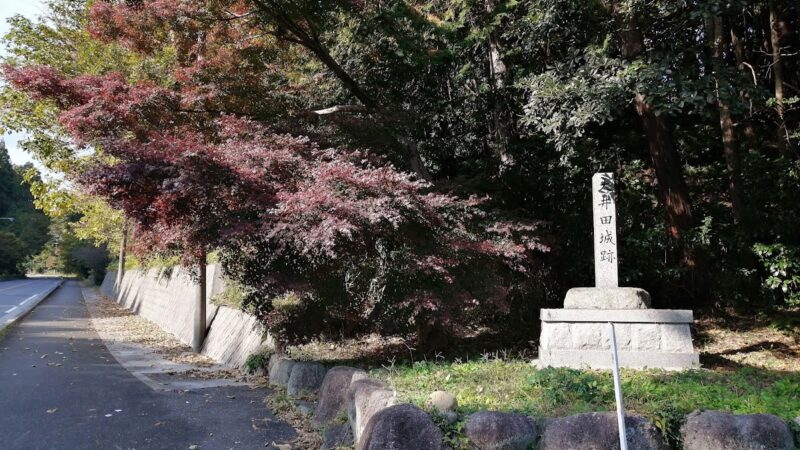
Hattata Castle is a Sengoku period mountain castle located in Fumoto Village, Hokusei-cho, Inabe City, Mie Prefecture. Built on a hill approximately 100 meters above sea level and 50 meters above ground level, overlooking the Aogawa River, this castle played an important role as a base for regional control in the Hokusei region during the Sengoku period.
Currently protected as an “Inabe City Designated Historic Site,” it was designated a cultural property by the former Hokusei Town on March 3, 2003. The castle ruins retain well-preserved remains such as earthworks, moats, watchtower bases, and baileys, making it a valuable historical site for understanding the structure of Sengoku period mountain castles.
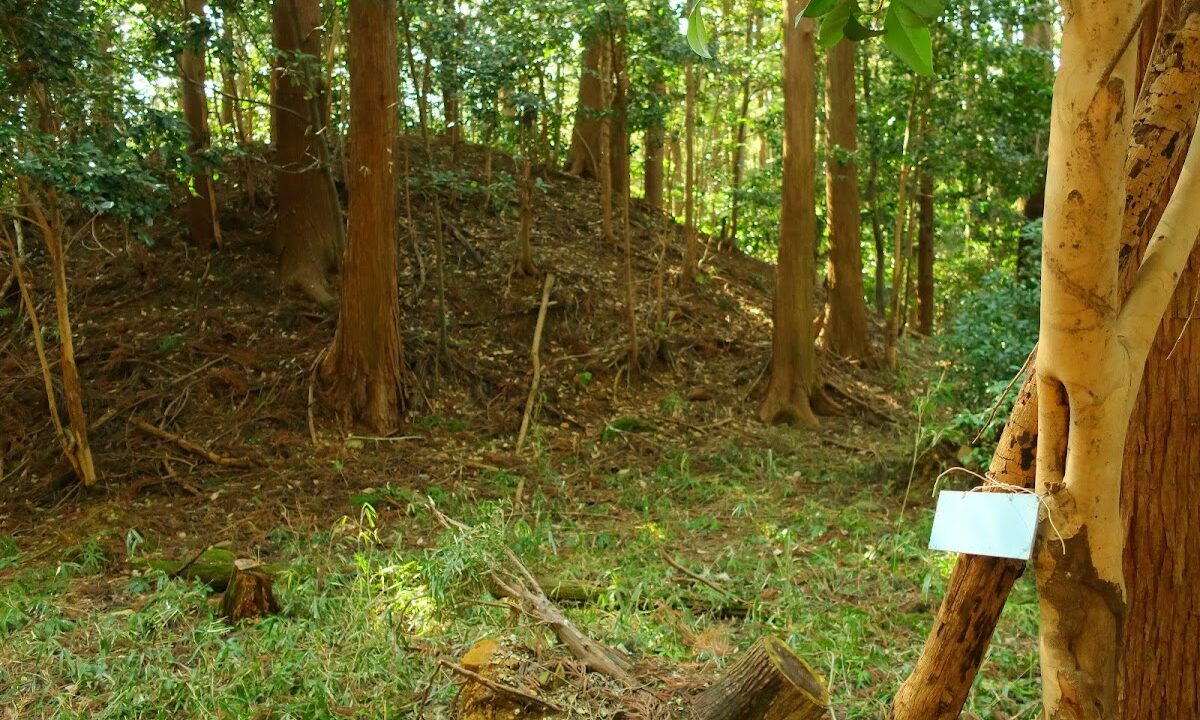
Since the castle site is still preserved as a forest, appropriate equipment and preparation are necessary when visiting. While accessible on foot from the national highway, signposts are limited, so prior information gathering is recommended.
History of Haruta Castle
Construction and Development by the Haruta Clan
Haruta Castle is said to have been built by Haruta Gohei, a local powerful family. The Haruta clan were powerful local lords in the Hokusei region, and they constructed the mountain castle to establish their control over the area.
During the time of Haruta Yamashiro-no-kami, the son of Haruta Gohei, the Haruta clan’s power expanded significantly. Particularly noteworthy is their defeat of Kondo Danjozaemon Yoshitsuna, the lord of the nearby Shirase Castle. This military success established the Haruta clan as a powerful Sengoku daimyo in the Hokusei region.
The Haruta Clan in the Sengoku Period
During the time of Haruta Yamashiro-no-kami, the Haruta clan engaged in active military activities, strengthening their influence over the surrounding areas. Using Haruta Castle as their base, the Haruta clan solidified their control over the Aogawa River basin and established their own sphere of influence in the Hokusei region.
At that time, the Hokusei region was located on the border between Ise and Omi provinces, and was a region where multiple powers vied for supremacy. It is believed that the Haruta clan also employed strategies for survival within this regional political landscape. Their defeat of the Kondo clan, lords of Shirase Castle, demonstrates that the Haruta clan was not merely a small local lord, but a force capable of altering the regional military balance.
Surrender to Oda Nobunaga and the End of the Haruta Clan
However, the fate of the Haruta clan changed dramatically during the Tensho era (1573-1592). As Oda Nobunaga advanced his invasion of the Ise region, the Haruta clan was forced to surrender in the face of the overwhelming military power of the Oda forces.
Oda Nobunaga began his full-scale conquest of Ise Province in 1574, and the local lords of the northern Ise region successively submitted to the Oda side. It is believed that the Haruta clan also abandoned their resistance and surrendered to Oda Nobunaga within this context.
While detailed historical records are scarce and many aspects of the Haruta clan’s fate after their surrender remain unclear, it is presumed that Haruta Castle gradually lost its military importance within the Oda’s system of rule and eventually became a ruined castle. The remaining ruins are invaluable witnesses to the turbulent history of the Sengoku period.
Haruta Castle’s Layout and Structure
Overall Location and Topography
Haruta Castle was built on the eastern peak of a hill north of the Aogawa River. A large valley cuts into the north side of the castle, and a reservoir called “Fumotoguchi-tame” (Foot of the The castle’s layout, skillfully utilizing the hilly terrain, creates an effective defensive system within a limited elevation difference of approximately 50 meters. While medium-sized for a mountain castle, its structure is a prime example of the advanced castle-building techniques of the Sengoku period.
Main Enclosure and its Features
The main enclosure, the central part of the castle, is located on the western peak. This is the most important section of the castle, and it is believed to have housed the lord’s residence and command post.
A watchtower base is located at the western end of the main enclosure. This base is situated in the southwest corner of the main enclosure and is constructed in combination with an earthen embankment. From this base, it was possible to monitor the western direction, allowing for early detection of approaching enemies. Even today, the elevation of this watchtower base is clearly visible, making it a particularly impressive part of the Haruta Castle ruins.
The main enclosure features a bend in the castle road in front of a square-shaped gate, indicating a layout designed with defense in mind. This bend prevents the enemy from advancing directly, creating a structure that gives the defenders an advantage.
Moat and Earthwork
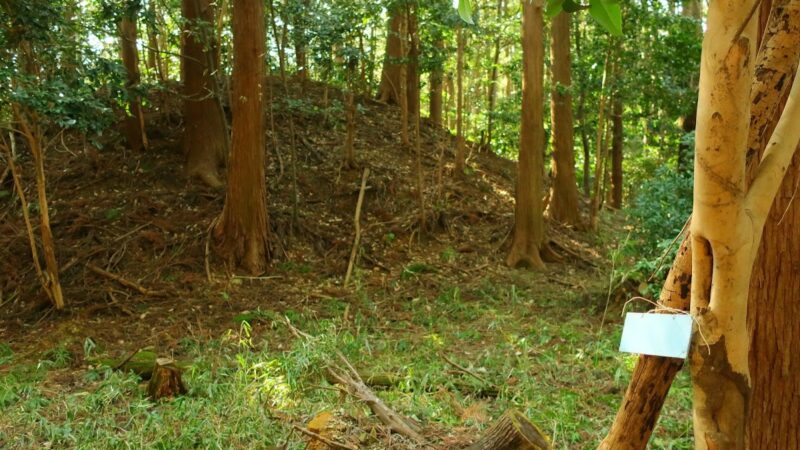
A moat is located on the western ridge of the main enclosure. Moats are a typical defensive structure in mountain castles, serving to stop enemies attacking along the ridge. The moat at Haruta Castle remains clearly visible today, and its scale suggests a high level of defensive awareness at the time.
To the south of the moat is a flat area surrounded by an earthwork. This earthwork was a defensive wall of earth, preventing enemy intrusion and also functioning as a base for counterattacks from within. The space enclosed by the earthwork may have been used as a soldier’s encampment or a storage area for supplies.
The earthworks around the main enclosure remain in relatively good condition, and their height and width allow us to appreciate the civil engineering techniques of the Sengoku period.
Arrangement of Enclosures
Several enclosures (flat areas) are arranged in a stepped pattern around the main enclosure. These enclosures form a three-tiered structure, each thought to have had a different function.
The upper enclosures, located near the main citadel, may have been used for important facilities or as living quarters for high-ranking samurai. The middle and lower enclosures are presumed to have housed practical facilities such as garrisons for ordinary soldiers, warehouses, and stables.
This tiered arrangement of enclosures is a rational design that maximizes the limited space on the mountaintop while also providing multiple layers of defense.
Current Status of the Remains
Currently, the following remains are preserved at the Haruta Castle site:
- Main Enclosure: The central part of the castle, where a relatively large, flat area can be seen.
- Watchtower Base: Located in the southwest corner of the main enclosure, well-preserved along with the earthworks.
- Earthworks: Can be seen in multiple locations around the main enclosure.
- Moat: Clearly remains, blocking the western ridge.
- Enclosure: Approximately three levels of flat ground arranged in a stepped pattern.
- Castle Road: Bends can be seen in the road leading to the main enclosure.
These remains, while some areas are overgrown with vegetation, generally retain the appearance of a Sengoku period mountain castle. However, since information boards and explanatory signs are limited, it is recommended to check the castle layout map beforehand.
Highlights of Haruta Castle
Watchtower Base in the Southwest Corner of the Main Enclosure
One of the most impressive remains of Haruta Castle is the watchtower base remaining in the southwest corner of the main enclosure. This watchtower base is still clearly visible today as a distinct elevation, and standing on it offers a panoramic view of the western side of the castle.
The earthen ramparts attached to the watchtower base are also well-preserved, making it a valuable point to experience the defensive structure of the time. It’s a popular spot for photography and is considered a must-see historical site among castle enthusiasts.
Masugata Koguchi (Square Gate) and the Turn in the Castle Road
The approach to the main enclosure employs a Masugata Koguchi (square gate) structure. A clear turn is incorporated into the castle road leading up to it, demonstrating a design intended to make enemy intrusion difficult.
This turn was designed to prevent a straight-line attack and allow the defenders to attack from the flank. It is a very interesting historical site as an example of castle construction techniques from the Sengoku period.
Moat on the Western Ridge
The moat blocking the western ridge is a crucial defensive feature of Haruta Castle. This moat, several meters deep, remains clearly visible today and exhibits a typical form for a mountain castle moat.
Earthen ramparts were built on both sides of the moat, demonstrating an effort to enhance its defensive effectiveness. Standing at the bottom of the moat, one can truly appreciate its depth and defensive capabilities.
Three-Tiered Enclosures
The three-tiered enclosures extending downwards from the main enclosure are another highlight. Each enclosure has a relatively large, flat surface, large enough to accommodate a large number of soldiers.
The steep, artificial slopes between the enclosures are clearly visible, confirming the construction of a tiered defensive line.
Northern Valley and Reservoir
The valley extending north of the castle served as a natural defensive line. Currently, a reservoir called Fumotoguchi Reservoir exists in this valley, altering the landscape of the castle site.
From the area around this reservoir, one can grasp the overall layout of the castle and appreciate its strategic location.
Access and Visiting Guide
Location
Address: Around 43 Baramon, Fumotomura, Hokusei-cho, Inabe City, Mie Prefecture
Type of Castle: Mountain Castle
Elevation: Approximately 50 meters
Designation: Inabe City Designated Historic Site (Designated March 3, 2003)
Access by Car
Access to Haruta Castle is convenient by private car. Located along National Route 365, the following route is recommended:
- Approximately 20 minutes from Kuwana-Higashi IC on the Tomeihan Expressway
- Head north on National Route 365 towards Fumotomura, Hokusei-cho, Inabe City
- Secure parking space along the national highway near the castle ruins (there is no dedicated parking lot)
If using a car navigation system, setting the destination to “43 Fumotomura, Hokusei-cho, Inabe City” is recommended. However, since there are few clear signs at the castle site itself, it is important to check a map or layout diagram beforehand.
Access by Public Transportation
If using public transportation, the following routes apply:
- Get off at Asouda Station on the Sangi Railway Hokusei Line, approximately 20-30 minutes on foot.
- Or get off at Sohara Station, approximately 25-35 minutes on foot.
However, the journey from the station to the castle site is on foot, and since there are few clear signs along the way, using a map app is recommended.
Ascent Route
From National Route 365, the ascent to the castle site is on foot.
- Park in a suitable location along the national highway.
- Find the path leading from the foot of the mountain to the castle ruins (there is no clearly defined path, so proceed while observing the terrain).
- Climb approximately 50 meters in elevation to reach the main enclosure.
- The journey takes about 15-20 minutes one way.
Notes for Visitors
Please note the following points when visiting Haruta Castle.
Equipment
- Wear hiking boots or non-slip shoes
- Wear long sleeves and long pants (for protection against bushes and insects)
- Carry gloves (useful when bushwhacking)
- Wear a hat
- Carry drinking water
- Insect repellent spray (especially in summer)
- Map or GPS device
Safety Considerations
- Avoid visiting alone; visiting in groups is recommended
- Avoid visiting during rainy weather or immediately after rain, as the ground can be slippery
- Allow ample time for your visit in winter, as sunset is early
- Be aware of wild animals such as wild boars and monkeys
- Check your cell phone signal strength beforehand
Manners
- Castle ruins are valuable cultural assets. Please be careful not to damage the ruins.
- Please take all your trash with you.
- Do not trespass on private property.
- The use of fire is strictly prohibited.
Estimated Visit Time
- Climbing the Castle Only: 15-20 minutes one way
- Exploring the Castle Interior: 30-45 minutes
- Total: Approximately 1 hour to 1 hour 30 minutes
If you want to carefully observe the ruins, it’s a good idea to allow about 2 hours.
Photography Tips
The following are recommended photography spots at Haruta Castle.
- Watchtower platform at the southwest corner of the main enclosure: Photographing it together with the earthworks creates a powerful image.
- Moat on the western ridge: Photograph from an angle that shows the depth of the moat.
- View from the main enclosure: On a clear day, you can enjoy a panoramic view of the surrounding area.
- Elevation difference in the enclosure: Photograph in a way that shows the height of the cliff face.
Nearby points of interest
Other castle ruins in Inabe City
When visiting Haruta Castle, we recommend visiting other castle ruins in Inabe City.
Kamiki Castle
This mountain castle is positioned as a surrounding castle to Haruta Castle. Visiting it together with Haruta Castle will help you understand the castle network in this region.
Tanabe Castle
Another mountain castle located within Inabe City, it is an important historical site for understanding the Sengoku period history of the Hokusei region.
Oida Castle
Also a castle ruin remaining in Hokusei Town, it is thought to have functioned at the same time as Haruta Castle.
Tourist Attractions in Inabe City
Inabe City Hall, Board of Education, Lifelong Learning Division
Address: 31 Ageki, Hokusei-cho, Inabe City, Mie Prefecture 511-0498
Phone: 0594-86-7846
You can obtain information about Inabe City’s cultural properties and history. If you wish to view detailed materials about Haruta Castle, it is recommended to inquire in advance.
Ageki Onsen (Hot Spring)
This is a hot spring facility where you can relax after a tiring tour of the castle ruins.
Inabe City Plum Blossom Park
This is a beautiful park where plum blossoms bloom in spring, and is a popular spot for tourists.
Voices of Castle Enthusiasts Visiting Haruta Castle
Haruta Castle is attracting attention from castle enthusiast communities such as “Kojodan” (Castle Attack Group), and visitors have given the following feedback:
- “The remains are well-preserved, making it ideal for learning about the structure of a Sengoku period mountain castle.”
- “The combination of the watchtower base and earthworks is magnificent, making it a photogenic spot.”
- “Some parts are overgrown with vegetation, but this also contributes to the authentic mountain castle atmosphere.”
- “There are few information boards, so prior research is essential.”
- “Visiting it together with the surrounding castle ruins allows for a more comprehensive understanding of the Sengoku period history of this region.”
Some visitors have described it as having a “Planet of the Apes-like atmosphere,” suggesting that the unique atmosphere of the mountain castle surrounded by nature is quite impressive.
Current Status of Haruta Castle Research
Research on Haruta Castle is mainly conducted within the context of regional history research and castle research. It is introduced as one of Mie Prefecture’s representative mountain castles in books such as “Walking the Best 50 Mountain Castles of Mie,” and its historical value is recognized.
Limitations of Historical Sources
Primary sources concerning Haruta Castle are limited, leaving many questions unanswered regarding the castle’s detailed history and the activities of the Haruta clan. Further research is needed, particularly on the following points:
- The origins of Haruta Gohei and the lineage of the Haruta clan
- Detailed account of the capture of Shirase Castle
- The timing and conditions of surrender to Oda Nobunaga
- The activities of the Haruta clan after surrender
- The timing and circumstances of the castle’s abandonment
Possibility of Archaeological Investigation
Currently, no full-scale archaeological excavation has been conducted at the Haruta Castle site. However, if archaeological investigations are conducted in the future, the following new insights may be gained:
- The layout and scale of the buildings
- The age and lifestyle as seen from artifacts such as ceramics used
- Detailed structure of defensive facilities
- Identification of the period the castle was used
The Position of Haruta Castle in Mie Prefecture’s Mountain Castle Culture
Mie Prefecture, especially the Hokusei region, is an area where many mountain castles were built during the Sengoku period. Located on the border of Ise Province and Omi Province, its geopolitical importance as a point of intersection for multiple forces meant that local lords maintained their power using mountain castles as their base.
Haruta Castle stands out among the mountain castles of the Hokusei region for its remarkably well-preserved remains, making it a valuable historical site that conveys the castle-building techniques of the Sengoku period. In particular, the remains of the turret base, earthworks, and moats around the main enclosure exhibit typical structures of medieval castles, making it highly valuable from an educational perspective.
The Inabe City designation of Haruta Castle as a city-designated historical site in 2003 holds significant importance in protecting and passing on the region’s historical heritage to future generations. With appropriate preservation, management, and utilization efforts, Haruta Castle is expected to further enhance its value as a resource for local history education and tourism.
Summary
Haruta Castle is a Sengoku period mountain castle site located in Hokusei-cho, Inabe City, Mie Prefecture, and is a valuable historical site that conveys the history of the rise and fall of the Haruta clan. The remains of the main enclosure, turret base, earthworks, and moats are well-preserved, making it a place where castle enthusiasts can experience the structure of a Sengoku period mountain castle firsthand, and it is highly regarded by castle enthusiasts.
While access may be somewhat challenging, with the right equipment and preparation, you can enjoy exploring this historically significant mountain castle. When visiting Inabe City, be sure to stop by the Haruta Castle ruins and experience the atmosphere of the Sengoku period.
The history of the Haruta clan, leading up to their surrender to Oda Nobunaga, and the numerous remaining ruins, provide valuable clues to understanding the regional history of the Sengoku period. It is hoped that appropriate preservation and utilization will continue, allowing the castle to continue conveying the charm of history to many people.