Kurobuchi Castle (Yatsushiro City, Kumamoto Prefecture): A Complete Guide to its History and Highlights
Kurobuchi Castle, located in Yatsushiro City, Kumamoto Prefecture, is a valuable mountain castle ruin that conveys the history of the Nanboku-cho period (Northern and Southern Courts period). Although detailed records are scarce, the remains, such as the steep cliffs, still exist, making it an important historical site that allows us to understand the construction techniques and strategic value of the time, attracting attention from castle enthusiasts and history buffs. This article provides detailed information useful for your visit, from the historical background of Kurobuchi Castle to specific highlights, access methods, and surrounding tourist information.
What is Kurobuchi Castle? | A Mountain Castle from the Nanboku-cho Period Remaining in Yatsushiro City, Kumamoto Prefecture
Kurobuchi Castle is a medieval mountain castle located in Yatsushiro City, Kumamoto Prefecture. Built on a hill overlooking the Yatsushiro Plain, this castle played an important role during the turbulent Nanboku-cho period. Currently, remains such as steep cliffs remain, mainly around the main enclosure, allowing us to imagine the castle’s structure at the time.
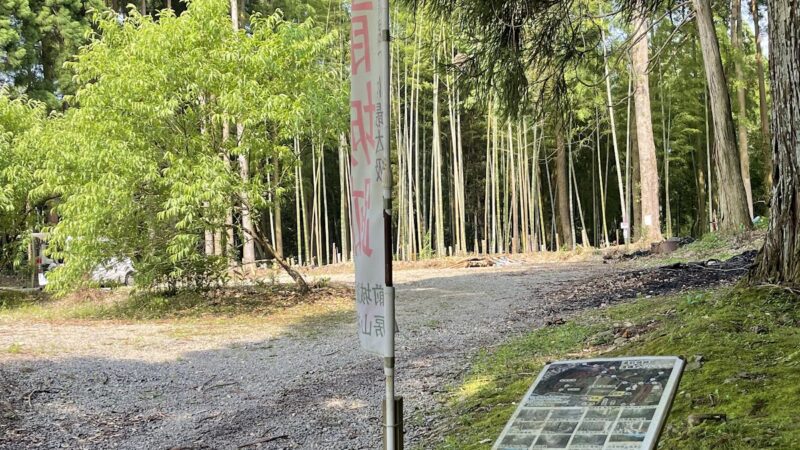
The castle ruins are covered in forest, but an information board has been installed at the summit to help visitors understand the historical background. While Yatsushiro City also has other early modern castles such as Yatsushiro Castle (Matsue Castle), Kurobuchi Castle is a historical site with a different kind of charm as a medieval mountain castle.
Basic Information on Kurobuchi Castle
Location: Yatsushiro City, Kumamoto Prefecture
Castle Classification: Mountain Castle
Construction Period: Estimated to be the Nanboku-cho period
Main Remains: Cut slopes, bailey remains
Designated Cultural Property: Not designated
Current Status: Forest
History of Kurobuchi Castle | The Struggle Between Shōni Yorihisa and Era Korezumi
Detailed historical records of Kurobuchi Castle are limited, but it is said to have been an important military base during the Nanboku-cho period. During this time, the forces of the Southern and Northern Courts clashed fiercely in the Kyushu region, and battles over castles were fought throughout the area. ### Kyushu Situation and Kurobuchi Castle During the Nanboku-cho Period
In the mid-14th century, Japan was divided into the Nanboku-cho period, a time of conflict between the Southern Court (Yoshino Court) and the Northern Court (Kyoto Court). In Kyushu, the Southern Court, supported by Prince Kaneyoshi, held significant power, and Higo Province (present-day Kumamoto Prefecture) was under its influence.
It is said that Kurobuchi Castle was contested by two warriors, Shōni Yorihisa and Era Korezumi, during this period of turmoil. The Shōni clan was a powerful shugo daimyo (provincial governor) based in northern Kyushu, while the Era clan was a local lord in Higo Province. The fact that these two fought over the castle indicates its strategically important location.
About Shōni Yorihisa
Shōni Yorihisa was a warrior who played an active role during the Nanboku-cho period as a member of the Shōni clan. The Shōni clan was a prestigious family that served as the governors of Chikuzen, Buzen, and Hizen provinces, and was a powerful force on the Northern Court side in Kyushu. During the time of Yorihisa, the Shōni clan fiercely opposed the Southern Court forces and sought to extend their influence into Higo Province.
Their involvement with Kurobuchi Castle is thought to have been part of the Shōni clan’s military actions as they sought to expand their influence in Higo Province. The Yatsushiro region is located at the mouth of the Kuma River and was a strategically important point for maritime traffic, making control of this region strategically crucial.
About Era Korezumi
Era Korezumi was a local lord of Higo Province and a military commander who was active in this region during the Nanboku-chō period. The Era clan was one of the powerful local lords within Higo Province and was well-versed in the local situation.
The fact that Korezumi clashed with Shōni Yorihisa over Kurobuchi Castle illustrates a typical Nanboku-chō period conflict between local and external forces. While there are no clear records of who ultimately secured the castle or its subsequent fate, this struggle was a significant event in local history.
The Aftermath of Kurobuchi Castle
There are very few records of Kurobuchi Castle after the Nanboku-cho period. It is presumed that after the turmoil of the Nanboku-cho period subsided, the castle ceased to function as a military institution and was abandoned. During the Sengoku period, the Yatsushiro region came under the influence of clans such as the Sagara and Nawa, and larger castles were built.
Structure and Layout of Kurobuchi Castle | Characteristics as a Mountain Castle
Kurobuchi Castle has the typical structure of a medieval mountain castle. The main enclosure was located on the mountaintop, and defensive facilities cleverly utilized the terrain. The remains that can still be seen today allow us to understand the castle-building techniques and tactical thinking of the time.
Structure of the Main Enclosure
The main enclosure, the heart of the castle, is located on the mountaintop. From this location, one can overlook a wide area of the Yatsushiro Plain, making it an ideal location for monitoring enemy movements. The main enclosure is relatively small, suggesting it served more as a surveillance base or emergency refuge than as a place to station large armies.
Currently, an information board is installed in the main enclosure, allowing visitors to understand the castle’s historical background. This board is a result of local historical preservation efforts and serves as a valuable source of information.
Remains of the Cut Slope
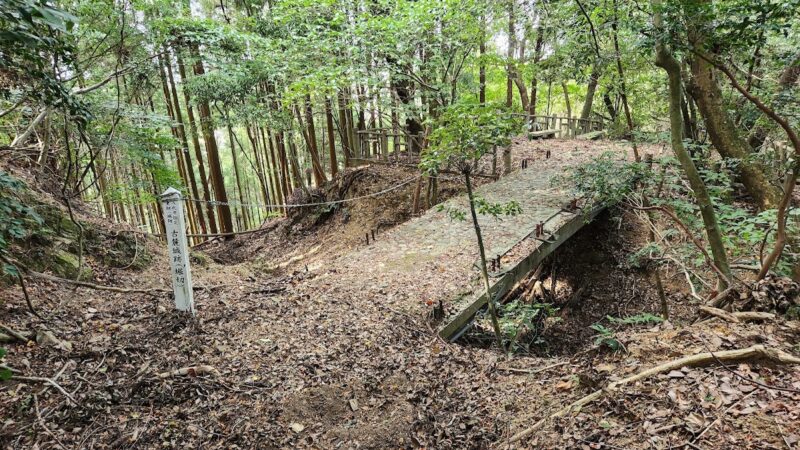
The most clearly identifiable remains at Kurobuchi Castle are the cut slopes. A cut slope is a defensive structure created by artificially cutting into a steep natural slope, designed to make enemy intrusion difficult.
The traces of the cut slopes at Kurobuchi Castle can still be clearly observed today. By carefully observing the differences from the natural terrain, it is possible to identify the areas that were modified by human hands. The existence of these cut slopes is important evidence that Kurobuchi Castle was not merely a fortification utilizing natural terrain, but a strategically constructed castle.
Characteristics of the Castle Layout
The layout (design and arrangement) of Kurobuchi Castle exhibits characteristics typical of mountain castles from the Nanboku-cho period. It is presumed that multiple enclosures were arranged around the main enclosure, following the terrain.
A characteristic of medieval mountain castles is the absence of structures like stone walls and keeps, which are found in later castles. Instead, construction primarily involved earthworks such as excavation and embankment. Kurobuchi Castle is no exception, and it is believed to have been composed of earthworks such as earthen ramparts and moats.
Highlights of Kurobuchi Castle | Castle Notes and Visiting Points
This section introduces highlights of Kurobuchi Castle and points to enjoy exploring the castle ruins. While the remains of medieval mountain castles may appear less impressive than those of early modern castles, understanding their historical context allows for a deeper appreciation of their value.
Observation of the Cliffs
The greatest highlight is the well-preserved remains of the cliffs. Observing the difference between natural and artificially carved slopes allows you to appreciate the medieval castle-building techniques. Paying particular attention to the slope angle and the way the earth was carved reveals the advanced civil engineering skills of the time.
When observing the cliffs, it is recommended to view them from multiple angles while taking safety precautions. The way the light hits them can make the topography appear more clearly.
View from the Main Enclosure
From the main enclosure at the summit, you can see the Yatsushiro Plain. This view is one of the reasons Kurobuchi Castle was built. The former lords and soldiers likely viewed the same scenery from this spot, monitoring enemy movements.
Currently, trees have grown and limited the view in some areas, but from key locations, you can still see the city of Yatsushiro and the flow of the Kuma River. On clear days, you can even see the Yatsushiro Sea.
Information on the Signboard
The signboard installed in the main enclosure provides explanations about the historical background and remains of Kurobuchi Castle. Reading this information on-site will deepen your understanding of the castle ruins. Carefully reading the information boards before observing the remains will lead to a more fulfilling visit.
Observing the Topography
While walking around the entire castle site, it’s important to observe the topography, including its undulations and ridge shapes. Medieval mountain castles were built making maximum use of the natural terrain, so the topography itself tells the story of the castle’s design philosophy.
By interpreting the topography—understanding which directions are difficult to attack and which areas were prioritized for defense—you can gain insight into the strategic thinking of the castle lord.
Access to Kurobuchi Castle | Visitor Guide
This section introduces access methods and points to note when visiting Kurobuchi Castle. As it is a mountain castle, preparation and caution are necessary for a visit.
Location and Access
Location: Yatsushiro City, Kumamoto Prefecture
Access by Public Transportation:
- The nearest station is JR Kagoshima Main Line “Yatsushiro Station”
- It is convenient to use a taxi or rental car from the station
- If using a local bus, you will need to walk from the bus stop nearest the castle ruins.
Access by Car:
- From Kyushu Expressway “Yatsushiro IC,” head towards Yatsushiro city center
- There may not be a dedicated parking lot around the castle ruins, so it is recommended to check parking locations in advance
- When setting your car navigation system, it is recommended to check the location of the castle ruins on a map of Yatsushiro City beforehand.
Precautions for Visiting
Clothing and Equipment:
- As it is a mountain castle, wear comfortable walking shoes (trekking shoes recommended)
- Long-sleeved shirt and long pants (to protect yourself from plants and insects)
- Hat, sunscreen, insect repellent spray
- Bring drinking water
Safety Precautions:
- Walk carefully as there are uneven areas.
- Avoid visiting during or after rain, as it can be slippery.
- Visiting in a group is safer than visiting alone.
- Check cell phone signal strength beforehand.
Manners:
- Do not damage the ruins.
- Always take your trash with you.
- Confirm entry permission if it is private property.
- No open flames.
Best Time to Visit
Spring (March-May): The weather is mild and ideal for visiting. The scenery is beautiful with the fresh greenery.
Autumn (October-November): Cool and easy to walk. The surrounding mountains are beautiful during the autumn foliage season.
Summer (June-September): Due to the heat and many insects, sufficient precautions are necessary. Visiting early in the morning is recommended.
Winter (December-February): Although the Yatsushiro area is relatively mild, warm clothing is necessary. The withered vegetation also has the advantage of making the ruins easier to observe.
History and Culture of Yatsushiro City | Regional Background that Nurtured Kurobuchi Castle
Yatsushiro City, where Kurobuchi Castle was built, has long developed as an important base in Higo Province. Understanding the historical background of this region will provide a deeper experience when visiting the castle ruins.
Geographical Characteristics of Yatsushiro
Yatsushiro City is located in the southern part of Kumamoto Prefecture, bordered by the Kyushu Mountains to the east and the Yatsushiro Sea (Shiranui Sea) to the west. The Kuma River, one of Japan’s three fastest-flowing rivers, flows through the center of the city, forming the fertile Yatsushiro Plain.
This geographical condition has made Yatsushiro a transportation hub since ancient times. As a place where sea and land routes intersected, it was a center for the collection and distribution of goods and a strategically important location. It is believed that this geographical importance played a role in the construction of Kurobuchi Castle.
History of Yatsushiro
Ancient and Medieval Periods: A region that developed from ancient times as Yatsushiro County in Higo Province. Manors flourished, and many samurai groups vied for power. During the Nanboku-cho period, it became a battleground for various forces, and Kurobuchi Castle played a significant role during this time.
Early Modern Period: During the Edo period, it came under the rule of the Kato clan, and later the Hosokawa clan, and Yatsushiro Castle (Matsue Castle) was built. It developed as a castle town and flourished as a commercial city.
Modern Era and Beyond: It continued to develop as a major city in Kumamoto Prefecture after the Meiji Restoration. In 2005, it merged with surrounding towns and villages to form the current city of Yatsushiro.
Culture and Traditions of Yatsushiro
Myoken Festival: The autumn grand festival of Yatsushiro Shrine (Myoken-gu), one of the three major festivals of Kyushu. It is also registered as a UNESCO Intangible Cultural Heritage.
Rush Grass and Tatami Mats: The Yatsushiro Plain is one of Japan’s leading rush grass producing areas. Traditional tatami mat production continues to this day.
Hinagu Onsen: A hot spring resort with a history of over 600 years. It is also known as a hot spring loved by the haiku poet Taneda Santoka.
The Legend of the Heike Clan in Gokanosho: In the mountainous area of the eastern part of the city, legends of Heike clan refugees remain, and a unique culture is being passed down.
Yatsushiro City Tourist Information | Attractions Around Kurobuchi Castle
When visiting Kurobuchi Castle, combining your visit with other tourist spots in Yatsushiro City will make for a more fulfilling trip.
Yatsushiro Castle Ruins (Matsue Castle Ruins)
Overview: A modern castle built in the early Edo period. It was built by Tadahiro, the son of Kato Kiyomasa.
Highlights: Stone walls, moats, and turret gates remain, giving a glimpse of the castle town. Because it is from a different era than Kurobuchi Castle, you can compare the development of the castle.
Access: Approximately 10 minutes on foot from JR Yatsushiro Station
Matsuhama-ken
Overview: A garden built as a villa for the Matsui family, lords of Yatsushiro Castle. A nationally designated scenic spot.
Highlights: A pond-centered strolling garden where you can enjoy the beautiful scenery of each season. Particularly famous for its Higo irises in spring.
Access: Approximately 10 minutes by car from JR Yatsushiro Station
Hinagu Onsen
Overview: A hot spring resort with a history of approximately 600 years. Also known as a place loved by Taneda Santoka.
Highlights: The retro atmosphere of the hot spring town, day-trip bathing facilities, and strolling through the hot spring town.
Access: Get off at JR Hisatsu Orange Railway “Hinagu Onsen Station”
Gokanosho
Overview: A secluded area in the Kyushu Mountains. A region steeped in the legend of the Heike clan refugees, boasting stunning natural beauty and a unique culture.
Highlights: Famous autumn foliage spots, historical sites related to the Heike legend, suspension bridges, waterfalls, etc.
Access: Approximately 1 hour by car from Yatsushiro city center.
Yatsushiro City Museum, Mirai no Mori Museum
Overview: A museum showcasing the history and culture of Yatsushiro.
Highlights: Exhibits of floats and decorated carts from the Myoken Festival, historical materials of Yatsushiro, etc. Also useful for learning about the historical background of Kurobuchi Castle.
Access: Approximately 15 minutes by car from JR Yatsushiro Station.
Kuma River Cruise
Overview: A sightseeing cruise down the Kuma River, one of Japan’s three fastest-flowing rivers.
Highlights: Enjoy the beauty of the gorge, the thrill of the rapids, and the boatman’s commentary.
Access: Starting from Hitoyoshi City (approximately 1 hour by car from Yatsushiro City)
Kurobuchi Castle and Surrounding Castles | A Tour of Castle Ruins in Higo Province
For castle enthusiasts visiting Kurobuchi Castle, other castle ruins around Yatsushiro City are also attractive. By visiting castle ruins of different eras and scales, you can experience the historical changes in castle architecture.
Castle Ruins in Yatsushiro City
Yatsushiro Castle (Matsue Castle): As mentioned above, a modern castle from the early Edo period. Comparing it with Kurobuchi Castle helps to understand the development of castle architecture.
Furufumoto Castle: A medieval mountain castle associated with the Sagara clan. It can be compared to Kurobuchi Castle as a castle from the same era.
Castle Ruins in Neighboring Municipalities
Hitoyoshi Castle (Hitoyoshi City, Kumamoto Prefecture): A castle with a 700-year history as the residence of the Sagara clan. There are many points of interest, such as the stone walls and the water gate. Approximately 1 hour by car from Yatsushiro City.
Uto Castle (Uto City, Kumamoto Prefecture): The residence of Konishi Yukinaga. Remains of a modern castle still exist. Approximately 40 minutes by car from Yatsushiro City.
Kumamoto Castle (Kumamoto City, Kumamoto Prefecture): One of Japan’s three most famous castles. A magnificent castle built by Kato Kiyomasa. Approximately 1 hour by car from Yatsushiro City.
Model Castle Tour Courses
Medieval Mountain Castle Course: Kurobuchi Castle → Kofumoto Castle → Gokanosho Mountain Castle Ruins
A course focusing on medieval mountain castles.
Historical Comparison Course: Kurobuchi Castle (Medieval) → Yatsushiro Castle (Early Modern) → Kumamoto Castle (Early Modern)
A course to experience the historical changes in castles.
Yatsushiro History Immersion Course:
Kurobuchi Castle → Yatsushiro Castle → Matsuhama-ken → Yatsushiro City Museum → Hinagu Onsen
A one-day course exploring the history and culture of Yatsushiro.
Research and Preservation Activities of Kurobuchi Castle
Kurobuchi Castle is a castle site with few detailed records, but research and preservation activities are ongoing by local researchers and history enthusiasts.
Current Status of Research
Research on Kurobuchi Castle is mainly conducted using the following methods:
Literature Research: Searching for descriptions of Shōni Yorihisa and Era Korezumi in historical materials from the Nanboku-chō period. Local ancient documents and temple records are also important sources of information.
Archaeological Investigation: Clarifying the castle’s structure through surveying of remains and topographical analysis. Studying castle construction techniques from remains such as cliffs.
Comparative Research: Clarifying the characteristics and positioning of Kurobuchi Castle by comparing it with other mountain castles of the same period.
Preservation Challenges and Efforts
Challenges:
- The remains are becoming difficult to see due to forestation.
- There are few detailed records, and it is not widely known.
- Budget and personnel for preservation are limited.
Efforts:
- Providing information through the installation of signboards.
- Holding regular guided tours by local historical organizations.
- Surveys and reports by castle research organizations.
- Disseminating information on social media and castle information websites.
What Visitors Can Do
We, as visitors to the castle ruins, can also contribute to preservation efforts.
- Observe proper etiquette, such as not damaging the remains and taking your trash with you.
- Share your visit records on social media and blogs to spread awareness of the castle.
- Take an interest in the activities of local historical organizations.
- Support research by purchasing books and materials related to castles.
Basic Knowledge to Know Before Visiting Kurobuchi Castle
Here is some basic knowledge to help you enjoy your visit to the castle ruins even more.
Characteristics of Medieval Mountain Castles
Location: Utilizing mountain ridges and summits
Structure: Lacking stone walls or keeps, primarily relying on defensive structures built through civil engineering
Purpose: Military base during wartime, center for territorial control
Remains: Main remains include steep slopes, moats, earthworks, and baileys
What is the Nanboku-chō Period?
Period: 1336–1392 (approximately 60 years)
Background: After the failure of Emperor Go-Daigo’s Kenmu Restoration, the country split into the Southern Court (Yoshino) and the Northern Court (Kyoto)
Situation in Kyushu: There was a period when the Southern Court, supported by Prince Kaneyoshi, held the upper hand
End: Unification in 1392 through the unification of the Northern and Southern Courts
Castle Terminology Explanation
Main Bailey (Shukaku): The central bailey of a castle. Also called the Honmaru.
Kirigishi: A defensive structure created by artificially cutting and steepening a slope.
Kuruwa: A flat area within a castle. Also written as Kuruwa.
Horikiri: A moat dug to cut across a ridge.
Dorui: A defensive wall made by piling up earth.
Nawabari: The design and layout plan of a castle.
Summary | The Charm and Value of Visiting Kurobuchi Castle
Kurobuchi Castle in Yatsushiro City, Kumamoto Prefecture, is a valuable mountain castle ruin that conveys the history of the Nanboku-cho period, despite the scarcity of detailed records. The historical episode of the struggle for control between Shōni Yorihisa and Era Korezumi illustrates the importance of the region during a turbulent era.
The existing remains, such as the kirigishi, are important for understanding medieval castle construction techniques, making it a historical site worth visiting for castle enthusiasts. The view from the mountaintop allows you to relive the scenery seen by the castle’s former lords.
While prior preparation and safety precautions are necessary when visiting Kurobuchi Castle, your efforts will be rewarded in the form of a dialogue with history. Yatsushiro City has many other attractive tourist spots, and you can enjoy a journey to deeply understand the region’s history and culture, using Kurobuchi Castle as a starting point.
If you are looking for the quiet charm of a medieval mountain castle, please visit Kurobuchi Castle. There, a simple yet historically significant landscape awaits you, different from the ornate castles of the early modern period.