A Complete Guide to the History and Highlights of Tsumori Castle (Mashiki Town, Kamimashiki District, Kumamoto Prefecture)
Tsumori Castle is a medieval mountain castle located in Shimojin, Mashiki Town, Kamimashiki District, Kumamoto Prefecture. Built as the residence of Tsumori Mitsunaga, a prominent retainer of the Aso clan, it holds historical significance as a castle that fiercely resisted the Shimazu army during the “Battle of Aso” at the end of the Sengoku period. This article provides a detailed explanation of Tsumori Castle, from its historical background to its structure, highlights, and access methods.
Overview and Location of Tsumori Castle
Tsumori Castle is located at the end of the ridge of Kuriyama, known as “Shiroyama,” in the Shimojin district of Mashiki Town, Kumamoto Prefecture. This area was strategically important, close to the center of Kamimashiki District and overlooking the Kumamoto Plain. The castle ruins remain in the mountains south of the current Tsumori Elementary School, and are affectionately known locally as “Shiroyama.”
Although not at a particularly high elevation, its location overlooking the surrounding plains provided excellent defensive and surveillance advantages. Mashiki Town, adjacent to the east of Kumamoto City, lies at a crucial transportation hub connecting the Aso region and the Kumamoto Plain. Tsumori Castle played a vital role as a base for controlling this region.
History of Tsumori Castle
Entry of the Tsumori Mitsunaga Clan and Construction
Tsumori Castle originated when Mitsunaga Nakatsukasa Koremune, a chief retainer of the Aso Grand Priest family, resided there with his younger brother, Korezumi. The entry of the Tsumori Mitsunaga clan is believed to have occurred sometime between 1431 (Eikyo 3) and 1451 (Hotoku 3) during the Muromachi period.
While there are no clear records regarding the exact construction date, it is estimated that construction began sometime in the late 15th century, after the arrival of the Mitsunaga clan, and was completed around the Tenmei era (1469-1486). This period marked a decline in the authority of the Muromachi Shogunate and the rise of various Sengoku daimyo (feudal lords), making it common for local powerful families to build castles for self-defense.
The Tsumori Mitsunaga clan, as senior retainers of the Aso clan, were entrusted with governing this region. The Aso clan were powerful local lords controlling northern Higo Province, and it is believed that the Mitsunaga clan, as their vassals, also possessed considerable influence. Tsumori Castle served as the residence of successive generations of the Mitsunaga clan for several years.
The Battle of Aso and the Siege of Tsumori Castle
Tsumori Castle’s name is etched in history thanks to the valiant efforts of Mitsunaga Soho during the “Battle of Aso” in 1587. This battle was fought between the Shimazu clan, who aimed to unify Kyushu, and the local lords of Higo Province who resisted them.
When the Shimazu army, led by Shimazu Yoshihiro, invaded Higo Province, many local lords surrendered to the Shimazu clan. Mitsunaga Soho is also said to have surrendered to the Shimazu clan at one point. However, as Toyotomi Hideyoshi’s conquest of Kyushu progressed, Soho rebelled against the Shimazu clan and once again showed a stance of resistance.
Enraged by this action, the Shimazu army launched a fierce attack on Tsumori Castle. Mitsunaga Munetomo held out in Tsumori Castle and continued his fierce resistance, but the castle fell due to the overwhelming difference in troop numbers, and Munetomo is said to have been killed in battle. His loyalty and bravery in this battle have been passed down through generations.
The Battle of Aso was a regional conflict that occurred within the larger historical context of Toyotomi Hideyoshi’s conquest of Kyushu, but the siege of Tsumori Castle holds significant importance as the last resistance of the Higo provincial lord.
The Castle’s Abandonment and Aftermath
There are no clear records of how Tsumori Castle was abandoned after the Battle of Aso. However, after Toyotomi Hideyoshi’s conquest of Kyushu, Sasa Narimasa entered Higo Province, and later Kato Kiyomasa became the lord of Higo. During this period, many medieval mountain castles were abandoned and replaced by modern castles on flat land.
It is believed that Tsumori Castle also lost its military function and was abandoned during this period. During the Edo period, the area surrounding the castle ruins was used for farmland and forests, and the castle’s remains gradually disappeared.
Currently, Tsumori Castle ruins are not designated as a cultural property, but they are recognized as a historical heritage site by locals and are preserved as a place that conveys the region’s history, with explanatory signs installed.
Structure and Remains of Tsumori Castle
Castle Layout and Structure
Tsumori Castle is a typical medieval mountain castle utilizing the end of a mountain ridge. It is believed that multiple baileys were arranged around the main bailey (honmaru), but many of the remains have been lost, and many aspects of the detailed layout remain unclear.
It is presumed to have been a relatively small medieval mountain castle, but it is thought to have had a defensive design that skillfully utilized the terrain. It is possible that there were trenches cutting across the mountain ridge and baileys leveled on the slopes.
Existing Remains
Currently, only a few remains can be confirmed at the Tsumori Castle site. According to visitor reports, flat areas believed to be the remains of baileys and traces of earthworks remain. However, due to years of weathering and overgrown vegetation, clearly identifiable remains are limited.
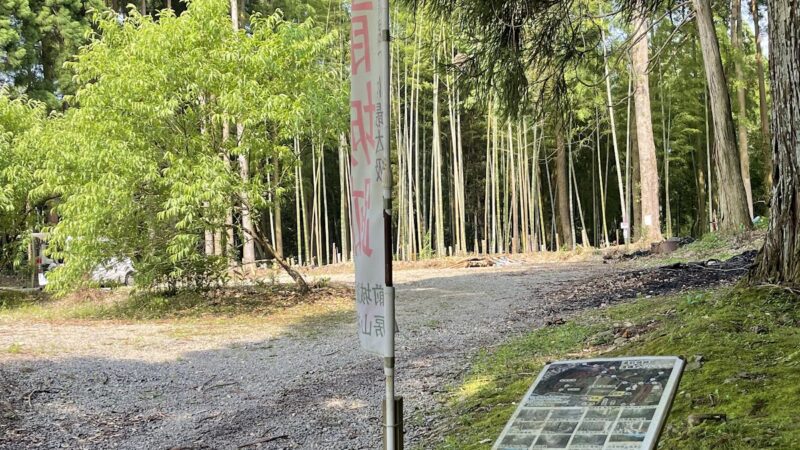
The castle ruins are located in a forest that includes private land, and there are no well-maintained access paths. Therefore, caution is advised when visiting. Information boards have been installed with the cooperation of local residents, allowing visitors to learn about the history of Tsumori Castle.
No stone structures such as stone walls have been confirmed, suggesting that it was primarily an earthen castle with earthworks and moats. This is reasonable considering the castle’s construction period in the late 15th century and is typical of medieval mountain castles in the Higo region.
Highlights of Tsumori Castle
Historical Value
The greatest highlight of Tsumori Castle lies in its historical value. The dramatic history of Mitsunaga Munetomo’s fierce resistance and death in the Battle of Aso is a valuable example of the situation in Higo Province at the end of the Sengoku period.
Tsumori Castle played a crucial role in the grand historical narrative of the Shimazu clan’s unification of Kyushu and the resistance of local forces against them. The loyalty and bravery of Mitsunaga Munetomo are remembered as a noteworthy event in the region’s history.
Topography and Landscape
From the castle ruins, you can overlook the plains of Mashiki Town. You can experience the perspective from which the Mitsunaga clan once ruled and surveyed their territory. The expanse of the Kumamoto Plain and the distant Aso Mountains provide valuable insight into the geographical features of this region.
The defensive structures, which utilize the unique terrain of a mountain castle, are also a point of interest for castle enthusiasts. You can observe the characteristics of medieval mountain castles, such as the use of ridges and integration with the natural terrain.
Information Boards and Learning Resources
Information boards have been installed at the castle ruins by local residents, allowing you to learn about the history of Tsumori Castle and the Mitsunaga clan. These boards are valuable resources for conveying the history of the region, especially since the castle ruins are not designated as cultural properties.
Local historical documents and records of Mashiki Town contain descriptions of Tsumori Castle. Those wishing to learn more are advised to consult these materials.
Access Information
Location
Address: Shimojin, Mashiki-machi, Kamimashiki-gun, Kumamoto Prefecture
Tsumori Castle Ruins are located in the Tsumori district of Mashiki Town, specifically in the Shimojin district. The castle ruins are situated in the mountains south of Tsumori Elementary School.
Access by Car
Approximately 30 minutes by car from central Kumamoto City. Accessible in about 10 minutes from the Mashiki-Kumamoto Airport Interchange on the Kyushu Expressway.
- From Kumamoto City: Head east on National Route 57 towards Mashiki Town.
- From Kumamoto Airport: Approximately 15 minutes.
- From Aso area: Head west on National Route 57.
Regarding parking, there is no dedicated parking lot for the castle ruins. You will need to use nearby public facilities or appropriate parking areas. When visiting, please be considerate of local residents and avoid causing any inconvenience.
Access by Public Transportation
If using public transportation, you will need to take a bus from Kumamoto City.
- Take the Sanko Bus bound for “Mashiki” from Kumamoto Transportation Center.
- Get off at the “Tsumori” bus stop and walk for approximately 15 minutes.
Since the number of buses is limited, it is recommended to check the timetable in advance.
Points to Note When Visiting
Tsumori Castle Ruins is not a well-maintained tourist site. Please pay attention to the following points when visiting.
- Consideration for Private Property: The castle ruins are located in a forest that includes private property. Please be considerate when entering.
- Safety Measures: Since the path to the castle is not maintained, please wear appropriate clothing and shoes.
- Season: In summer, vegetation is overgrown, making it difficult to see the remains. Visiting in spring or autumn is recommended.
- Wild Animals such as Bears and Snakes: Please be careful of wild animals in the forest.
- Please take your trash with you: To protect the natural environment, please be sure to take your trash with you.
Nearby Tourist Attractions
Historical Sites in Mashiki Town
Akai Castle Ruins: A medieval castle ruin located in Mashiki Town, similar to Tsumori Castle. It was the residence of the Akai clan, vassals of the Aso clan.
Oni no Iwaya Kofun: A decorated burial mound located in Mashiki Town, an important historical site that conveys the ancient culture of the Higo region.
Tsumori Shrine: A shrine revered as the tutelary deity of the Tsumori area, deeply connected to the history of the region.
Natural Scenic Spots
Somen Falls: A waterfall known as a natural scenic spot in Mashiki Town, attracting visitors seeking coolness in the summer.
Shioi Spring: A spring where pure spring water gushes forth, known as one of Kumamoto’s famous waters.
Tourist Attractions in Kumamoto City
Kumamoto City, located near Mashiki Town, boasts numerous tourist attractions, including Kumamoto Castle. Visiting Kumamoto Castle and Suizenji Jojuen Garden in conjunction with a visit to Tsumori Castle is highly recommended.
History of Kamimashiki District and Mashiki Town
Origins of Kamimashiki District
Kamimashiki District is located in the central part of Kumamoto Prefecture. Historically, it was part of Mashiki District in Higo Province, and was divided into Kamimashiki District and Shimomashiki District during the Meiji era’s implementation of the district system.
Currently, Kamimashiki District includes Mashiki Town, Kashima Town, Kosa Town, Yamato Town, and Mifune Town. With a population of approximately 80,000, it serves as a commuter town for Kumamoto City, while also having a thriving local industry centered on agriculture.
History and Development of Mashiki Town
Mashiki Town was established on April 1, 1954 (Showa 29), through the merger of Iino Village, Hiroan Village, Kiyama Town, Fukuda Village, and Tsumori Village. Tsumori Village was formed in 1889 (Meiji 22) when the town and village system was implemented, through the merger of six villages: Kamijin Village, Shimojin Village, Teranaka Village, Tahara Village, Kotani Village, and Sugido Village. It included the Shimojin district, the location of Tsumori Castle.
Mashiki Town is adjacent to Kumamoto City, and Kumamoto Airport is located within the town, resulting in convenient transportation and development as a residential area. In 2009, a referendum was held on whether to merge with Kumamoto City, but the town chose to remain an independent municipality and continues to develop its own unique town.
In the 2016 Kumamoto Earthquake, Mashiki Town recorded two tremors of magnitude 7, suffering extensive damage. However, efforts toward reconstruction are underway, and reconstruction and urban development are currently progressing.
Significance of Visiting Tsumori Castle
Unlike the magnificent early modern castles of Kumamoto Castle, Tsumori Castle is a simple mountain castle with a modest structure, serving as the residence of a local powerful family during the medieval period. However, precisely because of this, it is a valuable site for understanding the reality of local communities during the Sengoku period.
The history of Mitsunaga Soho’s fierce resistance and death in battle conveys the way of life of samurai rooted in the region, distinct from the battles of daimyo and famous warlords. Knowing about the existence of people who upheld their beliefs within the larger flow of history provides an important perspective for learning history.
By visiting the castle ruins, one can experience the scenery seen by the people of that time and reflect on their lives and battles. Although it is not a designated cultural property, it is a valuable legacy that conveys the history of the region and deserves to be passed down to future generations.
Preservation and Future of Tsumori Castle
Currently, the Tsumori Castle ruins are not designated as a cultural property, but they are recognized as a historical heritage of the region. The preservation efforts by local residents, such as the installation of explanatory signs, demonstrate a high level of interest in the region’s history.
Further detailed investigations are expected, leading to progress in the preservation and maintenance of the remains. In the recovery process following the Kumamoto earthquake, there is a possibility that local historical heritage sites like Tsumori Castle may be re-evaluated as part of the movement to reaffirm the region’s historical identity.
Increased visits from castle enthusiasts and history lovers are expected to raise interest in the region’s history and foster momentum for preservation. Each visitor respecting the region’s history and cherishing the remains is the first step in preserving historical sites.
Summary
Tsumori Castle is a medieval mountain castle located in Mashiki-machi, Kamimashiki-gun, Kumamoto Prefecture. It was built as the residence of Tsumori Mitsunaga, a senior retainer of the Aso clan. It is estimated to have been constructed in the late 15th century and completed around the Tenmei era.
The most famous event is Mitsunaga Soho’s fierce resistance during the Battle of Aso in 1587. The story of Soho, who fought to the very end against the Shimazu army led by Shimazu Yoshihiro in a siege, is deeply etched in the history of the region.
Currently, only a few remains of the castle are left, but an explanatory sign has been erected as a valuable historical site that conveys the region’s history. While caution is necessary when visiting, it will be a valuable place of learning for understanding the reality of local communities during the Sengoku period.
When visiting Mashiki Town, why not also visit the Tsumori Castle ruins and reflect on the history of the people who once lived in this land? Tsumori Castle is an indispensable part of understanding Kumamoto’s history from multiple perspectives.