History and Current Location of Kori Castle (Awa City, Tokushima Prefecture) – A Sengoku Period Castle Ruins Built at the Confluence of the Yoshino River
Overview of Kori Castle
Kori Castle was a medieval castle located in Kori, Donari-cho, Awa City, Tokushima Prefecture. Built at the strategically important location of the confluence of the Yoshino River and the Kuzutani River, this castle played an important role as a defensive base in northern Awa Province.
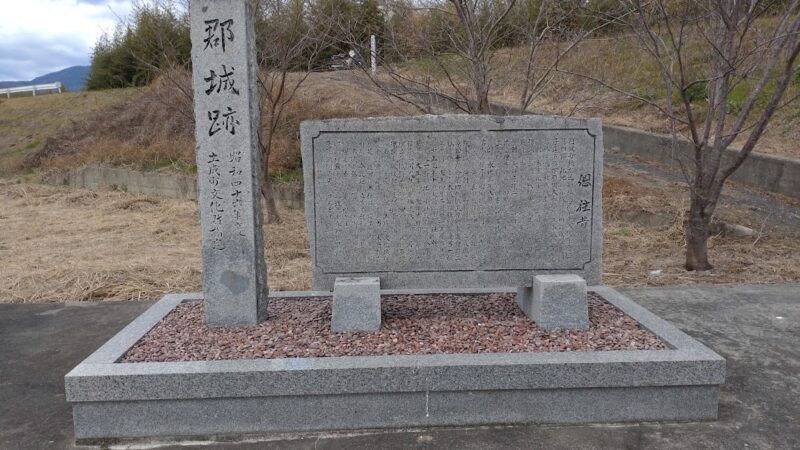
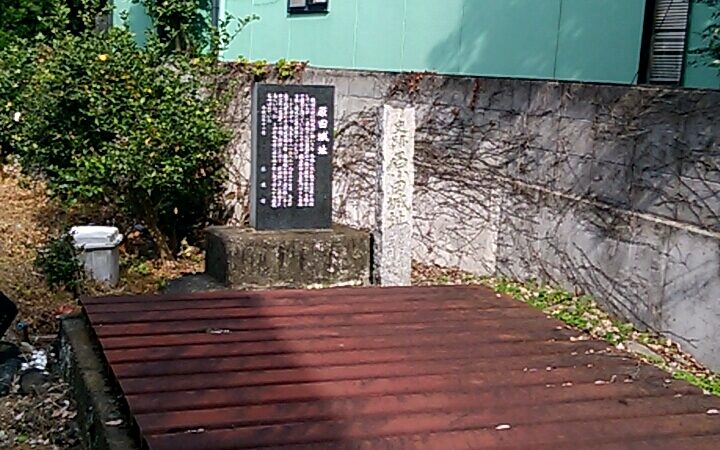
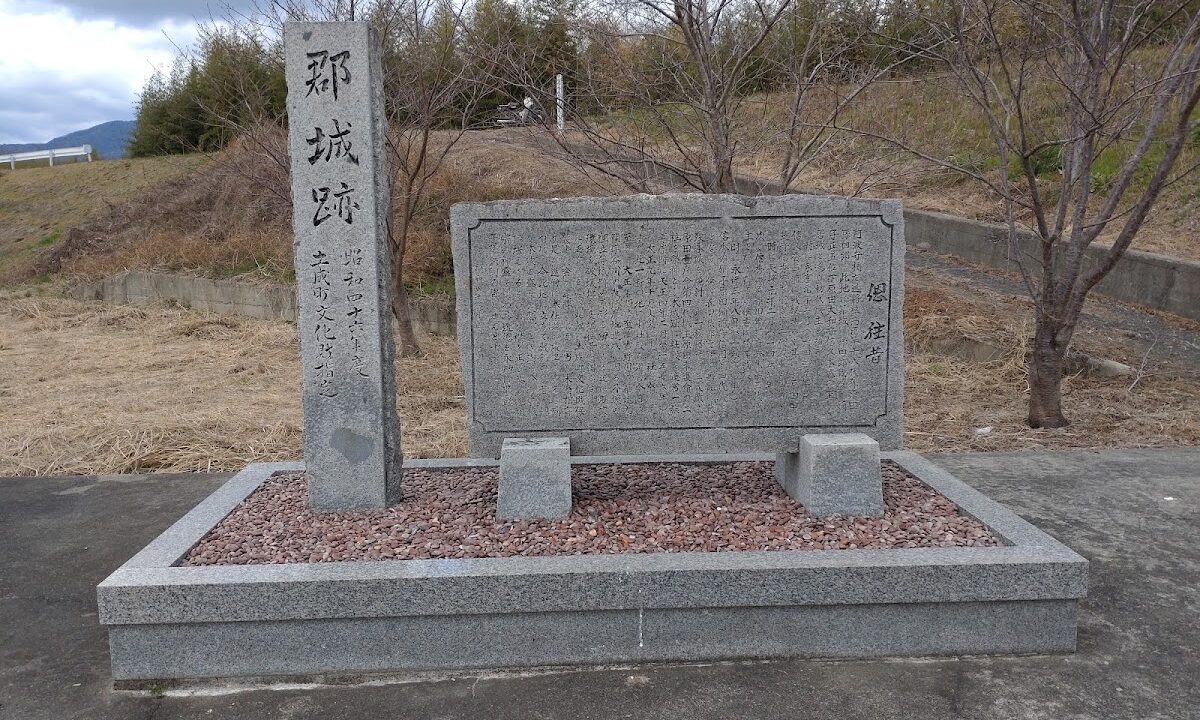
Currently, the remains of Kori Castle have been completely lost due to river improvement work, and only a stone monument remains at the foot of the embankment where the Kuzutani River and the Sashidani River merge with the Yoshino River. However, its historical value is still passed down by the local people.
Geography and Location of Kori Castle
Strategically Important Location in the Yoshino River Basin
Kori Castle was built on the north bank of the Yoshino River, which flows through northern Tokushima Prefecture. The Yoshino River, also known as Shikoku Saburo, is one of the largest rivers in Shikoku and has long been considered an important transportation route. Gunjo Castle was located at the confluence of the Yoshino River and its tributary, the Kuzutani River.
Awa City is located in the central northern part of Tokushima Prefecture, bordered by Kamiita Town to the east, Mima City to the west, Yoshinogawa City to the south, and Kagawa Prefecture to the north across the Sanuki Mountains. Due to these geographical conditions, Gunjo Castle is believed to have functioned as an important defensive base in northern Awa Province.
Topographical Characteristics of the River Confluence
The confluence of the Yoshino River and the Kuzutani River was a naturally fortified location suitable for building a castle. Being surrounded by rivers enhanced its defensive capabilities, and its location was also convenient for transporting goods using waterways.
However, this topography has been significantly altered by river improvements since modern times. Currently, the river channels, including the Sashidani River, have been changed, making it difficult to pinpoint the exact location of the former castle site.
History of Gunjo Castle
Construction Period and Lord
While there are few clear records regarding the construction period of Gunjo Castle, and many details remain unknown, it is presumed to have been under the influence of the Miyoshi clan, who ruled Awa Province during the Sengoku period. Awa Province was a region where the Miyoshi clan extended their power to the Kinai region during the Sengoku period, and Gunjo Castle is thought to have played a part in their control.
Donari Town is one of the areas that make up the current Awa City, and before the 2005 merger, it belonged to Itano District. This region was located on a transportation route connecting Awa and Sanuki (Kagawa Prefecture), and held a strategically and economically important position.
Awa Province and Gunjo Castle in the Sengoku Period
During the Sengoku period, Awa Province reached its peak under the Miyoshi clan during the reign of Nagayoshi, controlling a vast territory stretching from the Kinai region to Shikoku. Gunjo Castle was within the Miyoshi clan’s sphere of influence and is presumed to have functioned as a defense for northern Awa Province and as a countermeasure against attacks from the Sanuki region.
The Yoshino River basin was a region of fertile land with high agricultural productivity. It is believed that Gunjo Castle was maintained as a base for regional control, based on this economic foundation.
Abandonment and Disappearance
While there are no clear records of when Gunjo Castle was abandoned, after Toyotomi Hideyoshi’s conquest of Shikoku (Tensho 13, 1585), when the Hachisuka clan came to rule Awa Province, many small and medium-sized castles were abandoned. It is thought that Gunjo Castle also ceased to function around this time.
Subsequently, throughout the Edo period, the castle site was converted into farmland, and with modernization and river improvement projects after the Meiji Restoration, the remains were completely lost.
Current Site of Gunjo Castle
Location of the Stone Monument
Currently, the only remaining marker for Gunjo Castle is a stone monument erected below the embankment where the Kuzutani River and Sashidani River merge with the Yoshino River. This stone monument was erected to pass on the history of the region to future generations and serves as valuable evidence that a castle once stood on this site.
Access to the monument is via the embankment road along the Yoshino River in Gun, Donari-cho, Awa City. However, since no remains of the castle exist, opportunities to visit may be rare for anyone other than castle enthusiasts and history buffs.
Topographical Changes Due to River Improvement
The Yoshino River has historically been a river prone to repeated floods, and since modern times, large-scale river improvement projects have been carried out numerous times. This has straightened the river channel, constructed embankments, and significantly altered the former natural levees and the river’s meandering course.
The current topography at the confluence of the Kuzutani River and the Sashidani River is also thought to be significantly different from that of the Edo period and earlier. Therefore, reconstructing the accurate layout and scale of Gun Castle is extremely difficult.
Historical Background of Awa City
The Heisei Mergers and the Birth of Awa City
Awa City was formed on April 1, 2005 (Heisei 17), through the merger of four towns: Yoshino Town and Donari Town in Itano District, and Ichiba Town and Awa Town in Awa District. Donari Town, where the county castle is located, became part of Awa City as a result of this merger.
Before the merger, Donari Town belonged to Itano District and was a historical area with several medieval castle ruins in addition to the county castle. The current Awa City inherits the historical heritage of these various regions.
Historical Importance of the Yoshino River Basin
The Yoshino River basin has developed as a vital route for transportation and logistics since ancient times. Awa Province, also known as Awa Province in ancient times, was a region where agriculture, centered on rice cultivation, flourished. In the medieval period, it was under the rule of the Miyoshi clan, and in the early modern period, the Hachisuka clan, both powerful daimyo, and prospered as one of the political and economic centers of Shikoku.
Gunjo Castle functioned as a base for regional control within the history of the Yoshino River basin.
Regional Characteristics of Donari-cho, Awa City
Region Spreading at the Foot of the Sanuki Mountains
Donari-cho is located in the northern part of Awa City, spreading across the southern foothills of the Sanuki Mountains. It borders Kagawa Prefecture to the north, and a transportation route connecting Awa and Sanuki has passed through it since ancient times. This geographical condition is the background for the need for defensive bases like Gunjo Castle.
Present-day Donari-cho is a region where agriculture is the main industry, and agricultural products are produced taking advantage of the warm climate and fertile land. Awa City as a whole is known as one of the leading agricultural areas in the prefecture.
Historical Heritage of Donari-cho
Besides Gunjo Castle, Donari-cho has many historical sites scattered throughout the region from the medieval to early modern periods. Many of the local shrines and temples have long histories, conveying the region’s history to the present day.
Furthermore, Awa City, including Donari Town, is home to four temples of the Shikoku 88 Temple Pilgrimage: Jurakuji (Temple No. 7), Kumagaiji (Temple No. 8), Horinji (Temple No. 9), and Kirihataji (Temple No. 10). It is also known as a center of pilgrimage culture.
Tourism and Culture of Awa City
The World’s Three Great Earth Pillars: “Awa’s Earth Pillars”
Awa City’s representative tourist attraction is the “Awa’s Earth Pillars,” designated as a national natural monument. This spectacular formation, created over many years by erosion from rainwater, is known as one of the world’s three great earth pillars. Located in Sakuragaoka, Awa Town, it attracts many tourists.
Shikoku 88 Temple Pilgrimage
As mentioned above, Awa City is home to four temples of the Shikoku 88 Temple Pilgrimage, making it a popular destination for pilgrims. These temples possess high historical and cultural value and are an important element of the region’s identity.
Local Specialties and Agriculture
Awa City is a thriving agricultural area, producing high-quality vegetables under the brand name “Awa Veggie.” Taking advantage of its warm climate and fertile soil provided by the Yoshino River, it boasts the highest production volume of diverse agricultural products in Tokushima Prefecture, making it one of the leading agricultural regions in the prefecture.
Furthermore, Awa City has a traditional food culture of “Tarai Udon,” and hand-making experiences are offered as tourist programs.
Access and Transportation to Awa City
Public Transportation
There are no train stations within Awa City, but the nearest stations are Kamojima Station and Awa-Kawashima Station on the JR Tokushima Line in Yoshinogawa City. From these stations, you can reach Awa City by local bus or taxi.
Within the city, the “Awa City Demand-Responsive Shared Transportation” service operates and is used as a means of transportation for residents and visitors.
Access by Car
For access by car, the nearest interchange is the Donari Interchange on the Tokushima Expressway. From Tokushima City, it takes about 30 minutes to access via National Route 318 or prefectural roads.
To reach the site of the Kori Castle ruins monument, you will use the road along the Yoshino River in Kori, Donari-cho, Awa City. However, there are few landmarks, so it is recommended to check the location on a map beforehand.
Surrounding Castle Historical Sites
Medieval Castles in and around Awa City
In addition to Kori Castle, there are several other medieval castle ruins in Awa City and the surrounding area. Many of these were built during the Sengoku period by the Miyoshi clan or local lords. While few remains today, they are important historical sites for understanding the region’s history.
Same-period castle ruins are also scattered in neighboring areas such as Yoshinogawa City and Mima City, providing valuable resources for studying the medieval history of Awa Province.
Major Castles in Tokushima Prefecture
A representative castle of Tokushima Prefecture is Tokushima Castle (Iyama Castle) in Tokushima City. This castle served as the residence of the Hachisuka clan and was the center of Awa Province throughout the Edo period. Even today, the remains, such as the stone walls and moats, are well-preserved.
Furthermore, Mima City has the Wakimachi castle ruins, and Miyoshi City has Iwakura Castle, the base of the Miyoshi clan, making these important historical sites that tell the story of Tokushima Prefecture’s medieval history.
Historical Significance of Gunjo Castle
As a Regional Defense Base
Although Gunjo Castle is presumed to have been relatively small, it was a strategically important fortress that took advantage of its geographical location at the confluence of the Yoshino River and the Kuzutani River. It is believed to have played a crucial role in regional control, serving as a defense for northern Awa Province and a countermeasure against attacks from the Sanuki region.
A Key Point for River Transportation
The Yoshino River has long been an important water transport route, and Gunjo Castle was situated in a location that controlled this waterway. It is presumed to have had an economically important function as a base for monitoring and managing the transport of goods and the movement of people.
The Importance of Local History Research
Small to medium-sized castles like Gunjo Castle often have fewer records and are less researched compared to large castles. However, studying these local castles allows us to paint a more detailed historical picture of the realities of regional society during the Sengoku period, and the relationship between lords and local residents.
Although the remains of Gunjo Castle have been lost, its very existence is an important element in telling the history of Donari-cho, Awa City, and it is a historical heritage that should be passed down as part of the region’s identity.
Summary
Gunjo Castle, which once existed in Gunjo, Donari-cho, Awa City, Tokushima Prefecture, was a medieval castle built at the confluence of the Yoshino River and the Kuzutani River. Currently, due to river improvements, the remains have been completely lost, and only a stone monument below the embankment remains to commemorate its existence.
Thinking that Gunjo Castle functioned as a defensive base in northern Awa Province during the Sengoku period, it was not large in scale, but its geographically strategic location played an important role in regional control.
Awa City was formed through the large-scale municipal mergers of the Heisei era and is a region blessed with abundant nature and historical heritage along the Yoshino River basin. The Gunjo Castle ruins are one of the valuable historical sites that convey the history of this region to the present day, and are remembered by the local people.
While Awa City boasts many tourist attractions, such as the 88 temples of Shikoku and the Awa Earth Pillars, historical heritage like Gunjo Castle is also an indispensable element in understanding the region’s culture and history. Even though the remains have been lost, their historical significance should continue to be passed down through generations.