Kamono-Miyajo Castle (Miyoshi City, Tokushima Prefecture) Complete Guide: History, Access, and Highlights Explained in Detail
Kamono-Miyajo Castle, located in Miyoshi City, Tokushima Prefecture, is one of the important mountain castles of Awa Province during the Sengoku period. This article provides a detailed explanation of this historical castle, from its construction background to its current remains and how to visit.
What is Kamono-Miyajo Castle?: Basic Information and Overview
Kamono-Miyajo Castle is a medieval mountain castle located in Yamashiro-cho, Miyoshi City, Tokushima Prefecture. Built on a mountaintop approximately 300 meters above sea level, overlooking the Kamotani River basin, a tributary of the Yoshino River, it functioned as a strategic base controlling a key transportation hub in western Awa Province.
Basic Castle Data
- Location: Yamashiro-cho, Miyoshi City, Tokushima Prefecture (formerly Yamashiro-cho)
- Castle Structure: Mountain Castle
- Construction Period: Sengoku period (late 15th to 16th century)
- Builder: Estimated to be a local powerful family related to the Miyoshi clan
- Main Lords: Local powerful families (details below)
- Remains: Enclosures, earthworks, moats, etc.
- Designated Cultural Property: City-designated historical site (confirmation required)
The name Kamono-Miyagi Castle is believed to originate from a shrine (miya) that existed around the castle ruins, suggesting that the castle was closely connected to local religious beliefs.
History of Kamono-Miyagi Castle: From Construction to Abandonment
Background of Construction and Awa Province in the Sengoku Period
During the Sengoku period when Kamono-Miyagi Castle was built, Awa Province was within the sphere of influence of the Miyoshi clan. The Miyoshi clan rose to prominence as vassals of the Hosokawa clan and eventually expanded their power to the Kinai region, becoming known as a powerful daimyo during the Sengoku period.
Within Awa Province, the Miyoshi main family, along with numerous branch families and vassal groups, established castles throughout the region, serving as bases for governing their territory. Kamono-Miyagi Castle is believed to have been built as part of this Miyoshi clan system by a powerful local family.
Castle Location and Strategic Importance
The location of Kamono-Miyagi Castle was strategically important for the following reasons:
- Monitoring of Transportation Routes: Located along a tributary of the Yoshino River system, it could monitor transportation routes from western Awa Province to Sanuki Province (present-day Kagawa Prefecture).
- Center for Regional Control: Functioned as a base for controlling the agricultural productivity of the Kamotani region.
- Defense Network: Part of a defense system coordinated with surrounding mountain castles (numerous mountain castles exist within Miyoshi City).
Castle Lords and Changes in History
While historical records are limited and many details about the specific lords of Kamono-Miyagi Castle remain unclear, the following estimations have been made:
- Early Period: A local lord built the castle as a vassal of the Miyoshi clan.
- Heyday of the Miyoshi Clan: Functioned as a center for regional governance under the Miyoshi clan’s rule.
- Azuchi-Toyotomi Period: The role of castles changed with the unification of Shikoku by the Chosokabe clan and the pacification of Shikoku by Toyotomi Hideyoshi.
Period of Abandonment
Kamono-Miya Castle is presumed to have been abandoned either due to Toyotomi Hideyoshi’s “One Castle Per Province” decree after the pacification of Shikoku, or due to the castle reorganization in the early Edo period. Like many medieval mountain castles, it is thought to have ended its military role with the transition to early modern castles.
Remains of Kamono-Miya Castle: Highlights and Features
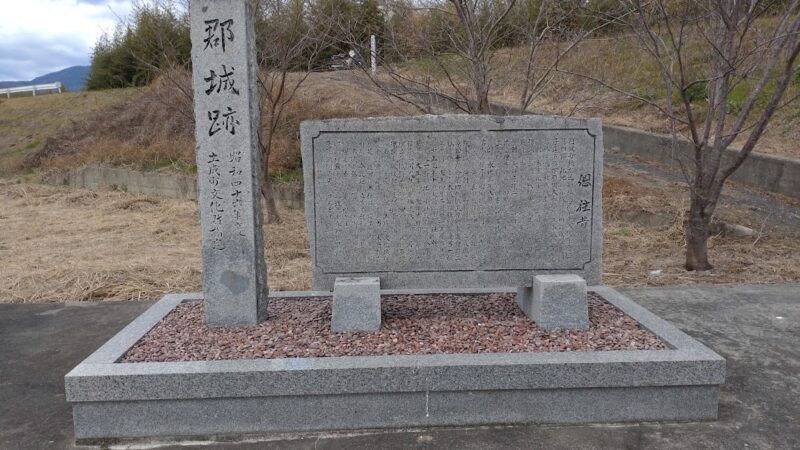
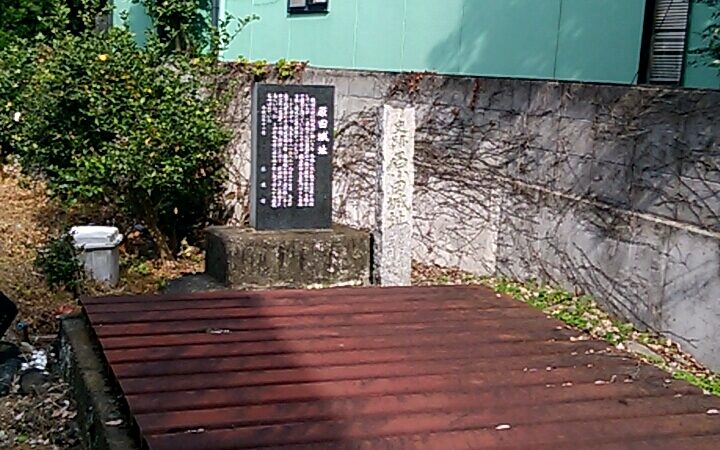
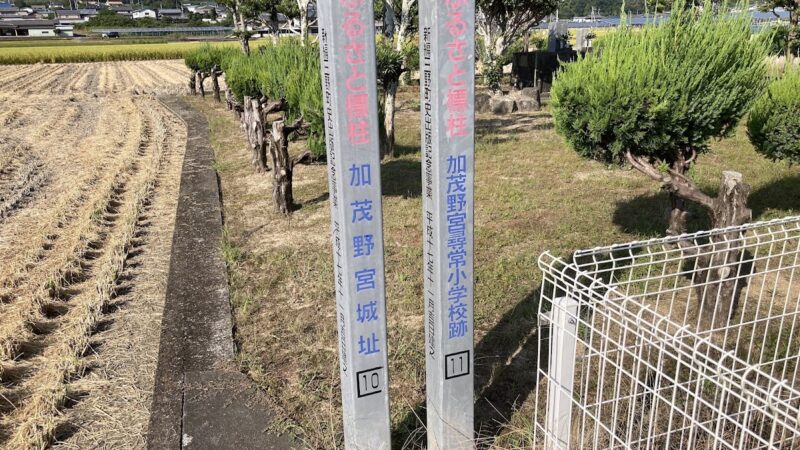
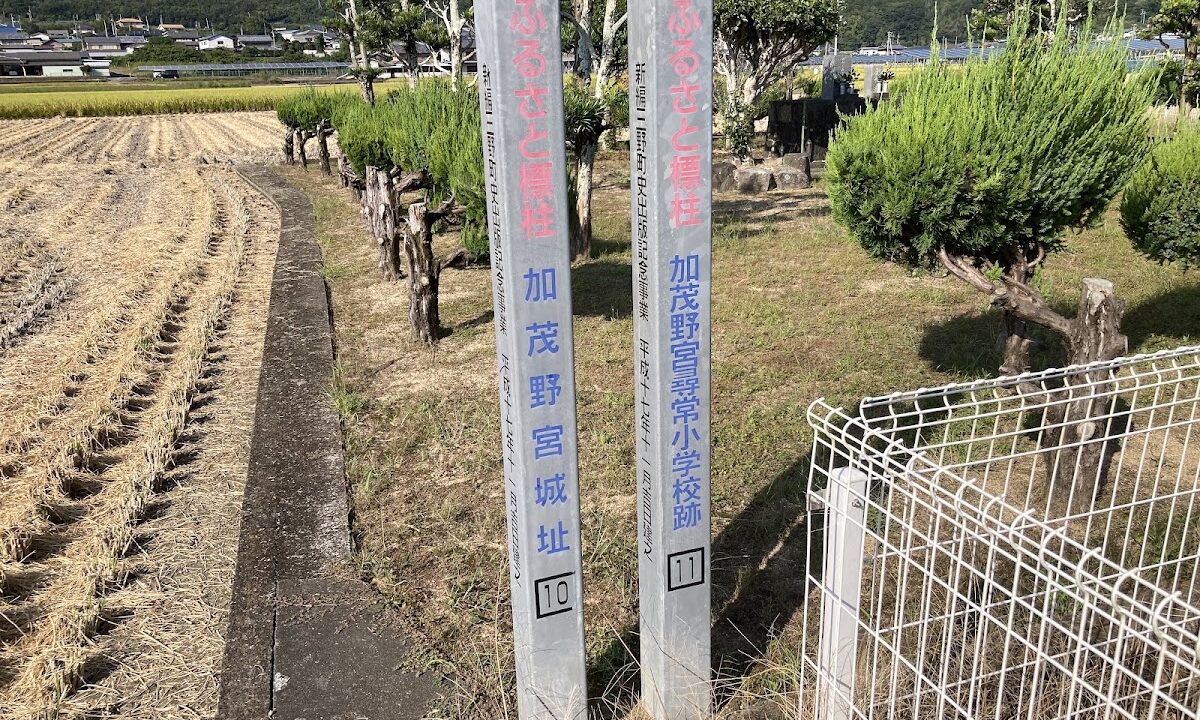
The current site of Kamono-Miya Castle retains remains that exhibit the characteristics of a mountain castle from the Sengoku period.
Main Enclosure (Honmaru) Area
The main enclosure, the central part of the castle, is located on a flat area at the mountaintop. It is presumed that the lord’s residence and command post were located here. Traces of earthworks can be seen around the main enclosure, indicating that it functioned as a defensive structure.
Arrangement of Enclosures
Several enclosures (flat areas) are arranged in a stepped pattern around the main enclosure. These are thought to have been used as:
- Defensive Positions: Positions designed to gradually prevent enemy incursions
- Soldier’s Garrison: Barracks for soldiers defending the castle
- Supply Storage: Facilities for storing weapons and food
Moats and Vertical Moats
Moats (ditches cutting across ridges), an important element of mountain castle defense, can be seen at the boundaries of the castle grounds. Vertical moats descending the slopes also partially remain, showing ingenuity in preventing lateral movement of the enemy.
Earthworks and Cut Slopes
Earthworks were built along the edges of the baileys, and cut slopes (artificially carved steep slopes) further enhanced defensive capabilities. These are typical defensive techniques of medieval mountain castles that did not use stone walls.
Structure of the Entrance (Koguchi)
The entrance to the castle, the koguchi, is presumed to have had a complex structure to prevent enemy incursions. The location of the koguchi can be estimated from changes in the terrain at the site.
How to Access Kamono Miyagi Castle
This guide provides access information for visiting the Kamono Miyagi Castle ruins.
Access by Public Transportation
By Train:
- The nearest stations are JR Dosan Line’s “Awakawaguchi Station” or “Awa-Kamo Station.”
- From the station, walk or take a taxi to the trailhead (distance and travel time vary depending on the trailhead).
Note: Public transportation is limited, so it is recommended to check the timetable in advance.
Access by Car
From Tokushima City:
- Head west on National Route 192 towards Miyoshi City.
- Travel time: Approximately 1 hour 30 minutes to 2 hours
From Kochi:
- Head north on National Route 32 towards Miyoshi City.
- Travel time: Approximately 1 hour to 1 hour 30 minutes
Parking: There may not be a dedicated parking lot for the castle ruins. When using parking spaces at local public facilities or shrines, please observe proper etiquette and be considerate of local residents.
Ascent Route
Kamono Miyagi Castle is a mountain castle, so you will need to hike from the trailhead to the castle ruins at the summit:
- Hiking Time: Approximately 30 minutes to 1 hour (varies depending on the trailhead and your physical condition)
- Difficulty: Intermediate (suitable for those familiar with mountain trails)
- Equipment: Trekking shoes, drinking water, map or GPS
Precautions for Visiting
- Maintenance Status: Castle ruins may be maintained as historical sites or left in their natural state. It is recommended to check the status with the Miyoshi City Board of Education beforehand.
- Season: In summer, vegetation grows thick, making it difficult to see the remains. Visiting from autumn to spring is recommended.
- Safety Measures: Avoid climbing alone; visiting in groups is recommended.
- Wildlife: Please be careful of wild boars, venomous snakes, etc.
- Weather: The ground can be slippery and dangerous during and after rain.
Attractions around Kamono-Miyagi Castle
When visiting Kamono-Miyagi Castle, you can enjoy a more fulfilling historical exploration by also visiting the surrounding tourist spots.
Other Mountain Castles in Miyoshi City
Numerous medieval mountain castles remain in Miyoshi City:
- Iwakura Castle: One of the important bases of the Miyoshi clan
- Shiraji Castle: A strategic point in western Awa Province
- Saijo Castle: A castle along the Yoshino River
Visiting these together will allow you to experience the network of castles in Awa Province during the Sengoku period.
Historical and Cultural Facilities in Miyoshi City
- Miyoshi City Historical and Folk Museum: A facility where you can learn about the history of the region
- Awa Ikeda Tobacco Museum: The history of the local industry
- Udatsu Townscape: A traditional building preservation district in Wakimachi
Natural Landscapes
- Oboke and Koboke: The beauty of the Yoshino River gorge
- Iya Kazurabashi Bridge: One of Japan’s three most unusual bridges
- Mt. Tsurugi: The second highest peak in Shikoku
Historical Significance and Modern Value of Kamono Miyagi
Importance in Local History
Kamono Miyagi is important in local history research for the following reasons:
- Miyoshi Clan’s Rule System: A concrete example showing how the Miyoshi clan governed Awa Province
- Typical Medieval Mountain Castle: A valuable site where you can learn about the structure of an earthen castle without using stone walls
- Relationship with the Local Community: Relationship between the Castle, Surrounding Settlements, and Religious Sites
Challenges of Preservation and Utilization
Like many medieval mountain castles, Kamono-Miyagi Castle faces the following challenges:
- Preservation of Remains: Deterioration of remains due to natural erosion and vegetation
- Research and Study: The need for academic archaeological excavations
- Tourism Utilization: Methods of utilization as a regional resource
- Passing on to Future Generations: Transmission of its value as a regional historical heritage site
Message to Castle Fans and History Enthusiasts
Kamono-Miyagi Castle is not as well-known as some famous castles, but that is precisely why it is a precious place where you can quietly appreciate the original landscape of a Sengoku period mountain castle. Here, you will find the true essence of historical exploration, different from that of a well-maintained tourist destination.
About the History of Miyoshi City and the Miyoshi Clan
Understanding the history of Miyoshi City and the Miyoshi clan is important for understanding Kamono-Miyagi Castle.
The Rise of the Miyoshi Clan
The Miyoshi clan was originally a minor local lord in Awa Province, but rose to prominence as vassals of the Hosokawa clan. In particular, during the time of Miyoshi Nagayoshi, they gained control of the Kinai region and effectively controlled the Muromachi Shogunate.
The Miyoshi Clan in Awa Province
Awa Province was the Miyoshi clan’s base and a crucial rear base for their expansion into the Kinai region. Within the province, the family and their vassals built numerous castles, establishing a strong system of control.
The Decline of the Miyoshi Clan and the Chosokabe Clan
After the death of Miyoshi Nagayoshi, the Miyoshi clan declined due to internal conflicts and the rise of Oda Nobunaga. Subsequently, Chosokabe Motochika of Tosa Province unified Shikoku, and Awa Province also came under the control of the Chosokabe clan.
Awa Province under the Toyotomi Regime
After Toyotomi Hideyoshi’s conquest of Shikoku, Awa Province became the territory of the Hachisuka clan, and a modern system of governance centered around Tokushima Castle was established. As a result, medieval mountain castles like Kamono-Miyagi Castle lost their military role.
How to Enjoy Visiting Mountain Castles: A Beginner’s Guide
This section introduces ways to enjoy visiting mountain castles like Kamono-Miyagi Castle.
Preparations
- Learning History: Learning about the castle’s history and historical context will deepen your understanding on-site.
- Obtaining Topographic Maps: Prepare topographic maps from the Geospatial Information Authority of Japan and castle-related materials.
- Checking Equipment: Ensure you are wearing appropriate clothing and equipment.
Observation Points on-site
- Utilization of Topography: Observe how the castle utilizes the natural terrain.
- Confirming Remains: Look for defensive structures such as baileys, moats, and earthworks.
- Confirming the View: Consider what could be seen from the castle and what was being monitored.
- Using Your Imagination: Imagine the castle and the lives of the people at that time.
How to Record Your Findings
- Photography: Record the distinctive features of the remains.
- Sketching: Try drawing your own layout plan (castle floor plan).
- Notes: Record anything you notice or think about.
Castle Culture and Mountain Castle Tours in Tokushima Prefecture
Tokushima Prefecture is a treasure trove of mountain castles, with numerous medieval castles remaining within the prefecture.
Major Mountain Castles of Tokushima Prefecture
- Ichinomiya Castle (Tokushima City): An important base in Awa Province
- Katsuzui Castle (Aizumi Town): One of the bases of the Miyoshi clan
- Muya Castle (Naruto City): Has elements of a coastal castle
- Ushiki Castle (Anan City): A strategic point in the south
Suggested Mountain Castle Tour Route
Mountain castle tour route centered around Miyoshi City:
Day 1:
- Morning: Kamono Miyagi Castle
- Afternoon: Iwakura Castle or Shiroji Castle
Day 2:
- Morning: Study at Miyoshi City Historical and Folk Museum
- Afternoon: Nearby tourist attractions (Oboke, Koboke, etc.)
Mountain Castle Tour Communities
By joining a community of castle enthusiasts, you can exchange information and have opportunities for joint explorations:
- Japan Castle Association: A nationwide organization of castle enthusiasts
- Local History Research Association: Research groups in Miyoshi City and Tokushima Prefecture
- SNS: Information exchange via Twitter, Instagram, Facebook, etc.
Summary: The Charm and Value of Visiting Kamono-Miyagi Castle
Kamono-Miyagi Castle, a Sengoku period mountain castle remaining in Miyoshi City, Tokushima Prefecture, possesses the following attractions:
- Historical Value: A site that tells the story of the Miyoshi clan’s rule and the history of Awa Province
- Preservation of Remains: The typical structure of a medieval mountain castle can be observed on-site
- Harmony with Nature: Experience the wisdom of castle construction that utilizes the mountain terrain
- The Joy of Exploration: A quiet historical exploration unspoiled by tourism
Visiting Kamono-Miyagi Castle is not merely sightseeing; it is a historical experience that touches upon the lives and strategic thinking of people in the Sengoku period. With proper preparation and consideration for safety, it will be a valuable opportunity to truly appreciate the depth of Japanese castle culture.
As one of Miyoshi City’s rich historical treasures, Kamono Miyagi Castle will continue to convey its value as a source of local pride and a place of exploration for history enthusiasts. When you visit Tokushima Prefecture, be sure to stop by this little-known mountain castle. New discoveries and unforgettable experiences await you.