The History and Remains of Kuchita Castle (Awa City, Tokushima Prefecture) – A Complete Overview of a Mountain Castle that Survived from the Nanboku-cho Period to the Sengoku Period
Kuchita Castle, located in Awa-cho, Awa City, Tokushima Prefecture, is a mountain castle that played an important role as a strategic point in western Awa Province from the Nanboku-cho period to the Sengoku period. Situated at the southern foot of the Sanuki Mountains, and built on a strategic location overlooking the Yoshino River basin, this castle served as the residence of the Onodera clan and was the political and military center of western Awa Province for approximately 220 years.
This article provides a comprehensive explanation of this historical mountain castle, including its detailed history, castle structure, the current state of its remains, and how to access the site.
Overview and Location of Kuchita Castle
Basic Information
Kuchita Castle is a medieval mountain castle located in Kuchita, Awa-cho, Awa City, Tokushima Prefecture. Also known as “Kuchida Castle,” it functioned as an important strategic fortress in western Awa Province.
Location: Kuchida, Awa-cho, Awa City, Tokushima Prefecture
Castle Type: Mountain Castle
Construction Period: Before the Nanboku-cho period
Main Lord: Onodera clan
Year of Abandonment: Tensho 10 (1582)
Geographical Characteristics
Awa-cho, Awa City, is located in the northern part of Tokushima Prefecture, forming the western part of Awa City. The Yoshino River, one of the three major rivers of Shikoku, flows along its southern end, and the northern part is characterized by the mountain range of the Sanuki Mountains. Kuchida Castle was built on a mountaintop approximately 200 meters above sea level at the southern foot of the Sanuki Mountains, offering an excellent location with panoramic views of the Yoshino River basin and the surrounding plains.
Located at a strategic transportation hub bordering Mima City to the west, Yoshinogawa City across the Yoshino River to the south, and the Ichiba district of Awa City to the north and east, it has historically been an important point connecting the western and eastern parts of Awa Province. The surrounding area is covered with rice paddies and has developed as an agricultural region blessed with fertile land and a mild climate.
History of Kuchida Castle
Western Awa Province Before the Castle’s Construction
The western part of Awa Province, where Kuchida Castle was built, has been considered an important transportation hub since ancient times. This region, where water transport on the Yoshino River intersects with land routes, lies on a route connecting the Kinai region and Shikoku, playing a politically and economically significant role.
From the late Heian period to the Kamakura period, the Minamoto and Taira clans advanced into Awa Province, and local lords were established in various locations. Kuchida was no exception, and it is believed to have developed as a manor controlled by local powerful families.
The Nanboku-cho Period and the Arrival of the Onodera Clan
The most important turning point in the history of Kuchida Castle was the arrival of the Onodera clan during the Nanboku-cho period.
In 1362 (Jōji 1st year/Shōhei 17th year), Onodera Hachirō Kurōdo descended from Ōshū (present-day Tohoku region) to Awa Province as a general of the Southern Court. Onodera Hachirō Kurōdo, who was granted five estates by the Southern Court—Kuchida, Katsumei, Nakano, Nishinogawa, and Ōmata—established Kuchida Castle as his base of operations and built his power base in this region.
During this period, the Nanboku-cho period of intense conflict between the Southern and Northern Courts was raging throughout Japan, and conflict between the two forces was also unfolding in Awa Province. The placement of the Onodera clan in western Awa Province as a Southern Court supporter is thought to have been part of the Southern Court’s strategy to maintain its power in Shikoku.
Kuchida Castle in the Muromachi Period
After the unification of the Northern and Southern Courts, Awa Province came under the control of the Hosokawa clan during the Muromachi period. However, the Onodera clan maintained their power as local lords, using Kuchida Castle as their base.
Throughout the Muromachi period, the Onodera clan grew into a powerful local lord controlling Gokasho. Kuchida Castle functioned not only as a military base but also as a center for territorial management, playing a role in managing agricultural production in the surrounding area.
It is believed that the castle’s fortifications were also developed during this period, and the basic structure of a medieval mountain castle, with multiple baileys arranged around the main bailey at the mountaintop, was likely formed.
The Sengoku Period and the Invasion of the Chosokabe Clan
With the arrival of the Sengoku period, the entire Shikoku region was engulfed in fierce warfare. In particular, Chosokabe Motochika, who unified Tosa Province (present-day Kochi Prefecture), expanded his power with the aim of unifying Shikoku, and Awa Province became a target of his invasion.
In Tensho 10 (1582), during the time of Onodera Bichu-no-kami Tsuguyoshi, Kuchida Castle was attacked by a large army of the Chosokabe clan. At this time, Chosokabe Motochika was advancing his conquest of Awa Province, forcing local lords to surrender one after another.
After a fierce battle, Kuchida Castle fell, and Onodera Bichu-no-kami Tsuguyoshi abandoned the castle and fled to Ichiu in Mima District (present-day Ichiu area, Mima City). This marked the end of Kuchida Castle’s history as the Onodera clan’s residence for approximately 220 years.
Kuchida Castle After its Demolition
In Tensho 13 (1585), Toyotomi Hideyoshi’s conquest of Shikoku took place, and the Chosokabe clan was reduced to Tosa Province. Hachisuka Iemasa was appointed to Awa Province, and began governing the province from Tokushima Castle.
During this process, medieval mountain castles like Kuchida Castle lost their strategic value and were abandoned. From the Edo period onward, the castle sites became forests, and only remnants of the original structure remain to this day.
Kuchida Castle’s Fortification Structure and Remains
Layout and Structure
Kuchida Castle is a typical medieval mountain castle built on an isolated mountaintop at the southern foot of the Sanuki Mountains. The main enclosure is located on the mountaintop at an altitude of approximately 200 meters, with multiple enclosures arranged radially from it.
Main Components:
- Main Enclosure (Honmaru): The central part of the castle located on the mountaintop, presumed to be the residence of the castle lord.
- Second Enclosure: A defensive enclosure surrounding the main enclosure.
- Third Enclosure: A group of enclosures located further outside.
- Moat: A defensive structure dug to block the ridge.
- Earthwork: An earthen wall built around the enclosures.
Existing Remains
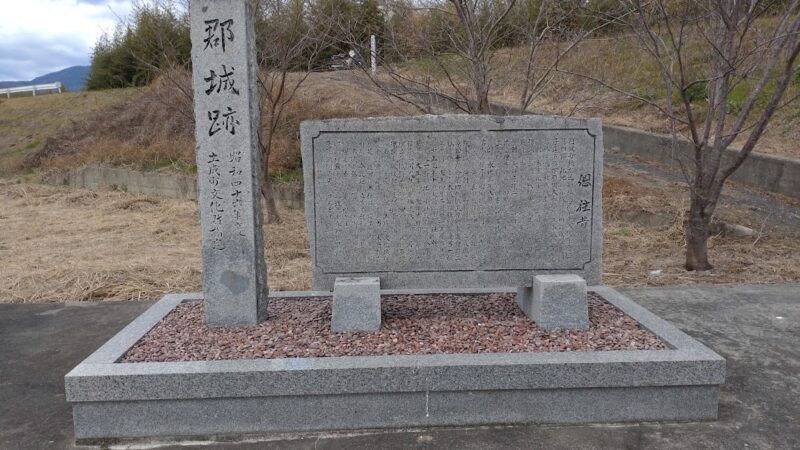
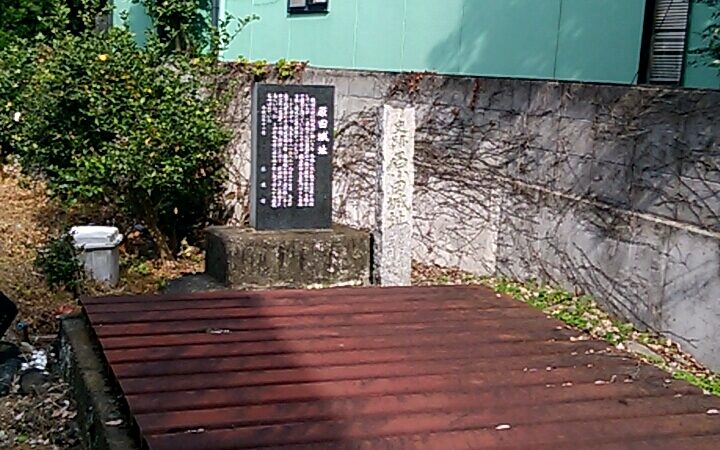
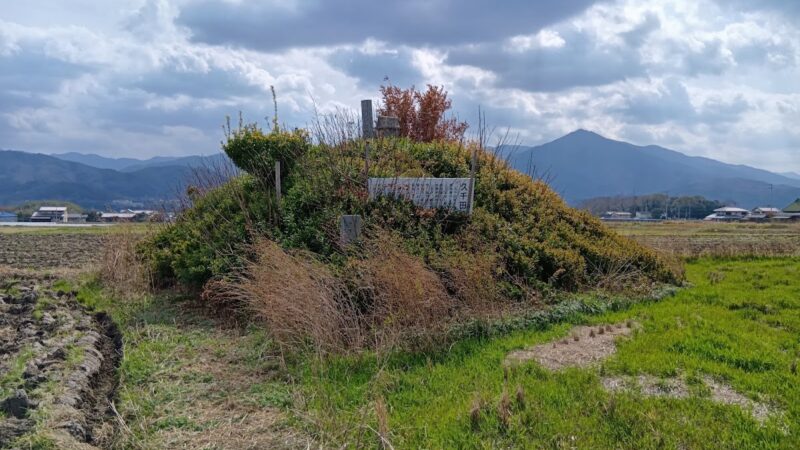
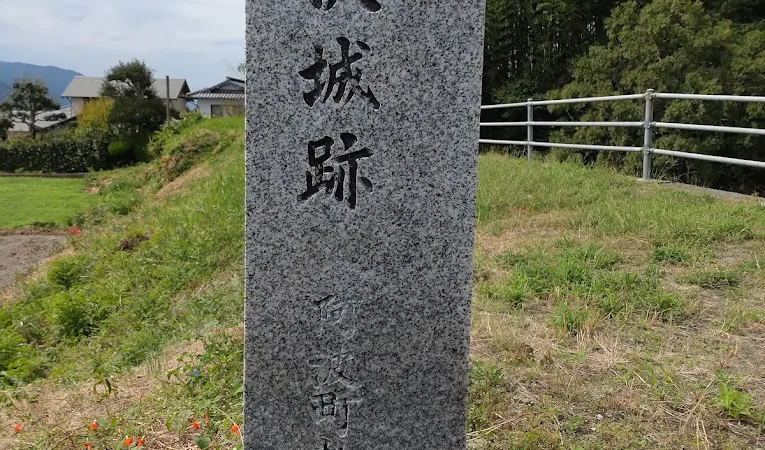
Currently, the remains of the Kuchida Castle site are well-preserved, exhibiting characteristics of a medieval mountain castle.
Main Enclosure Site: Clearly identifiable as a flat area on the mountaintop, with traces of earthworks visible around it. The main enclosure is estimated to be approximately 30 meters east-west and 25 meters north-south.
Group of Enclosures: Multiple enclosures descending in steps from the main enclosure are visible, each clearly demarcated by a cliff face. These enclosures are thought to have served not only as defensive structures but also as places for garrisoning soldiers and storing supplies.
Moat: Clear moats remain along the ridge, demonstrating ingenuity in preventing enemy intrusion. While the moats are currently about 2-3 meters deep, they are presumed to have been deeper at the time of construction.
Vertical Moats: Vertical moats dug along the slopes can also be partially identified, indicating the presence of defensive structures characteristic of mountain castles.
Castle Town and Related Facilities
It is believed that a castle town settlement was formed at the foot of the mountain where Kuchida Castle stood. The current Kuchida district of Awa Town may still retain some remnants of the original land divisions and road layouts.
Furthermore, the family temple of the castle lord, the Onodera clan, and the remains of the residences of their retainers may have existed in the surrounding area, but detailed investigation remains a task for the future.
About the Onodera Clan
Origins of the Oshu Onodera Clan
The Onodera clan, who became lords of Kuchida Castle, were originally a powerful samurai group in Oshu (Tohoku region). The Onodera clan was a prominent family that held power from southern Akita Prefecture to southern Iwate Prefecture, and their influence lasted from the Kamakura period to the Sengoku period.
It is believed that Onodera Hachiro Kurōdo’s move to Awa Province during the Nanboku-chō period was driven by a strategy to expand his influence in Shikoku as a general of the Southern Court. Having moved from distant Oshu to Awa Province, the Onodera clan established a new power base in this region.
Development of the Awa Onodera Clan
The Onodera clan, having settled in Awa Province, grew into a powerful local lord, controlling the five areas of Gokasho (Hisako, Katsumyo, Nakano, Nishinogawa, and Ōmata) from their base at Kuchida Castle.
From the Muromachi period to the Sengoku period, the Onodera clan was an important force in western Awa Province, managing their territory while maintaining relationships with powerful shugo (provincial governor) and shugodai (deputy governor) forces such as the Hosokawa and Miyoshi clans.
By fulfilling diverse roles as lords, including agricultural production management, flood control, and protection of temples and shrines, they maintained control of the region for approximately 220 years, demonstrating the high level of their governing ability.
The End of the Onodera Clan and its Descendants
In 1582, Onodera Bichu-no-kami Tsuguyoshi lost Kuchida Castle in an attack by the Chosokabe clan and fled to Ichiu in Mima District. While much of the subsequent fate of the Onodera clan remains unclear, it is said that some members settled and survived in Mima District.
Traditions and place names related to the Onodera clan remain in the Kuchida area, attesting to the significant influence this family had on the region.
Historical Background of Kuchida Castle and its Surroundings
Awa Province during the Nanboku-cho Period
Awa Province during the Nanboku-cho period was one of the fierce battlegrounds where the forces of the Southern and Northern Courts were evenly matched. The year 1362, when the Onodera clan entered Kuchida Castle as part of the Southern Court’s forces, coincided with a period of intense conflict between the two sides.
In Awa Province, the Hosokawa clan held power as part of the Northern Court’s forces, while the Southern Court continued to resist by establishing bases in various locations. The entry of the Onodera clan is thought to have been an important strategic move by the Southern Court to maintain its power in western Awa Province.
Situation in Shikoku during the Sengoku Period
With the arrival of the Sengoku period, Shikoku became a region where powerful daimyo such as the Miyoshi, Chosokabe, Kono, and Saionji clans vied for power. In particular, Chosokabe Motochika of Tosa rapidly expanded his power during the Tensho era and began invading various provinces with the aim of unifying Shikoku.
Awa Province was the stronghold of the Miyoshi clan, but with the decline of the Miyoshi clan, it came under attack from the Chosokabe clan. The fall of Kuchida Castle was an event that occurred within this major historical context.
Toyotomi Hideyoshi’s Shikoku Campaign and the Transformation of Awa Province
In 1585, Toyotomi Hideyoshi dispatched a large army to Shikoku to subdue the Chosokabe clan, who had unified the province. As a result of this campaign, the Chosokabe clan’s territory was reduced to Tosa Province, and Hachisuka Iemasa was appointed to Awa Province.
This marked a transition to a system of governance under early modern daimyo in Awa Province, and medieval mountain castles like Kuchida Castle lost their strategic value and were abandoned. The Hachisuka clan established their domain through early modern castles, centered around Tokushima Castle, and established their rule over the territory through early modern castles.
History and Culture of Awa-cho, Awa City
Origins of Awa-cho
Awa-cho, where Kuchida Castle is located, has long developed as the central hub of western Awa Province. Blessed with abundant water resources from the Yoshino River and fertile land, it has been a thriving agricultural area since ancient times.
In the Middle Ages, it was the territory of the Onodera clan, centered around Kuchida Castle, and in the early modern period, it developed as an agricultural area under the rule of the Tokushima Domain. With the implementation of the town and village system in the Meiji era, Awa-cho was established, and in the Heisei-era mergers, it became part of Awa City.
Formation of Awa City
On April 1, 2005, Awa City was formed through the merger of four towns: Yoshino-cho and Donari-cho in Itano District, and Ichiba-cho and Awa-cho in Awa District. Located in the northeastern part of Tokushima Prefecture, Awa City is characterized by its rich natural environment and agricultural area on the north bank of the Yoshino River.
Awa City, nestled against the Sanuki Mountains and overlooking the Yoshino River, is blessed with abundant water and greenery. Its mild climate and fertile land contribute to its thriving agriculture, making it one of Tokushima Prefecture’s leading agricultural areas, boasting the highest production volume in the prefecture for a variety of crops.
Surrounding Historical Sites
Besides Kuchida Castle, many historical sites remain in Awa-cho, Awa City, and the surrounding areas.
Saiko-ji Temple: An ancient temple located in Awa-cho, with a long history as a center of local faith.
Awa Earth Pillars: A representative natural landscape of Awa-cho, these are spectacular formations, 10 to 18 meters high, formed by the erosion of sandstone layers approximately 1.3 million years ago. Only three such formations exist in the world, and in Japan, they are found only in Awa-cho.
Shikoku 88 Temple Pilgrimage: Awa City contains temples of the Shikoku 88 Temple Pilgrimage, and the pilgrimage culture continues to thrive here.
Access and Visiting Information for Kuchida Castle
Transportation Access
Access by Car:
- Approximately 20 minutes from the Tokushima Expressway “Donari IC” via National Route 318
- Approximately 40 minutes from central Tokushima City via National Route 192 and prefectural roads
- Parking: There is no designated parking area around the castle ruins, so consideration for local residents is necessary.
Access by Public Transportation:
- Approximately 20 minutes by bus or taxi from JR Tokushima Line “Kamojima Station”
- There are also bus services from Tokushima City, but the number of services is limited, so advance confirmation is necessary.
Precautions for Visiting
Kuchida Castle is a mountain castle, and hiking equipment and preparation are necessary.
Clothing and Equipment:
- Comfortable clothing and hiking boots or trekking shoes
- Drinking water and snacks
- Map and compass (or GPS-enabled smartphone)
- Insect repellent (especially from spring to autumn)
Safety Precautions:
- Avoid hiking alone; hike in groups whenever possible
- Avoid hiking in bad weather
- Be careful not to damage the ruins
- Do not trespass on private property owned by locals
Points to Note When visiting the Kuchida Castle Ruins, paying attention to the following points will help you understand the castle’s history more deeply.
- Location and View of the Main Enclosure: From the main enclosure at the mountaintop, one can enjoy a panoramic view of the Yoshino River basin and the surrounding plains, clearly demonstrating its strategic location.
- Arrangement of the Enclosures: The terraced arrangement of the enclosures provides a tangible understanding of the defensive structure of a medieval mountain castle.
- Structure of the Moats: The moats blocking the ridge are noteworthy as a clever way to prevent enemy intrusion.
- Surrounding Topography: Observing the relationship between the castle’s location and the surrounding topography allows us to understand the strategic thinking of the castle’s builder.
Historical Significance of Kuchida Castle
As a Regional Control Base during the Nanboku-cho Period
Kuchida Castle played a crucial role as a regional control base for the Southern Court during the Nanboku-cho period. The placement of the Onodera clan in Awa Province, far from Oshu, demonstrates its importance in the Southern Court’s Shikoku strategy.
The Onodera clan, granted a vast territory of Gokasho, contributed not only to the defense of a military base but also to the governance and development of the region. The history of Kuchida Castle and the Onodera clan is a valuable case study for understanding the realities of local governance in the medieval period.
A Typical Example of a Medieval Mountain Castle
The layout and structure of Kuchida Castle exhibit typical characteristics of a medieval mountain castle. The arrangement of baileys centered around the main enclosure, defensive facilities such as moats and vertical trenches, and construction techniques that skillfully utilize the terrain make it an important resource for the study of medieval castles.
In particular, its continuous use for approximately 220 years, from the Nanboku-cho period to the Sengoku period, offers the possibility of discerning changes in castle structure over time, and further detailed investigations are anticipated.
Importance in Regional History
The history of Kuchida Castle and the Onodera clan is an indispensable element in the regional history of western Awa Province. The history of Kuchida Castle provides important clues for understanding the political and social transformations during the transition from the medieval to the early modern period in this region.
Furthermore, the fall of Kuchida Castle as part of the Chosokabe clan’s conquest of Awa Province during their unification of Shikoku is a significant event for understanding the situation in Shikoku during the Sengoku period.
Current Status and Challenges of Kuchida Castle Research
Current Research Status
Research on Kuchida Castle has primarily been conducted within the context of regional history and castle research. However, large-scale archaeological excavations have not been carried out, and research has mainly relied on historical documents and field surveys.
Castle research websites such as “Castle Wanderings” and research reports by regional history researchers are the main sources of information, and detailed academic research remains a challenge for the future.
Future Research Topics
The following research is needed for a more detailed understanding of Kuchida Castle:
Archaeological Investigation: Detailed understanding of the remains through excavation and dating based on unearthed artifacts.
Excavation of Historical Documents: Discovery and analysis of new historical materials concerning the Onodera clan and Kuchida Castle.
Fortress Layout Survey: Creation of a detailed layout map using the latest surveying techniques.
Investigation of Relationships with Surrounding Sites: Investigation of remains of the castle town and related facilities.
Comparative Study: Clarification of the characteristics of Kuchida Castle through comparison with medieval mountain castles in other regions.
Preservation and Utilization
The preservation and utilization of the Kuchida Castle ruins are also important issues. Appropriate preservation measures are necessary to pass on the valuable remains of this medieval mountain castle to future generations. At the same time, it is hoped that it will be utilized as a regional historical resource for tourism and education.
If the city of Awa designates it as a cultural property, installs information boards, and develops hiking trails, more people will have the opportunity to learn about the history of Kuchida Castle.
Summary
Kuchida Castle, located in Awa-cho, Awa City, Tokushima Prefecture, was a mountain castle that served as the residence of the Onodera clan from the Nanboku-cho period to the Sengoku period, and was an important historical base in western Awa Province.
From 1362, when Onodera Hachiro Kurōdo descended from Ōshū and was granted Gokashō as a staunch supporter of the Southern Court, until its fall to the Chōsokabe clan in 1582, the Onodera clan played a prominent role as powerful local lords in western Awa Province for approximately 220 years.
Even today, the remains of the main enclosure, baileys, and moats are well-preserved on the mountaintop, making it a valuable historical site for understanding the structure of medieval mountain castles. Built on a strategically important location at the southern foot of the Sanuki Mountains, Kuchida Castle boasted an excellent location overlooking the Yoshino River basin, functioning not only as a military base but also as a center of regional control.
The history of Kuchida Castle is a valuable example of how local castles and feudal lords survived amidst the major currents of Japanese history: the turmoil of the Northern and Southern Courts, regional rule during the Muromachi period, the warring states of the Sengoku period, and the unification of Japan by Toyotomi Hideyoshi.
When visiting Awa City, why not also visit this historic mountain castle site, along with other tourist attractions such as the Awa Earth Pillars? You’ll be able to enjoy the view from the mountaintop and feel the weight of history etched into it.