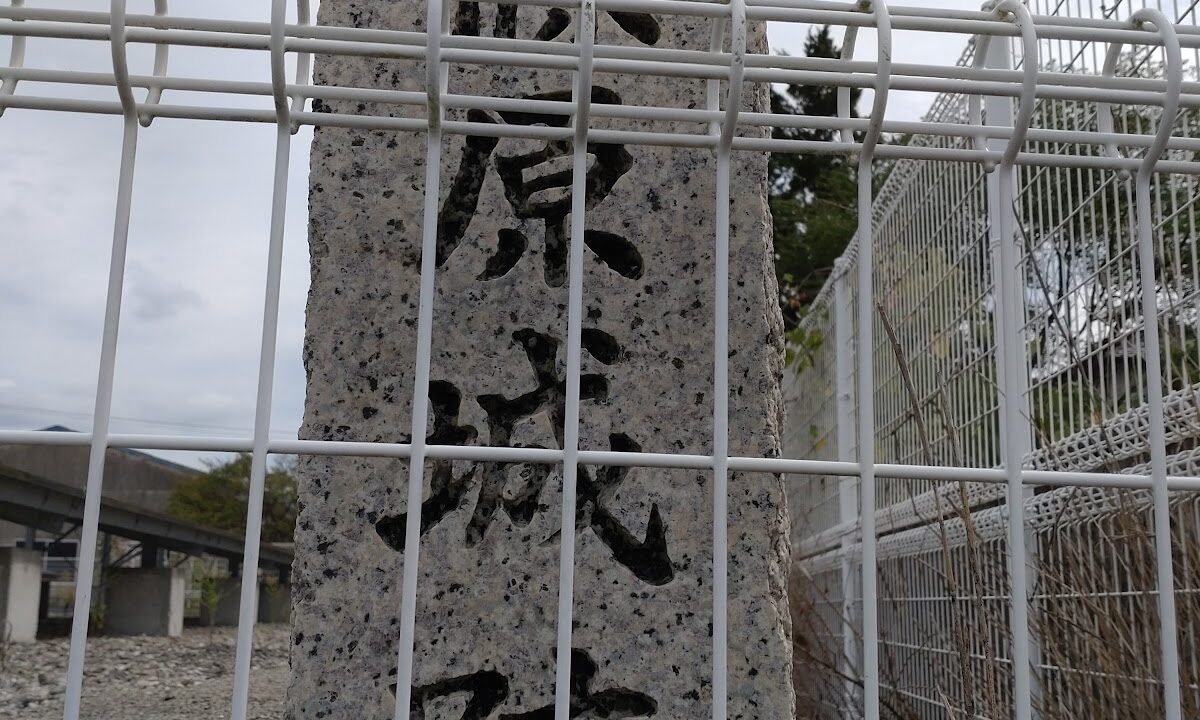
Shinohara Castle (Awa City, Tokushima Prefecture) Complete Guide | History, Highlights, and Access Information
Shinohara Castle is a medieval castle site located in Kakihara, Yoshino-cho, Awa City, Tokushima Prefecture. Also known as “Shinohara Yashiki,” it is now the grounds of a local shrine, but was once the residence of a powerful warlord of Awa Province. This article comprehensively explains information useful for castle enthusiasts and history buffs, from the historical background of Shinohara Castle to the remaining structures and highlights for visitors.
Overview and Basic Information of Shinohara Castle
Shinohara Castle is a flatland castle (residence) located on the north bank of the Yoshino River in Awa City, Tokushima Prefecture, and was one of the regional power centers of Awa Province during the medieval period. While not large in scale as a castle, it is an important historical site for understanding the medieval history of the Awa region.
Basic Data
- Location: Kakihara, Yoshino-cho, Awa City, Tokushima Prefecture
- Alternate Name: Shinohara Yashiki
- Castle Classification: Flatland Castle (Residence)
- Construction Period: Details unknown (Estimated to be medieval period)
- Lord: Tachibana Tadamasa, Shinohara (Various theories exist)
- Current Status: Shrine grounds, residential area
- Remains: Moat remains (pond), stone monument
- Designated Cultural Property: None
History and Lords of Shinohara Castle
Shinohara Castle as Seen in Documents
Regarding the detailed construction period and lords of Shinohara Castle, reliable historical sources are scarce, and different descriptions can be found in multiple documents. According to “Medieval Castles and Residences of Tokushima Prefecture,” there are two theories regarding the lord of this castle.
“Awa-shi” identifies Tachibana Tadamasa as the lord. The Tachibana clan was a prominent family from ancient times, and there were samurai groups of the Tachibana clan within Awa Province. On the other hand, the “Awa County History” lists Shinohara (someone) as the castle lord, suggesting the possibility that the Shinohara clan was the lord, given the connection to the place name.
The Position of Shinohara Castle in Awa Province
Medieval Awa Province was a region where powerful warlords, including the Miyoshi clan, held sway. The area north of the Yoshino River, where Shinohara Castle is located, was a crucial transportation hub connecting the central part of Awa Province with Sanuki Province, and is thought to have been a strategically important base despite its small size.
The place name Shinohara is highly likely to originate from the Shinohara clan, who were the developers of this region, and it is presumed that it functioned as the residence of a local lord who ruled this area from the late Heian period to the Kamakura period.
Changes After the Sengoku Period
During the Sengoku period, Awa Province came under the control of the Miyoshi clan and was further invaded by the Chosokabe clan. Following Toyotomi Hideyoshi’s conquest of Shikoku, the Hachisuka clan became the rulers of Awa Province. While the exact date of Shinohara Castle’s abandonment is unclear, it is believed that by the early Edo period, it had already lost its function as a castle and become part of a settlement.
Structure and Layout of Shinohara Castle
Scale and Form of the Castle
Shinohara Castle is a typical medieval flatland castle (residence), lacking the complex layout of large mountain castles or early modern castles. The current grounds of the An’nai Shrine are thought to roughly correspond to the castle’s area, indicating a relatively small scale.
According to the “Comprehensive Survey of Japanese Castles,” a dry moat and earthen ramparts once existed, but the ramparts are no longer visible. It is believed that many remains have been lost due to years of development and the construction of the shrine.
Traces of a Water Moat
Currently, the most clearly remaining trace of Shinohara Castle is the pond located on the south side of the An’nai Shrine grounds. This pond is thought to be a remnant of the castle’s moat, and is featured as a moat site on castle information websites such as “Castle Wanderings” and “Castle Siege Group.”
In medieval residences, it was common to surround them with moats as a defensive feature. Based on the current shape and location of the pond, it is highly probable that Shinohara Castle was a square-shaped residence surrounded by a moat, primarily on the south side.
Relationship with An’nai Shrine
Currently, An’nai Shrine stands on the site of Shinohara Castle. It is common throughout Japan for shrines to be built on the site of abandoned castles. While the exact date of An’nai Shrine’s founding is unknown, it can be said that it has continued to protect the castle site as the guardian shrine of the region.
The shrine grounds are well-maintained, and although there are few clear traces of the castle’s remains, the micro-topography and surrounding land use allow one to imagine the former castle area.
Highlights of Shinohara Castle
Strolling through the An’nai Shrine Grounds
An’nai Shrine is the central point of interest when visiting Shinohara Castle. The shrine itself is small but deeply rooted in the community, and its grounds are enveloped in a quiet and peaceful atmosphere.
When walking around the grounds, if you pay attention to the changes in the terrain and the differences in elevation with the surrounding area, imagining that this was once the residence of a samurai, you can sense the remnants of a castle.
Observation of the Moat Remains (Pond)
The pond located south of the shrine is the most important remains of Shinohara Castle. While it may currently be used as an agricultural reservoir, its location and shape indicate that it is a remnant of the castle’s moat.
Observing the area around the pond provides clues to inferring the scale of the moat and the extent of the castle grounds. Paying particular attention to the positional relationship between the pond and the shrine grounds reveals the layout of the residence.
Location of the Shinohara Castle Monument
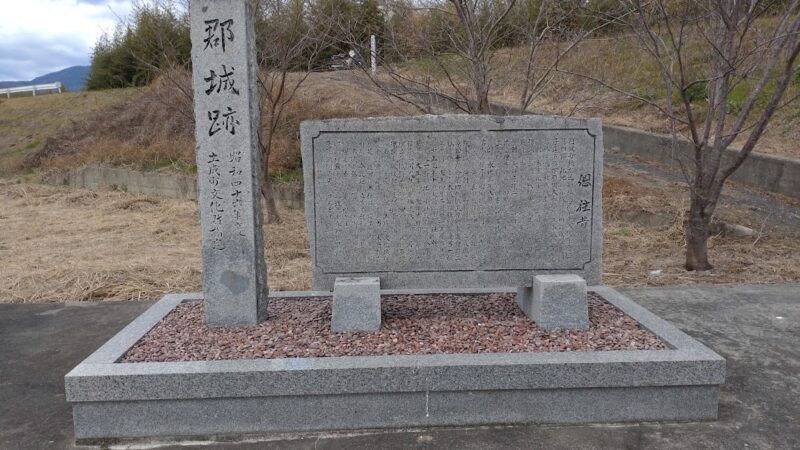
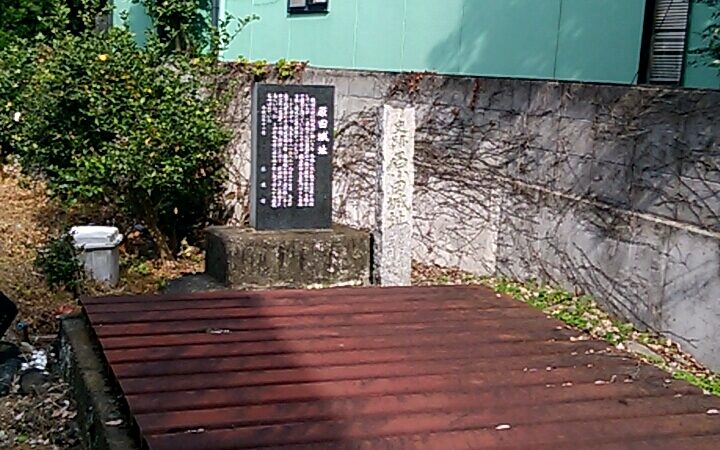
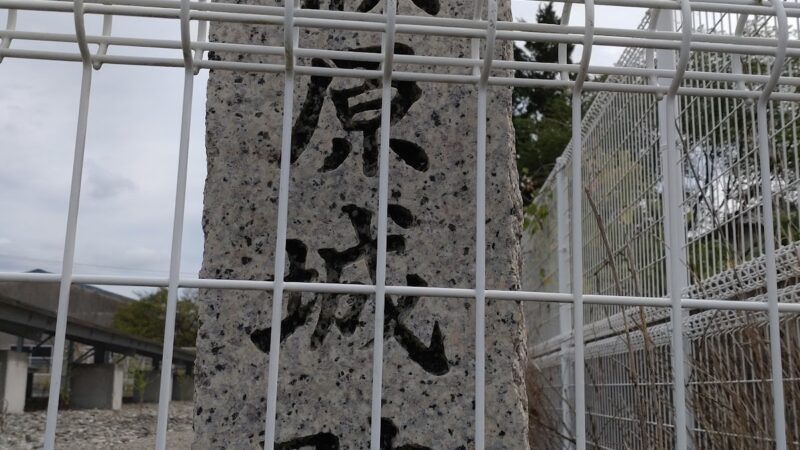
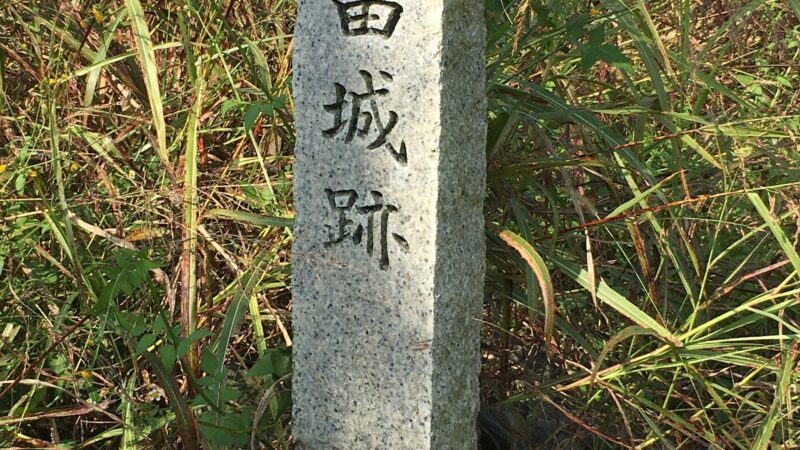
A monument marking the castle site stands at Shinohara Castle, but its location requires careful observation. According to information from the Kojodan (Castle Attack Group), the monument is located northwest of the shrine, beyond the fence where solar panels are installed.
Since it’s often difficult to find within the shrine grounds, visitors are advised to confirm the exact location of the stone monument beforehand. You should be able to find it by searching along the perimeter fence of the solar panel facility.
Castle Notes: Points to Note When Visiting
Here’s a summary of points to note when visiting Shinohara Castle:
- State of Remains: Since no clear earthworks or stone walls remain, those expecting extensive castle ruins may be disappointed.
- Location of the Stone Monument: Note that it’s not within the shrine grounds, but near the solar panel facility to the northwest.
- Moat Remains: The pond on the south side is the clearest remains, so be sure to check it.
- Time Required: Approximately 15-30 minutes for observing the shrine grounds and surrounding area.
- Photography: Photography is permitted within the shrine grounds, but please refrain from entering private property or the solar panel facility.
Access Information
Location
Address: Kakihara, Yoshino-cho, Awa City, Tokushima Prefecture
Shinohara Castle (Annai Shrine) is located in the Yoshino-cho district of Awa City. It’s situated in a settlement slightly north of National Route 318, on the north bank of the Yoshino River.
Access by Public Transportation
The nearest stations to Shinohara Castle are as follows:
- JR Tokushima Line, Nishi-Asa Station: Approximately 20-25 minutes on foot (approx. 1.5 km)
- JR Tokushima Line, Kamojima Station: Approximately 30 minutes on foot (approx. 2.5 km)
- JR Tokushima Line, Awa-Kawashima Station: Approximately 25 minutes on foot (approx. 2 km)
While it is possible to access the castle on foot from any of these stations, the distance is somewhat long, so you may want to consider taking a taxi. Nishi-Asa Station is the closest station.
Access by Car
If using the Tokushima Expressway:
- Approximately 15 minutes from Donari IC (approx. 10 km)
- Approximately 20 minutes from Wakimachi IC (approx. 12 km)
Using National Route 318 as a landmark, head towards the Kakihara area of Yoshino Town. Setting the Annai Shrine as your destination will allow you to arrive relatively easily using your car navigation system. ### Parking
While there is no dedicated parking lot at the shrine, there is space for 1-2 cars along the road in front of the shrine. However, since this is also a local road, consideration should be given to avoiding inconvenience. It is recommended to avoid long-term parking and limit your visit to a short time.
Nearby Castles and Tourist Spots
Nearby Castles
When visiting Shinohara Castle, visiting other castles around Awa City will allow you to gain a deeper understanding of the region’s medieval history.
Izuki Castle (Awa City)
This mountain castle is located approximately 5km northeast of Shinohara Castle. It is a castle associated with the Miyoshi clan and has larger remains than Shinohara Castle. Parts of the castle’s layout and stone walls can be seen, allowing visitors to enjoy authentic castle ruins.
Kawashima Castle (Yoshinogawa City)
Located in Kamojima-cho, Yoshinogawa City, approximately 8km southeast of Shinohara Castle. Situated on the south bank of the Yoshino River, it is known as the residence of the Kawashima clan. This is also a flatland castle, and it shares a similar historical background with Shinohara Castle.
Tourist Spots in Awa City
Here are some tourist spots in Awa City that can be enjoyed in conjunction with a visit to Shinohara Castle.
Dochu (Earth Pillars)
A representative tourist attraction of Awa City, designated as a national natural monument. The columnar earth formations, created by erosion from rainwater, are a rare natural landscape worldwide. It is about a 20-minute drive from Shinohara Castle.
Kirihataji Temple
The tenth temple of the Shikoku 88 Temple Pilgrimage. Reaching the main hall, built on the mountainside, requires climbing 333 stone steps, and from the temple grounds, you can enjoy a panoramic view of the Awa plain. Its historical temple architecture and scenery are its main attractions.
Tarai Udon
“Tarai Udon,” a famous local dish of Awa City, is a unique style of eating udon noodles served in a large tub (tarai) by several people. There are several tarai udon (udon noodles served in a large wooden tub) restaurants in the city, which are popular with tourists.
Shinohara Castle Ratings and Reviews
Ratings by Castle Enthusiasts
According to data from Kojodan (a castle-stacking website), the average rating for Shinohara Castle is ★★☆☆☆ (1.75/5.0). This is a relatively low rating among castles nationwide, mainly due to the limited remaining structure.
Visitors expecting clear stone walls, earthworks, moats, and other structures may find it disappointing. However, visitors who appreciate its historical value as the site of a medieval local lord’s residence and enjoy imagining its past from the few remaining traces will find it quite satisfying.
Visitor Feedback
Castle enthusiasts who have actually visited Shinohara Castle have shared the following comments:
- “Although there are hardly any remains left, I was able to reflect on history in the quiet shrine.”
- “The location of the stone monument was difficult to find, and I had trouble locating it.”
- “Knowing that the pond on the south side is the remains of a moat makes it interesting to imagine the scale of the castle.”
- “Visiting it together with the surrounding castles helps to understand the medieval history of Awa.”
Recommendation for Visiting Shinohara Castle
Who is it Recommended For?
Shinohara Castle is recommended for the following people:
- Those interested in medieval castles and residences: Although there are no large-scale remains, you can imagine the living base of a local lord in the medieval period.
- Those who want to cover all the castles in Tokushima Prefecture: It is worth visiting as one of the castles in the prefecture.
- Those who prefer quiet historical sites: It is a historical site that is not commercialized for tourism and is integrated into the local area.
- Those who have the opportunity to visit Awa City: It can be visited in a short time, combined with other sightseeing.
Things to Keep in Mind When Visiting
When visiting Shinohara Castle, it is good to keep the following points in mind:
- Understand that there are no large-scale remains or reconstructed buildings.
- Enjoy imagining history from the few remaining traces.
- Respect that this is a living space for the local people.
- Combine your visit with other castles and sightseeing spots in Awa City.
Historical Significance of Shinohara Castle
Position in the Medieval History of Awa Province
Shinohara Castle is an important historical site for understanding the regional governance structure of Awa Province during the medieval period. Unlike large mountain castles or the residences of Sengoku daimyo, it is a residence where local lords lived on a daily basis, reflecting the social structure of the time.
In medieval Awa Province, many local lords were based around the Yoshino River basin. Shinohara Castle was one of them, and it is thought to have functioned as a base for regional development and governance.
Value as a Cultural Property
Currently, Shinohara Castle is not a designated cultural property, but it is a historical site recognized academically, as it is listed in “Medieval Castles and Residences of Tokushima Prefecture.” While the state of the remains is not ideal, combining it with historical documents could contribute to the study of medieval history in Awa Province.
Future archaeological excavations may provide more detailed information about the castle’s structure and age.
Summary: The Value of Visiting Shinohara Castle
Shinohara Castle (Shinohara Residence) is the site of a medieval residence in Awa City, Tokushima Prefecture. Currently, it is the grounds of the An’nai Shrine, and while there are few clearly visible remains, the pond on the south side remains as a remnant of the moat.
There are various theories regarding the castle’s lord, including Tachibana Tadamasa and a certain Shinohara, but in any case, it is certain that it was a base for a local lord in medieval Awa Province. While it may be disappointing for visitors expecting large-scale castle ruins, it is a valuable historical site where one can reflect on medieval history in a quiet environment.
When visiting Awa City, why not also visit Shinohara Castle in addition to other tourist spots such as the Dochu (earthen pillars) and Kirihata-ji Temple? A historical walk, imagining the figures of the warlords who once ruled this land from the few remaining traces, will surely be a memorable experience.
Tokushima Prefecture is dotted with many medieval castle ruins, and Shinohara Castle is one of them, continuing to convey the history of the region to the present day. It is a historical site worth visiting not only for castle enthusiasts but also for anyone interested in local history.