Nakasho Castle (Miyoshi District, Tokushima Prefecture): History and Remains – A Flatland Castle Built on the Birthplace of the Miyoshi Clan
About Nakasho Castle
Nakasho Castle was a flatland castle located in Nakasho, Higashi-Miyoshi Town, Miyoshi District, Tokushima Prefecture. Built on a plain on the south bank of the Yoshino River, this castle held an important position as one of the strongholds of the Miyoshi clan, who wielded great power in the Kinai region during the Sengoku period. Currently, the site is occupied by residential areas and farmland, and no clear remains are visible on the surface. However, archaeological excavations have confirmed the remains of a medieval rectangular residence, leading to a renewed recognition of its historical value.
Location and Current Status
Nakasho Castle is located in Nakasho, Higashi-Miyoshi Town, Miyoshi District, Tokushima Prefecture. Miyoshi District is a historical region established in 860 (Jōgan 2) when Mino-go, Minawa-go, and Mitsu-go separated from Mima District. It is known as the birthplace of the Miyoshi clan, who were active in the Kinai region and other areas from the mid to late Sengoku period.
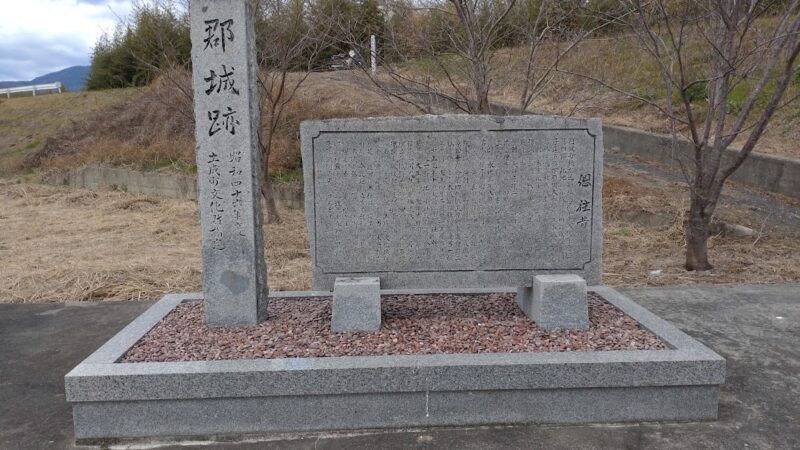
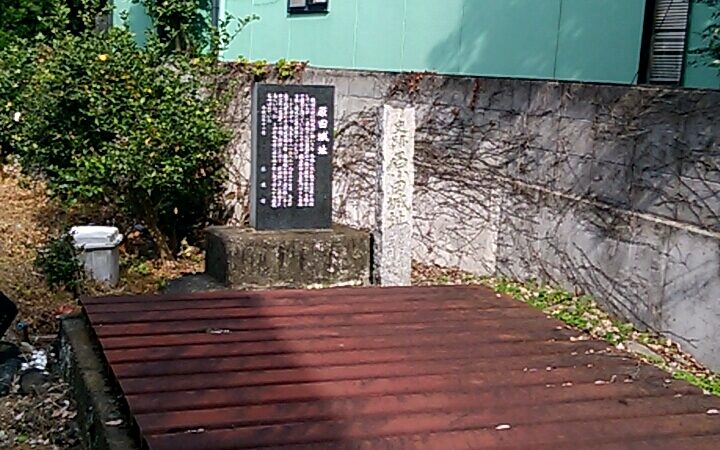
The current Higashi-Miyoshi Town was formed on March 1, 2006, through the merger of Miyoshi Town and Mikamo Town in Miyoshi District. The Nakasho area belonged to the former Miyoshi Town and is located in a plain on the north bank of the Yoshino River. A marker post stands in a corner of the castle ruins, indicating the former existence of an important castle.
History of Nakasho Castle
Relationship between the Miyoshi Clan and Nakasho Castle
Different historical sources describe the lord of Nakasho Castle. The “Awa-shi” states it was Miyoshi Hizen-no-kami, the “Miyoshi-gun Sonshi” states it was Asa Kii-no-kami, and the “Mikamo-cho Shi” states it was the castle of three generations of Miyoshi Echigo-no-kami: Katsutoki, Masanaga, and Masakatsu. These differences in descriptions are thought to be due to variations in the period of castle use and interpretations of historical sources.
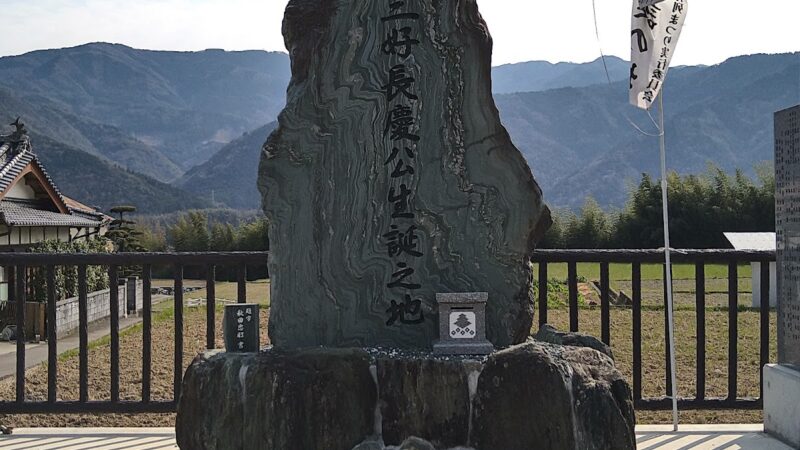
The Miyoshi clan was a samurai family based in Miyoshi District, Awa Province, and expanded their power from the Muromachi period to the Sengoku period. In particular, Miyoshi Nagayoshi expanded his influence into the Kinai region and built up enough power to seize real control of the Muromachi Shogunate. Nakasho Castle is thought to have been one of the important bases in the birthplace of the Miyoshi clan.
Construction Period and Changes of Nakasho Castle
Excavations conducted at the Nakasho site have revealed the castle’s changes over time. The excavations have uncovered remains from multiple periods, including the West Residence Site, a square-shaped residence dating from the 13th to 14th centuries, and the East Residence Site, dating from the 15th to 16th centuries.
From these findings, it is clear that Nakasho Castle was not built in a single period, but rather developed gradually from the 13th to the 16th centuries. The West Residence Site is estimated to be a residence from the Kamakura period to the Nanboku-cho period, while the East Residence Site is estimated to be a castle facility from the Muromachi period to the Sengoku period.
Nakasho Castle in the Sengoku Period
During the Sengoku period, the Miyoshi clan expanded their power from Awa Province to the Kinai region. During the time of Miyoshi Nagayoshi, the Miyoshi clan controlled five provinces: Settsu, Kawachi, Yamashiro, Yamato, and Tanba, wielding power that surpassed that of the Muromachi Shogunate. It is believed that the castles and residences of their base in Awa Province also increased in importance during this period.
Nakashō Castle was located on the plains south of the Yoshino River, strategically situated to control a key waterway. The Yoshino River was a vital transportation route in Awa Province, functioning as a vital artery for the transport of goods and military movements. It is presumed that Nakashō Castle, as a base controlling this crucial transportation hub, played a vital role in the Miyoshi clan’s control of their territory.
Structure and Remains of Nakashō Castle
Characteristics as a Flatland Castle
Nakashō Castle is a flatland castle built on the plains south of the Yoshino River. Among the many mountain castles of the Sengoku period, flatland castles can be considered a castle form that prioritized habitability and administrative functions. While built on flat land, these sites were well-suited for daily residence and as bases for managing the domain, but required reliance on artificial defensive structures such as moats and earthworks for defense.
Archaeological Excavations Revealed
The following important discoveries were made during the excavations conducted at the Nakashō site:
West Residence Site (13th-14th Century)
The West Residence Site is the remains of a square-shaped residence dating from the 13th to 14th centuries. This period corresponds to the Kamakura and Nanboku-chō periods, a time when the Miyoshi clan was still active as local lords in Awa Province. A square residence is a typical form of residence for medieval samurai, with buildings arranged within a square area surrounded by a moat.
East Residence Site (15th-16th Century)
The East Residence Site is a remains from the 15th to 16th centuries, thought to be a castle facility from the Muromachi to Sengoku periods. This period coincides with the time when the Miyoshi clan expanded their power by advancing into the Kinai region. The remains on the eastern site of the castle grounds are from a later period than those on the western site, suggesting that its functions as a castle were enhanced during that time.
The existence of these remains indicates that Nakasho Castle was used for a long period and was renovated and expanded over time.
Current Status of Remains
Currently, the Nakasho Castle site is occupied by residential areas and farmland, and no clear remains remain on the surface. The exact boundaries of the castle site are largely unclear, but a marker post in one corner indicates that an important castle once stood here.
It is highly likely that remains similar to those confirmed in archaeological excavations remain underground, and further investigations are expected to reveal more details.
Historical Background of Miyoshi County
Establishment and Development of Miyoshi County
Miyoshi County was established in 860 (Jōgan 2) when Mino-go, Minawa-go, and Mitsu-go separated from Mima County. This region is located in the middle reaches of the Yoshino River and has flourished as a transportation hub since ancient times.
At the beginning of the Meiji era, the entire Miyoshi district was part of the Awa Tokushima Domain. The “Old Land Survey Records” lists 32 villages, and Nakasho Village is recorded as one of them. Other villages included Shimizu Village, Seiryoku Village, Kamonomiya Village, Shibafu Village, Tachinoyama Village, Tachino Village, Ashidai Village, Keda Village, Nishisho Village, Kamo Village, Hiruma Village, Higashiyama Village, Suzu Village, Nishiyama Village, Higashiikawa Village, Inouchidani, Shiroji Village, Umaji Village, Sano Village, Nakanishi Village, Otori Village, Kawasaki Village, Urushikawa Village, Nakatsugawa Village, Nishiikawa Village, Ikeda Village, Matsuo Village, Yamashirodani, Nishiu Village, Kamina Village, and Shimona Village.
The Kamigori Uprising and Nakasho Village
On January 4, 1843, a large-scale uprising occurred in Miyoshi district. This incident began when the land tax reported in the Imabari domain differed from the tax reported by the Miyoshi district magistrate, leading to a movement in Yamashirodani village to riot and destroy the village headman’s house.
This riot spread to Kamoyama village, Nakasho village, Nishisho village, Inouchidani village, Ikawa village, Ashidai village, Urushikawa village, Ootori village, and Tachinoyama village, and further expanded to Mima, Awa, and Oe districts. This “Kami-gun Uprising” is an important historical event illustrating the poverty and discontent of farmers during the late Edo period, and records show that Nakasho village was also at the center of it.
Changes since the Modern Era
After the Meiji era, Miyoshi district underwent the development of modern administrative divisions. During the Showa era, town and village mergers progressed, with multiple villages merging to form towns.
On March 1, 2006, Miyoshi town and Mikamo town in Miyoshi district merged to form Higashi-Miyoshi town. As a result of this merger, the Nakashō district became part of Higashi-Miyoshi Town, which remains so to this day. Meanwhile, within the same Miyoshi County, Mino Town, Ikeda Town, Yamashiro Town, Ikawa Town, Higashi-Iya-yama Village, and Nishi-Iya-yama Village merged to form Miyoshi City, indicating a significant reorganization of Miyoshi County.
History of the Miyoshi Clan and its Development in Awa Province
Origins of the Miyoshi Clan
The Miyoshi clan was a samurai family originating in Miyoshi County, Awa Province. They are considered a branch of the Ogasawara clan, and it is believed that a branch of the Awa Ogasawara clan settled in Miyoshi County and adopted the name Miyoshi.
From the Kamakura period to the Nanboku-chō period, the Miyoshi clan grew into a powerful local lord in Awa Province. During the Muromachi period, they served the Hosokawa clan and expanded their power as their retainers.
The Miyoshi Clan’s Expansion into the Kinai Region
From the mid-to-late Muromachi period, the Miyoshi clan expanded into the Kinai region, following their lord, the Hosokawa clan. Their activities in the Kinai region became particularly active during the time of Miyoshi Yukinaga, the grandfather of Miyoshi Nagayoshi.
Miyoshi Nagayoshi defeated his lord, Hosokawa Harumoto, in 1549, effectively seizing control of the Kinai region. Nagayoshi brought five provinces—Settsu, Kawachi, Yamashiro, Yamato, and Tanba—under his control, effectively turning the Muromachi Shogunate into a puppet ruler and establishing a system known as the “Miyoshi regime.”
Miyoshi Clan Castles and Residences in Awa Province
While the Miyoshi clan was active in the Kinai region, they also maintained several castles and residences in their base of operations, Awa Province. Besides Nakasho Castle, it is believed that several other castles and residences related to the Miyoshi clan existed within Miyoshi County.
These castles and residences played a role in maintaining the Miyoshi clan’s control over Awa Province and supporting their activities in the Kinai region from the rear. Furthermore, it is highly probable that members of the Miyoshi clan and their retainers remained in Awa Province to manage their territory, and that Nakasho Castle was one of these strongholds.
Geography and Environment Around Nakasho Castle
Location of Nakasho and the Yoshino River
Nakasho Castle is located on the plains on the south bank of the Yoshino River. The Yoshino River, also known as Shikoku Saburo, is one of the largest rivers in Shikoku and is an important river system that flows through Tokushima Prefecture from east to west.
The middle reaches of the Yoshino River have a relatively flat topography and have long been a thriving agricultural area. Thanks to the fertile soil and abundant water resources provided by the river, agricultural production, primarily rice cultivation, was carried out. The area around Nakasho Castle was also an agricultural zone, and it is thought that the castle was built on an economic foundation based on the region’s agricultural production.
Nakasho as a Transportation Hub
The Yoshino River was not merely a water source for agriculture, but also an important transportation route. River transportation was considered important in the Middle Ages, when land transportation was underdeveloped, as it was a means of efficiently transporting large quantities of goods. The location of Nakashō Castle was strategically important, controlling the Yoshino River’s water transport and enabling control of the distribution of goods and military movements. It is presumed that this region was also an important transit point for the Miyoshi clan when traveling between the Kinai region and Awa Province.
Relationship with Surrounding Settlements
Nakashō Village was surrounded by settlements such as Ashidai Village, Keda Village, Nishishō Village, Kamo Village, Hiruma Village, and Higashiyama Village. These villages underwent mergers after the Meiji Restoration and eventually became part of Higashi-Miyoshi Town.
Nakashō Castle did not exist in isolation but functioned within the context of these surrounding settlements. The castle lord and his retainers collected land tax from the surrounding farmers and imposed military service as needed to maintain the castle and secure military strength.
Comparison with Medieval Castles in Tokushima Prefecture
Characteristics of Castles in Tokushima Prefecture
It is estimated that there are approximately 300 ruins known as castles, fortifications, and fort sites in Tokushima Prefecture. Many of these castles were built from the medieval period to the Sengoku period, and mountain castles make up the majority.
Awa Province was the base of powerful daimyo such as the Hosokawa and Miyoshi clans, and was also a strategic point connecting Shikoku and the Kinai region, so many castles and residences were built there. These castles and residences functioned as centers for governing the territory and as military defense facilities.
The Position of Nakashō Castle as a Flatland Castle
Nakashō Castle is a flatland castle built on plains, which is a relatively rare form in Tokushima Prefecture, where mountain castles are more common. While flatland castles are inferior to mountain castles in terms of defense, they excel in terms of habitability and administrative functions, making them suitable as centers for governing a territory.
Nakashō Castle, which functioned as the base of the Miyoshi clan, is thought to have played a role not only as a military facility but also as an administrative center for governing the territory. The remains of residences from multiple periods confirmed by archaeological excavations indicate that it was used continuously over a long period, illustrating its importance as a base for the Miyoshi clan in this region.
Relationship with Tokushima Castle
Tokushima Castle is a representative castle of Tokushima Prefecture. Built in 1585 by Hachisuka Iemasa, it is a modern castle that served as the administrative center of the Tokushima Domain throughout the Edo period.
Nakashō Castle is an older castle than Tokushima Castle, possessing medieval characteristics. The transition from the Miyoshi clan to the Hachisuka clan represented a significant shift in the power structure in Awa Province, and the form of castles changed accordingly.
Preservation and Utilization of Nakashō Castle Ruins
Value as a Cultural Property
Nakashō Castle Ruins are a historically valuable site, associated with the Miyoshi clan, who were active in the Kinai region during the Sengoku period. Archaeological excavations have confirmed remains dating from the 13th to 16th centuries, making it an important historical resource for understanding the history of medieval Awa Province.
Although no clear remains currently exist on the surface, there is a high possibility that valuable remains are preserved underground, and further investigation and preservation are anticipated.
Position in Local History
Nakashō Castle is an indispensable historical site when discussing the history of Higashi-Miyoshi Town. In Miyoshi County, the birthplace of the Miyoshi clan, Nakashō Castle is an important element in forming the region’s historical identity.
For local residents, the Nakashō Castle ruins are a valuable place where they can experience the history of their hometown, and it has value for use in local history education and cultural activities.
Future Challenges and Prospects
Future challenges for the Nakashō Castle ruins include the following:
Continued Detailed Investigation
While significant results have been obtained from previous excavations, the overall picture of the castle is not yet fully clear. Continued investigations are necessary to further clarify the castle’s scale, structure, and transformations.
Preservation of Remains
Although the castle site is now residential land and farmland, valuable remains are preserved underground. Prior to development, it is necessary to conduct preliminary surveys and ensure the preservation of important historical remains.
Information Dissemination and Utilization
To widely publicize the historical value of Nakasho Castle, it is crucial to strengthen information dissemination. This requires conveying the existence and value of Nakasho Castle to a wider audience through measures such as installing information boards, creating explanatory materials, and utilizing it in local history education.
Current Status of the Nakasho Area
Overview of Nakasho, Higashi-Miyoshi Town
The current Nakasho area is located in the plains on the south bank of the Yoshino River, as part of Higashi-Miyoshi Town, Miyoshi District, Tokushima Prefecture. The address is “Nakasho, Higashi-Miyoshi Town, Miyoshi District, Tokushima Prefecture,” and the postal code varies depending on the area, distinguishing between Nakasho (Okumura) and other areas.
The Nakasho area is primarily agricultural, with rice cultivation and vegetable farming taking place. Agriculture, utilizing the abundant water resources of the Yoshino River, remains an important industry in the region.
Access and Transportation
Access to the Nakasho area is via major roads and public transportation. A national highway runs along the Yoshino River, allowing for travel to Tokushima City and Kochi Prefecture.
It’s approximately an hour’s drive from Tokushima City, the nearest major city, making a day trip quite feasible.
Local Initiatives
In Higashi-Miyoshi Town, town development is progressing by leveraging the region’s history and culture. As a place associated with the Miyoshi clan, the preservation and utilization of historical heritage is a key pillar of regional development.
The Nakasho Castle ruins are one such historical resource, and further utilization is expected in the future. It is crucial that local residents, the government, and researchers cooperate to promote the preservation and utilization of the castle ruins.
Summary
Nakasho Castle was a flatland castle located in Nakasho, Higashi-Miyoshi Town, Miyoshi District, Tokushima Prefecture. It is an important castle associated with the Miyoshi clan, who were active in the Kinai region during the Sengoku period. Archaeological excavations have revealed that it was built on a plain on the south bank of the Yoshino River and was used from the 13th to the 16th centuries.
Although no clear remains are currently visible on the surface, valuable structures are preserved underground, and further investigation and preservation are anticipated. As an important base in the birthplace of the Miyoshi clan, and as a historical site that conveys the history of medieval Awa Province, the Nakasho Castle ruins hold high historical value.
The challenge for the future is to appropriately preserve and utilize the Nakasho Castle ruins, which are an important element in forming the region’s historical identity. For those interested in history, the Nakasho Castle ruins are an unmissable historical site when tracing the footsteps of the Miyoshi clan.