Complete Guide to the History and Highlights of Izawa Castle (Awa City, Tokushima Prefecture) | An 800-Year Story Continuing from Minamoto no Yoritomo
What is Izawa Castle? – A Kamakura Period Castle Ruins Remaining in Awa City
Izawa Castle is a flatland castle located in Izawa, Awa-cho, Awa City, Tokushima Prefecture. Believed to have been built in the early Kamakura period, it was constructed by Izawa Iekage, a samurai who served Minamoto no Yoritomo. Although the site is now residential and farmland, remnants such as the Kamakura moat remain, and its history is preserved through stone monuments and information boards.
Awa City is located in the northern part of Tokushima Prefecture and was formed in 2005 through the merger of four towns: Yoshino-cho and Donari-cho in Itano-gun, and Ichiba-cho and Awa-cho in Awa-gun. Izawa Castle is known as a historical site of particularly high historical value within Awa City.
Geographical Characteristics of Izawa Castle
Izawa Castle was a flatland castle built in the vicinity of Okachi, Awa-cho, Awa City. The area from the present-day Hiruta Pond to Reijingu Shrine is considered to be the former castle grounds. Awa City is bordered to the south by a plain located in the Yoshino River delta, and to the north by the Asan Mountains, bordering Kagawa Prefecture. Izawa Castle was built in this plain.
Its location as a flatland castle indicates that it functioned as an administrative and military base for governing the Inasawa-no-sho, the territory under the castle’s control at the time. Unlike mountain castles, it is thought to have been designed with an emphasis on habitability and convenience for managing the territory during peacetime.
The History of Izawa Castle – A Story Beginning with Minamoto no Yoritomo
Construction of the Castle and the Achievements of Izawa Iekage
There are various theories regarding the construction date of Izawa Castle, but it is generally believed to be around 1179 (Jisho 3), or after 1189 (Bunji 5), during the late Heian period to the early Kamakura period. The builder was Izawa Shirotaifu Iekage.
Izawa Iekage was a warrior who served under Minamoto no Yoritomo and achieved numerous military successes. He is particularly credited with outstanding achievements in the subjugation of Fujiwara no Yasuhira in Hiraizumi, Oshu in 1189 (Bunji 5). For this service, he was granted a vast territory of 1,000 hectares (1,000 cho) in Inasawa-sho by Minamoto no Yoritomo.
Iekage moved to this area, adopted the name “Izawa” after the place name, and built Izawa Castle as his base of operations. This period coincided with the establishment of the Kamakura Shogunate, a time when Yoritomo was consolidating his rule by deploying vassals throughout the country. The Izawa clan played a crucial role in governing Awa Province.
The Development of the Izawa Clan and Expansion of Their Power in Awa
The Izawa clan grew into a powerful samurai family in northern Awa Province throughout the Kamakura period. Based in Inasawa Manor, they expanded their influence into surrounding areas. Awa Province during the Kamakura period was divided and ruled by multiple vassals, and the Izawa clan was one of the major powers.
Izawa Castle was not merely a military base, but functioned as the center of their territory’s management. It is believed that their retainers resided in the castle town, managing agricultural production, collecting taxes, and maintaining public order. The name “Kamakura-bori” (Kamakura Moat), which still exists today, indicates that it is a relic from this period.
The Muromachi Period and Izawa Yoritoshi’s Ambition
The most dramatic turning point in the history of the Izawa clan was the era of Izawa Yoritoshi during the Muromachi period. Yoritoshi served the Hosokawa clan, the governors of Awa Province, but gradually began to aim for independent power expansion.
During the chaotic period following the Ōnin War (1467-1477), as central authority weakened, Yoritoshi aimed for de facto control of Awa Province. He entered Shōzui Castle (present-day Aizumi-chō, Itano-gun, Tokushima Prefecture), the governor’s residence of Awa, and attempted to establish his position as the lord of Awa Province.
The Fall of Izawa Castle and the End of the Izawa Clan
However, Izawa Yoritoshi’s ambitions were not realized. His rapid expansion of power aroused suspicion from the Hosokawa clan and other powerful samurai. Ultimately, Yoritoshi was assassinated at Sakanishi Castle (present-day Awa City, Tokushima Prefecture), and Izawa Castle is said to have fallen after being attacked. This incident significantly weakened the power of the Izawa clan, which had continued since the Kamakura period. While the details of Izawa Castle afterward are unclear, it is highly likely that it had already been abandoned by the Sengoku period. Awa Province subsequently saw changes in rulers, from the Miyoshi clan to the Chosokabe clan and then the Hachisuka clan, but Izawa Castle never again played a prominent role in history.
Remains and Highlights of Izawa Castle
Current Status of Remains
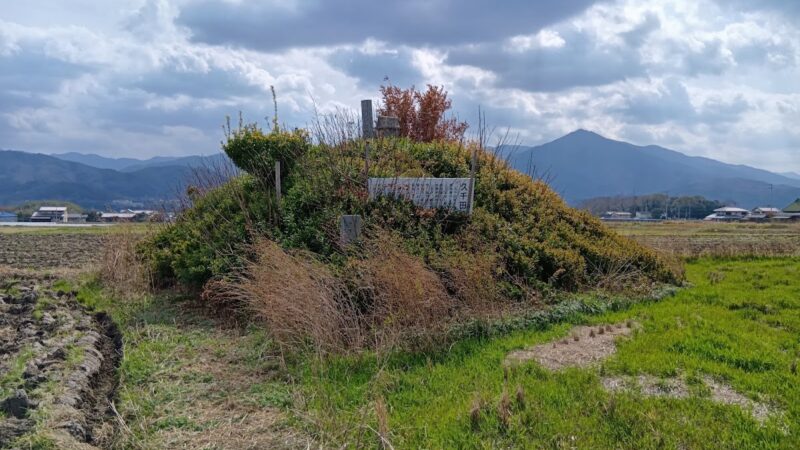
The current Izawa Castle site is largely occupied by residential areas and farmland, making it difficult to clearly identify castle remains. However, several important traces remain.
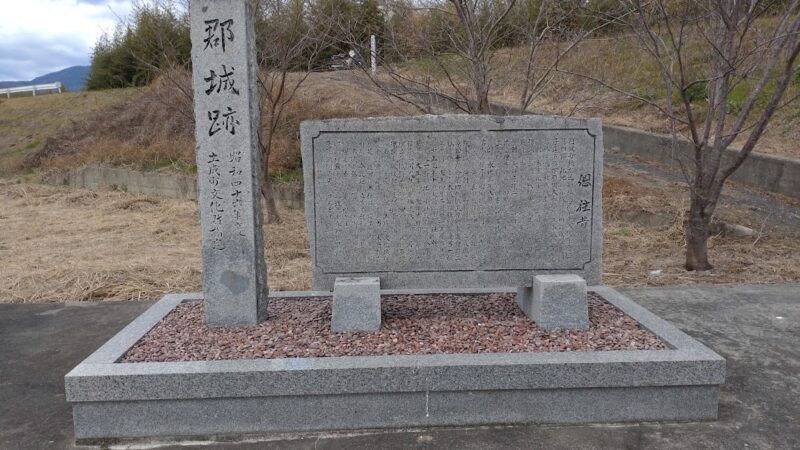
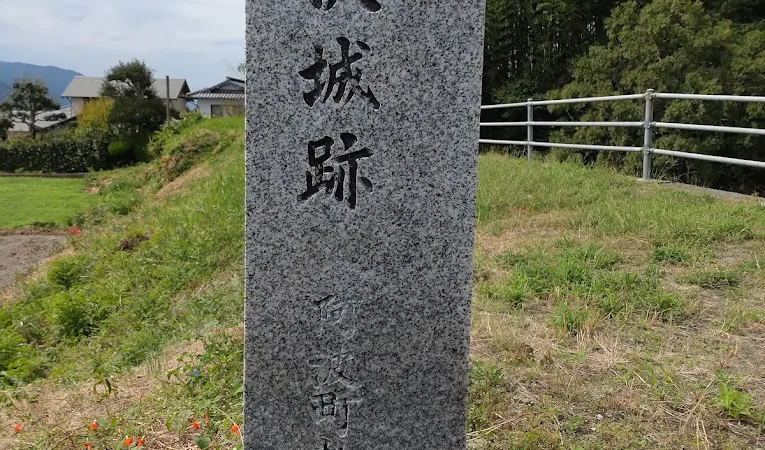
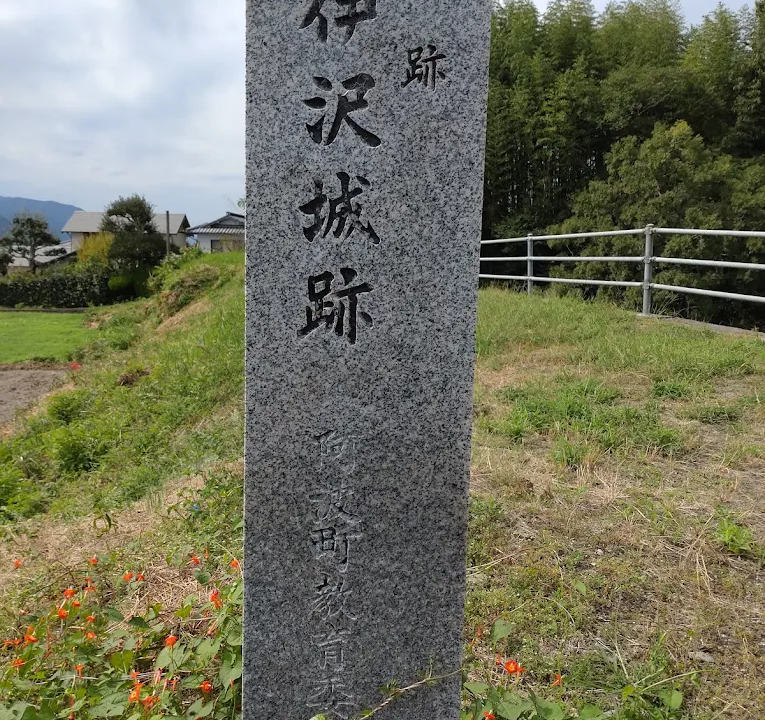
A stone monument marking the site of Izawa Castle stands near the embankment of Hiruta Pond, indicating that this is the castle site. This monument serves as an important landmark for visitors to the castle ruins.
Kamakura Moat – The Most Important Remains
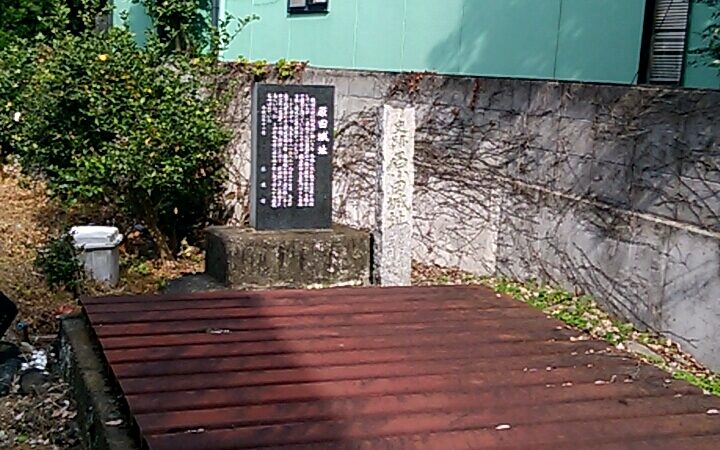
The most noteworthy remains of Izawa Castle are the “Kamakura Moat.” The valley section on the way from Hiruta Pond to Reijingu Shrine corresponds to the Kamakura Moat. An information board for “Izawa Castle/Kamakura Spring” is installed at the site, explaining the historical background to visitors.
The name Kamakura Moat suggests that it was built during the Kamakura period. In medieval castles, moats were crucial defensive features, important structures that prevented enemy incursions. Although the original scale and shape have been lost, the undulations of the terrain allow us to imagine the former moat’s existence.
Reijingu Shrine and the Surrounding Castle Ruins
Reijingu Shrine is located on what is believed to be part of the Izawa Castle ruins. Traces of the castle-era topography remain, albeit faintly, within the shrine grounds and surrounding area. The shrine itself may have deep ties to the history of the Izawa clan and the region, making it a worthwhile spot to visit when visiting the castle ruins.
Stone Monuments and Information Boards
Several stone monuments and information boards are installed at the Izawa Castle ruins. These were maintained by local historical preservation activities and serve as valuable sources of information for visitors to understand the castle’s history. The information board details the achievements of the castle’s builder, Izawa Iekage, his relationship with Minamoto no Yoritomo, and the castle’s historical changes.
Access to Izawa Castle and Surrounding Information
Location
Address: Izawa, Awa-cho, Awa City, Tokushima Prefecture
Izawa Castle ruins are located in the Izawa district of Awa-cho, Awa City. Specifically, the castle grounds are considered to be the area from around Hiruta Pond to Reijingu Shrine.
Access by Public Transportation
Nearest Station: JR Tokushima Line “Awa-Yamakawa Station”
From Awa-Yamakawa Station, access to Izawa Castle ruins is by foot or taxi. The distance from the station to the castle ruins is approximately 3-4 km, so allow about 40 minutes on foot. A taxi ride takes about 10 minutes.
Access by Car
Expressway: Approximately 15 minutes from Tokushima Expressway “Donari IC”
Access by car is the most convenient. Exit the Tokushima Expressway at the Donari Interchange and head towards Awa Town via National Route 318. If using a car navigation system, it’s recommended to set “Hiruta Pond” or “Reijingu Shrine” as your destination.
There is no designated parking area, so please park in a location that does not inconvenience the surrounding area.
Precautions for Visiting
The Izawa Castle Ruins include residential areas and private land, so please observe the following points when visiting:
- Avoid trespassing on private land
- Be quiet in residential areas
- Always take your trash with you
- Be careful not to damage the ruins
- Check the locations of information boards and monuments in advance
Other Historical Spots in Awa City
Awa’s Earth Pillars
Awa’s representative tourist spot is “Awa’s Earth Pillars (Awa no Dochu).” This unique geological formation, designated as a national natural monument, is a columnar landform created over a long period of time by erosion from rainwater. When visiting the Izawa Castle ruins, this is a must-see attraction.
Shikoku 88 Temple Pilgrimage
There are four Shikoku 88 Temple Pilgrimage sites within Awa City:
- Temple No. 7, Jurakuji
- Temple No. 8, Kumagaiji
- Temple No. 9, Horinji
- Temple No. 10, Kirihataji
These temples are centers of pilgrimage culture and attract many pilgrims. Along with the history of Izawa Castle, you can experience the religious culture of Awa City.
Kitaoka Kofun (ancient burial mound)
Awa Town has the Kitaoka Kofun, indicating that people lived in this area from the Kofun period (ancient burial mound period). As an even older ruin than Izawa Castle, it allows you to feel the depth of Awa City’s history.
Historical Background of Izawa Castle and Awa
Awa Province in the Kamakura Period
During the Kamakura period, the Awa Province’s rule was established by Minamoto no Yoritomo’s deployment of eastern warriors. Like the Izawa clan, samurai who distinguished themselves while serving the Minamoto clan were granted territories in various regions, playing a role in implementing the shogunate’s rule locally.
Besides the Izawa clan, other shogunate retainers such as the Ogasawara and Sasaki clans were stationed in Awa Province, each maintaining their own castles and residences. These samurai groups competed with each other, yet maintained order under the shogunate’s control.
The Importance of Inasawa Manor
The 1,000 chobu (approximately 1,000 hectares) of Inasawa Manor, granted to Izawa Iekage, encompassed a vast area centered around present-day Awa-cho, Awa City. 1,000 chobu is equivalent to approximately 1,000 hectares, a very large territory for that time.
This region benefited from the Yoshino River, providing fertile farmland, and agricultural production, primarily rice cultivation, flourished. The Izawa clan used the income from this rich territory as a foundation to support their samurai group and maintain their power.
The Turmoil of the Muromachi Period and Local Samurai
The Muromachi period, particularly after the Ōnin War, is known as the era of “gekokujō” (overthrowing one’s superiors by external forces). As central authority weakened, local samurai sought to expand their power through force. Izawa Yoritoshi’s actions can be understood within this historical context.
In Awa Province, the Hosokawa clan reigned as the shugo (provincial governor), but some of their vassals sought to expand their own power. Izawa Yoritoshi is a prime example; his ambition and subsequent failure symbolize the state of local samurai during the transition to the Sengoku period (Warring States period).
The Historical Significance of Izawa Castle
An Example of the Kamakura Shogunate’s Local Governance
Izawa Castle is an important historical site demonstrating the local governance system of the samurai government established throughout Japan by the Kamakura Shogunate. The establishment of Izawa Castle concretely illustrates the system in which Minamoto no Yoritomo granted territories to his vassals, allowing them to build castles and rule those territories.
Heritage that tells the history of medieval Awa
While many medieval castles exist in Tokushima Prefecture, only a limited number of castle ruins date back to the early Kamakura period. Izawa Castle is one of these rare examples, making it a valuable resource for studying the medieval history of Awa.
Fostering local historical awareness
The remaining stone monuments and information boards demonstrate the local residents’ awareness of historical preservation. Efforts to pass on the history of Izawa Castle to future generations contribute to the formation of Awa City’s cultural identity.
Summary – The value of visiting Izawa Castle
Izawa Castle is a castle ruin with a history of over 800 years, dating back to the time of Minamoto no Yoritomo. Although there are few clear remains today, its history can be learned through the Kamakura moat, stone monuments, and information boards.
As a place where you can experience the achievements of the castle’s builder, Izawa Iekage, the ambitions and setbacks of Izawa Yoritoshi, and the history of medieval Awa, it is a historical site worth visiting for history enthusiasts. When you visit Awa City, why not stop by the Izawa Castle ruins and reflect on the history of the samurai who once ruled this land?
The surrounding area also boasts numerous other tourist attractions, such as the Awa Earth Pillars and the Shikoku 88 Temple Pilgrimage. Starting from the Izawa Castle ruins, you can enjoy a journey exploring the history and culture of Awa City.
Izawa Castle in Awa City, Tokushima Prefecture, is a valuable historical site that conveys the history of Japan’s medieval period, and it will undoubtedly continue to be protected as a source of local pride.