Saijo Castle (Awa City, Tokushima Prefecture) Complete Guide | A Thorough Explanation of the History and Highlights of the Nine Castles of Awa
What is Saijo Castle?
Saijo Castle was a Japanese castle located in Saijo, Yoshino-cho, Awa City, Tokushima Prefecture. It was also known as Saijo Higashi Castle, Ebisu Castle, and Nishi Castle, and functioned as an important base in Awa Province.
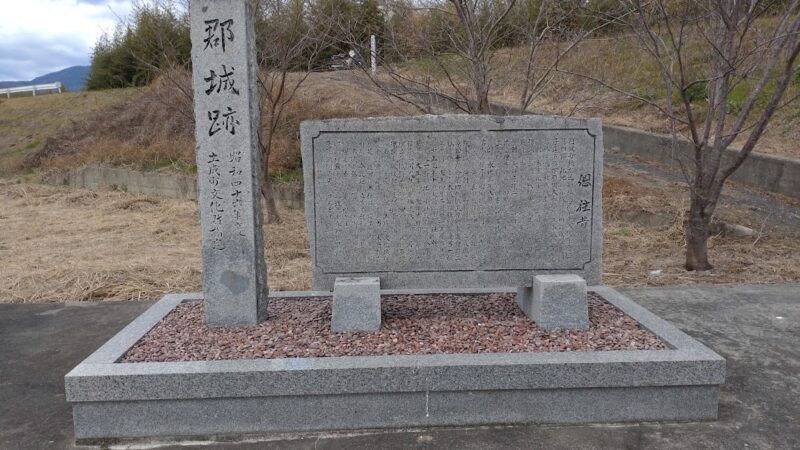
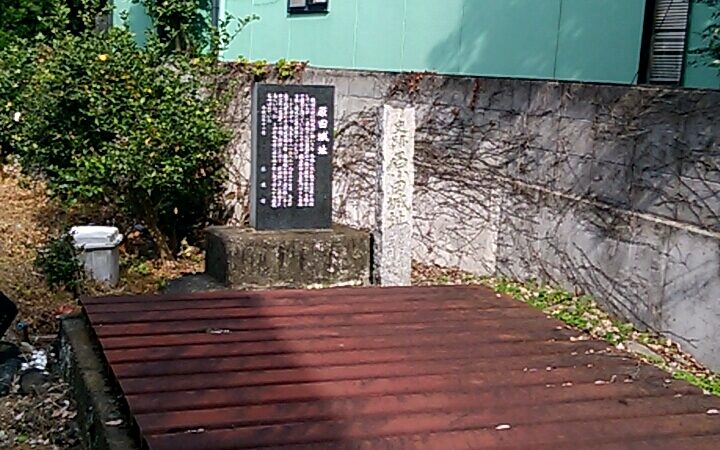
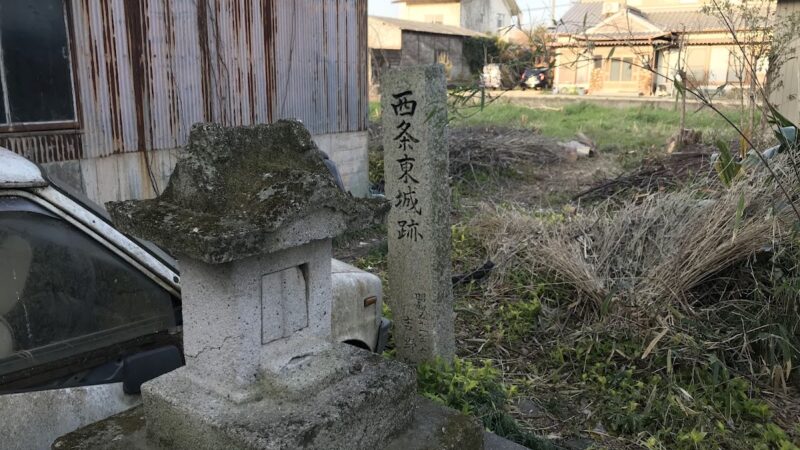
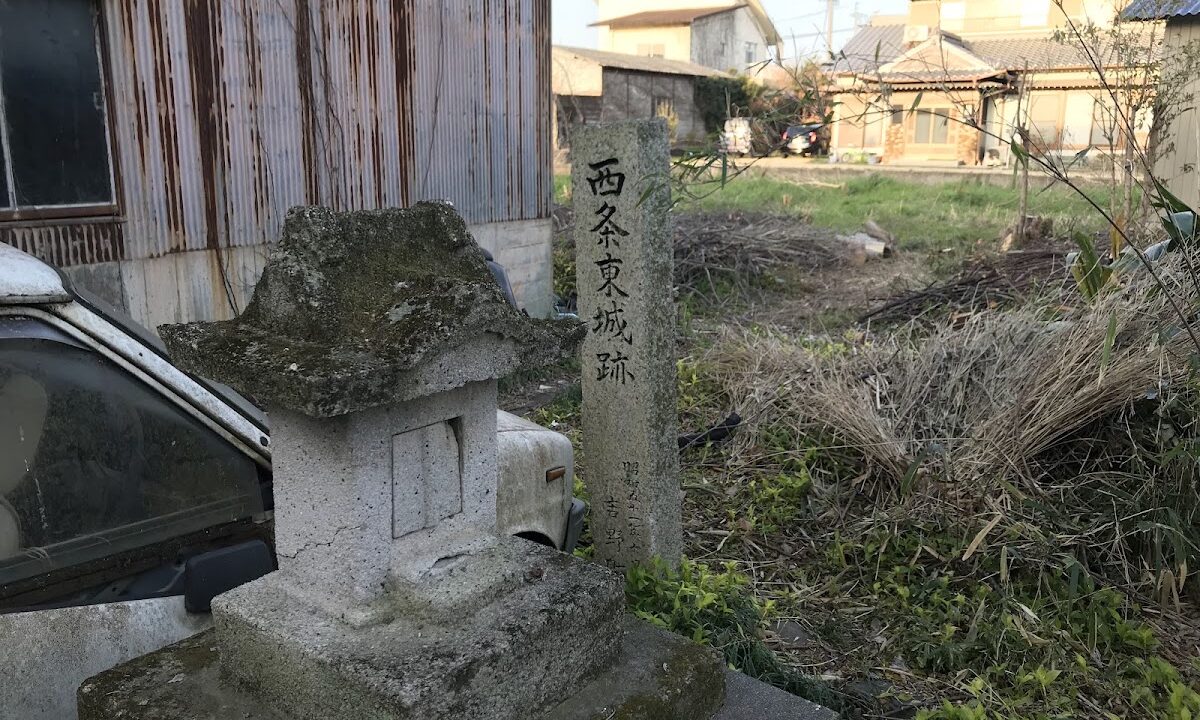
Currently, the castle ruins are located within the city, with a shrine and a castle site monument remaining on the south side of the hill where the former residence once stood. It is one of the essential historical sites when discussing the history of castles in Tokushima Prefecture from the medieval to early modern periods.
Basic Information on Saijo Castle
- Location: Saijo, Yoshino-cho, Awa City, Tokushima Prefecture
- Castle Structure: Hilltop Castle
- Year of Construction: 1346 (Jōwa 2)
- Builder: Mori Sakon Shōgen Bizen-no-kami Haruyuki
- Main Lords: Mori clan, Okamoto clan, Mori Kenmotsu Masakuni
- Year of Abandonment: Around 1638 (Kan’ei 15)
- Remains: Castle site monument, shrine
- Designated Cultural Property: None
History of Saijo Castle
From Construction to the Nanboku-chō Period
The history of Saijo Castle dates back to the Nanboku-chō period. According to the “Miki Family Genealogy” passed down in Yoshino-cho, it is said that Mori Sakon Shōgen Bizen-no-kami Haruyuki built it in 1346 (Jōwa 2) as a branch castle of Akizuki Castle.
Akizuki Castle was an important stronghold in Awa Province, and Saijo Castle was built to strengthen its defenses. During the turbulent period of the Northern and Southern Courts, Awa Province was under the influence of the Hosokawa clan, and it is believed that Saijo Castle also functioned under their influence.
From its inception, Saijo Castle played a crucial role as a key point for governing and defending the surrounding region. The castle’s location on a hill overlooking the fertile plains of the Yoshino River basin gave it a strategic position controlling a vital transportation hub.
Saijo Castle in the Sengoku Period
During the Sengoku period (Warring States period), Saijo Castle functioned as a base for powerful local lords in Awa Province. Records show that Okamoto Mimasa-no-kami Kiyomune served as the castle lord during the Tenbun era (1532-1555).
Okamoto Kiyomune is also known as the father of Koshosho, and Saijo Castle was an important political and military center in the region during this period. However, in the late Sengoku period, the situation in Awa Province changed dramatically due to the invasion of Chosokabe Motochika, who aimed to unify Shikoku.
During the Tensho era (1573-1592), Chosokabe Motochika, a Sengoku daimyo from Tosa, intensified his invasion of Awa Province. Motochika’s forces successively captured castles in Awa Province, and in 1582, Katsuzui Castle, a central stronghold of Awa Province, fell.
Saijo Castle also fell to the Chosokabe army, sharing the same fate as Katsuzui Castle. During this period, Awa Province came under the control of the Chosokabe clan, and Saijo Castle temporarily became part of their sphere of influence.
As one of the nine castles of Awa
In 1585, Toyotomi Hideyoshi pacified Shikoku, and Hachisuka Iemasa entered Awa Province as its lord with a domain of 176,000 koku. At this time, Iemasa established nine branch castles known as the “Nine Castles of Awa” for the governance and defense of Awa Province.
Saijo Castle was rebuilt as one of these nine castles. The other eight castles were Ichinomiya Castle, Ushiki Castle, Ebisuyama Castle, Onishi Castle, Niu Castle, Kizu Castle, Niimi Castle, and Kawashima Castle. These castles were important bases supporting the Hachisuka clan’s rule centered around Tokushima Castle.
Mori Kenmotsu Masakuni, a senior retainer of the Hachisuka family, was appointed as the castle lord of Saijo Castle, and was defended by 300 soldiers. Mori Kenmotsu Masakuni was a powerful retainer who served Hachisuka Iemasa, and his entrustment of governing Saijo Castle demonstrates its importance.
The One Castle Per Province Decree and Castle Abolition
Following the Battle of Sekigahara in 1600, Tokugawa Ieyasu achieved unification of Japan, and the Edo Shogunate imposed strict control over the daimyo (feudal lords) throughout the country. As part of this, the “One Castle Per Province Decree” was issued in 1615.
This decree obligated each domain to abolish all branch castles other than their main castle. In Awa Province, only Tokushima Castle remained; the other castles, including the nine castles of Awa, were destined for abolition.
While there are various theories regarding the exact date of Saijo Castle’s abolition, it is generally believed to have occurred around 1638. After its abolition, the castle buildings were demolished, and structures such as stone walls were removed, so very few remains exist today.
Structure and Layout of Saijo Castle
Castle Location and Topography
Saijo Castle is a flatland castle built on a hill overlooking the plains of the Yoshino River basin. While not particularly high in elevation, its strategic location offered excellent views of the surrounding plains.
The Yoshino River flowed to the north of the castle, serving as a natural moat. Small rivers and wetlands stretched to the east and west, forming a natural defensive line against enemy incursions.
Castle Structure
Regarding the detailed structure of Saijo Castle, many aspects remain unclear due to limited historical records. However, it is certain that a castle of a certain size existed when it was developed as one of the nine castles of Awa Province.
The central part of the castle likely contained the main enclosure (honmaru), where the lord’s residence and administrative buildings were located. Samurai residences and barracks surrounded it, forming a castle town.
Records indicating that Mori Kenmotsu Masakuni defended the castle with 300 soldiers suggest it was a castle of considerable size. It is presumed to have been equipped with facilities capable of accommodating 300 soldiers and withstanding prolonged sieges.
Defensive Structures
As a castle from the medieval to early modern period, Saijo Castle would have had defensive structures such as moats and earthworks. Especially when it was renovated as one of the nine castles of Awa Province, it is thought to have been modified to a castle with considerable defensive capabilities, serving as a base for supporting the Hachisuka clan’s rule.
The castle would have been surrounded by dry or water moats, and fortified with earthworks and fences. Furthermore, structures such as turrets and gates would have been positioned to serve as surveillance and defense functions.
Current Status of Saijo Castle Site
Condition of Remains
The current Saijo Castle site is located within the urban area of Saijo, Yoshino-cho, Awa City. Over the long course of time, most of the castle’s remains have been lost, making it difficult to imagine its former appearance.
A shrine and a castle site monument are located on the south side of the hill, which is believed to be the site of the former residence. This is the only remaining trace of Saijo Castle that can be confirmed today. The surrounding area is now residential and farmland, and no clear remains such as moats or earthworks are left.
Castle Site Monument and Shrine
The castle site monument, marking the site of Saijo Castle, was erected by local history enthusiasts and related parties. The monument is inscribed with “Saijo Castle Site,” conveying to future generations that a castle once stood on this site.
The shrine is carefully preserved as an object of local worship, and is regularly cleaned and maintained by local residents. Although the castle site has not been developed, it functions as a place that preserves the historical memory of the region.
Access Information
Access to the Saijo Castle site is as follows:
Using Public Transportation
- Approximately 10 minutes by car from JR Tokushima Line “Kamojima Station”
- Approximately 5 minutes on foot from Tokushima Bus “Saijo” bus stop
Using a Car
- Approximately 15 minutes from Tokushima Expressway “Donari IC”
- Saijo area, Yoshino-cho, along National Route 318
There is no designated parking lot, so you will need to use public facilities or shopping street parking lots, or find a place where you can park on the street.
Nearby Attractions
There are several spots around Saijo Castle Ruins where you can experience the history and culture of Awa City.
Awa City Ichijo Elementary School
This elementary school is located near the castle ruins and is a central hub for local education. Saijo Castle is also studied at the school as part of local history education.
Yoshino Post Office
This post office is located in the Saijo shopping district and is one of the local landmarks.
Yoshino River
The Yoshino River, which once served as a natural moat for Saijo Castle, continues to irrigate the region as an important water system in Awa City. The riverbanks are suitable for walks and cycling, allowing visitors to enjoy the changing seasons.
About the Nine Castles of Awa
What are the Nine Castles of Awa?
The Nine Castles of Awa are a collective term for the nine branch castles established by Hachisuka Iemasa when he entered Awa Province in 1585. These castles were important military and administrative centers supporting the Hachisuka clan’s rule centered around Tokushima Castle.
The Nine Castles of Awa are as follows:
- Ichinomiya Castle – Ichinomiya-cho, Tokushima City
- Ushiki Castle – Hanoura-cho, Anan City
- Ebisuyama Castle – Wakimachi, Mima City
- Onishi Castle – Mima-cho, Mima City
- Niu Castle – Nakagawa-cho, Anan City
- Kizu Castle – Oasa-cho, Naruto City
- Niimi Castle – Katsuura-cho, Katsuura District
- Kawashima Castle – Kawashima-cho, Yoshinogawa City
- Saijo Castle – Saijo, Yoshino-cho, Awa City
The Role of the Nine Castles of Awa Province
The nine castles of Awa Province were strategically positioned to efficiently govern the entire Awa region. Each castle was staffed by a senior retainer of the Hachisuka family, who was responsible for governing and defending their respective areas.
These castles not only defended against external enemies but also performed administrative functions such as maintaining public order within the territory, collecting taxes, and handling lawsuits. They also served as bases for suppressing uprisings and rebellions.
The Nine Castles of Awa Province After the “One Castle Per Province” Decree
Following the “One Castle Per Province” decree of 1615, all nine castles of Awa Province were abolished. In the Tokushima Domain, only Tokushima Castle remained; the other castles were gradually demolished.
Even after the castles were abolished, the former castle towns continued to develop as rural towns, functioning as centers of local commerce and culture. The town of Saijo, while retaining traces of its castle town past, continues to form a thriving community to this day.
Saijo Castle and Local History
History of Saijo, Yoshino-cho
Saijo, Yoshino-cho, is a region that developed as a castle town of Saijo Castle. During the time the castle existed, samurai and merchants gathered, forming a vibrant town.
The current Saijo shopping district is located at the entrance to the town of Saijo Castle, one of the nine castles of Awa Province, and retains the atmosphere of the former castle town. The town center houses Awa City Ichijo Elementary School and Yoshino Post Office, serving as the heart of local life.
Local Legends
Legends and traditions concerning Saijo Castle have been passed down by the local people. The castle’s alternative name, “Ebisu Castle,” is said to originate from the fact that it enshrined Ebisu, the god of business prosperity.
Furthermore, tragic stories of the castle’s fall, as well as anecdotes about the castle lord and warriors, have been passed down in the region, becoming part of the area’s historical identity.
The Significance of Saijo Castle in Modern Times
Currently, Saijo Castle ruins do not have any significant remains, and therefore are not developed as a tourist attraction. However, it is an important historical site for learning about the region’s history and is a subject of education and local history research.
Local elementary schools include Saijo Castle in their lessons on local history, providing children with opportunities to learn about their local history. Furthermore, research and investigations are continuously conducted by local history enthusiasts, and the discovery of new historical materials and advancements in research are expected.
Points to Note When Visiting Saijo Castle
Estimated Visiting Time
Visiting the Saijo Castle ruins itself can be completed in about 10 minutes if you only want to see the castle monument and shrine. However, if you want to include time to stroll through the surrounding townscape and reflect on the region’s history, a stay of 30 minutes to an hour is recommended.
Points to Note When Visiting
- The castle ruins are located in a residential area, so please be considerate of the surrounding residents.
- There is no dedicated parking lot, so please be careful where you park if you are visiting by car.
- Since very few remains are left, learning about the history beforehand will deepen your understanding.
- Please keep the area around the castle ruins monument and shrine clean, and be sure to take your trash with you.
Regarding Photography
You are free to take photos of the castle ruins monument and shrine, but please be considerate of the surrounding houses and private spaces. Also, please respect the daily lives of the local people and take photos with good manners.
Current Status and Challenges of Saijo Castle Research
Status of Historical Materials
Historical materials concerning Saijo Castle are limited, and many points remain unclear regarding the detailed structure and daily operation of the castle. Main historical materials include the “Miki Family Genealogy” and the records of the Hachisuka family, but these remain fragmentary.
Further discoveries of historical materials and archaeological investigations could potentially reveal more about the true nature of Saijo Castle.
Future Preservation and Utilization
Currently, no special preservation measures are in place at the Saijo Castle site. However, it is desirable to preserve and utilize it in some form as a regional historical heritage site.
Possible solutions include installing information boards, developing historical walking trails in the surrounding area, and virtual reconstruction using digital technology. Cooperation among local residents, government officials, and researchers is expected to ensure that the historical value of Saijo Castle is passed on to future generations.
Summary
Saijo Castle was a historical castle located in Saijo, Yoshino-cho, Awa City, Tokushima Prefecture. From its construction in 1346 (Jowa 2) until its abandonment around 1638 (Kanei 15), it watched over the history of the region for approximately 300 years.
Originally a subsidiary castle of Akizuki Castle during the Nanboku-cho period, Saijo Castle functioned as a base for powerful local lords during the Sengoku period and was temporarily captured by Chosokabe Motochika. Later, it was redeveloped by Hachisuka Iemasa as one of the nine castles of Awa Province, becoming an important base supporting the Tokushima Domain’s governing system.
Currently, very few remains of the castle exist, but a castle site monument and shrine commemorate its former presence. While not a prominent tourist destination, it is an important historical site for understanding the history of Awa Province.
Learning about the history of Saijo Castle leads to an understanding of Tokushima Prefecture’s history from the medieval to early modern periods. When visiting Awa City, be sure to stop by the Saijo Castle ruins and reflect on the castle that once stood here.