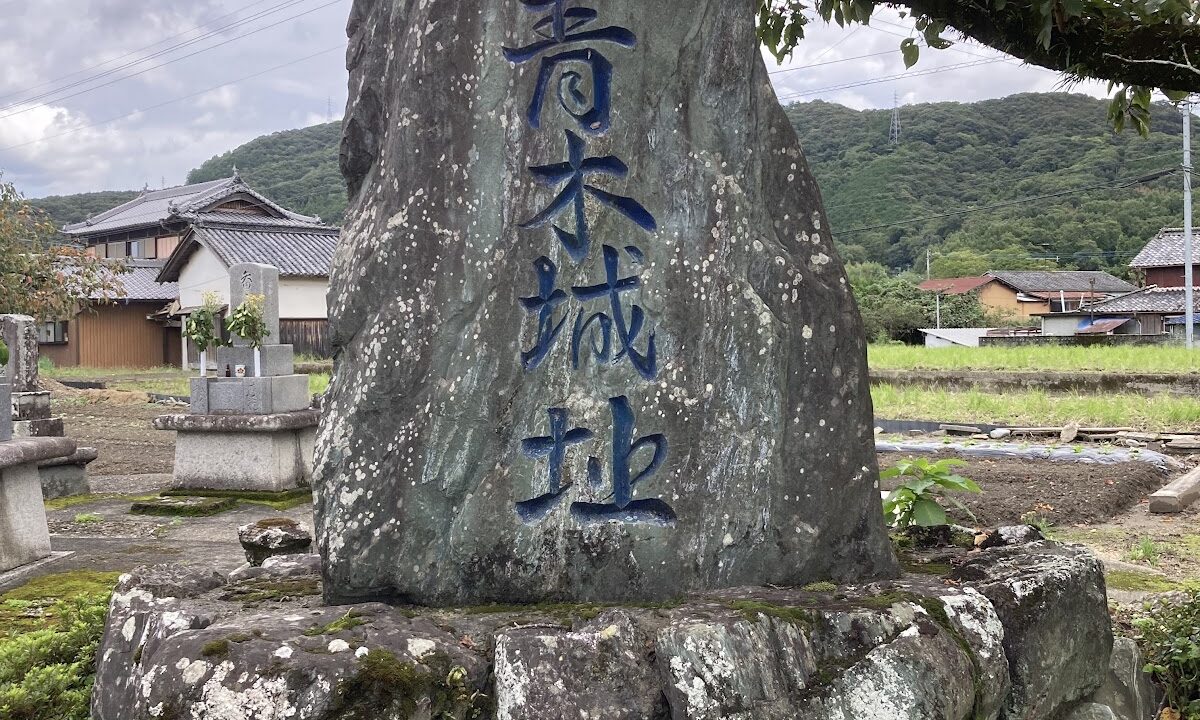
Aoki Castle (Yoshinogawa City, Tokushima Prefecture) | Detailed Explanation of the History and Remains of Awa Province
What is Aoki Castle?
Aoki Castle is a medieval hilltop castle located in Kojō, Yamakawa-chō, Yoshinogawa City, Tokushima Prefecture. As one of the important castles in Awa Province (present-day Tokushima Prefecture), it is an indispensable historical site for understanding the region’s history.
Built on a hill approximately 30 meters high, this castle was strategically located to control a key point in the Yoshino River basin and functioned as a full-fledged mountain castle equipped with defensive structures such as earthworks and moats. Currently designated as a city historical site, it attracts attention among castle researchers and history enthusiasts.
Basic Information on Aoki Castle
- Location: Kojō, Yamakawa-cho, Yoshinogawa City, Tokushima Prefecture
- Castle Classification: Hilltop Castle
- Construction Period: Medieval Period (Details Unknown)
- Relative Height: Approximately 30 meters (Elevation Approximately 40 meters)
- Major Remains: Earthworks, moats, and bailey remains
- Designation: City Historic Site
- Current Status: Remains exist around Honkaku-ji Temple
Historical Background of Aoki Castle
The Position of Aoki Castle in Awa Province
Awa Province is the former name of the province that corresponds to the entirety of present-day Tokushima Prefecture, and many castles were built there from ancient to medieval times. Among them, Aoki Castle is located in the middle reaches of the Yoshino River, a strategic transportation hub, and is thought to have played an important role as a base for regional control.
The Yoshino River is a first-class river that runs east-west through Tokushima Prefecture and has been a major route for the transport of goods and people since ancient times. Aoki Castle, built on a hill along the river, is presumed to have served the function of monitoring river traffic and controlling the surrounding area.
Background of Construction and Lord
The exact date of construction and builder of Aoki Castle are unknown due to a lack of clear historical records. However, judging from the castle’s structure and location, it is believed to have been built by a powerful local samurai during the medieval period, before the Sengoku period (Warring States period).
While the Miyoshi clan wielded great power in Awa Province during the Sengoku period, many local powerful families had held sway even before that. Aoki Castle may have been built as part of such regional control and may have passed through the hands of various forces over time.
Historical Background of Yamakawa Town
Yamakawa Town, where Aoki Castle is located, was an independent municipality as Yamakawa Town, Oe District, until October 1, 2004 (Heisei 16), when it merged with Kamojima Town, Kawashima Town, and Misato Village to become Yoshinogawa City.
The Yamakawa area is a naturally rich region at the foot of the sacred Mt. Takakoshi, where agriculture has been the primary mode of transport since ancient times. Aoki Castle is believed to have functioned as a base for medieval samurai groups and as a key element of regional defense in the history of this area.
Layout and Structure of Aoki Castle
Castle Location and Topographical Utilization
Aoki Castle is a flatland castle built on a hill approximately 30 meters high. A flatland castle is a castle built on a hill or plateau in a flat area, characterized by being less steep than a mountain castle and offering superior defensibility compared to a flatland castle.
The main enclosure is located at an altitude of approximately 40 meters, ensuring excellent visibility overlooking the surrounding plains. The high ground of Aoki Castle is clearly visible from the opposite bank of the Yoshino River, suggesting that visual coordination with surrounding castles such as Gongen-yama Castle was possible.
Details of Major Remains
Earthworks
The most prominent remains of Aoki Castle are the earthworks. Earthen ramparts are defensive structures built by piling up earth, serving to prevent enemy intrusion and give an advantage to attacks from within the castle.
Even today, traces of earthen ramparts can be seen around Honkaku-ji Temple, providing valuable clues to understanding the castle’s structure at the time. The height and placement of the ramparts allow us to estimate the castle’s defensive lines and the locations of its main entrances.
Moats
Moats, a fundamental element of castle defense, were also present at Aoki Castle. Moats are crucial structures that make it difficult for enemies to approach and enhance the defensive effectiveness of the castle walls.
The moats of Aoki Castle are cleverly positioned, utilizing the natural terrain, revealing the castle-building techniques of the time that sought to achieve maximum defensive effectiveness with limited resources. Although they no longer retain their original form due to burial and alteration, their locations can be estimated from the topography.
Enclosure (Kuruwa) Layout
It is believed that multiple enclosures (flat sections) were arranged around the main enclosure, which was the center of the castle. These enclosures were used for soldier garrisons, storage of supplies, and living spaces. The layout of the baileys at Aoki Castle was arranged in a stepped fashion, following the terrain of the hills, and it is presumed that each bailey was designed to support the others.
Relationship with Honkaku-ji Temple
Currently, Honkaku-ji Temple stands in the center of the Aoki Castle ruins. The relationship between castles and temples is a phenomenon seen throughout Japan, and it is not uncommon for the sites of abandoned castles to be used as religious facilities.
Remains from the castle era can be found within and around the grounds of Honkaku-ji Temple, and the layout of the temple itself may reflect the bailey structure of the time. Looking at Aoki Castle from Gongen-yama Castle on the opposite bank across the railway tracks, the hill where Honkaku-ji Temple is located is clearly visible, giving a real sense of the castle’s advantageous location.
About Aoki Castle Taromaru
Location and Characteristics of Taromaru
At the tip of the ridge extending west from Aoki Castle, there was a related facility called “Taromaru.” Taromaru, also known as “Tanomaru,” is believed to have functioned as an outpost or subsidiary castle of Aoki Castle.
Its location is Miyaji, Yamakawa-cho, Yoshinogawa City, Tokushima Prefecture, and it is geographically continuous with the main Aoki Castle. This type of subsidiary castle placement along a ridge was a common technique in medieval castles to expand the defensive range and respond to attacks from multiple directions.
Current Status of Taromaru
Unfortunately, the site of Taromaru is now occupied by a nursing home, and no clear castle remains can be confirmed. Due to significant topographical changes caused by development, it is difficult to estimate its original appearance.
Classified as a hill castle, Taromaru was located at a lower elevation than the main Aoki Castle, but it is presumed to have played an important role in monitoring and defending against invasions from the west.
Coordination between Aoki Castle and Taromaru
Aoki Castle and Taromaru are visually and geographically connected along the ridge, and are thought to have formed an integrated defensive system. The castle’s layout was strategically superior, allowing for a flank attack from another side even if the enemy launched an attack from one.
This kind of coordinated defense using multiple castles was widely adopted as a castle tactic during the Sengoku period, and Aoki Castle is no exception, suggesting it was built based on a meticulous defensive plan.
Aoki Castle Ruins Survey and Photographic Record
Survey by “Castle Wanderings”
Aoki Castle has undergone detailed surveys by castle researchers, and in particular, “Castle Wanderings” records the condition of the ruins with 12 photographs. Such photographic records are valuable resources for conveying the state of the ruins as it changes over time to future generations.
The photographs contain important information for understanding the castle, such as cross-sections of earthworks, traces of moats, flat surfaces of baileys, and the surrounding topography. When visiting the site, comparing these photographic records with the actual topography will allow for a deeper understanding of the castle’s structure.
Preservation Status as a City Historic Site
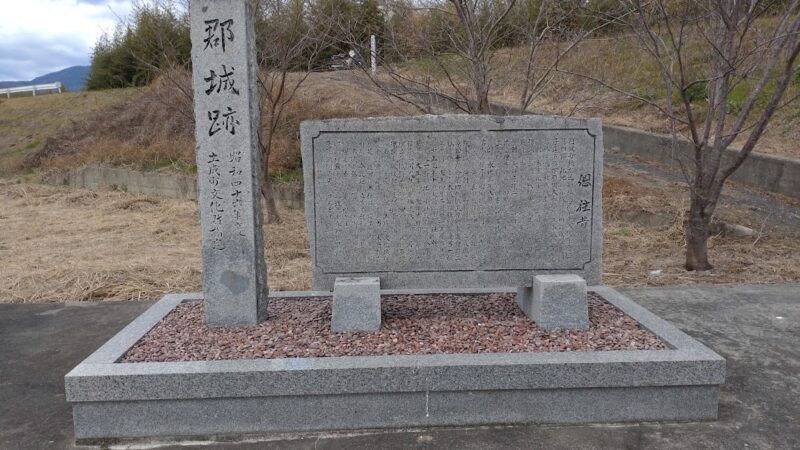
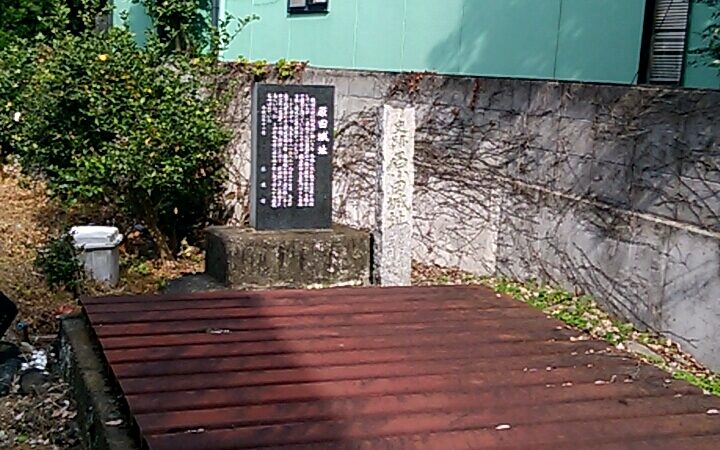
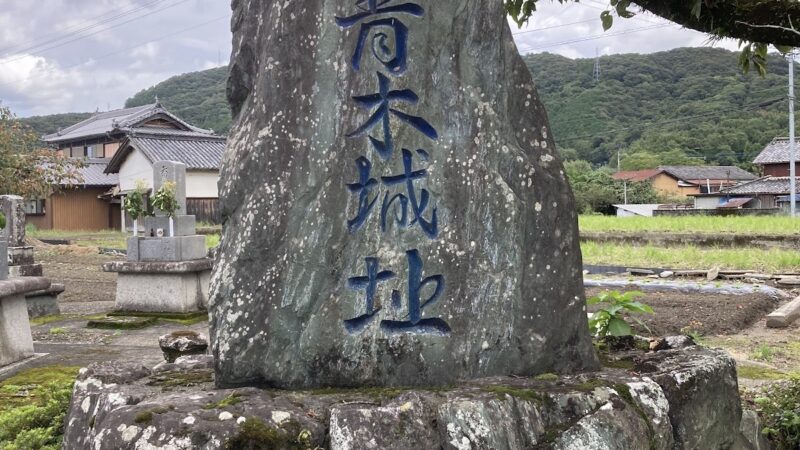
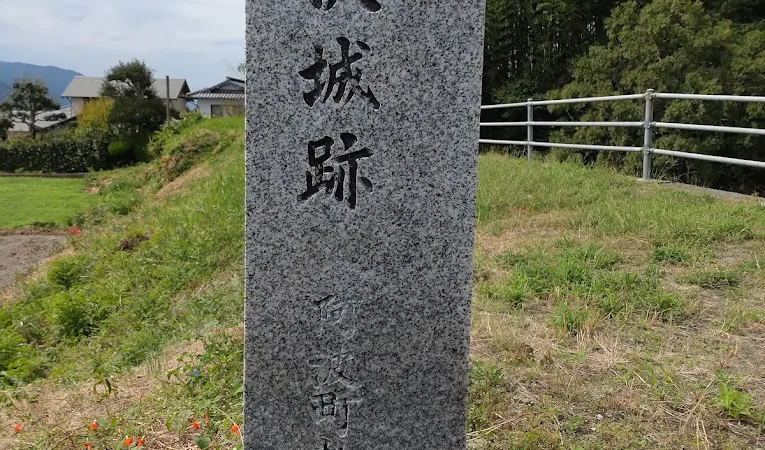
Aoki Castle is designated as a historic site by Yoshinogawa City and is recognized as an important cultural property of the region. However, clear maintenance and the installation of information boards are limited, and the information provided to visitors to understand the remains is insufficient.
Although remains exist around Honkaku-ji Temple, it is not easy for the average visitor to recognize them as castle remains. The installation of appropriate explanatory signs and the formulation of a plan for the preservation and utilization of the remains are desired for the future.
Importance of Detailed Field Surveys
Small and medium-sized castles in rural areas, like Aoki Castle, often receive less research and investigation compared to large castles. However, these castles are precisely what concretely tell the history of the region, making detailed investigation and documentation crucial.
Specialized investigations, such as surveying earthworks, examining moat cross-sections, and analyzing excavated artifacts, may reveal the construction date, the lord, and the castle’s functions. Continuous research activities by local researchers and history enthusiasts are hoped for.
Aoki Castle in the Yoshinogawa City Castle Complex
Historical Positioning of Yoshinogawa City
Yoshinogawa City is located in the central part of Tokushima Prefecture and is a relatively new city formed by a merger in 2004. The eastern part, Kamojima Town, is a commercial town; the central part, Kawashima Town, is a castle town; the western part, Yamakawa Town, is a town rich in nature; and the southern part, Misato, is a mountain village, each possessing its own unique history and culture.
Yamakawa Town, where Aoki Castle is located, has long been a place where people have lived a life centered on agriculture, nurtured by the natural environment of the sacred Mt. Takakoshi. In addition to Aoki Castle, several other castle remains exist in this region, conveying aspects of regional governance during the medieval period.
Major Surrounding Castles
Gongenyama Castle
Gongenyama Castle, located across the railway tracks from Aoki Castle, is situated in a position that allows for visual connection between the two castles. The mutual visibility between the two castles suggests the possibility of some kind of cooperative system existing.
Looking at Aoki Castle from Gongen-yama Castle, the hill where Honkaku-ji Temple is located is clearly visible, highlighting the castle’s advantageous location. This kind of visual coordination is thought to have been utilized as a means of communication, along with smoke signals and flags.
Kawashima Castle
Located in Kawashima-cho, Yoshinogawa City, Kawashima Castle was the foundation for the development of Kawashima-cho as a castle town. It is larger in scale than Aoki Castle and is believed to have been used for a longer period.
Although Kawashima Castle and Aoki Castle are several kilometers apart in a straight line, as castles located in the same Yoshino River basin, they may have had a certain relationship within a regional control network.
Castle Culture of Awa Province
Numerous castles were built in Awa Province, each telling the story of the region’s history. A diverse range of castles existed, from major castles such as Tokushima Castle, Ichinomiya Castle, and Katsuzui Castle, to smaller, local castles like Aoki Castle.
These castles indicate that before the unified rule of the Miyoshi clan during the Sengoku period, many local powerful families held sway over the area. Aoki Castle also functioned as one of these regional power centers within the complex political situation of Awa Province.
Access and Visiting Information for Aoki Castle
Location and Transportation
Address: Kojō, Yamakawa-cho, Yoshinogawa City, Tokushima Prefecture (near Honkaku-ji Temple)
Public Transportation:
- Walk or take a taxi from the nearest JR Tokushima Line station
- Yoshinogawa City Community Bus is also available (check routes and schedules)
By Car:
- Approximately 15 minutes from Wakimachi IC on the Tokushima Expressway
- Approximately 10 minutes from Yoshinogawa City Hall
- Parking: Visitor parking at Honkaku-ji Temple is available (prior confirmation with the temple is recommended)
Notes for Visitors
- Private Property/Temple Grounds: Many of the remains are located within or around the grounds of Honkaku-ji Temple, so consideration for the temple is necessary when visiting.
- Lack of Signage: Due to the scarcity of clear castle signage, it is recommended to research the location and information about the remains beforehand.
- Safety: When examining the remains of earthworks and moats, please watch your step and avoid entering areas unnecessarily.
- Photography: When taking photographs within temple grounds, please do so with respect for the religious facility.
- Season and Time: The remains may be easier to observe in winter than in summer when vegetation is lush.
Nearby Tourist Spots
Mount Takakoshi
Mount Takakoshi, a sacred mountain and symbol of Yamakawa Town, is a mountain of mountain worship with an elevation of 1,133 meters. Takakoshi Temple is located at the summit and has long been known as a sacred site for Shugendo (mountain asceticism). Visiting Takakoshi Temple in conjunction with a visit to Aoki Castle allows you to experience the region’s nature and history of faith.
Yoshino River
The Yoshino River, considered one of Japan’s three most turbulent rivers, is a representative natural landscape of Tokushima Prefecture. From the cycling path along the river and the riverbanks, you can enjoy views of the hilltop where Aoki Castle is located.
Misato District
The Misato district in southern Yoshinogawa City is a mountain village area that retains the original landscape of Japan. You can enjoy the traditional Japanese rural scenery, including terraced rice fields, old houses, and clear streams.
Current Status and Challenges of Aoki Castle Research
Lack of Historical Materials and Research Difficulties
Documentary materials concerning Aoki Castle are extremely limited, and little is known about its construction date, lord, or changes over time. This lack of historical materials is a common challenge for small and medium-sized castles in rural areas.
Diligent work is needed to gradually reveal the true nature of the castle through archaeological surveys, layout surveys, and comparative studies with surrounding castles.
Challenges in Preserving Historical Remains
The remains of Aoki Castle have been partially altered due to the construction of Honkaku-ji Temple and surrounding development. In the case of Taromaru, the remains have been almost completely lost due to the construction of a nursing home for the elderly.
In the future, a concrete preservation plan is needed to appropriately preserve the remaining remains and pass them on to future generations. It is crucial to implement policies that balance development and preservation, leveraging the designation as a city historical site.
Utilization of Castles in the Region
Local castle remains like Aoki Castle play an important role not only as a tourist resource but also in local history education and fostering local pride.
By considering multifaceted utilization methods, such as use in school education, preservation activities by local residents, and incorporation into tourist routes, the value of castle remains can be enhanced and understanding of preservation can be deepened.
Future Research Directions
To advance research on Aoki Castle, the following approaches are effective:
- Detailed Survey: Clarify the scale and structure of the castle through accurate surveying of existing earthworks and moats.
- Archaeological Excavation: Determine the age of artifacts and remains through limited excavation.
- Literature Research: Gather information about the castle from local historical documents and temple/shrine records.
- Comprehensive Study: Clarify the characteristics of Aoki Castle by comparing it with other castles in Awa Province.
- Comprehensive Study of Local History: Position Aoki Castle within the overall medieval history of Yamakawa Town.
Summary: The Historical Value of Aoki Castle
Located in Kojō, Yamakawa-cho, Yoshinogawa City, Tokushima Prefecture, Aoki Castle is a valuable castle ruin that conveys the medieval history of Awa Province. As a flatland castle with a relative height of 30 meters, it was equipped with defensive facilities such as earthworks and moats, and was built in a strategic location controlling a key point in the Yoshino River basin.
Although historical records are scarce and many details of the castle remain unknown, the existing remains and its relationship with surrounding castles suggest that it was an important base for regional control. The remains around Honkaku-ji Temple, its connection to Taromaru, a subsidiary castle to the west, and its visual connection to Gongen-yama Castle on the opposite bank, all retain many characteristics of a medieval castle.
Aoki Castle is designated as a city historical site, and further detailed investigations and appropriate preservation and utilization will enhance its value as a resource for regional history education and tourism. Aoki Castle remains an indispensable presence in understanding the castle culture of Awa Province.
For those interested in regional history, castle enthusiasts, and researchers, Aoki Castle is a historical site worth visiting. Standing in the tranquil grounds of Honkaku-ji Temple, why not imagine the medieval samurai who once ruled this land?