Shibōjō Castle, Miyoshi City, Tokushima Prefecture – A Thorough Explanation of the Birthplace of Miyoshi Nagayoshi and the History of the Miyoshi Clan
Shibōjō Castle, located in Shibō, Mino-chō, Miyoshi City, Tokushima Prefecture, is a castle site that holds an important place in Japanese history as the birthplace of Miyoshi Nagayoshi, who was called a “ruler of Japan” during the Sengoku period. Although no remains exist today, it is a place visited by many history enthusiasts as the birthplace of the Miyoshi clan and the center of the samurai government in Awa Province.
The History of Shibōjō Castle and the Rise of the Miyoshi Clan
Construction History and Ogasawara Yoshinaga
The history of Shibōjō Castle dates back to the Kanshō era (1460-1466). At that time, Ogasawara Yoshinaga, a member of the Ogasawara clan who were the governors of Awa Province, moved to this area from Ōnishi Castle in Ikeda and built Shibōjō Castle. This relocation had strategic significance, aiming to strengthen their power base in Awa Province by controlling the crucial transportation hub of the middle reaches of the Yoshino River.
When Ogasawara Yoshinaga built Shibafu Castle, a crucial event occurred: he changed his surname from “Ogasawara” to “Miyoshi.” By adopting the surname “Miyoshi,” derived from the local place name, he strengthened his ties with the region and established a new samurai identity. Therefore, Shibafu Castle became historically significant as the “birthplace of the Miyoshi clan.”
The Miyoshi Clan’s 100-Year Base
Shibafu Castle was an important base for the Miyoshi clan, serving as their residence for approximately 100 years. During this period, the Miyoshi clan expanded their power from Awa Province to the entirety of Shikoku, and even to the Kinai region. Shibafu Castle was not merely a military base, but also functioned as the political, economic, and cultural center of the Miyoshi clan.
Shibafu Castle, situated on a river terrace of the Yoshino River, was more of a residential fortress that leveraged its advantageous location for transportation and logistics rather than being a strategically important stronghold. Its location facing a river flowing into the Yoshino River, making it suitable for trade and information gathering via water transport, is considered one of the factors that supported the expansion of the Miyoshi clan’s power.
Miyoshi Nagayoshi – A Ruler Before Nobunaga
The Birth of Miyoshi Nagayoshi
Shibafu Castle is most historically significant because it is the birthplace of Miyoshi Nagayoshi, a key figure of the Sengoku period. In 1522, Miyoshi Nagayoshi was born at Shibafu Castle. 2022 marked the 500th anniversary of his birth, and commemorative events were held locally, demonstrating that he remains a source of local pride.
Miyoshi Nagayoshi as a Ruler
Miyoshi Nagayoshi was a warlord who was called a “ruler of Japan” even before Oda Nobunaga. He held real power within the Muromachi Shogunate and wielded enough influence to manipulate the Ashikaga Shogun in Kyoto. He established a political system known as the Miyoshi regime and controlled a vast territory centered on the Kinai region.
Nagayoshi possessed not only military prowess but also a high level of cultural refinement, protecting cultural activities such as the tea ceremony and linked verse poetry. His governing skills are said to have influenced later figures such as Oda Nobunaga and Toyotomi Hideyoshi, placing him in an extremely important position in the political history of the Sengoku period.
The fact that Nagayoshi, born and raised at Shibafu Castle, rose to prominence throughout Japan from the Awa region is a great source of pride for the local people.
Structure and Location of Shibafu Castle
Geographical Characteristics
Shibafu Castle is located in Shibafu, Mino-cho, Miyoshi City, Tokushima Prefecture, built on a river terrace in the middle reaches of the Yoshino River. It is close to the current center of Miyoshi City, near the former Mino Town Hall (now the Mino Branch of Miyoshi City Hall).
To the south, across the Yoshino River, lies Higashi-Miyoshi Town. To the north and east, it borders Tachinoyama in Mino Town, and to the west, it borders the Mino Town territory. This location was important because it provided access to transportation routes connecting the east and west of Shikoku, as well as water transport on the Yoshino River.
Castle Scale and Characteristics
Shibafu Castle is thought to have been more of a flatland castle or residence-type fortress than a large mountain castle. As a castle of the Sengoku period, it is presumed to have prioritized governance and residential functions over defense.
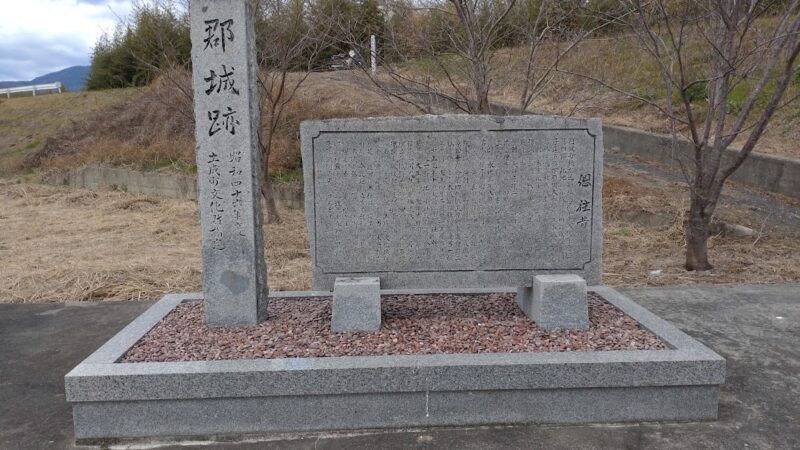
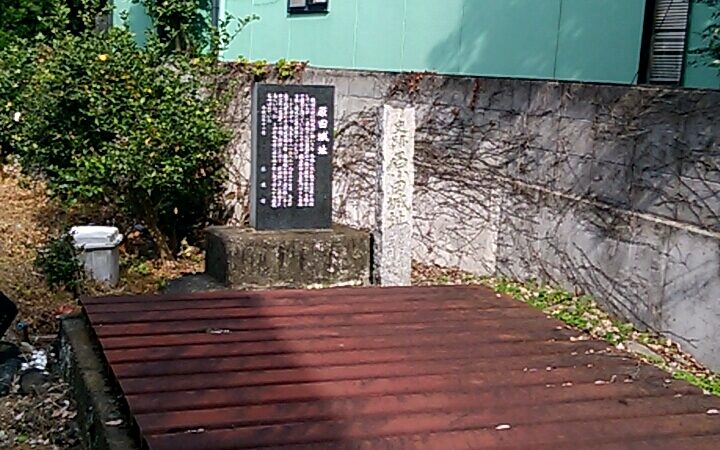
Unfortunately, very few remains of the castle exist today. Traces of the castle, such as stone walls, moats, and earthworks, cannot be found; only an information board and a stone monument remain in the rural landscape. This is thought to be because the area was developed into farmland over many years after the castle was abandoned.
Current Shibafu Castle Site
Monument to the Birthplace of Lord Miyoshi Nagayoshi
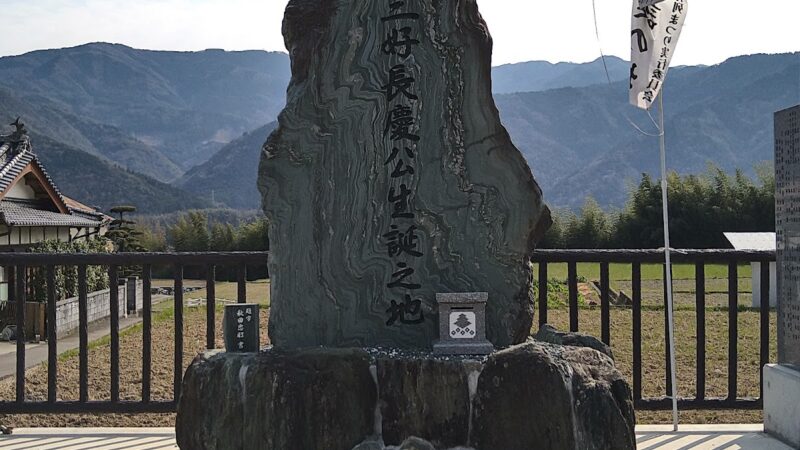
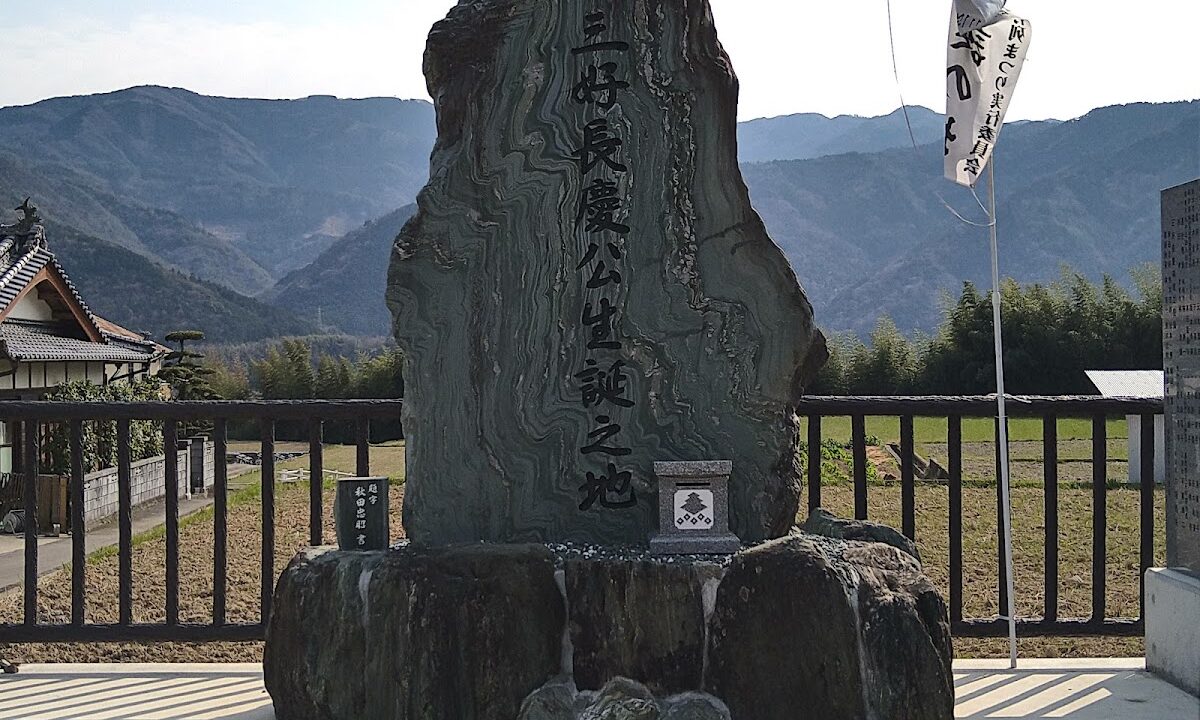
A magnificent stone monument made of Awa blue stone stands at the current Shibafu Castle site. This stone monument, inscribed with “Birthplace of Lord Miyoshi Nagayoshi,” was erected to honor Miyoshi Nagayoshi and conveys the historical importance of this site to visitors.
Awa blue stone is a representative building material of Tokushima Prefecture, a crystalline schist produced in the Yoshino River basin. By using this traditional building material, the monument symbolizes the history and culture of the region.
Information Board and Site View
Near the monument, there is an information board explaining the history of Shibafu Castle. The board details the castle’s history, the lineage of the Miyoshi clan, and the achievements of Miyoshi Nagayoshi, allowing visitors without prior knowledge to understand the historical significance of the castle ruins.
The area surrounding the castle ruins is now a peaceful rural landscape, making it difficult to imagine that this was once the center of power during the Sengoku period. However, it is a charming historical site where one can reflect on history in a tranquil environment.
Miyoshi Nagayoshi Festival – A Historical and Cultural Heritage Rooted in the Community
Every November, the “Miyoshi Nagayoshi Festival” is held around the Shibafu Castle ruins. This event aims to celebrate the achievements of Miyoshi Nagayoshi and pass on the region’s historical and cultural heritage to future generations.
The festival features various events, including a samurai procession, historical lectures, and sales of local specialty products. It attracts not only local residents but also history enthusiasts from across the country, providing an opportunity to learn about and interact with the history of Miyoshi Nagayoshi and Shibafu Castle.
In 2022, the 500th anniversary of Miyoshi Nagayoshi’s birth, a special commemorative event was held, drawing a large crowd. Such community initiatives are attracting attention as a prime example of regional revitalization utilizing historical heritage.
Access and Visiting Information
Location
- Address: Near 822 Shibafu, Mino-cho, Miyoshi City, Tokushima Prefecture 771-2304
- Castle Type: Hilltop Castle
- Remains: None (Only information boards and stone monuments)
Transportation Access
Access by Car:
- Approximately 15 minutes from the Ikawa-Ikeda IC on the Tokushima Expressway
- Accessible from National Route 192 along the Yoshino River
- Parking: No dedicated parking lot; please use nearby public facilities.
Public Transportation:
- Approximately 10 minutes by taxi from Awa-Ikeda Station on the JR Tokushima Line
- Bus service is limited; please check the timetable in advance.
Visiting Hours and Notes
- Visiting Time: Approximately 15-30 minutes
- Admission Fee: Free
- Visiting Hours: No restrictions (As it is an outdoor historical site)
- Note: Since no remains exist, it is recommended to learn about the historical background beforehand before visiting.
Nearby Tourist Attractions
Other Castle Ruins in Miyoshi City
Besides Shibafu Castle, several other castle ruins are scattered throughout Miyoshi City.
Kamono Miyagi Castle:
- A flatland castle located in Kamono Miya, Mino-cho, Miyoshi City.
- Known as a castle associated with the Miyoshi clan.
Umaji Castle:
- A mountain castle at an altitude of 260m.
- Built on a strategic location with a relative height of approximately 70m.
Tourist Facilities in Miyoshi City
Oboke and Koboke Gorslands:
- A national natural monument where you can enjoy the beauty of the Yoshino River gorge.
- Approximately 30 minutes by car from Shibafu Castle.
Iya Kazurabashi Bridge:
- One of Japan’s three most unusual bridges.
- A secluded tourist spot where legends of the Heike clan remain.
Michi-no-Eki “Oboke” (Roadside Station “Oboke”):
- You can purchase local specialties and yokai (supernatural creature) goods.
- Convenient for gathering tourist information.
Historical Significance of the Miyoshi Clan
From Awa to Kinai
The Miyoshi clan first solidified their power within Awa Province, using Shibafu Castle as their base. Subsequently, their influence expanded to other regions of Shikoku, and they even crossed the Seto Inland Sea to advance into the Kinai region.
Particularly during the time of Miyoshi Nagayoshi, they brought important areas in the Kinai region, such as Settsu, Kawachi, Izumi, and Yamashiro, under their control, and seized real power within the Muromachi Shogunate. The fact that this rapid expansion of power originated here at Shibajo Castle is a noteworthy fact in Japanese history.
Position in the Sengoku Period
Miyoshi Nagayoshi established a form of governance during the decline of the Muromachi Shogunate, where he held de facto power while still supporting the Shogun. This method set a precedent for Oda Nobunaga’s later march to Kyoto with Ashikaga Yoshiaki.
Furthermore, the Miyoshi regime showed the beginnings of early modern governance methods, such as the development of castle towns, the promotion of commerce, and the protection of culture, and is considered an important regime in the transitional period from the Sengoku period to the early modern period.
Evaluation as a Castle
Evaluation by Castle Enthusiasts
On castle information websites such as Kojodan, Shibafu Castle receives an average rating of ★★★☆☆ (3.33). This is mainly due to the lack of remaining structures, but its historical importance is highly regarded.
Visitor comments include the following opinions:
- “Although there are no remains, it has high historical value as the birthplace of Miyoshi Nagayoshi.”
- “Only an information board and a stone monument remain, but it’s worth visiting for those who like Sengoku period history.”
- “In the midst of the rural landscape, you can reflect on what was once the center of power.”
As a Place for Historical Learning
Shibafu Castle ruins have a different appeal than castles with remaining structures. It offers the opportunity to experience the “memory of place,” which is crucial for learning the political history of the Sengoku period.
Visiting the place that was the origin of understanding Miyoshi Nagayoshi, the Miyoshi clan, and the Sengoku period provides an experience that cannot be obtained from textbooks and documents alone.
Miyoshi City and Local Initiatives
Preservation and Utilization of Historical Heritage
Miyoshi City is working on the preservation and utilization of historical heritage, including the Shibafu Castle ruins. Regional development is being promoted by leveraging local history through initiatives such as the installation of information boards, the holding of the Miyoshi Nagayoshi Festival, and the dissemination of tourist information.
The Miyoshi City official website and the tourism association website feature historical spots within the city, including Shibafu Castle, providing comprehensive information for visitors.
Utilization in Education
The history of Shibafu Castle and Miyoshi Nagayoshi is also an important theme in local school education. Learning about Miyoshi Nagayoshi as a local hero fosters pride in the region and an interest in history among children.
Points to Note and Recommendations for Visiting
Preparation Before Visiting Shibafu Castle Ruins
When visiting Shibafu Castle Ruins, it is recommended to learn about the history of Miyoshi Nagayoshi and the Miyoshi clan beforehand. Because no remains exist, visiting without knowledge of the historical background may result in the site appearing merely as a rural landscape.
Visiting after studying related books or history websites will allow you to experience history more deeply.
Photo Spots
- Stone monument marking the birthplace of Lord Miyoshi Nagayoshi (made of Awa blue stone)
- Information board and surrounding rural landscape
- View towards the Yoshino River
Best Season
- November: The Miyoshi Nagayoshi Festival is held, making it the liveliest time of year.
- Spring and Autumn: The weather is pleasant, making it ideal for strolling.
- The rural landscape shows different expressions in each season, making it charming no matter when you visit.
Summary – Historical Value of Shibafu Castle
Shibafu Castle in Miyoshi City, Tokushima Prefecture, is a historical site of extremely important significance in the history of Japan’s Sengoku period, even though no remains of the castle itself exist. As the birthplace of the Miyoshi clan and the birthplace of “Tenka-no-Kami” (unifier of Japan), the historical value of this place is immeasurable.
The fact that this is the starting point for Miyoshi Nagayoshi, a figure who held power before Oda Nobunaga, that a historical turning point occurred here—the change of surname from Ogasawara to Miyoshi—and that it was the starting point for the Miyoshi clan’s expansion of power from Awa to the Kinai region over approximately 100 years, makes the Shibafu Castle ruins more than just a “historical site with no remains.”
When you visit Miyoshi City, be sure to stop by the Shibafu Castle ruins and reflect on the rise and fall of power during the Sengoku period and the history of the warlords who rose from the provinces to the central government. You will surely feel the memory of its former glory amidst the tranquil rural landscape.