
Complete Guide to Hirado City: A Thorough Explanation of Nagasaki Prefecture’s Treasure Trove of History and Culture
Located in the northwestern part of Nagasaki Prefecture, Hirado City has played an extremely important role in Japanese history. Its historical landscape centered around Hirado Castle, its legacy as an international trading port during the Age of Discovery, and its rich natural environment harmoniously combine to create an attractive region that continues to fascinate many tourists. This article provides a detailed explanation of everything from Hirado City’s history and tourist spots to access methods and cultural characteristics.
Basic Information and Geography of Hirado City
Location and Topography
Hirado City is located in the northern part of Nagasaki Prefecture, at the northwestern tip of the Kitamatsuura Peninsula, and is the westernmost city in Nagasaki Prefecture and on the Kyushu mainland. The city area consists of several islands and parts of the mainland, and its unique geographical features have shaped Hirado City’s history and culture.
The main city area consists of the following regions:
- Hirado Island: The main island where the city center is located, including Hirado Castle and the city district.
- Ikitsuki Island: Located northwest of Hirado Island, connected by the Ikitsuki Bridge.
- Dojima Island: An island located directly north of Hirado Island.
- Matoyama-Oshima Island: An outlying island located further north of Dojima Island.
- Mainland Area: Part of the Kitamatsuura Peninsula (including the Tabira district).
Hirado Island and the Kyushu mainland are separated by the Hirado Strait, which has historically served as an important maritime transportation route. Currently, they are connected by the Hirado Bridge, making access easy.
Administrative Information
The Hirado City Hall is located at 1508-3 Iwanoue-cho, Hirado City, Nagasaki Prefecture, and serves as the central hub for citizen services. The main telephone number for the city hall is 0950-22-4111. Hirado City is a large municipality within Nagasaki Prefecture, and due to its complex topography, including islands, branch offices are established in various areas.
Postal codes vary by area, with each area having its own unique postal code, such as Ikitsuki-cho Satomen, Ikitsuki-cho Tateura, Ikitsuki-cho Misaki, Ikitsuki-cho Minamimen, and Ikitsuki-cho Yamadamen.
History of Hirado City: From Ancient Times to the Present
From Ancient Times to the Middle Ages: Development as an Open Ancient Capital
Hirado City has been known as an open port since ancient times, with active exchanges with the continent. Hirado’s geographical location made it an important transit point for maritime traffic to the Korean Peninsula and mainland China, and it served as a window for cultural exchange from an early stage.
In the Middle Ages, the Matsuura clan ruled Hirado, and it developed as a naval base. As the center of a maritime power known as the Matsuura Party, Hirado held a militarily and economically important position.
From the Sengoku Period to the Edo Period: A Golden Age as an International Trading Port
The most glorious period in Hirado’s history was its role as an international trading port during the Age of Discovery. From the 16th to the 17th centuries, Hirado flourished as a trading hub with European countries such as Portugal, Spain, the Netherlands, and England.
Since the arrival of Portuguese ships in 1550, Hirado became a center of Nanban trade (trade with European countries). In 1609, the Dutch trading post was established, followed by the British trading post in 1613, making Hirado a gateway to Western culture in Japan. During this period, Christianity also spread, and many churches were built.
During the Edo period, the Matsuura clan ruled the Hirado Domain, with Hirado Castle (also known as Kameoka Castle, Kikkō Castle, and Hinodake Castle) as their residence, governing a domain of approximately 60,000 koku. Even after the Dutch trading post relocated to Dejima in Nagasaki due to the isolationist policy, Hirado maintained its relationship with Nagasaki while cultivating its own unique culture.
Meiji to Showa Era: Modernization and Transformation
After the Meiji Restoration, the Hirado Domain ceased to exist due to the abolition of the feudal system and the establishment of prefectures. It was incorporated into Nagasaki Prefecture via Hirado Prefecture. Hirado Castle was dismantled during the Meiji era, but its historical value was passed down to the local people.
During the Showa era, industries centered on fishing developed, and Hirado City grew into an important economic hub in northern Nagasaki Prefecture. From the 1950s to the 1960s, mergers with surrounding towns and villages progressed, forming the foundation of present-day Hirado City.
Heisei to Present: Revitalization as a Tourist City
In the Heisei era, Hirado City began to focus on revitalizing itself as a tourist city, utilizing its historical heritage. In 2002, the Hirado Castle keep was restored, becoming a symbol of the city and a center of tourism.
Currently, Hirado City attracts attention both domestically and internationally as a “town with a unique atmosphere where Japanese and foreign cultures are mixed,” through the preservation and utilization of historical buildings, the development of tourism infrastructure, and the hosting of cultural events.
Heisei Era to Present: Revitalization as a Tourist City
In the Heisei era, Hirado City began to focus on revitalization as a tourist city, leveraging its historical heritage. In 2002, the Hirado Castle keep was restored and became a central tourist attraction and symbol of the city.
Currently, Hirado City attracts attention both domestically and internationally as a “town with a unique atmosphere where Japanese and foreign cultures are mixed,” through the preservation and utilization of historical buildings, the development of tourism infrastructure, and the hosting of cultural events.
Hirado Castle: A Castle That Saw the World Across the Sea
History and Characteristics of Hirado Castle
Hirado Castle (Hirado-jo) is a castle located in Hirado City, Nagasaki Prefecture. During the Edo period, it was the residence of the Matsuura clan of the Hirado Domain. Also known as Kameoka Castle, Kikkō Castle, and Hinodake Castle, it is a beloved symbol of Hirado.
The most distinctive feature of Hirado Castle is its location. Built on a hill overlooking Hirado Port, Hirado Castle offers panoramic views of the Hirado Strait, the townscape of Hirado, and even the distant sea. This view symbolizes Hirado’s history as an international trading port open to the world.
The castle’s structure is that of a flatland castle, with a main keep at its center, surrounded by turrets, gates, and stone walls. The current main keep was restored in 1962, and its interior houses a museum showcasing the history and culture of Hirado.
Highlights of Hirado Castle
Main Tower
The five-story, six-level main tower is the symbol of Hirado Castle. From the observation deck on the top floor, you can enjoy a 360-degree panoramic view, offering a magnificent vista of Hirado’s beautiful scenery. Inside the tower, there are exhibits on the history of the Hirado domain, materials related to the Nanban trade, and the Matsuura clan, as well as extensive video displays using projectors.
Stone Walls
The stone walls of Hirado Castle are a valuable historical site that conveys the castle-building techniques of the early Edo period. The walls, skillfully constructed using natural stones in a rough-hewn style, remain strong even after more than 400 years. The city is committed to preserving the stone walls and regularly carries out repair work.
Turrets
In addition to the main tower, turrets such as the North Tiger Gate, Tanuki Turret, and Misou Turret have been restored, creating an atmosphere reminiscent of a castle. These structures are important elements for understanding the defensive functions of Hirado Castle.
Opening Hours and Admission Fees
Hirado Castle’s opening hours vary by season:
- April 1st – September 30th: 8:30 AM – 6:00 PM
- October 1st – March 31st: 8:30 AM – 5:00 PM
- Closed: December 30th – 31st
During the summer, opening hours are extended, allowing visitors to enjoy the beautiful scenery at dusk. Admission fees are 520 yen for adults, 310 yen for high school students, and 210 yen for elementary and junior high school students (as of 2024).
Hirado Castle Events
Hirado Castle hosts various events throughout the year.
Hirado Castle Cherry Blossom Festival
In spring, approximately 800 cherry trees planted within the castle grounds bloom, and the “Hirado Castle Cherry Blossom Festival” is held. The trees are also illuminated at night, allowing visitors to enjoy the magical sight of cherry blossoms at night. Hirado Night Museum
Held from summer to autumn, the “Hirado Night Museum” features a special nighttime exhibition of Hirado Castle. Visitors can experience Hirado Castle at night, a sight not usually seen, with special lighting effects.
Zheng Chenggong Lantern Night: Tanabata Festival of Light
This event, dedicated to Zheng Chenggong, who has deep ties to Hirado, is held during the Tanabata festival. Chinese-style lanterns illuminate the area around Hirado Castle, creating an exotic atmosphere.
Access and Parking
Hirado Castle is approximately a 15-minute walk or a 5-minute drive from Hirado city center. After crossing the Hirado Bridge to Hirado Island and heading towards the city center, you will see signs for Hirado Castle.
Free parking is available at the foot of Hirado Castle, with space for approximately 50 cars. It can get crowded during peak tourist seasons and events, so consider using public transportation.
Main Tourist Spots in Hirado City
Ikitsuki Island and Ikitsuki Bridge
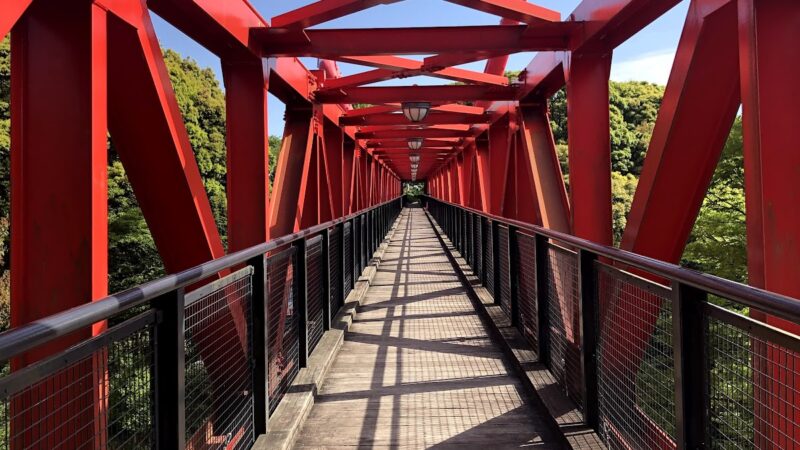
Ikitsuki Island is located northwest of Hirado Island and is connected to Hirado Island by the Ikitsuki Bridge, completed in 1991. This 960-meter-long bridge was the longest continuous truss bridge in Japan at the time of its completion.
Ikitsuki Island is known as a region with a strong history of hidden Christians. The history of people who continued to uphold their faith even under the Edo period’s ban on Christianity is registered as a World Heritage Site as part of the “Hidden Christian Sites in the Nagasaki Region.”
Obae Lighthouse
Located at the northernmost tip of Ikitsuki Island, the Obae Lighthouse is a white lighthouse standing atop a sheer cliff. The view of the Genkai Sea from the approximately 80-meter-high cliff is breathtaking, and it has been selected as one of “Japan’s 50 Best Lighthouses.” On a clear day, you can see as far as Iki and Tsushima. ### Tabira Catholic Church
Tabira Catholic Church is a Catholic church located in Tabira-cho, Hirado City. Built in 1918 (Taisho 7), it is a beautiful brick church. Designed by Yosuke Tetsukawa, it features a distinctive blend of Romanesque and Gothic architectural styles.
It is designated as a National Important Cultural Property and, as one of the constituent assets of “Churches and Christian-related Heritage in Nagasaki,” possesses high historical value. It is still carefully preserved by local parishioners, and prior contact is recommended for visits.
Sakikata Park
Sakikata Park is located at the foot of the Hirado Bridge and offers a spectacular panoramic view of the beautiful Hirado Strait. The park features observation decks and walking paths, allowing visitors to see the Hirado Bridge up close.
Cherry blossoms bloom in spring, and azaleas in early summer, allowing visitors to enjoy the changing seasons. Furthermore, the sunset over the Hirado Strait is beautiful at dusk, making it a popular spot for photography.
Hirado Xavier Memorial Church
This Catholic church stands on a hill in the city of Hirado and was built to commemorate the visit of Francis Xavier to Hirado. Its distinctive green spire makes it a landmark of Hirado, along with Hirado Castle.
Many temples are located near the church, creating a landscape that symbolizes Hirado’s unique religious tolerance, with its “scenery of temples and churches.”
Dutch Trading Post Site
This is the site of the Dutch trading post established in Hirado during the early Edo period. Currently, a restored warehouse is open to the public as a museum, displaying exhibits on trade practices and excavated artifacts.
It is an essential spot for understanding the history of exchange between Hirado and Europe, and allows visitors to experience the prosperity of Hirado as an international trading port.
Hirado Kaijo Hotel
Located on a hill overlooking the Hirado Strait, this resort hotel offers views of the Hirado Bridge and Hirado Castle from its guest rooms and open-air baths. It’s renowned for its cuisine featuring fresh seafood and is a popular base for exploring Hirado.
Day-use bathing is also available, perfect for relaxing after a day of sightseeing.
Tabira Insect Nature Park
Located in Tabira-cho, Hirado City, this nature experience facility recreates the satoyama (traditional rural landscape) environment of old Japan. Visitors can observe various insects throughout the seasons, enjoying nature learning for both children and adults.
The park features walking trails and observation huts, and guided tours are also available.
Access to Hirado City
Access by Airplane
The nearest airport is Nagasaki Airport. From Nagasaki Airport to Hirado City, it takes approximately 2 hours by bus or rental car.
Route from Nagasaki Airport
- Take a bus from Nagasaki Airport to Nagasaki city (approx. 40 minutes)
- Take a highway bus from Nagasaki Station to Hirado Pier (approx. 1 hour 50 minutes)
- Get off at Hirado Pier or Hirado City Hall
Access by Train and Bus
Using JR
- Take a train to JR Sasebo Station
- Take a Nishihi Bus bound for Hirado from Sasebo Station (approx. 1 hour 30 minutes)
- Get off at Hirado Pier or Hirado City Hall
From JR Hakata Station, take the Limited Express “Midori” or “Huis Ten Bosch” to Sasebo Station (approx. 1 hour 50 minutes).
Access by Car
From Fukuoka
From Fukuoka city to Hirado city, it takes approximately 2 hours via the West Kyushu Expressway and Nagasaki Expressway.
- From Fukuoka Urban Expressway to Kyushu Expressway
- At Tosu JCT, take the Nagasaki Expressway
- At Takeo JCT, take the West Kyushu Expressway
- Exit at Sasa IC and take National Route 204 towards Hirado
- Cross the Hirado Bridge to Hirado Island
From Nagasaki City
From Nagasaki City to Hirado City, it takes approximately 2 hours via National Route 202 and National Route 204.
Transportation within Hirado City
Renting a car is the most convenient way to get around Hirado City. While there are also local buses operated by Nishihi Bus, the number of services is limited, so using a car is recommended for sightseeing.
The Hirado City Tourist Transportation Terminal has a tourist information center where you can obtain tourist maps and brochures, and inquire about tourist information. Rental bicycles are also available, and cycling is convenient for sightseeing around the city center.
Hirado City’s Culture and Local Products
Hirado’s Food Culture
Hirado City is surrounded by a rich sea, resulting in an abundance of fresh seafood. Hirado-produced flounder, horse mackerel, and squid, in particular, are highly regarded nationwide.
Hirado Beef
Among Nagasaki Prefecture’s brand-name beef, Nagasaki Wagyu, Hirado beef raised in Hirado is considered to have particularly high quality. It is characterized by its fine marbling and tender texture.
Casdose
This traditional confection is said to have been introduced from Portugal during the Nanban trade era. Made by soaking castella cake in a syrup of egg yolks and sugar and then frying it, it has a rich flavor and is a beloved representative confection of Hirado.
Hirado Chanpon
This is a unique chanpon dish from Hirado, distinct from Nagasaki chanpon. It features a light broth and fresh seafood, and is loved by locals.
Traditional Crafts of Hirado
Hirado Ware
A traditional ceramic ware dating back to the Edo period, featuring beautiful white porcelain with blue underglaze decoration. Characterized by delicate painting and elegant colors, it is used for tea ceremony utensils and everyday tableware.
Annual Events
Hirado Jangara
A traditional Bon Odori dance held in August, this spirited festival features dancing to the rhythm of gongs and drums. Performed throughout the city, it’s a summer tradition in Hirado.
Hirado Castle Town Hina Doll Festival
Held from February to March, this Hina doll festival event displays various Hina dolls in shops and facilities throughout the city. Enjoy a diverse range of exhibits, from historical Hina dolls to original creations.
Accommodation and Stays in Hirado
Accommodation Options
Hirado offers a variety of accommodation options, from luxury resort hotels to guesthouses.
Resort Hotels
At seaside resort hotels, including the Hirado Kaijo Hotel, you can enjoy stunning views of the Hirado Strait while savoring delicious cuisine made with fresh seafood. Many hotels also have hot spring facilities, allowing for a relaxing stay.
Inns and Guesthouses
In Hirado city and Ikitsuki Island, you’ll find warm and inviting inns and guesthouses run by locals. Experience the everyday life of Hirado in a homey atmosphere.
Guest Houses
In recent years, the number of guest houses renovated from old traditional houses has increased, offering an opportunity to experience Hirado’s historical architecture at a reasonable price.
Sample Itinerary
1-Night, 2-Day Course
- Day 1: Arrive in Hirado in the morning → Visit Hirado Castle → Lunch (Hirado Champon) → Visit the Dutch Trading Post Ruins and Xavier Memorial Church → Stroll through Hirado city → Overnight stay
- Day 2: Sightseeing on Ikitsuki Island (Ikitsuki Bridge, Ohabae Lighthouse) → Lunch (Seafood) → Visit Tabira Catholic Church → Depart from Hirado
2-Night, 3-Day Course
In addition to the 1-night, 2-day course, you can enjoy nature experiences at Tabira Insect Nature Park, island hopping around Hirado, fishing, and marine sports.
Hirado City’s Natural Environment and Scenery
Beauty of the Coastline
Hirado City’s coastline is diverse, offering a variety of landscapes including cliffs, white sand beaches, and intricate coves. The west coast of Ikitsuki Island, in particular, boasts magnificent scenery created by the rough waves of the Genkai Sea, allowing you to feel the power of nature.
The Islands’ Nature
The islands of Hirado City retain a rich natural environment. Diverse ecosystems exist, including forests, grasslands, and coastal vegetation, allowing for the observation of various wild animals and plants.
The Tabira Insect Nature Park recreates a rural landscape, preserving the habitat of insects and other small animals. Different insects can be observed seasonally, making it a valuable place for nature education.
Famous Sunset Spots
Hirado City is also known for its beautiful sunsets. Spectacular sunsets can be enjoyed in various locations, such as the sunset over the Hirado Strait and the sunset over the horizon viewed from Ikitsuki Island. The sunset views from Sakikata Park and Hirado Castle are particularly popular among photography enthusiasts.
Hirado City’s Relocation Support and Living Environment
Relocation Promotion Initiatives
Hirado City actively supports those wishing to relocate. The Nagasaki Prefecture’s official relocation support website, “Nagasaki Relocation Navi,” also introduces the charms of Hirado City, providing information on relocation consultations and experiential tours.
Relocation Support System
Hirado City offers various support systems for relocating residents, including assistance with housing acquisition, business startup, and childcare. In particular, efforts are being made to improve the childcare environment to encourage relocation among younger generations.
Living Environment
Hirado City is a regional city with a population of approximately 30,000, but it has all the necessary facilities for daily life, including medical institutions, educational institutions, and commercial facilities. Even in areas far from the city center, local communities are active, and a spirit of mutual support is deeply rooted.
Medical Care and Welfare
There are several medical institutions, including Hirado Municipal Hospital, and basic medical services can be received within the city. For cases requiring advanced medical care, a cooperative system is in place with medical institutions in Sasebo City and Nagasaki City.
Education
Elementary and junior high schools are located throughout the city, and there are also several high schools. Small class sizes are practiced, allowing for detailed instruction.
Shopping
Supermarkets, convenience stores, and drugstores are readily available, so daily shopping is not a problem. There are also many direct sales outlets selling local agricultural and marine products.
Hirado City’s Industry and Economy
Fisheries
Fishing is Hirado City’s core industry. The Hirado Strait and surrounding waters are known as excellent fishing grounds, and a variety of fish species, including horse mackerel, mackerel, squid, and flounder, are landed there. Aquaculture is also thriving, with a particular focus on the farming of pufferfish and tuna.
Agriculture
Agriculture, taking advantage of the warm climate, is also an important industry. In addition to rice cultivation, vegetables, fruit trees, and flowers are grown. Hirado-grown asparagus, in particular, is of high quality and is popular as a brand-name vegetable.
Beef cattle farming is also popular, and the aforementioned Hirado beef is sold as a high-end brand-name beef.
Tourism
In recent years, tourism has become increasingly important to Hirado City’s economy. Initiatives utilizing diverse tourism resources are underway, including historical tourism centered around Hirado Castle, cultural tourism visiting churches, and ecotourism to enjoy nature.
Hirado City is also focusing on inbound tourism, implementing measures such as improving English and Chinese signage and developing tour programs for foreign tourists.
Challenges and Prospects for Hirado City
Addressing Population Decline
Like many regional cities, Hirado City faces the challenges of population decline and an aging population. The city is continuously working to mitigate the pace of population decline through measures such as promoting migration, supporting young people’s settlement, and improving the child-rearing environment.
Infrastructure Maintenance
In Hirado City, with its vast area including islands, maintaining infrastructure such as roads, bridges, and ports is a crucial issue. Continuous investment is also necessary for the preservation of historical buildings, as exemplified by the repair work on the stone walls of Hirado Castle.
Hirado City strives to maintain a safe and comfortable living environment through regular inspections and planned repairs.
Tourism Promotion and Regional Revitalization
Hirado City’s rich historical and cultural heritage holds great potential for tourism promotion. The inscription of the “Hidden Christian Sites in the Nagasaki Region” as a World Heritage Site is expected to attract even more tourists and revitalize the local economy.
Tourism strategies adapted to the times are being developed, including the provision of new tourism experiences utilizing digital technology and the promotion of sustainable tourism.
Summary: Experience the Charms of Hirado City
Hirado City in Nagasaki Prefecture is a charming city woven together by its historical landscape centered around Hirado Castle, the legacy of international exchange during the Age of Discovery, a rich natural environment, and warm-hearted people.
Hirado Castle, which once overlooked the world across the Hirado Strait; a unique townscape where foreign cultures and Japanese traditions blend; fresh seafood and traditional flavors; and the beautiful nature of the surrounding islands. Hirado City is filled with diverse attractions that will captivate visitors.
Visiting this place, which has etched an important page in Japanese history, will be a valuable experience that goes beyond mere sightseeing. From the keep of Hirado Castle, gaze out over the Hirado Strait and reflect on the history of international exchange that once unfolded in this very place.
Hirado City warmly welcomes history buffs, nature lovers, foodies, and anyone seeking a relaxing getaway. When visiting Nagasaki Prefecture, be sure to include Hirado City in your itinerary and experience its unique charm.
-680x450.png)