Funakakushi Castle (Iki City, Nagasaki Prefecture) Complete Guide: History, Highlights, and Access Information
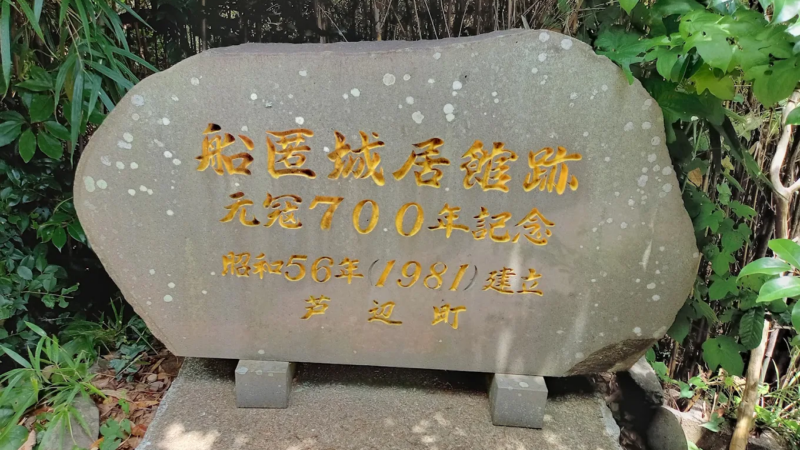
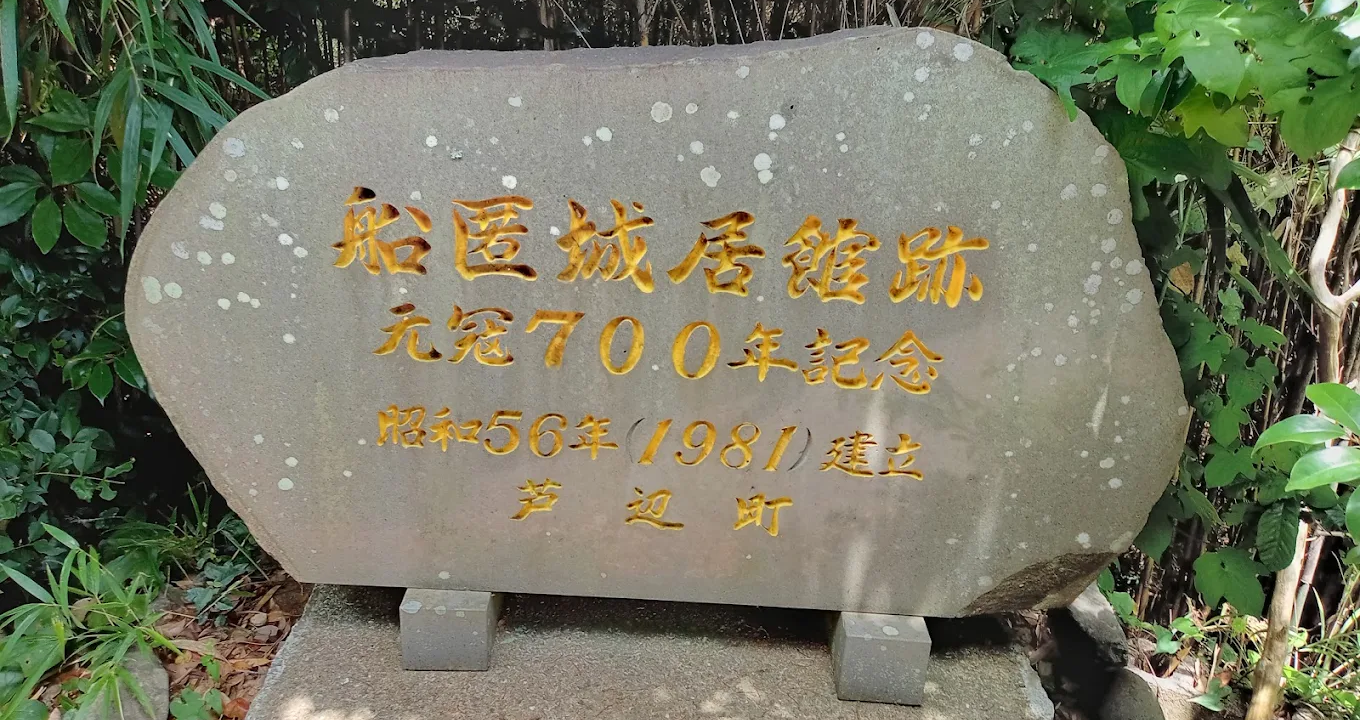
Funakakushi Castle, located in Hakozaki Osasa-fure, Ashibe-cho, Iki City, Nagasaki Prefecture, is a historical castle site associated with the Hata and Hidaka clans, who ruled Iki during the Sengoku period (Warring States period). Currently, the “Funakakushi Castle Residence Site Shogun Jizo Hall” stands on the site, and it is known as an important historical site that conveys the medieval history of Iki.
This article provides a detailed explanation of Funakakushi Castle’s historical background, structure, highlights, access methods, and even information on surrounding castle ruins, for castle enthusiasts and history lovers visiting Iki.
What is Funakakushi Castle?: A Castle Site that Tells the Story of Iki’s Sengoku Period
Funakakushi Castle is a medieval castle site located on the southern slope of the mountain in Ashibe-cho, Iki City, Nagasaki Prefecture. The place name “Funakakushi” is thought to originate from the fact that it was used as a place to hide ships since ancient times. Iki Island, strategically located between Kyushu and Tsushima, has played a vital role as a key point for maritime traffic since ancient times.
During the Sengoku period (Warring States period), Iki was under the control of the Hata clan, a branch of the Matsuura clan, a powerful daimyo family of Hizen Province. Funanokuri Castle is believed to have functioned as a residence for local lords such as the Hata and Hidaka clans, and was one of the strongholds of medieval samurai groups on Iki.
Historical Positioning of Funanokuri Castle
Iki Island has several castle ruins scattered throughout, including Katsumoto Castle, Kameoka Castle, and Ikeike Castle, and Funanokuri Castle was one of them, forming part of Iki’s defense network. Especially in the latter half of the 16th century, during Toyotomi Hideyoshi’s conquest of Kyushu and the invasion of Korea, the entire island was considered militarily important, and castles and residences throughout the island were improved and strengthened.
Although Funanokuri Castle was not large in scale, it is believed to have functioned as a regional power base, and local influential figures resided there. Currently, a Shogun Jizo Hall stands on the castle site, and it is cherished as a place of worship for the local community.
Structure and Layout of Funanokuri Castle
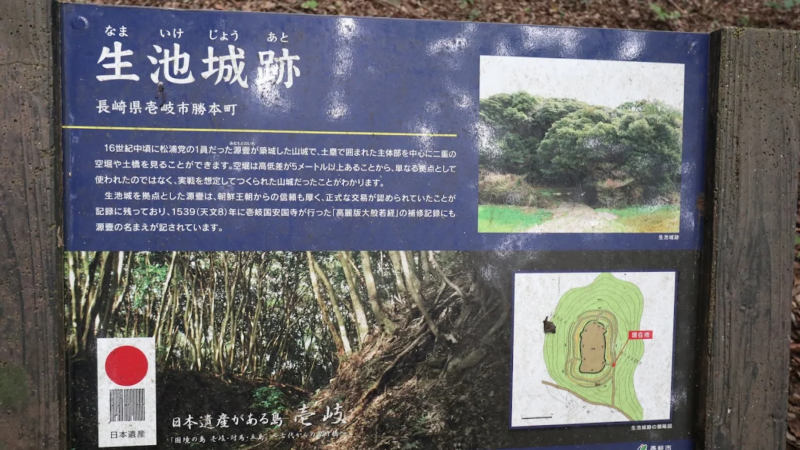
Funanokuri Castle is a castle site with a typical medieval residential style, built utilizing the gentle slope of the mountainside. While it lacks large stone walls or a keep, and is relatively simple in construction, it is presumed to have had defensive facilities that cleverly utilized the terrain.
Location and Utilization of Topography
Funanokuri Castle is located on the middle of the southern mountainside, overlooking the sea. This location offered the following strategic advantages:
- Surveillance of Maritime Traffic: It offered a panoramic view of the waters around Iki Island, allowing for monitoring of ship traffic.
- Defensive Terrain: The mountainside terrain provided a natural stronghold, making enemy incursions difficult.
- Securing Water Sources: Springs on the mountainside allowed for prolonged sieges.
Existing Remains
Currently, very few clear castle remains remain at the Funanokuchi Castle site, but the topography and layout allow for inferences about its appearance at the time. The most prominent feature is the “Funanokuchi Castle Residence Site General Jizo Hall,” which stands in the center of the castle site.
Local residents have testified that traces of earthworks and moats were once visible, but due to years of development and weathering, they are now almost indistinguishable. Nevertheless, the undulations and elevation changes of the terrain allow for the imagination of the former layout of the castle’s baileys.
Highlights of Funanokuri Castle: Shogun Jizo Hall and Historical Traces
The main highlights when visiting Funanokuri Castle are as follows:
Funanokuri Castle Residence Site: Shogun Jizo Hall
The Shogun Jizo Hall, built in the center of the castle ruins, is the greatest highlight of Funanokuri Castle. This hall is an object of local worship and is carefully maintained by the local people.
The Shogun Jizo Hall enshrines a Jizo Bodhisattva dedicated to the warlords and fallen soldiers of the Sengoku period, conveying the history of the wars on Iki Island. The hall is usually locked, but if you ask a nearby resident, they may kindly open it for you. Some visitors have even shared stories of being shown around by a local resident they happened to ask for directions.
View from the Castle Ruins
From the Funanokuri Castle ruins, you can enjoy views of Iki Island’s beautiful coastline and the surrounding islands. On a clear day, you can enjoy the breathtaking scenery of the blue sea of the Genkai Sea and the lush green nature of Iki Island. This view is the same one that the castle lords once gazed upon, evoking a sense of historical romance.
Historical Atmosphere of the Surrounding Area
Around Funanokuchi Castle, old houses and stone walls remain, allowing you to experience the rural landscape of Iki Island from the medieval to early modern periods. While the castle ruins themselves are small, a stroll around the area allows you to reflect on the lives of the people who lived there and the history of the region.
History of Funanokuchi Castle: The Era of the Hata and Hidaka Clans
To understand the history of Funanokuchi Castle, you need to know about the Hata clan and Hidaka clan who ruled Iki Island.
The Hata Clan’s Rule of Iki Island
The Hata clan was a branch of the Matsuura clan of Hizen Province and ruled Iki Island from the 14th to the 16th centuries. The Matsuura clan was also known as a pirate group (naval force) that controlled maritime traffic, operating in the Genkai Sea region from bases in Iki and Hirado.
The Hata clan built several castles and fortresses on Iki, bringing the entire island under their control. It is believed that Funanokuchi Castle functioned as a regional base as part of this system of control. The Hata clan’s main base was Katsumoto Castle, and Funanokuchi Castle may have been one of its branch castles.
The Hidaka Clan’s Presence
The Hidaka clan were local lords who operated on Iki under the Hata clan. The Hidaka clan possessed the Hakozaki region, including Funanokuchi Castle, and supported the Hata clan’s rule over Iki. It is presumed that the Hidaka clan, as influential local figures, were involved in promoting agriculture and fishing, and managing maritime traffic.
At the end of the Sengoku period, Toyotomi Hideyoshi’s conquest of Kyushu had a significant impact on local forces on Iki, including the Hata and Hidaka clans. Subsequently, Iki Island came under the control of the Matsuura and Nabeshima clans, and during the Edo period, it became part of the Hirado Domain.
Toyotomi Hideyoshi’s Korean Invasion and Iki Island
During Toyotomi Hideyoshi’s invasion of Korea (the Bunroku-Keicho War) from 1592 to 1598, Iki Island became an important supply base. Various castles and fortifications on Iki Island were developed as military strongholds, and it is possible that Funagakure Castle was also incorporated into the mobilization system in some way.
During this period, many soldiers and supplies gathered on Iki Island, and the entire island was under a wartime regime. Daimyo (feudal lords) departing from Nagoya Castle stopped at Katsumoto Castle, and Iki Island functioned as a gateway to the Korean Peninsula.
Funagakure Castle Visiting Guide: Access and Points to Note
This section provides specific information for visiting Funagakure Castle.
Location and Basic Information
- Location: Hakozaki Osasa-fure, Ashibe-cho, Iki City, Nagasaki Prefecture
- Castle Type: Residence
- Construction Period: Sengoku period (details unknown)
- Lords: Hata clan, Hidaka clan
- Remains: Topography, Shogun Jizo Hall
- Designated Cultural Property: None
- Visiting Time: Approximately 15-30 minutes
- Admission Fee: Free
- Parking: None (use street parking)
Access Method
Access to Iki Island
Iki Island can be accessed from Fukuoka (Hakata Port) or Nagasaki.
- High-speed ferry: Approximately 1 hour from Hakata Port to Iki’s Gonoura Port, and approximately 1 hour and 10 minutes to Ashibe Port.
- Ferry: Approximately 2 hours and 20 minutes from Hakata Port to Iki’s Gonoura Port.
- Airplane: Approximately 30 minutes from Nagasaki Airport to Iki Airport.
Access to Funakutei Castle
Within Iki Island, we recommend using a rental car or taxi. Public transportation is limited, and there are no bus routes that directly access the castle ruins.
- From Ashibe Port: Approximately 15 minutes by car
- From Gonoura Port: Approximately 20 minutes by car
- From Iki Airport: Approximately 25 minutes by car
Searching for “Funakutei Castle” or “Funakutei Castle Residence Ruins Shogun Jizo Hall” on your car navigation system or smartphone map app will show the approximate location. However, the castle ruins are located in a residential area, and some roads are narrow, so caution is required when driving.
Points to Note and Precautions During Your Visit
- Consideration for Local Residents: The area around the castle ruins is a residential area where local residents live. Please be careful not to make noise and do not trespass on private property.
- Visiting the Shogun Jizo Hall: The hall is usually locked. If you politely ask nearby residents, they may open it for you to see. However, this is not guaranteed, so please do not have high expectations.
- Clothing and Equipment: The castle ruins are located on a mountainside, and some areas have uneven footing. We recommend wearing comfortable shoes and clothing. Insect repellent is also useful during the summer months.
- Photography: Photography is permitted, but please be considerate and avoid including private homes or residents in your photos.
- Visiting Time: The castle ruins themselves are small, and 15 minutes is usually sufficient for a visit. However, it’s a good idea to allow about 30 minutes to enjoy the surrounding scenery and reflect on the history. ## Other Castle Ruins on Iki Island: Nearby Attractions
If you visit Funakoku Castle, we recommend exploring other castle ruins on Iki Island. Iki has several medieval castle ruins, each with its own unique characteristics.
Katsumoto Castle
A representative castle ruin on Iki Island, built by Matsuura Shigenobu during Toyotomi Hideyoshi’s invasion of Korea. Located on a hill overlooking Katsumoto Port, the remains of the stone walls and baileys are well-preserved. It is one of the most impressive castle ruins on Iki Island.
- Location: Katsumoto-cho, Iki City
- Visiting Time: Approximately 30 minutes to 1 hour
- Remains: Stone walls, baileys, moats
Kameoka Castle
A medieval castle ruin located in Gonoura-cho, Iki City. It is believed to have been one of the residences of the Hata clan and was built on a hill. Currently developed as a park, it offers a magnificent view.
- Location: Gonoura-cho, Iki City
- Visiting Time: Approximately 20-30 minutes
- Remains: Earthworks, baileys
Ikeike Castle
Located in Ashibe-cho, Iki City, this castle ruin was one of the branch castles of the Hata clan. Similar to Funakoku Castle, detailed records are scarce, but it is an important historical site that conveys the history of the region.
- Location: Ashibe-cho, Iki City
- Visiting Time: Approximately 15 minutes
- Remains: Topography
Tips for Visiting Castle Ruins in Iki
Iki’s castle ruins are not large-scale tourist destinations, allowing you to quietly experience history. However, many locations lack signboards and parking, so prior research is important.
- Using Map Apps: Saving the locations of castle ruins in your smartphone’s map app is convenient.
- Questions for Locals: If you get lost, locals are often happy to help you.
- Efficiently Visiting Multiple Castle Ruins: Iki Island is compact, so you can visit multiple castle ruins in one day.
Iki’s History and Culture: To Deeply Understand Funakutoku Castle
To understand Funakutoku Castle more deeply, it’s important to know about Iki’s history and culture.
Ancient Iki: The Era of Iki Province
In ancient times, Iki was recorded as “Iki Province” in the *Wei Zhi Woren Zhuan* (Records of the Three Kingdoms, Account of the Wa People). From the Yayoi period to the Kofun period, Iki flourished as a trading hub with the continent, and important ruins such as the Haranotsuji site remain.
The Iki City Iki Province Museum allows you to see the history of ancient Iki and excavated artifacts, making it a must-see facility for learning about Iki’s history.
Iki Island in the Middle Ages: An Era of Pirates and Trade
During the Middle Ages, Iki Island became a base for pirate groups (naval forces) such as the Matsuura clan. The Genkai Sea was an important maritime trade route connecting Japan and the continent, and Iki prospered as a transit point.
At the same time, it also became a base of operations for pirate groups known as Wakou, and Iki has a complex history where maritime trade and piracy intersected. Funakoku Castle was built against this historical backdrop.
Iki Island from the Early Modern Period Onward
During the Edo period, Iki Island became part of the territory of the Matsuura clan of the Hirado Domain and enjoyed a relatively peaceful era. Castles lost their military role, and many were abandoned. It is believed that Funakoku Castle was already abandoned by the early Edo period.
Since the Meiji era, Iki Island has developed as an island centered on fishing and agriculture, and continues to do so today.
Iki Island Sightseeing and Funakutō Castle: Travel Planning
When visiting Funakutō Castle, combining it with other Iki Island sightseeing spots will make for a more fulfilling trip.
Recommended Sightseeing Spots
- Iki City Ichikoku Museum: A museum where you can learn about the ancient history of Iki Island. Located next to the Haranotsuji Ruins.
- Saruiwa (Monkey Rock): A symbolic, uniquely shaped rock of Iki Island. Famous for its resemblance to a monkey’s profile.
- Tatsunoshima Island: A beautiful uninhabited island with crystal-clear waters and unique rock formations. Accessible by sightseeing boat (March to November).
- Kojima Shrine: A mystical shrine where the approach only appears at low tide. Also known as “Iki’s Mont Saint-Michel.”
- Harahoge Jizo: Six Jizo statues standing in the sea. A mysterious sight when they are submerged at high tide.
Iki’s Gourmet Food
Iki is known as a treasure trove of food.
- Sea Urchin: A specialty of Iki. Especially in season from spring to summer.
- Iki Beef: High-quality Japanese Black beef.
- Fresh Seafood: Fish caught in the Genkai Sea are exquisite.
- Shochu: Iki is the birthplace of barley shochu. There are seven distilleries, and brewery tours are available.
Model Itinerary: 2-Day/1-Night Tour of Iki Castle Ruins
Day 1
- Morning: Take a high-speed ferry from Hakata Port to Iki
- Lunch: Arrive in Iki, rent a car
- Afternoon: Visit Katsumoto Castle, take a cruise to Tatsunoshima (seasonal)
- Evening: Check into accommodation
- Night: Enjoy Iki’s seafood cuisine and shochu
Day 2
- Morning: Visit Funanokuchi Castle, Ikeike Castle, and Kameoka Castle
- Lunch: Visit Iki City Ichikoku Museum
- Afternoon: Visit tourist spots such as Saru-iwa Rock and Kojima Shrine
- Evening: Return from Iki to Hakata
The Charm of Funanokuchi Castle: A Castle Ruin of Historical Romance and Tranquility
Funanokuchi Castle is not a large-scale castle ruin like Katsumoto Castle, but precisely because of this, it has the charm of allowing you to quietly feel history. The unspoiled castle ruins, untouched by tourism, allow you to feel firsthand the life of local samurai during the Sengoku period and the history of Iki Island.
The castle ruins, now home to the Shogun Jizo Hall, serve as a place of remembrance for those who lived through turbulent times, and evoke a profound sense of history. Carefully preserved by local residents, Funakutoku Castle is a valuable historical site that should be passed down to future generations as part of Iki’s historical heritage.
For castle enthusiasts and history buffs, Funakutoku Castle offers more than the satisfaction of “conquering” a castle; it’s a place that provides the enjoyment of searching for traces of history and stimulating the imagination. When visiting Iki, be sure to visit Funakutoku Castle and reflect on Iki during the Sengoku period.
Summary: Experiencing Iki’s Medieval History at Funakutoku Castle
Located in Ashibe-cho, Iki City, Nagasaki Prefecture, Funakutoku Castle is a historical castle site that functioned as a base for medieval samurai clans such as the Hata and Hidaka clans. Currently, the Shogun Jizo Hall stands on the site, and it is cherished as a place of local worship.
While Funakoku Castle itself is small and the visit only takes about 15 minutes, it is a valuable historical site that tells the story of Iki’s Sengoku period (Warring States period). Visiting it along with other castle ruins on Iki, such as Katsumoto Castle, Kameoka Castle, and Ikeike Castle, will allow you to gain a deeper understanding of Iki’s medieval history.
Iki is easily accessible from Fukuoka by high-speed ferry in about an hour, and is an attractive island with beautiful nature, a rich food culture, and historical heritage. When visiting Funakoku Castle, be sure to enjoy other tourist spots on Iki as well for a fulfilling trip.
Why not embark on a journey to Iki during the Sengoku period at Funakoku Castle, a place steeped in historical romance?
-680x450.png)