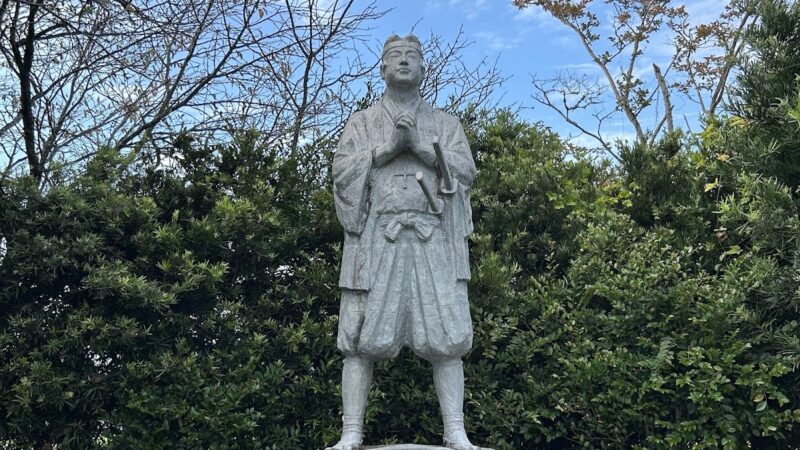
Complete Guide to Hara Castle Ruins (Minamishimabara City) | Highlights and Access to the Shimabara-Amakusa Rebellion’s Final Battle Site, a World Heritage Site
Located in Minamishimabara City, Nagasaki Prefecture, Hara Castle Ruins is the site of the final battle of the Shimabara-Amakusa Rebellion, known as the largest Christian uprising in Japanese history. Registered as a World Cultural Heritage site in 2018 as part of the “Hidden Christian Sites in the Nagasaki Region,” it has attracted attention both domestically and internationally. Built on a hill overlooking the Ariake Sea, the castle ruins are a valuable historical site that conveys the stonework techniques of the Sengoku period and the tragic history of the time.
History and Background of Hara Castle Ruins
Construction of Hara Castle and the Arima Clan
Hara Castle was built between 1599 (Keicho 4) and 1604 (Keicho 9) by Arima Harunobu (Arima Takazumi), a daimyo known for his Christian faith. Located on a hill approximately 30 meters above sea level overlooking the Ariake Sea, Hara Castle functioned as a subsidiary castle of Hinoe Castle, the main castle of the Arima clan.
The castle complex boasted a scale of approximately 1.3 kilometers from north to south and 0.5 kilometers from east to west, and was a flatland castle with a stepped layout, consisting of the main keep, second keep, third keep, and Amakusa keep. Its distinctive feature is the stone walls, which utilize the stonework techniques of the Sengoku period, demonstrating the high level of castle construction technology of the time.
From Abandoned Castle to Stage of Uprising
Hara Castle was abandoned in 1627, less than 30 years after its construction. This was because, after the Arima clan was transferred to Hyuga Nobeoka, Matsukura Shigemasa became the lord of Shimabara Domain and built Shimabara Castle. While remnants such as stone walls and moats remain after the abandonment of Hara Castle, the buildings themselves were demolished.
However, this abandoned castle became the final stronghold for approximately 37,000 rebels during the Shimabara-Amakusa Rebellion, which broke out in 1637. The rebels utilized the defensive capabilities of the abandoned Hara Castle, engaging in a siege against approximately 120,000 shogunate troops for about four months.
The Shimabara-Amakusa Rebellion and Hara Castle
The Shimabara-Amakusa Rebellion was the largest uprising in Japanese history, initiated by farmers suffering from harsh tax collection and persecution of Christians, led by Amakusa Shiro Tokisada. The conflict, which lasted from October 1637 to February of the following year, ended with the siege of Hara Castle.
The shogunate forces mobilized troops from various Kyushu domains and launched a full-scale attack, supported by artillery fire from Dutch ships. On February 28, 1638 (Kanei 15), Hara Castle fell, and the rebel forces were almost completely annihilated. This tragedy served as a catalyst for further strengthening the Edo Shogunate’s policy of prohibiting Christianity.
Hara Castle Ruins as a World Heritage Site
Component Site of the “Hidden Christian Sites in the Nagasaki Region”
On June 30, 2018, Hara Castle Ruins was registered as a World Cultural Heritage site as one of the component sites of the “Hidden Christian Sites in the Nagasaki Region.” This World Heritage site is a group of sites that tell the history of the Hidden Christians who continued to maintain their faith under the prohibition of Christianity from the 17th to the 19th centuries.
Hara Castle Ruins is valued as the site of large-scale religious resistance in the early stages of the prohibition, and as a place that had a significant impact on the subsequent history of Hidden Christians. After the suppression of the rebellion, the shogunate carried out a thorough persecution of Christians, and the believers became “hidden Christians,” secretly continuing their faith while outwardly pretending to be Buddhists.
Value as a National Historic Site
Hara Castle Ruins were designated a National Historic Site in 1938, and their historical value was recognized even before their World Heritage designation. Excavations have unearthed numerous Christian-related artifacts, such as crosses, religious objects, and rosaries, providing valuable evidence of the deep faith of the rebels.
Highlights of Hara Castle Ruins
Main Enclosure and Stone Walls
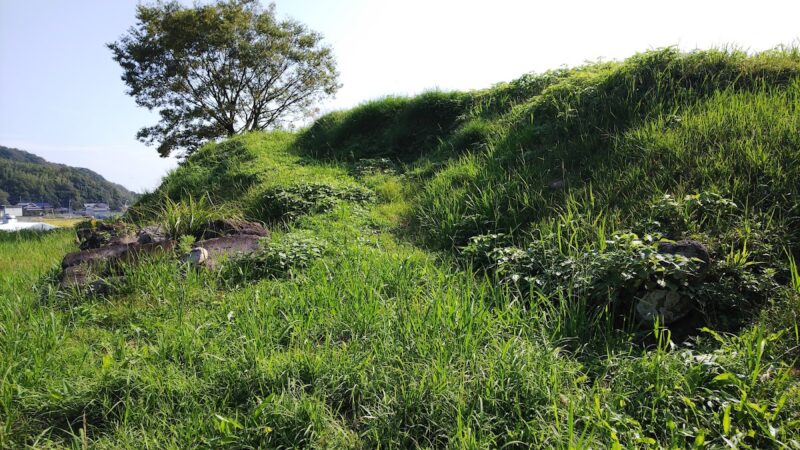
The main enclosure of Hara Castle, the heart of the castle, is located at the highest point of the castle grounds, offering a spectacular panoramic view of the Ariake Sea. Around the main enclosure, the stone walls, built using the stonework techniques of the Sengoku period, remain in excellent condition, allowing visitors to observe the castle construction techniques of that era up close.
The stone walls utilize multiple techniques, including rough-hewn stonework and fitted stonework, allowing us to discern the castle’s construction date and traces of renovations. The stone wall separating the main keep and the second keep is particularly tall, demonstrating its high defensive capabilities.
Second Keep, Third Keep, and Amakusa Keep
Hara Castle ruins have a terraced layout, with the second keep, third keep, and Amakusa Keep arranged in that order from the main keep. Each enclosure is separated by dry moats, earthworks, and stone walls, allowing visitors to explore while understanding the overall structure of the castle.
The second keep features a plaque commemorating its World Heritage designation and explanatory signs, providing detailed information about the historical value of Hara Castle ruins. Amakusa Keep was built to defend against attacks from the Amakusa region, and is said to have been named after the rebel forces who holed up there under the command of Amakusa Shiro.
Dry Moats and Earthworks
The dry moats and earthworks separating each enclosure played a crucial role as defensive structures at Hara Castle ruins. The dry moat between the main keep and the second bailey is particularly deep, attesting to the intensity of the siege. Walking along the earthen ramparts allows you to grasp the overall topography of the castle and imagine how the rebels constructed their defensive lines.
Excavated Artifacts and Archaeological Findings
Continuous archaeological excavations have been conducted at the Hara Castle site, yielding numerous artifacts. In addition to Christian-related items such as crosses, medals, and rosaries, musket balls, swords, and pottery fragments have also been discovered.
These artifacts are on display at the Arima Christian Heritage Museum (Minamishimabara City), and a visit to the museum is highly recommended when visiting the Hara Castle site. Among the excavated crosses are simple ones believed to have been made by the rebels during the siege, conveying the image of people who maintained their faith even in extreme circumstances.
View of the Ariake Sea
One of the major attractions of the Hara Castle site is the magnificent view overlooking the Ariake Sea. On a clear day, you can see all the way to the Amakusa region of Kumamoto Prefecture across the bay, giving you a real sense of why this location was chosen as the final stronghold of the rebellion.
The terrain, jutting out into the sea, is a natural fortress surrounded by the ocean on three sides, one of the reasons why it was able to withstand the shogunate army’s siege for such a long period. At dusk, the sunset over the Ariake Sea is beautiful, leaving a deep impression on visitors.
Basic Information and Access to Hara Castle Ruins
Location and Opening Hours
Location: 859-2412 Minami-Arima-cho Otsu, Minami-Shimabara City, Nagasaki Prefecture
Opening Hours: Open 24 hours (however, nighttime visits are not recommended)
Admission Fee: Free
Closed Days: None
Inquiries: Minami-Shimabara City Board of Education World Heritage Promotion Office (TEL: 0957-73-6706)
Access by Car
The most convenient way to access Hara Castle Ruins is by car.
- From the Isahaya Interchange on the Nagasaki Expressway: Approximately 1 hour 20 minutes (approximately 60 km)
- From the center of Shimabara City: Approximately 40 minutes (via National Route 251)
- From Nagasaki Airport: Approximately 1 hour 30 minutes
Parking: Dedicated parking lot for Hara Castle Ruins (free, approximately 50 spaces for regular cars)
It’s about a 15-minute walk from the parking lot to the main keep ruins. A paved walking path is maintained, but there are some inclines, so comfortable shoes are recommended.
Access by Public Transportation
Using the Shimabara Railway:
- Get off at Shimabara Station or Shimabara Gaiko Station on the Shimabara Railway
- Take the Shimabara Railway bus bound for Kuchinotsu Port (approximately 60 minutes)
- Get off at the Hara Castle bus stop and walk for approximately 15 minutes.
Since bus service is limited, it is recommended to check the timetable in advance.
Direct Bus from Nagasaki Airport:
During peak seasons, direct buses from Nagasaki Airport to Minamishimabara City may be available. Please contact the Minamishimabara City Tourism Association for details.
Estimated Visiting Time
If you wish to thoroughly explore the Hara Castle ruins, allow approximately 1 hour 30 minutes to 2 hours. This includes round-trip travel from the parking lot to the main keep, exploring each enclosure, and taking photographs.
Those interested in history or wishing to observe details should allocate more time.
Recommended Spots near Hara Castle Ruins
Arima Christian Heritage Museum
Located about 15 minutes by car from the Hara Castle ruins, the Arima Christian Heritage Museum exhibits artifacts excavated from the Hara Castle and Hinoe Castle ruins. It displays valuable materials related to Christianity and detailed explanations of the Shimabara-Amakusa Rebellion. Visiting before or after your visit to the Hara Castle ruins will provide a deeper understanding.
Since August 2022, a service has been available where visitors can obtain an original castle stamp (Goshuin) by taking a photo of the World Heritage registration plaque at Hara Castle Ruins and presenting it at the memorial museum.
Hinoe Castle Ruins
Hinoe Castle Ruins, the main castle of the Arima clan, is also an important historical site as part of the “Hidden Christian Sites in the Nagasaki Region.” Located about 20 minutes by car from Hara Castle Ruins, visiting both together allows for a deeper understanding of the Arima clan’s rule and the history of Christian daimyo.
Numerous artifacts from the Christian daimyo era have been unearthed at Hinoe Castle Ruins, suggesting the possibility of a seminary (theological school) being located there.
Ariie Christian Historical Park (Sakurababa Christian Cemetery Group)
Ariie Christian Historical Park, located in Ariie-cho, Minamishimabara City, preserves numerous Christian cemeteries from the early Edo period. Tombstones inscribed with Christian symbols such as crosses and chalices are valuable historical documents that convey the state of faith before the ban on Christianity.
Located about 25 minutes by car from Hara Castle Ruins, it can be included in a tour of Christian historical sites in Minamishimabara City.
Hayasaki Peninsula
The Hayasaki Peninsula, extending south from Hara Castle Ruins, is an area charming for its beautiful natural scenery and tranquil fishing village landscape. From the area around Hayasaki Fishing Port at the tip of the peninsula, you can enjoy spectacular views of the Ariake Sea and Mount Unzen.
There are also restaurants serving fresh seafood, making it a perfect stop during sightseeing.
Gourmet and Lunch Spots near Hara Castle Ruins
Homemade Flavors Marsala
“Homemade Flavors Marsala,” a popular home-style cooking restaurant in Minamishimabara City, offers home-style dishes made with locally sourced ingredients. Their daily specials and regional dishes are popular and loved by both tourists and locals.
Located about 20 minutes by car from Hara Castle Ruins, it can get crowded during lunchtime, so it’s recommended to visit with plenty of time to spare.
Seafood Cuisine of the Shimabara Peninsula
In Minami-Shimabara City, facing the Ariake Sea, dishes made with fresh seafood are a specialty. Especially famous are octopus, kuruma prawns, and conger eels from the Ariake Sea, which can be enjoyed at local restaurants and eateries.
Small restaurants are scattered around the Hara Castle Ruins, where you can enjoy unique local flavors.
Guzoni
Guzoni, a famous local dish of the Shimabara Peninsula, is said to have been devised by Amakusa Shiro as rations during the Shimabara-Amakusa Rebellion. This nutritious soup contains many ingredients such as mochi (rice cakes), chicken, vegetables, and eggs, and is served at many restaurants in Minami-Shimabara City.
When visiting Hara Castle Ruins, enjoying Guzoni while reflecting on history is a wonderful experience.
Hotels and Accommodations near Hara Castle Ruins
Accommodations in Minamishimabara City
Minamishimabara City has a scattering of small accommodations, including guesthouses and business hotels. Guesthouses like “Kazebiyori” offer local cuisine and warm hospitality.
Since the site was designated a World Heritage Site, reservations may be difficult to obtain at certain times, so early booking is recommended.
Hotels in Shimabara City
Shimabara City, about a 40-minute drive from Hara Castle Ruins, has more accommodations. It boasts a good selection of hot spring inns and business hotels, making it a convenient base for sightseeing.
A popular sightseeing plan involves using Shimabara City as a base to visit Hara Castle Ruins, Shimabara Castle, and Unzen Onsen.
Unzen Onsen
Located in the central part of the Shimabara Peninsula, Unzen Onsen is known as one of Japan’s leading hot spring resorts. It’s about an hour’s drive from Hara Castle Ruins, making it ideal for a travel plan combining sightseeing and hot springs.
From luxury ryokans to reasonably priced accommodations, there’s a wide range of choices, allowing you to relax and unwind while enjoying the benefits of sulfur springs.
Notes and Manners When Visiting Hara Castle Ruins
Clothing and Items to Bring
Hara Castle Ruins is an outdoor historical site with many unpaved areas, so comfortable sneakers or athletic shoes are recommended. In summer, the sun is strong, so bring a hat, sunscreen, and drinking water. In winter, the sea breeze is cold, so warm clothing is necessary.
In rainy weather, the ground can be slippery, so caution is advised.
Manners for Historic Site Preservation
Hara Castle Ruins is a nationally designated historical site and a component of a World Heritage Site. Climbing on the stone walls, damaging the remains, and littering are strictly prohibited. Also, please do not enter areas where excavation is underway.
Photography is permitted, but please be considerate of other visitors.
Respect for History
Hara Castle Ruins is the scene of a tragedy where approximately 37,000 people lost their lives. When visiting, it is important to reflect on the events that took place here and to view the site with respect.
Especially at the site of the main keep and the place where the rebels fought to the end, we recommend taking some time to quietly contemplate history.
Tourist Spots in Minamishimabara City to Visit Along with Hara Castle Ruins
Natural Landscapes of Minamishimabara City
Minamishimabara City is a region rich in nature, surrounded by the Ariake Sea and Mount Unzen. It offers not only historical attractions but also abundant natural beauty, such as coastal drives, terraced rice fields, and seasonal flowers.
Cherry blossoms in spring, sunflowers in summer, and cosmos in autumn are in full bloom, and can be enjoyed in conjunction with Hara Castle Ruins.
Shimabara Peninsula Geopark
The Shimabara Peninsula is designated as the “Shimabara Peninsula Geopark,” an area where you can learn about the unique topography and geology formed by volcanic activity. There are also geosites around Hara Castle Ruins, allowing you to experience the history of the Earth. ### Kuchinotsu Port and its History
Located at the southern tip of Minamishimabara City, Kuchinotsu Port was once a thriving port town thanks to trade with the West. During the Christian era, it served as a landing site for missionaries, and in the Meiji era, it developed as a coal export port.
At the Kuchinotsu Historical and Folk Museum, you can learn about the history of this port town. Visiting it in conjunction with the Hara Castle Ruins allows you to understand the multifaceted history of Minamishimabara City.
Summary: Reflecting on History and Peace at Hara Castle Ruins
The Hara Castle Ruins in Minamishimabara City, Nagasaki Prefecture, are one of the most important historical sites in the history of Christianity in Japan. Its designation as a World Heritage Site has attracted international attention, and it now draws many visitors.
The stone walls and dry moats remaining amidst the beautiful scenery overlooking the Ariake Sea quietly convey the castle-building techniques of the Sengoku period and the tragic history of the Shimabara-Amakusa Rebellion. Visiting the Hara Castle Ruins is not merely sightseeing; it provides an opportunity to reflect on freedom of religion, the preciousness of peace, and human dignity.
When you visit Minamishimabara City, be sure to stop by the Hara Castle ruins and reflect on the events that took place there. Visiting related facilities such as the Arima Christian Heritage Museum and the Hinoe Castle ruins in conjunction with the Hara Castle ruins will provide a deeper understanding and a more profound experience.
The Hara Castle ruins are an important place to remember the tragedy of the past and to serve as a lesson for the future. It is our responsibility to protect its value as a World Heritage site while continuing to convey the truth of history to many people.
-680x450.png)