Complete Guide to Jinzai Castle (Izumo City, Shimane Prefecture) | A Sengoku Period Mountain Castle and the History of the Jinzai Clan
Jinzai Castle is a Sengoku period mountain castle located in Higashi-Jinzai-cho, Izumo City, Shimane Prefecture. It was counted as one of the Ten Great Fortresses of the Amago clan and played an important role as the residence of the Jinzai clan. This article comprehensively introduces information useful for castle enthusiasts and tourists alike, covering the history, layout, access methods, and highlights of Jinzai Castle.
Basic Information on Jinzai Castle
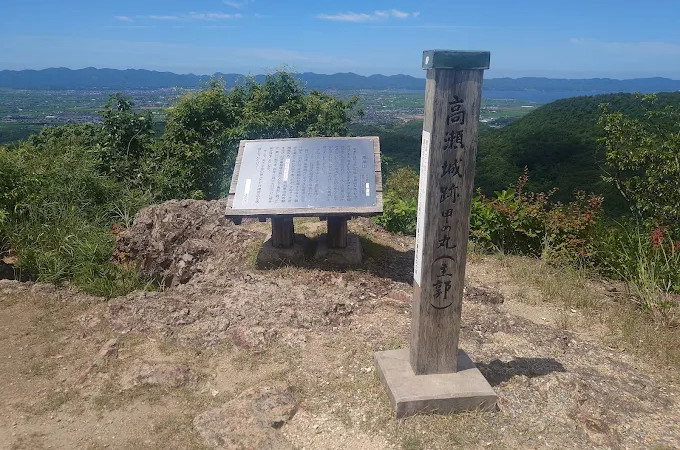
Jinzai Castle is a mountain castle built on Mt. Takakura, which rises to an elevation of 101.3m, just north of Nameza Shrine. It is also known as Takeo Castle, Takakura Castle, and Ryuo-zan Takeo Castle, with a relative height of approximately 90m. Currently, a walking path has been developed, and a gazebo, stone monument, and information board have been installed at the site of the main keep, making it a viewpoint offering panoramic views of Izumo City.
Location: Higashi-Jinzai-cho, Izumo City, Shimane Prefecture
Elevation: 101.3m
Relative Height: Approximately 90m
Construction Period: Around 1500 (estimated)
Castle Type: Mountain Castle
Remains: Enclosures, moats, earthworks, etc.
Origins and History of the Jinzai Clan
Genealogy from the Ono Clan, one of the Musashi Seven Clans
The Jinzai clan is a family descended from the Ono clan, one of the Musashi Seven Clans. During the Kamakura period, Ono Takamichi was appointed as a jitō (land steward) by the Kamakura Shogunate and moved to Jinzai in Jinmon District, Izumo Province, which is considered the beginning of the Jinzai clan. Ono Takamichi adopted the surname Jinzai locally and subsequently developed as a local lord ruling this area.
The Jinzai clan ruled this area for generations, and used Jūraku-ji Temple as their family temple and center of faith. Jurakuji Temple still stands southeast of Jinzai Castle, preserving its deep connection to the Jinzai clan.
Role as one of the Amago Ten Castles
During the Sengoku period (Warring States period), the Jinzai clan came under the control of the Amago clan, who ruled Izumo Province, and played an important role as one of the “Amago Ten Castles.” The Amago Ten Castles were a group of major branch castles supporting the Amago clan, and Jinzai Castle functioned as a strategic stronghold.
Through the twelve generations of the Jinzai family’s rule, Jinzai Castle developed as a defensive base in western Izumo Province and as the center of governance for the surrounding region. From the main keep built on the summit of Takakura Mountain, one could see the Izumo Plain and even the Sea of Japan, giving it an extremely advantageous military location.
Jinzai Motomichi and the End of Jinzai Castle
Turmoil in the Sengoku Period
Indispensable to understanding the history of Jinzai Castle is the existence of Jinzai Motomichi. As the head of the Kanzai clan, Kanzai Motomichi joined the Amago faction and pledged his loyalty to the Amago clan. During the Sengoku period, Izumo Province was the front line of the power struggle between the Amago and Mori clans, and Kanzai Castle was caught in the middle of this conflict.
The Amago clan expanded their power in the San’in region, centered on Izumo Province, but gradually fell into a disadvantageous position due to their conflict with the Mori clan, who became the dominant power in the Chugoku region. Kanzai Motomichi is said to have remained loyal to the Amago clan and continued to resist until the very end.
The Fall of the Castle and the Fate of the Kanzai Clan
When the Amago clan was defeated by the Mori clan, Kanzai Castle shared the same fate. While its construction is estimated to be around 1500, there are various theories regarding the exact date of its abandonment based on historical records, and the precise date remains unknown. However, with the fall of the Amago clan, Kanzai Castle is believed to have ended its role along with the end of the Sengoku period.
While detailed records of the end of Kanzai Motomichi’s life are scarce, it is presumed that, like many samurai who joined the Amago clan, he disappeared from the historical stage with the downfall of his lord’s family.
Layout and Structure of Kanzai Castle
Features of the Main Enclosure (Honmaru)
The main enclosure of Kanzai Castle is located on the summit of Mount Takakura. Currently, it is being maintained, with a stone monument and information board installed to convey the castle’s history to visitors. From the main enclosure, a 360-degree panoramic view unfolds, offering views of Izumo city, and on clear days, even the Sea of Japan and Lake Shinji.
The main enclosure is of a standard size for a mountain castle, and a gazebo has been built, serving as a resting spot. This excellent view indicates its important role as a military surveillance function.
Enclosures and Defensive Facilities
Multiple enclosures are arranged around the main enclosure, forming a tiered defensive structure. Taking advantage of its location at a relative elevation of 90 meters, the castle was designed to provide a defensive advantage from above.
The remains include traces of moats and earthworks, showcasing a typical defensive system of a mountain castle from the Sengoku period. The moats, in particular, were constructed to cut across the ridgeline, functioning as a crucial defensive line to prevent enemy incursions.
Features of the Ascent Route and Castle Layout
Currently, a walking path has been constructed, making it relatively easy to ascend to the castle. The ascent route starts from the side of the Namesa Shrine, giving a glimpse of the former main approach. The climb takes approximately 20-30 minutes on foot, making it manageable even for those without much physical stamina.
The castle layout skillfully utilizes the terrain, maximizing the mountain’s natural strength as a fortress. As its official name, Ryuo-zan Chikubu Castle, suggests, the castle is characterized by its steep terrain, resembling a dragon ascending to the heavens.
How to Access Jinzai Castle
Access by Train
The nearest station is Izumo-shi Station on the JR San’in Main Line. Jinzai Castle is approximately 7km from Izumo-shi Station.
Access from Izumo-shi Station:
- By Taxi: Approximately 15 minutes
- By Bus: Take the Ichibata Bus bound for “Jinzai,” then walk approximately 15 minutes from the nearest bus stop.
- By Bicycle Rental: Bicycle rentals are available around Izumo-shi Station.
Izumo-shi Station is also the gateway to Izumo Taisha Shrine, making it a convenient base for sightseeing. A sightseeing plan combining Jinzai Castle and Izumo Taisha Shrine is also recommended.
Access by Car and Parking
Access by car is the most convenient.
Access from Major Roads:
- Approximately 15 minutes from the San’in Expressway “Izumo IC”
- Accessible via Prefectural Roads from National Route 9
Parking Information:
You can use the parking lot at Namesa Shrine. Since parking is limited, it’s recommended to arrive early on weekends. The castle entrance is just a few minutes’ walk from the shrine’s parking lot.
When entering the address into your car navigation system, it’s best to search for “Higashi-Jinsei-cho, Izumo City, Shimane Prefecture” or “Namesa Shrine.”
Highlights and Sightseeing Points of Jinsei Castle
Spectacular View from the Main Keep Ruins
The greatest highlight of Jinsei Castle is undoubtedly the view from the main keep ruins. The panoramic view of Izumo city from an altitude of 101 meters is breathtaking, allowing you to imagine the samurai of the Sengoku period gazing upon this same scenery.
On clear days, you can see the direction of Izumo Taisha Shrine, the Sea of Japan, and even the mountain range of the Chugoku Mountains, making it an excellent spot to experience the geographical features of Izumo Province. The view at sunset is particularly beautiful and ideal for photography.
Combined Sightseeing with Namesa Shrine
Namesa Shrine, located at the entrance to Kanzai Castle, is another must-see spot. This shrine has long been revered as a center of faith in this region and is believed to have had deep ties to the Kanzai clan.
The shrine grounds are enveloped in a tranquil atmosphere, and the route of visiting the shrine and then climbing to Kanzai Castle is an ideal course for a historical walk. The shrine buildings and the large trees on the grounds are also impressive.
Juraku-ji Temple and the Kanzai Clan’s Family Temple
Juraku-ji Temple, located southeast of Kanzai Castle, is known as the family temple of the Kanzai clan. It houses the tombs of successive generations of the Kanzai clan and related historical materials, making it a must-see spot for those who want to learn more about the history of the Kanzai clan.
The temple grounds contain historical buildings and stone structures, allowing for a peaceful and serene experience. Visiting it in conjunction with Kanzai Castle allows for an understanding of both the faith and lifestyle of the Kanzai clan.
Well-maintained walking paths and information boards
In recent years, the Jinzai Castle ruins have been improved, and the walking paths are well-maintained and easy to walk on. Information boards are placed at key points, allowing you to learn about the castle’s structure and history while strolling.
There are also gazebos, so you can take a break during your climb. However, as it is a mountain castle, we recommend wearing comfortable clothing and shoes. Particular caution is needed after rain, as the ground can become slippery.
Tourist attractions around Jinzai Castle
Izumo Taisha Shrine
Located about 20 minutes by car from Jinzai Castle, Izumo Taisha Shrine is a representative tourist attraction in Shimane Prefecture. It is nationally famous as a shrine for matchmaking and is bustling with visitors throughout the year. Visiting it in combination with Jinzai Castle allows you to experience both the history and faith of Izumo.
Tourist facilities in Izumo City
Around Izumo City Station, there are many facilities where you can learn about Izumo’s history and culture, such as the Izumo Science Museum and the Izumo Yayoi no Mori Museum. Furthermore, there are numerous restaurants where you can enjoy local cuisine, including Izumo soba noodles.
Lake Shinji and Matsue Area
A 30-minute drive east from Jinzai Castle will take you to Lake Shinji, the seventh largest lake in Japan. The sunset over Lake Shinji is known as a spectacular spot, and has been selected as one of “Japan’s Top 100 Sunsets.” If you extend your trip further to Matsue City, you can enjoy the charming streets of Matsue Castle, a national treasure, and the historic castle town.
Points to Note and Advice When Visiting Kanzai Castle
Clothing and Equipment
Since Kanzai Castle is a mountain castle, the following equipment is recommended:
- Shoes: Trekking shoes or athletic shoes (non-slip)
- Clothing: Comfortable clothing, appropriate warmth and sun protection for the season
- Items to Bring: Drinking water, towel, insect repellent (summer)
- Other: Camera, binoculars (to enjoy the view)
Best Time to Visit
Kanzai Castle is open year-round, but the recommended time is as follows:
- Spring (March-May): The weather is mild and the castle is easy to climb. Beautiful fresh greenery
- Autumn (September-November): Enjoy the autumn foliage; the air is clear and the views are excellent.
- Winter: Be aware that climbing the castle may be difficult during heavy snowfall.
- Summer: Heat and insect repellent measures are necessary.
Estimated Time Required
Please refer to the following for the time required for sightseeing at Kanzai Castle:
- Climbing the castle only: Approximately 1 hour (round trip)
- Thorough exploration: Approximately 1.5-2 hours
- Including Namesa Shrine and Juraku-ji Temple: Approximately 2.5-3 hours
We recommend planning with ample time.
Historical Value and Future Preservation of Kanzai Castle
Kanzai Castle holds significant historical value as a castle of a local powerful family during the Sengoku period in Izumo Province. The fact that it played a part in the defense network within the Amago clan’s sphere of influence, as one of the Amago Ten Banners, is valuable material for the study of regional history during the Sengoku period.
Currently, Izumo City is working on development, creating an environment where visitors can easily learn about history through the construction of walking paths and the installation of information boards. Local history enthusiasts and preservation societies are also actively involved, conducting regular cleaning activities and surveys.
The Jinzai Castle ruins are an important cultural property that should be passed down to future generations as a regional historical heritage. When visiting, please be considerate of the ruins, take your trash with you, and observe proper etiquette.
Summary: Experience Sengoku-era Izumo at Jinzai Castle
Jinzai Castle is a valuable Sengoku-era mountain castle remaining in Izumo City, Shimane Prefecture. It was the residence of the Jinzai clan, who played an important role as one of the Amago Ten Banners, and from Takakura Mountain (101m above sea level), a spectacular panoramic view of the Izumo Plain unfolds.
Jinzai Castle boasts a rich history, from the Jinzai clan, descendants of the Ono clan (one of the seven Musashi clans), who descended to Japan during the Kamakura period and ruled for twelve generations, to the turbulent Sengoku period when Jinzai Motomichi joined the Amago clan and resisted to the very end, and the surviving remains such as baileys and moats.
The castle is relatively easy to reach via well-maintained walking paths, and visiting related historical sites such as Namesa Shrine and Juraku-ji Temple allows for a deeper understanding of the Jinzai clan and the history of Izumo Province. A historical exploration combining Jinzai Castle with nearby tourist attractions such as Izumo Taisha Shrine and Matsue Castle is also highly recommended.
With easy access from Izumo City Station and ample parking, it’s conveniently located for both train and car visits. Be sure to visit Jinzai Castle and experience the atmosphere of a Sengoku period mountain castle. As a hidden historical spot in Shimane Prefecture, it’s sure to be a memorable experience.