Shiraga Castle (Matsue City, Shimane Prefecture) | A Thorough Explanation of the History and Remains of the Amago Clan’s Foremost Fortress
What is Shiraga Castle?
Shiraga Castle (Shiraga-jō) is a Sengoku period mountain castle built on Mt. Shiraga (elevation 154m) in Hōyoshi-chō, Matsue City, Shimane Prefecture. Also known as Shiraga Castle, Shiragayama Castle, and Shiragayama Castle, it was known as the foremost fortress among the branch castles of the Amago clan, who ruled Izumo Province.
Its geographical advantage of being located on the northern shore of Lake Shinji made it a crucial commercial and economic point controlling water transport to Mihonoseki and Lake Nakaumi. Due to this strategic importance, it was counted as the foremost of the Amago clan’s ten castles, and the Matsuda clan, senior retainers of the Amago clan, served as its lords for generations.
Currently, the remains of this mountain castle attract attention from castle enthusiasts and history buffs.
History and Background of Shiraka Castle
Construction and the Amago Clan Era
Shiraka Castle is believed to have been built during the late Muromachi period. While there are no clear records of its builder, it is thought to have been constructed by either the Amago or Matsuda clan.
The Amago clan was a Sengoku-period daimyo (feudal lord) that expanded its power throughout the San’in region, based in Izumo Province. They established numerous branch castles around their main castle, Gassan-Toda Castle. Among these, Shiraka Castle was the foremost of the “Amago Ten Flags,” a group of major branch castles, and played a crucial role as a strategic base for securing the supply routes of provisions and military supplies to Gassan-Toda Castle.
The Matsuda clan, who served as castle lords, were hereditary vassals of the Amago clan and defended this important base for generations. In particular, Matsuda Nobuyasu, the last lord of the castle, was known as the foremost warrior under the Amago.
Shiraka Castle was the first of the ten major branch castles known as the “Amago Ten Flags,” and played an extremely important role as a strategic base for securing the supply routes of rice and military supplies to Gassan-Toda Castle.
The Matsuda clan, who served as castle lords, were hereditary vassals of the Amago clan and defended this important base for generations. In particular, Matsuda Nobuyasu, the last lord of the castle, was known as the foremost warrior under the Amago.
The Battle of Shiraka Castle
The most important event in the history of Shiraka Castle is the invasion by the Mori clan in 1563, known as the “Battle of Shiraka Castle.”
Mori Motonari, who was in conflict with the Amago clan over hegemony in the Chugoku region, adopted a strategy of successively capturing the Amago clan’s subsidiary castles in order to weaken their power. In August of 1563, the Mori army began its attack on Shiraka Castle.
The Mori army’s siege was meticulously planned. Kikkawa Motoharu occupied Mayama Castle and used it as a forward castle, and further constructed a forward castle at Arakijo Castle. A forward castle is a temporary castle built nearby to attack an enemy castle, serving as a base in preparation for a long siege.
The castle lord, Matsuda Nobuyasu, held out bravely, and although reinforcements were sent from Amago Yoshihisa of Gassan-Toda Castle, the Mori army repelled them. First, Kobiraki Castle fell, and the main castle, Shiraka Castle, became isolated.
After a siege lasting several months, in October of the same year, Matsuda Nobuyasu finally decided to surrender. The fall of Shiraka Castle was a major blow to the Amago clan and contributed to their subsequent decline.
Shiraka Castle After Abandonment
Shiraka Castle was abandoned after its fall in 1563. After the Mori clan unified the Chugoku region, this area came under Mori control, but Shiraka Castle was never used as a military base again.
Currently, the remains of the mountain castle are preserved as a historical heritage site by the locals. Hiking trails are maintained, allowing visitors to explore the castle ruins.
Structure and Layout of Shiraka Castle
Location and Geographical Characteristics
Shiraka Castle is a typical mountain castle built on the summit of Shiraka Mountain, at an altitude of 154m. Located on the northern shore of Lake Shinji, it boasted an excellent location overlooking the Shimane Peninsula to the north and Lake Shinji and Lake Nakaumi to the south.
This location was militarily crucial. It allowed for monitoring and control of the water transport route connecting Lake Nakaumi and Lake Shinji, and also served to prevent invasions from the Shimane Peninsula. As a vital point protecting the supply route to Gassan Tomita Castle, it was an indispensable part of the Amago clan’s defense network.
Castle Structure
Shiraka Castle is a mountain castle with multiple enclosures (kuruwa) arranged around the mountaintop. The following are the main remains that have been confirmed:
Main Enclosure (Honmaru)
Located at the mountaintop, this was the most important enclosure and is believed to have housed the lord’s residence and command post. The terrain remains flat today.
Secondary Enclosures
Multiple enclosures were arranged surrounding the main enclosure. These are presumed to have functioned as defensive facilities and troop garrisons.
Dry Moats
These are defensive moats dug between enclosures or on slopes. Multiple dry moats have been identified at Shiraka Castle, indicating they were crucial defensive structures to prevent enemy intrusion.
Wells
Securing a water source was vital for mountain castles. The remains of wells at Shiraka Castle suggest that the castle was equipped to withstand prolonged sieges.
Earthworks
These are defensive structures built by piling up earth around enclosures. They served to prevent enemy intrusion and protect against arrow and gunfire.
Relationship with Kobiraka Castle
Shiraka Castle had a related castle called “Kobiraka Castle.” Kobiraka Castle is thought to have functioned as a subsidiary or outpost of Shiraka Castle.
During the Mori clan’s invasion in 1563 (Eiroku 6), Kobiraka Castle fell first, followed by the attack on the main castle, Shiraka Castle. This suggests that Kobiraka Castle played a crucial role as a forward base for Shiraka Castle.
Remains and Highlights of Shiraka Castle
Existing Remains
Even today, more than 460 years after its construction, several remains of Shiraka Castle are well-preserved.
Enclosure Remains
Multiple flat areas remain on the mountaintop and slopes, allowing us to confirm the former layout of the enclosures. The main enclosure remains, in particular, are clearly visible as a relatively large flat area.
Dry Moats
Traces of dry moats can be seen in various places within the castle grounds. Although some parts are filled in, the depressions in the terrain allow us to discern the layout of the defensive structures at the time.
Well Remains
The remains of a well, a valuable water source for mountain castles, can be confirmed. While the depth and exact structure are unknown, traces of stonework remain.
Cut Slopes
These are defensive structures created by cutting into the surrounding area of the enclosures to create steep slopes. By utilizing the natural terrain while artificially creating steep slopes, it made enemy intrusion difficult.
Points to Note When Visiting and Viewing the Castle
When visiting the Shiraka Castle ruins, paying attention to the following points will help you understand the castle’s structure and history more deeply.
View
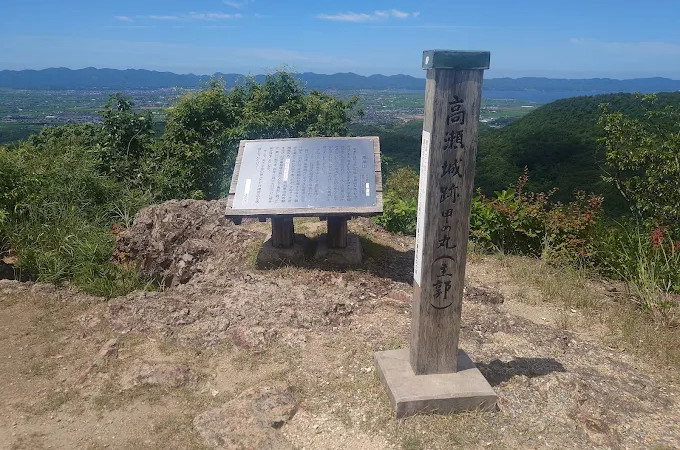
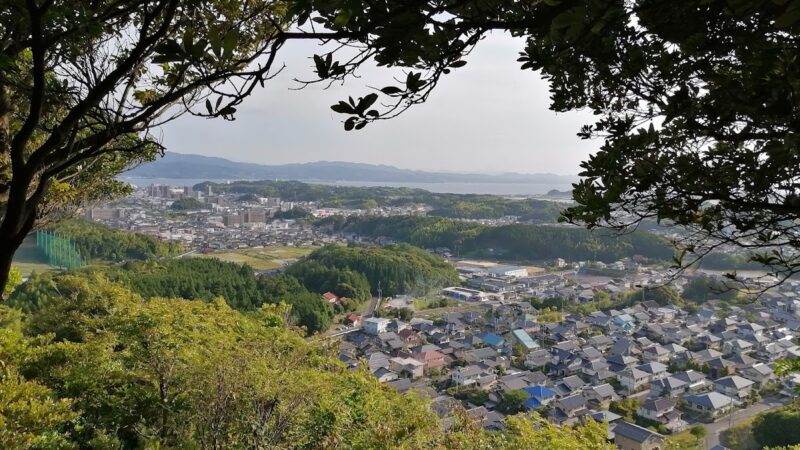
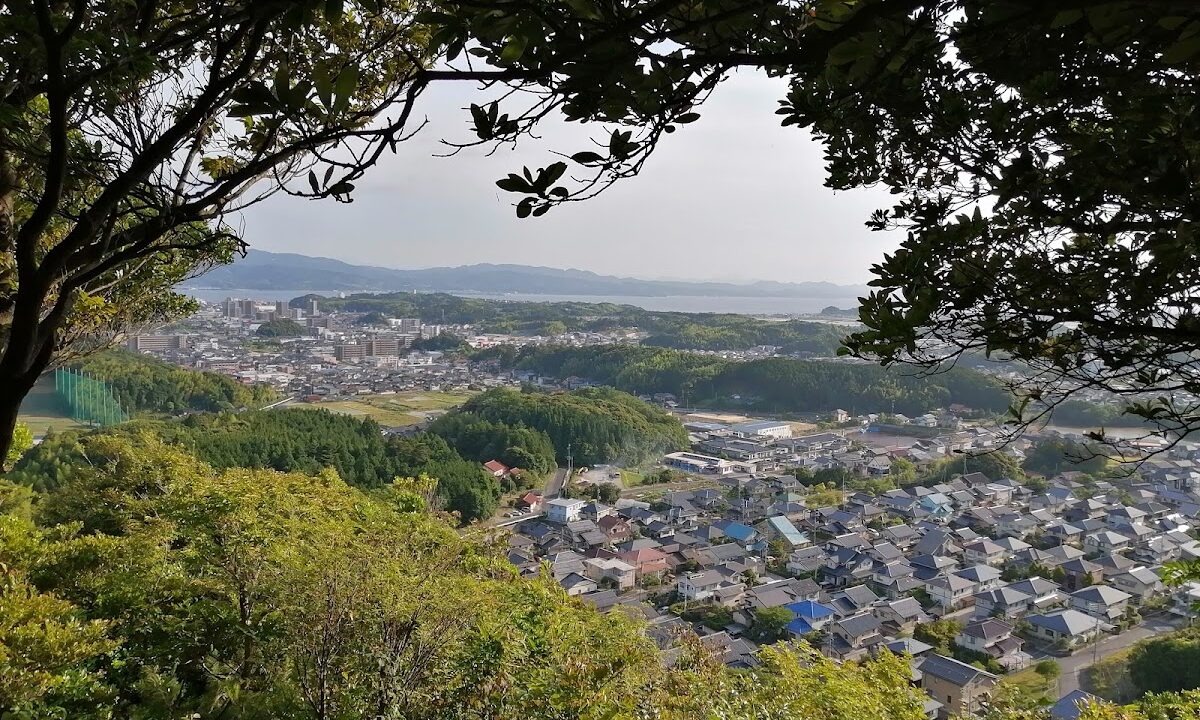
From the mountaintop, you can enjoy a panoramic view of Lake Shinji, Matsue city, and the Shimane Peninsula. This view is the main reason why Shiraka Castle was a strategically important location.
Layout of Enclosures
By imagining how the multiple enclosures were arranged and what kind of defensive lines they formed, you can understand the castle-building techniques and strategies of the Sengoku period.
Utilization of Topography
By observing the layout, which skillfully utilizes natural ridges and valleys, you can discern the ingenuity of the castle builders of the time.
The Amago Ten Castles and the Importance of Shiraka Castle
What are the Amago Ten Castles?
The Amago Ten Castles refer to the ten main branch castles that the Amago clan positioned around Gassan-Toda Castle to protect it. These were not merely branch castles, but formed a strategic defensive network to maintain the Amago clan’s sphere of influence.
The Amago Ten Castles included not only Shiraka Castle, but also Mitoya Castle, the Shingu clan’s stronghold, and Akana Castle. Each castle was staffed by a senior retainer of the Amago clan, responsible for regional control and securing supply routes to Gassan-Toda Castle.
Reasons why Shiraka Castle was considered the foremost castle
There are several clear reasons why Shiraka Castle was considered the foremost castle among the Amago Ten Castles.
Geographical Importance
Located on the northern shore of Lake Shinji, it was a strategic point controlling water transport on Lake Nakaumi and Lake Shinji, as well as the Shimane Peninsula. Controlling this region meant securing supply routes to Gassan-Toda Castle.
Economic Value
Its location allowed it to control trade routes through the port of Mihonoseki, making it a commercially and economically important base. It also functioned as a center for tax collection and the accumulation of goods.
Defensive Strength
As it was described as “the strongest castle among the Amago clan’s branch castles,” its defensive strength was outstanding. In fact, during the Mori clan’s invasion in 1563 (Eiroku 6), the castle held out for several months.
The Status of the Castle Lord
The Matsuda clan held a particularly important position among the Amago clan’s hereditary vassals, and Matsuda Nobuyasu was even called “the foremost warrior under the Amago.” The high status of the castle lord also indicates the importance of Shiraga Castle.
The Matsuda Clan and Shiraga Castle
The Origins of the Matsuda Clan and Their Relationship with the Amago Clan
The Matsuda clan was a family of hereditary vassals who served the Amago clan, and they served as the lords of Shiraga Castle for generations. As the Amago clan expanded its power in Izumo Province, the Matsuda clan played an important military and political role.
The Matsuda clan was not merely castle lords, but also functioned as regional rulers. They controlled the territory around Shiraga Castle, and were responsible for tax collection, maintaining public order, and military mobilization.
Matsuda Nobuyasu and His Final Battle
Matsuda Nobuyasu, the last lord of Shiraka Castle, was known as a particularly brave warrior within the Amago clan. His reputation as “the foremost under the Amago” demonstrates his exceptional military prowess and loyalty.
During the Mori army’s invasion in 1563 (Eiroku 6), Matsuda Nobuyasu prepared for a fierce resistance. Despite the overwhelming difference in troop numbers, he held out for several months, demonstrating his unwavering loyalty to Amago Yoshihisa of Gassan-Toda Castle.
Ultimately, he was forced to surrender, but his resistance inflicted significant damage on the Mori army and demonstrated the pride of the Amago samurai. While there are various theories about Matsuda Nobuyasu’s fate after the surrender, his bravery has been passed down through generations.
Access and Visiting Guide to Shiraka Castle
Location and Basic Information
Location: Hōyoshi-chō, Matsue City, Shimane Prefecture
Elevation: 154m
Castle Classification: Mountain Castle
Construction Period: Late Muromachi Period
Abandonment Period: Eiroku 6 (1563)
Designated Cultural Property: None (Not designated as a city historical site, etc.)
Access Methods
Access by Car
- Approximately 10 minutes from Matsue-Nishi IC on the San’in Expressway
- Approximately 15 minutes from Matsue city center via National Route 9
- There is no dedicated parking lot for the castle ruins, but there is some roadside parking available near the trailhead (limited number of spaces)
Access by Public Transportation
- Approximately 20 minutes by Ichibata Bus bound for “Hōyoshi” from JR Matsue Station, get off at “Hōyoshi” bus stop, and walk approximately 20 minutes to the trailhead
- Due to the limited number of buses, it is necessary to check the timetable in advance.
Ascent Route and Estimated Time
The trail to Shiraka Castle Ruins is maintained from the Hoki-cho side.
From the Trailhead to the Summit
- Estimated Time: Approximately 20-30 minutes one way
- Difficulty: Beginner to Intermediate (Caution is advised for those unfamiliar with mountain trails)
- Round-trip Visiting Time: Approximately 1 hour to 1 hour 30 minutes
Precautions During Hiking
- The hiking trail is well-maintained, but there are some steep slopes and areas with poor footing.
- Wearing athletic shoes or trekking shoes is recommended.
- In summer, bring insect repellent and drinking water.
- In winter, there is a possibility of snow and ice, so check the conditions in advance.
- Cell phone reception is good, but it is recommended to avoid hiking alone.
Best Season for Visiting
Spring (March-May)
The weather is mild and ideal for hiking. The season of fresh greenery brings beautiful mountain scenery, making it the most recommended time to visit, except for those with hay fever.
Autumn (September-November)
It’s cool and a great time to enjoy the autumn foliage. Mid-October to early November is especially beautiful with stunning autumn colors and excellent views.
Summer (June-August)
Due to the heat and numerous insects, early morning visits are recommended. However, be careful as the ground can be slippery during the rainy season.
Winter (December-February)
This season is for experienced hikers due to the possibility of snow and ice. However, the air is clear, making for exceptional views on sunny days.
Related Historical Sites and Tourist Spots in the Surrounding Area
Gassan Tomita Castle
If you visit Shiraka Castle, we highly recommend also visiting Gassan Tomita Castle, the main castle of the Amago clan. Located in Yasugi City, Gassan Tomita Castle is a renowned castle, considered one of Japan’s five greatest mountain castles, and flourished as the base of the Amago clan.
Located about 40 minutes by car from Shiraka Castle, visiting both castles will give you a deeper understanding of the Amago clan’s castle network.
Matsue Castle
Matsue Castle, designated a National Treasure, is about 20 minutes by car from Shiraka Castle. Built in the early Edo period, it is a valuable castle with a surviving keep.
By comparing Shiraka Castle, a mountain castle from the Sengoku period, with Matsue Castle, a flatland castle from the Edo period, you can learn about the changes in castle construction techniques over time.
Lake Shinji
Lake Shinji, which spreads out below Shiraka Castle, is known as one of Japan’s leading brackish lakes. It is also famous as a spot for sunsets, and while the view from the castle ruins is magnificent, watching the sunset from the lakeside is also recommended.
Seeing Lake Shinji firsthand will give you a real sense of why Shiraka Castle was considered important as a key point for water transport.
Mayama Castle Ruins
The ruins of Mayama Castle, which Kikkawa Motoharu used as an outpost during the siege of Shiraka Castle in 1563 (Eiroku 6), are located relatively close to Shiraka Castle. Understanding the relative positions of the two castles allows for a more concrete visualization of the siege battle at the time.
Cultural Value of Shiraka Castle
Archaeological Value
The Shiraka Castle ruins are a valuable historical site that conveys the structure of a mountain castle from the Sengoku period. While archaeological excavations have been limited, the remaining topography allows us to understand the layout and placement of defensive structures from that time.
In particular, it retains many characteristics of mountain castles from the Amago clan era, and occupies an important position in the study of Sengoku period castles in the Chugoku region.
Historical Value
The history of Shiraka Castle symbolizes the conflict between the Amago and Mori clans in the Chugoku region during the Sengoku period. Its function as the first of the Amago’s Ten Banners, and its fall marking a turning point in the decline of the Amago clan, gives it significant historical importance.
The Battle of Shiraka Castle in 1563 was not merely a siege of a single castle, but a turning point in history marking a shift in regional power.
Challenges of Preservation and Utilization
While Shiraka Castle ruins are not currently designated as a cultural property, their value is recognized by local history enthusiasts and castle researchers.
It is hoped that appropriate preservation and utilization will lead to its recognition by even more people as a regional historical heritage site. Steady preservation activities, such as maintaining hiking trails, installing information boards, and regular grass cutting, are continuing.
The Historical Romance Surrounding Shiraka Castle
The Rise and Fall of the Amago Clan
The history of Shiraka Castle is closely intertwined with the story of the rise and fall of the Amago clan. The Amago clan, who expanded their power from Izumo Province throughout the San’in region, reigned as one of the leading Sengoku daimyo in the Chugoku region for a time.
However, due to Mori Motonari’s skillful strategies, the castle lost its subsidiary castles one after another, and eventually even its main castle, Gassan-Toda Castle, fell. The fall of Shiraka Castle was a crucial chapter in its decline.
The Loyalty of Matsuda Nobuyasu
Matsuda Nobuyasu’s fierce resistance embodied the loyalty and pride of a samurai. His unwavering loyalty to his lord, even under overwhelmingly unfavorable circumstances, and his fighting spirit to the very end, has deeply impressed future generations.
In the turbulent Sengoku period, the story of a single warrior who remained true to his beliefs speaks volumes to us living today.
Local Memories
For the local people, Shiraka Castle symbolizes the history of their region. Legends and place names related to Shiraka Castle still remain in the area around Hokichi-cho, becoming an integral part of the region’s identity.
Visiting castle ruins is not simply about viewing the remains, but also about connecting with the lives and thoughts of the people who lived in this land.
Summary
Shiraka Castle is a Sengoku period mountain castle located in Hōyoshi-chō, Matsue City, Shimane Prefecture. As the first of the Amago clan’s ten castles, it played an extremely important role in maintaining the Amago clan’s sphere of influence.
Located at a strategic point on the northern shore of Lake Shinji, it also possessed economic value by controlling water transport and trade. The castle lord, the Matsuda clan, and especially Matsuda Nobuyasu, the last lord, were known as the foremost warriors under the Amago clan. They fiercely resisted the Mōri clan’s invasion in 1563, but were ultimately forced to surrender.
Even today, remains such as the baileys, dry moats, and well remains remain on the mountaintop and can be visited via a hiking trail. From the 154m-high summit, you can enjoy a panoramic view of Lake Shinji and Matsue city, giving you a real sense of why this location was considered a strategic point.
Although Shiraka Castle is not designated as a cultural property, it is a valuable historical site that conveys the history of the Chugoku region during the Sengoku period. With its many stories—the conflict between the Amago and Mori clans, the loyalty of samurai, and the history of the region—it is a place well worth visiting.
When sightseeing in Matsue, why not visit Shiraka Castle ruins in addition to the national treasure Matsue Castle? You’ll have a valuable experience of feeling the spirit of the Sengoku period and reflecting on the romance of history.