-1360x720.png)
Complete Guide to Kosuge Castle and Kosuge Village (Yamanashi Prefecture): History, Tourism, and Access Information
Located at the easternmost tip of Yamanashi Prefecture, Kosuge Village is a fascinating area where rich nature and historical heritage coexist. Among its many attractions, Kosuge Castle holds significant historical value as a mountain castle from the Sengoku period (Warring States period), and remains a popular spot visited by many history enthusiasts and hikers. This article provides a detailed overview, from the historical background of Kosuge Castle to tourism information for Kosuge Village.
What is Kosuge Castle?
Kosuge Castle is a medieval mountain castle located in Kosuge Village, Kitatsuru District, Yamanashi Prefecture. Built on a mountaintop approximately 1,050 meters above sea level, it functioned as an important military base during the Takeda clan era. Currently, it is preserved as a castle ruin, and remnants such as stone walls and baileys can be seen.
Basic Information on Kosuge Castle
- Location: Kosuge Village, Kitatsuru District, Yamanashi Prefecture
- Construction Period: Sengoku period (estimated 16th century)
- Castle Type: Mountain castle
- Elevation: Approximately 1,050 meters
- Current Status: Castle ruins (remains still exist)
History of Kosuge Castle
Background of Construction in the Sengoku Period
During the Sengoku period, when Kosuge Castle was built, this region was part of the territory of the Takeda clan, who ruled Kai Province (present-day Yamanashi Prefecture). Kosuge Village was located near the border between Kai Province and Musashi Province (present-day Tokyo and Saitama Prefectures), making it a strategically important location.
The Takeda clan built mountain castles throughout the region to defend their territory and monitor transportation routes. Kosuge Castle is thought to have functioned as one of these castles, serving as a defensive base in the upper reaches of the Tama River.
Relationship with the Takeda Clan
Kosuge Castle is believed to have been managed by vassals of the Takeda clan. During the time of Takeda Shingen, Kosuge Castle played a crucial role as part of the eastern defense line of Kai Province. The castle offered a vantage point overlooking the Tama River valley, allowing for early detection of enemy incursions.
Kosuge Castle After the Fall of the Takeda Clan
While much of the detailed history of Kosuge Castle remains unknown after the fall of the Takeda clan in 1582, it is believed to have lost its role as a military base with the end of the Sengoku period and was abandoned. It is thought to have been out of use by the Edo period and was gradually returned to nature.
Remains and Highlights of Kosuge Castle
Major Remains
The following remains can be observed at the current Kosuge Castle site:
Enclosures (Kuruwa)
Multiple enclosures (kuruwa) are arranged in the central part of the castle. The group of enclosures, arranged in stages around the main enclosure (honmaru), exhibits a typical structure for a mountain castle. The flat surfaces of each enclosure are relatively well-preserved, allowing us to imagine the scale of the castle at that time.
Stone Walls
Traces of stone walls remain in some of the baileys. These walls, constructed using the nozura-zumi method (a technique of stacking natural stones), are valuable relics that convey the castle-building techniques of the Sengoku period (Warring States period). Although not completely intact, their existence can be confirmed from the collapsed stones.
Moats and Vertical Ditches
Traces of moats and vertical ditches can be seen as defensive structures. These are defensive structures unique to mountain castles, designed to cut off ridges or dig trenches into slopes to prevent enemy intrusion.
Ascent Route
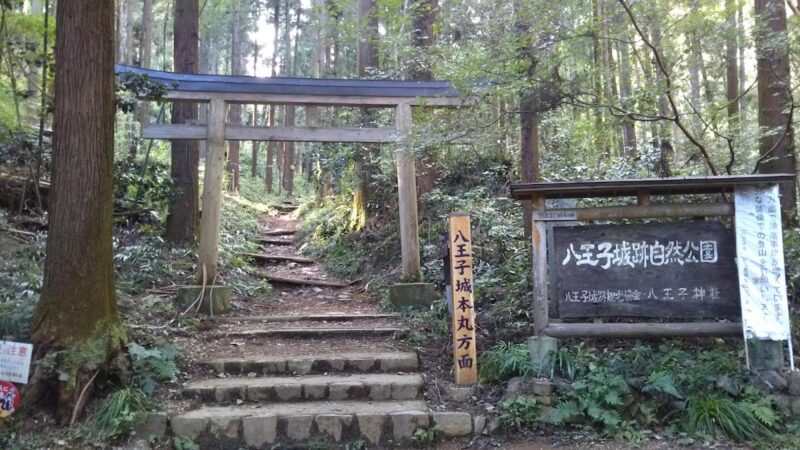
Access to Kosuge Castle Ruins is via a hiking trail. The journey from the trailhead to the castle ruins at the summit takes approximately 40 minutes to 1 hour. The trail includes steep slopes, so appropriate equipment and physical fitness are necessary.
Signposts are installed along the hiking trail, making it relatively easy to navigate even for first-timers. However, as it is still a mountain trail, wearing hiking boots or trekking shoes is recommended.
View
The view from the Kosuge Castle ruins is magnificent, offering a panoramic view of the Tama River valley and the surrounding mountains. On a clear day, you can even see the distant Okutama mountain range, giving you a real sense of why this area was so important as a surveillance base during the Sengoku period.
About Kosuge Village
Overview of Kosuge Village
Kosuge Village is located at the easternmost tip of Yamanashi Prefecture, bordering Tokyo. Although a small village with a population of approximately 700 (as of 2024), it is a charming region with a rich natural environment and unique culture.
Geographical Characteristics
- Area: Approximately 52.78 square kilometers
- Population: Approximately 700 people
- Neighboring Municipalities: Okutama Town (Tokyo), Tambayama Village (Yamanashi Prefecture), Uenohara City (Yamanashi Prefecture), etc.
- Major River: Tama River (Kosuge River)
Approximately 95% of the village is covered in forest, preserving a rich natural environment. As one of the headwaters of the Tama River, it is characterized by its pristine waters and beautiful gorges.
History of Kosuge Village
Kosuge Village has a long history, with Jomon period ruins having been discovered. In the Middle Ages, it was part of the Takeda clan’s territory, and in the early modern period, it was used as a back route of the Koshu Kaido (highway).
With the implementation of the town and village system in the Meiji era, the current Kosuge Village was established, and since then, it has developed as a village centered on forestry and agriculture. In recent years, it has also focused on tourism, and experiential tourism utilizing the natural environment has become popular.
Tourist Spots in Kosuge Village
Nature of the Tama River Headwaters
Kosuge Village is one of the headwaters of the Tama River, and its charm lies in its clear streams and abundant forests.
Kosuge River
The Kosuge River is a tributary of the Tama River, a clear stream flowing through the village. In summer, it is bustling with people enjoying river activities and fishing. It is home to stream fish such as char and trout, making it a popular spot for stream fishing.
Virgin Forest and Hiking Trails
Village retains its old-growth forest, and several hiking trails are maintained. One of the hiking routes to Mount Daibosatsu starts in Kosuge Village, making it popular with hiking enthusiasts.
Kosuge no Yu Hot Spring
Kosuge no Yu, a hot spring facility operated by Kosuge Village, is a popular tourist spot in the village. It features a free-flowing hot spring, perfect for relaxing and relieving fatigue after hiking or climbing.
- Spring Quality: Alkaline Simple Hot Spring
- Efficacy: Neuralgia, muscle pain, joint pain, etc.
- Opening Hours: 10:00 AM – 7:00 PM (may vary seasonally)
- Closed: Wednesdays (or the following day if Wednesday is a public holiday)
Kosuge Village Local History Museum
This museum allows visitors to learn about the history and culture of Kosuge Village. It features exhibits of historical materials, folk implements, and information about Kosuge Castle, offering a deep understanding of the village’s history.
Michi-no-Eki Kosuge
Located along National Route 139, this roadside station offers local agricultural products and specialty goods for sale. The restaurant serves dishes made with local ingredients. It’s a convenient base for sightseeing in Kosuge Village.
Kosuge Village’s Specialty Products and Gourmet Food
Wasabi
Kosuge Village is known for its thriving wasabi cultivation, utilizing its clear streams. Kosuge-grown wasabi is of high quality and is shipped to high-end restaurants in Tokyo. Fresh wasabi and processed wasabi products can be purchased at Michi-no-Eki Kosuge.
Wild Vegetables and Mushrooms
Wild vegetables and mushrooms harvested from the village’s abundant forests are also specialty products. Wild vegetables are in season in spring, and mushrooms in autumn, and can be enjoyed at local restaurants and the roadside station.
Venison (Game Meat)
In recent years, Kosuge Village has also been focusing on game meat dishes using venison. Properly processed venison has no unpleasant odor and is gaining popularity as a healthy food.
Soba
Soba has been cultivated in Kosuge Village since ancient times, and there are restaurants that serve handmade soba noodles. Soba made with pure water is renowned for its rich flavor and delicious taste.
Access Information
Access by Car
From Tokyo
- Approximately 40 minutes from Uenohara IC on the Chuo Expressway via National Route 139
- Approximately 1 hour from Akiruno IC on the Ken-O Expressway via National Routes 411 and 139
From Yamanashi Prefecture
- Approximately 1 hour 30 minutes from Kofu City via National Routes 411 and 139
There are several free parking lots in the village, and parking spaces are also available at Michi-no-Eki Kosuge and Kosuge-no-Yu. There is also parking at the Kosuge Castle trailhead, but the number of spaces is limited, so early arrival is recommended.
Access by Public Transportation
By Train and Bus
- Approximately 35 minutes by Nishi-Tokyo Bus bound for “Kosuge-no-Yu” from JR Chuo Line “Okutama Station”
- Approximately 50 minutes by Fujikyu Yamanashi Bus bound for “Kosuge Village Office” from JR Chuo Line “Uenohara Station”
Since the number of buses is limited, it is recommended to check the timetable in advance. Especially on holidays, there may be extra buses, but on weekdays, the number of buses is small, so please be careful.
Access to Kosuge Castle
To reach the Kosuge Castle ruins, you will use a hiking trail from within the village. The main trailheads are as follows:
- Shirasawa Trailhead: The most common route. Parking is available.
- From the center of Kosuge Village: Accessible on foot, but it is a long distance.
There are signposts at the trailheads, but if you are unsure, it is recommended to check information at the Kosuge Village Office or tourist information center before visiting.
Important Points for Visiting Kosuge Castle and Kosuge Village
Precautions When Hiking
Please note the following points when climbing to the Kosuge Castle ruins.
- Appropriate Equipment: Hiking boots or trekking shoes, comfortable clothing
- Drinking Water: There is no water source at the summit, so bring plenty of water.
- Weather Check: It is slippery and dangerous in rainy weather, so choose a day with good weather.
- Time Management: Plan with plenty of time to descend before sunset.
- Bear Precautions: Bears inhabit the mountain area, so take precautions such as bear bells.
Seasonal Highlights and Precautions
Spring (March-May)
- A season of beautiful fresh greenery
- Season for gathering wild vegetables (permission may be required)
- River water levels increase due to snowmelt
Summer (June-August)
- Best season for playing in the river
- Heat precautions are necessary for hiking
- Don’t forget insect repellent
Autumn (September-November)
- Beautiful autumn foliage
- Ideal weather for hiking
- Enjoy mushrooms and autumn delicacies.
Winter (December-February)
- There is snow cover; mountain climbing is for advanced hikers only.
- Perfect for warming up in hot springs.
- Be careful of icy roads.
Accommodation in Kosuge Village
Accommodations
Kosuge Village has the following types of accommodations:
Guesthouses and Inns
There are several guesthouses and inns in the village, where you can enjoy homey hospitality and local cuisine. Reservations are required.
Campgrounds
There are campgrounds along the Kosuge River, mainly operating during the summer. Camping by the clear stream is a popular activity where you can fully enjoy nature.
Accommodations in Surrounding Areas
If accommodations in Kosuge Village are fully booked, or if you want more options, you can consider accommodations in the neighboring towns of Okutama and Uenohara.
Annual Events in Kosuge Village
Kosuge Village Summer Festival
This is the village’s summer festival, held in mid-August. This event features Bon Odori (traditional Japanese dance) and fireworks displays, enjoyed by both villagers and tourists.
Autumn Leaves Festival
Events are sometimes held from late October to early November, coinciding with the peak of the autumn foliage season. These events often include sales of local specialties and the serving of regional cuisine.
Opening of Stream Fishing Season
Many anglers visit on March 1st, the opening day of the stream fishing season. The Kosuge River Fisheries Cooperative manages the area, and a fishing license is required.
Nearby Tourist Attractions
Lake Okutama
An artificial lake located in Okutama Town, Tokyo, approximately 30 minutes by car from Kosuge Village. Its charm lies in the beautiful scenery created by the lake and the surrounding mountains.
Mount Daibosatsu
One of Japan’s 100 Famous Mountains, it is also accessible from Kosuge Village. From its 2,057-meter summit, you can enjoy views of Mount Fuji and the Southern Alps.
Tambayama Village
Like Kosuge Village, the neighboring Tambayama Village is a village rich in nature, offering opportunities for hot springs and mountain climbing.
Environmental Conservation Activities in Kosuge Village
Water Source Conservation in the Tama River Headwaters
Kosuge Village plays a vital role as a water source for Tokyo. The village is committed to forest conservation activities and is working to protect the “headwaters forest.”
FSC Certification
Kosuge Village’s village-owned forests have obtained FSC (Forest Stewardship Council) certification, a testament to proper forest management. The village practices sustainable forest management, aiming to balance environmental conservation and regional development.
Ecotourism
Kosuge Village promotes ecotourism that considers the natural environment. It offers opportunities to learn about the importance of the environment while interacting with nature, such as nature observation events and environmental learning programs.
The Future of Kosuge Castle and Kosuge Village
Preservation and Utilization of Historical Heritage
The Kosuge Castle ruins are a valuable historical heritage site, and proper preservation is required for the future. The village continuously maintains signposts and hiking trails, striving to create an environment where visitors can safely learn about history.
Tourism Promotion
For Kosuge Village, which continues to experience population decline, tourism is a vital industry. Through tourism promotion that leverages its rich natural environment and history, the village aims to increase the number of visitors and revitalize the region.
Promotion of Migration and Settlement
Kosuge Village is also working to promote migration and settlement. It has established systems such as housing support and business startup support for people seeking to live in a rich natural environment.
Summary
Kosuge Castle and Kosuge Village are attractive regions where history and nature harmonize. Kosuge Castle, with its remaining Sengoku period mountain castle ruins, is a valuable destination not only for history enthusiasts but also for those who enjoy mountain climbing and hiking.
Kosuge Village as a whole is full of attractions that cannot be experienced in the city, such as the pristine nature of the Tama River headwaters, hot springs, local products, and the warm hospitality of its people. Its easy accessibility, approximately two hours from Tokyo, is also one of its attractions.
Kosuge Castle and Kosuge Village offer a variety of ways to enjoy yourself, from weekend getaways and day trips to serious mountain climbing. Be sure to visit and experience the charm of its history and nature. The beauty of each season and the historical traces that have survived through the ages will provide visitors with a special experience.

-800x450.png)