Complete Guide to Kosugenuma Castle (Uozu City) | A Thorough Explanation of the History, Stone Walls, and Highlights of the Takekuma Retainer’s Residence
What is Kosugenuma Castle? – A Medieval Castle Ruins Remaining in Uozu City, Toyama Prefecture
Kosugenuma Castle is a castle ruin from the medieval to early modern period located in Kosugenuma, Uozu City, Toyama Prefecture. Also known as Takekuma Residence or Takekuma Retainer’s Residence, it is currently protected as a historical site by Uozu City.
Built on a hill approximately 60 meters above sea level, this castle functioned as an important military base in Etchu Province (present-day Toyama Prefecture). Even today, the remains of the original stone walls, earthworks, and gates are well-preserved, making it a valuable historical site for understanding the structure of medieval castles.
While many castle ruins exist in Toyama Prefecture, Kosugenuma Castle is particularly well-preserved in terms of its stone walls, some of which are thought to date back to the medieval period. Locally known as the “Takekuma Residence Site,” it attracts attention among history enthusiasts and castle fans.
History of Kosugenuma Castle – The Takekuma Clan and the Sengoku Period in Etchu
Background of Construction and the Takekuma Clan
While there are no clear records regarding the exact construction date of Kosugenuma Castle, it is believed to have been built by the Takekuma clan during the Sengoku period. The Takekuma clan was one of the powerful local families in Etchu Province, and they were responsible for governing the region.
During the Sengoku period, Etchu Province was a fierce battleground where the forces of daimyo such as the Uesugi, Takeda, and Oda clans clashed. The area around Uozu City was no exception, and it is presumed that Kosugenuma Castle played an important role as a subsidiary castle, forming part of the defense network centered around Matsukura Castle.
Function as a Chief Retainer’s Residence
The Takekuma clan is said to have served as chief retainers to the lord of Matsukura Castle, and Kosugenuma Castle functioned not only as a military base but also as a political and administrative center. The remains of the former residence reveal a structure where living spaces and defensive facilities were integrated, suggesting that it was used as a residence in peacetime and as a castle in wartime.
Changes from the Early Modern Period Onward
In the Edo period, Kosugenuma Castle ceased its role as a military facility and continued to exist as the residence of the Takekuma clan. Records indicate that descendants of the Takekuma family resided there until the Showa era, and it remained a central presence in the region throughout its long history.
Currently, it is designated as a city historical site and is being preserved and utilized as a valuable cultural asset.
Structure and Layout of Kosugenuma Castle – Understanding the Characteristics of Medieval Castles
Overall Layout
Kosugenuma Castle is a flatland castle that skillfully utilizes the topography of the hilly terrain. Multiple baileys (kuruwa) are arranged around the main enclosure, demarcated by earthworks and moats. Looking at a map, it can be seen that it measures approximately 150 meters north-south and 100 meters east-west.
A key feature of the castle’s layout is its defensive structure, which makes maximum use of the natural terrain. Steep slopes serve as outer moats, creating a difficult-to-attack structure.
Features of the Stone Walls – Valuable Remains Conveying Medieval Technology
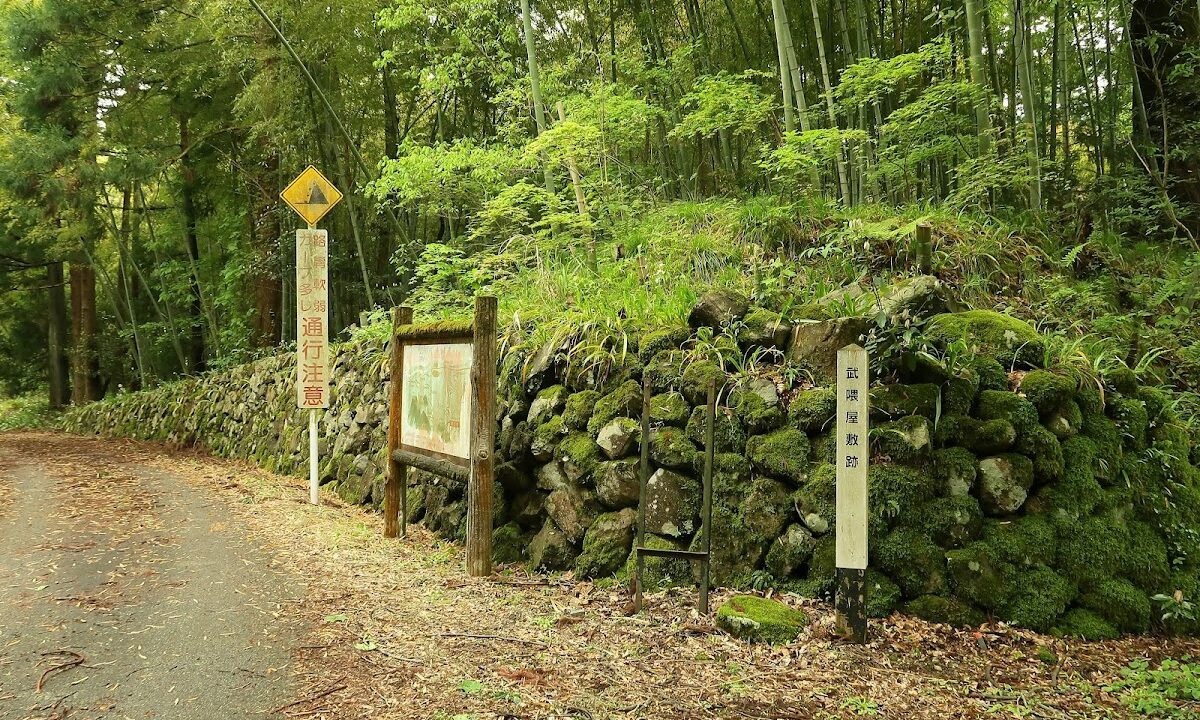
The greatest highlight of Kosugenuma Castle is its well-preserved stone walls. Some of the stone walls may date back to the medieval period, making them valuable remains within Toyama Prefecture.
The stone walls are constructed using a technique called “nozurazumi,” characterized by a simple structure where natural stones are stacked with minimal processing. They are important resources for understanding the stone-laying techniques of the time, and some sections of the walls are magnificent, exceeding 2 meters in height.
According to the information board, these stone walls are concentrated around the entrances and boundaries of the baileys, indicating their strategic importance in reinforcing key defensive points.
Earthworks and Moats
Alongside the stone walls, earthworks are another important defensive structure. Earthen ramparts surround the main enclosure, and in some sections, sections of the ramparts, approximately 1.5 meters high, remain in good condition.
Outside the ramparts, a moat was constructed, creating a double defensive structure to prevent enemy intrusion. Traces of the moat can still be seen today, allowing us to understand the defensive thinking of the time.
Structure of the Entrance (Koguchi)
The koguchi, the entrance to the castle, is also an important point of interest. Kosugenuma Castle employs a structure called a staggered koguchi, where the passage is curved to prevent direct advancement, thereby enhancing its defensive capabilities.
Stone walls are placed around the koguchi, showing a design that lured attackers into the narrow passage and allowed for flanking attacks. Such a structure is a common feature of castles from the Sengoku period, indicating that Kosugenuma Castle was built with actual combat in mind.
Highlights of Kosugenuma Castle – Points to Check When Visiting
Main Enclosure (Honmaru) Site
The main enclosure, the central part of the castle, is now a flat area, and while the foundation stones of the former buildings cannot be seen, the surrounding earthworks and stone walls allow us to imagine its scale at the time. From the main enclosure, one can see the city of Uozu and Toyama Bay, and it is thought to have also functioned as a lookout post.
Observing Medieval Stone Walls
When visiting Kosugenuma Castle, the medieval stone walls are a must-see. The stone walls around the entrance are particularly well-preserved and are a popular spot for photography.
By observing the details, such as the construction method, the selection of stones, and the treatment of the corners, you can understand the stonemasonry techniques of the time. The information boards provide detailed explanations of the characteristics of the stone walls, so we recommend reading them carefully while you visit.
Traces of Earthworks and Moats
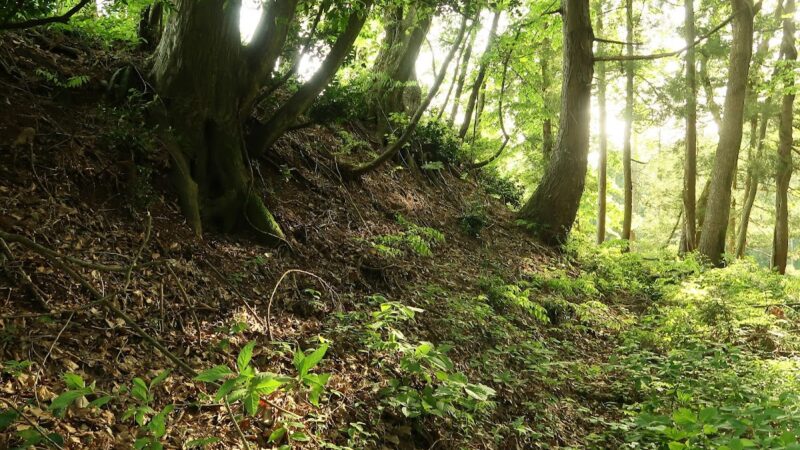
The earthworks surrounding the main enclosure are partially well-preserved. Walking along the earthen ramparts allows you to experience the perspective of the defending soldiers of that time. The clear remnants of the moats also allow you to appreciate the ingenuity of the defensive structure.
Information Boards and Panels
The castle ruins have information boards installed by the Uozu City Board of Education, providing detailed explanations of the history and structure of Kosugenuma Castle. Having some prior knowledge before your visit will deepen your understanding, but the information boards alone are enjoyable enough.
Surrounding Scenery
From Kosugenuma Castle, you can see the rural landscape of Uozu City, and on clear days, Toyama Bay and the Tateyama mountain range. Especially during the seasons of fresh greenery in spring and autumn foliage, you can enjoy a beautiful landscape where the castle ruins and nature harmonize.
Access Methods – How to Get to Kosugenuma Castle
Using Public Transportation
Access by Train and Bus:
- Get off at Uozu Station on the Ainokaze Toyama Railway.
- Take the Uozu City Bus and get off at the Matsukura Elementary School bus stop.
- Approximately 42 minutes on foot (approx. 3.5 km) from the bus stop.
Access by public transportation is somewhat inconvenient, but you can enjoy the rural scenery of Uozu City on your walk. Since the number of buses is limited, it is recommended to check the timetable in advance.
Using a Private Car
Access by Car:
- Approximately 15 minutes from Uozu IC on the Hokuriku Expressway
- Approximately 40 minutes from central Toyama City via National Route 8
- Parking: There are several parking spaces around the castle ruins (confirmation required).
Visiting by private car is the most convenient. However, some roads around the castle ruins are narrow, so caution is required when driving. When using a map app, it’s best to search for “Kosugenuma, Uozu City, Toyama Prefecture.”
Points to Note When Visiting
- The castle ruins are not a well-maintained park, so comfortable walking shoes are recommended.
- In summer, vegetation can be overgrown, making it difficult to see the remains.
- In winter, heavy snowfall can make visits difficult.
- There are no facilities such as toilets or shops, so advance preparation is necessary.
Nearby Tourist Attractions – Highlights of Uozu City
Matsukura Castle Ruins
Matsukura Castle, closely related to Kosugenuma Castle, is a representative mountain castle of Uozu City. Built on a mountaintop 430 meters above sea level, it was a full-fledged mountain castle and an important base in Etchu Province. Visiting both Kosugenuma Castle and Matsukura Castle will help you understand the castle network of the time.
Uozu Buried Forest Museum
This museum exhibits the “buried forest,” one of Uozu City’s three great natural wonders. You can see a valuable natural heritage site where a forest approximately 2000 years ago was buried under the sea. It’s about a 20-minute drive from Kosugenuma Castle.
Mirage Observation Point
Uozu City is famous as a “city where mirages can be seen.” Mirages sometimes occur in Toyama Bay from spring to early summer, and can be observed from observation points along the coast.
Uozu Aquarium
One of Japan’s oldest aquariums, it mainly exhibits marine life from Toyama Bay. Recommended for family sightseeing.
Firefly Squid Sightseeing
From March to May, you can observe the phenomenon of firefly squid stranding themselves at Uozu Port. This fantastical sight is a unique experience only available in Uozu City.
Kosugenuma Castle Photography Points – A Guide for Photography Enthusiasts
Recommended Photography Spots
- Stone Walls around the Entrance: This is the best-preserved area, offering magnificent stonework for photography. The soft morning light is recommended.
- View from the Main Enclosure: You can take landscape photographs with Uozu city and Toyama Bay in the background.
- Earthwork Lines: The curved earthworks are a good subject to add movement to your composition.
- Combination of Information Boards and Ruins: Photographing historical explanations together with the actual ruins creates highly documentary-quality photographs.
Precautions When Taking Photographs
- Please be careful not to trespass on private property.
- Please be careful not to damage the ruins.
- The condition of vegetation varies depending on the season, so it’s a good idea to choose your visit time carefully.
- Comparing with photographs from the Showa era allows you to see the changes over time.
How to Enjoy Visiting Kosugenuma Castle
For History Fans
You can closely observe the structure of the castle and decipher the defensive thinking of the Sengoku period. Reading books on medieval castles beforehand will deepen your understanding. Bringing a map and comparing the layout with the actual terrain is another way to enjoy the experience.
For Hiking and Strolling
The area around the castle ruins is rich in nature and can be enjoyed as a light hiking course. A leisurely stroll while enjoying the scenery of the four seasons is highly recommended.
For Local History Learning
Kosugenuma Castle is an important teaching tool for learning about the history of Uozu City. It is also used as a site for local elementary and junior high school students’ local history studies, providing a good opportunity to learn about the region’s history.
The History of Uozu City and the Role of Kosugenuma Castle
Uozu City is located in the eastern part of Toyama Prefecture and has developed as a port town facing Toyama Bay. It has long been a transportation hub and is known for the Battle of Uozu Castle, where the Uesugi and Oda clans fought fiercely during the Sengoku period.
Kosugenuma Castle played an important role as a branch castle of Matsukura Castle in Uozu City’s Sengoku history. It played a part in the castle network of Etchu Province at the time and functioned as a base for regional control.
Currently, several castle ruins remain in Uozu City, but Kosugenuma Castle is particularly valuable due to the relatively well-preserved remains, such as its stone walls. It has been designated a city historical site and is carefully protected as a regional historical heritage.
Materials and Research on Kosugenuma Castle
City Historical Site Designation
The Kosugenuma Castle ruins (Takekuma Residence Ruins) are designated as a Uozu City historical site and are preserved and managed by the Uozu City Board of Education. Official city documents provide detailed explanations of the castle ruins’ overview and historical value.
Current Research Status
Academic research on Kosugenuma Castle is progressing as part of research on medieval castles in Toyama Prefecture. In particular, dating and structural analysis of the stone walls are attracting attention as future research topics.
The suggestion that some of the stone walls may date back to the medieval period is an important clue to understanding the development process of stone-walled castles in Toyama Prefecture.
Related Books
Some books dealing with castles in Toyama Prefecture include descriptions of Kosugenuma Castle. You can find more detailed information by referring to guidebooks for castle enthusiasts or books on the local history of Uozu City.
Best Season to Visit Kosugenuma Castle
Spring (April-May)
The fresh greenery is beautiful, and the weather is mild, making it the perfect season to visit. Since the vegetation hasn’t grown too thick yet, it’s an easy time to observe the ruins.
Autumn (October-November)
The autumn foliage is beautiful, and the weather is pleasant, making it another recommended season to visit. It’s also suitable for photography.
Summer (June-August)
The vegetation can become overgrown, potentially making it difficult to see the ruins. Also, precautions against heat and insects are necessary.
Winter (December-March)
Snowfall can make visits difficult. However, the castle ruins amidst a snowy landscape also have their own charm.
Summary – The Charm and Value of Visiting Kosugenuma Castle
Kosugenuma Castle (Takekuma Residence) is a valuable medieval castle ruin remaining in Uozu City, Toyama Prefecture. The well-preserved stone walls, earthworks, and defensive structures such as gates are important cultural assets that convey the structure of a Sengoku period castle.
In particular, the stone walls, which may date back to the medieval period, are a valuable relic within Toyama Prefecture and a must-see for castle enthusiasts and history buffs. Opportunities to directly observe the stonework techniques and defensive philosophies of that time are limited, and Kosugenuma Castle can be said to be one of those precious places.
While access is somewhat inconvenient, it is an attractive spot where you can visit while experiencing the rich nature and history of Uozu City. There are many other attractions nearby, such as the Matsukura Castle Ruins and the Uozu Buried Forest Museum, making it possible to enjoy a day trip exploring the history and culture of Uozu City.
With a map in hand and reading the explanations on the information boards, you can slowly stroll through the castle ruins and imagine yourself in Etchu Province during the Sengoku period. One of the joys of visiting castle ruins is imagining the lives and battles of the people who lived there in those days, while enjoying taking photographs.
When you visit Toyama Prefecture, be sure to stop by Kosugenuma Castle. This historical site, which has been carefully preserved since the Showa era, is sure to evoke a sense of historical romance in you.