Mizuo Castle (Uozu City, Toyama Prefecture): A Thorough Explanation of the Sengoku Period Mountain Castle Remains and the Uesugi Clan’s Defensive Base
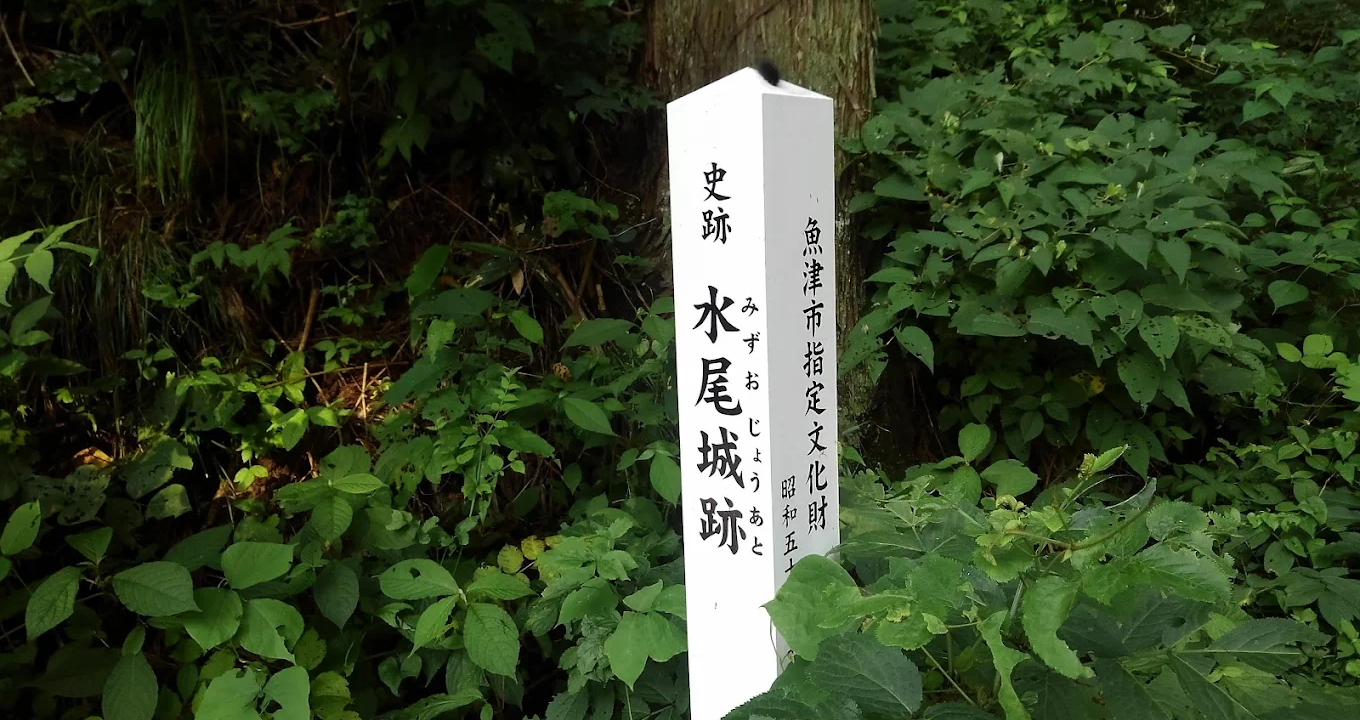
Mizuo Castle, located in the Okuma district of Uozu City, Toyama Prefecture, is a mountain castle that functioned as an important military base for the Uesugi clan in Etchu Province during the Sengoku period. Built around the present-day Mizuo Shrine, this castle played a part in the defense network centered on Uozu Castle and played a crucial role in the battles against Oda Nobunaga’s army. This article provides a detailed explanation of Mizuo Castle’s historical background, the characteristics of its remains, and its relationship with surrounding related castles.
Overview and Location of Mizuo Castle
Basic Information
Mizuo Castle is a mountain castle located in Okuma, Uozu City, Toyama Prefecture, built on a mountaintop approximately 300 meters above sea level. With a relative height difference of about 150 meters, it is a strategically important location offering panoramic views of the Uozu Plain and Toyama Bay. It is a typical mountain castle, and remains such as moats and baileys can still be seen today. ### Geographical Importance
Uozu City boasts a unique topography where the mountains and sea are connected by a single water cycle, with pristine water originating from the Kegachi Sanzan and Sōgatake peaks of the Northern Alps circulating throughout the city before flowing into Toyama Bay. Mizuo Castle was built in a prime location, taking advantage of this topography to monitor the Hokuriku Highway and Toyama Bay.
During the Sengoku period, Etchu Province was the front line where powerful daimyo such as the Uesugi clan (Echigo), Takeda clan (Kai), and Oda clan (Owari) vied for supremacy. The Uozu region, with its function as a port city facing Toyama Bay and its role as a hub for transportation routes to the inland areas, was militarily and economically extremely important.
History and Construction Background of Mizuo Castle
Situation in Etchu Province during the Sengoku Period
In the 16th century, Etchu Province was in a complex political situation. Initially, the Jinbo and Shiina clans, who served as deputy governors, held power. However, as the Nagao clan of Echigo (later the Uesugi clan) expanded their influence, Etchu came under the influence of Uesugi Kenshin.
The Uozu region was under the control of the Shiina clan, but when Uesugi Kenshin intensified his invasion of Etchu, this area became a crucial base for the Uesugi clan. To secure his control of Etchu, Kenshin constructed a defensive network centered around Uozu Castle, with numerous branch castles. Mizuo Castle functioned as one of these branch castles.
Part of the Matsukura Castle Branch Castle Group
Within the Uozu City area, there was a group of castles centered around Matsukura Castle. Matsukura Castle, built on a mountain approximately 430 meters above sea level, was one of the most formidable castles in Etchu and the most important base for the Uesugi clan’s control of Etchu.
Mizuo Castle was positioned as a subsidiary castle of Matsukura Castle and formed a defensive network with the following castles:
- Mizuo North Castle: A subsidiary castle located north of Mizuo Castle
- Mizuo South Castle: A subsidiary castle protecting the south of Mizuo Castle
- Kitayama Castle (Kanayama Castle/Kanayama Valley Castle): A defensive base to the north
- Kosugenuma Castle: A watchtower to the east
- Masugata Castle (Masugatayama Castle): A strategic point to the south
- Tsubono Castle: A castle controlling the inland transportation routes
- Tenjinyama Castle (Hagi Castle): A defensive base near the coast
These subsidiary castles cooperated with each other, transmitting information through signal fires and other means to prepare for enemy invasions.
Battles with the Oda Army
In 1582 (Tensho 10), Etchu Province was subjected to a large-scale invasion by Oda Nobunaga’s army. The Oda army, with Shibata Katsuie as its commander-in-chief, invaded Etchu Province, leading forces including Maeda Toshiie, Sassa Narimasa, and Sakuma Morimasa.
Uesugi Kagekatsu (Kenshin’s successor) stationed Kawada Nagachika as the castle commander of Uozu Castle, entrusting it to approximately 3,000 soldiers. The Oda army, with a force of about 30,000 men, besieged Uozu Castle, and a fierce battle ensued.
It is believed that the subsidiary castles, including Mizuo Castle, were also targeted by the Oda army. With Uozu Castle isolated, the subsidiary castles fell one after another, and ultimately Uozu Castle itself fell. This Battle of Uozu Castle is recorded in history as a tragedy that occurred around the same time as the Honnoji Incident.
Before news of the fall of Uozu Castle reached Japan, Oda Nobunaga was killed in the Honnoji Incident, forcing the Oda army to retreat, and the situation in Etchu Province became fluid once again.
From the Edo Period Onward
During the Edo period, Etchu Province came under the control of the Kaga Domain (Maeda clan). Uozu became part of the Kaga Domain, and with the arrival of a peaceful era, Mizuo Castle, as a mountain castle, ceased its military role and was abandoned.
Currently, Mizuo Shrine stands on the castle site and is a beloved place of worship for the local community. Remains from the Sengoku period remain around the shrine, making it a historical site visited by history enthusiasts and castle fans.
Remains and Highlights of Mizuo Castle
Layout and Structure
Mizuo Castle has the typical layout of a Sengoku period mountain castle, and the following structure can be observed:
Main Enclosure (Honmaru): The central part of the castle located on the mountaintop, now the grounds of Mizuo Shrine. Relatively flat, leveled areas remain, suggesting the former building sites.
Group of Enclosures: Multiple enclosures (flat areas) are arranged in a stepped pattern around the main enclosure. These areas are thought to have been used as troop encampments and storage areas for supplies.
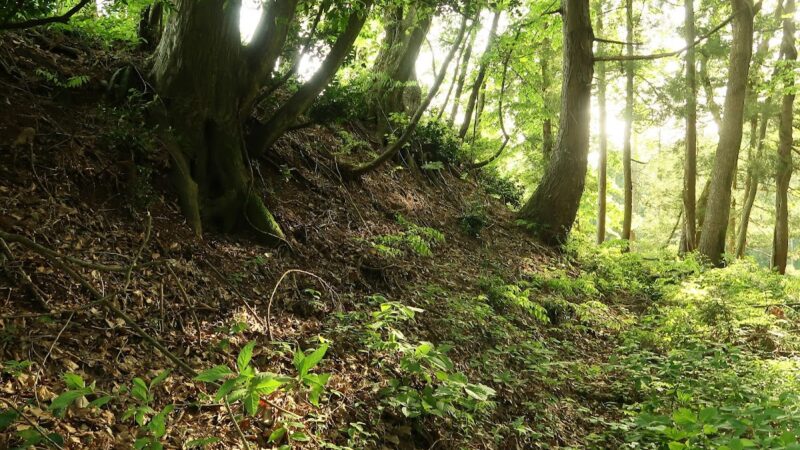
Moats: Multiple moats dug to cut across the ridge have been identified. These moats served to prevent enemy intrusion and clearly demarcate the castle grounds. The moats at Mizuo Castle are relatively well-preserved, and their depth and width give a sense of their defensive capabilities at the time.
Earthworks: Traces of earthworks remain along the edges of the baileys, indicating their function as defensive structures.
Presence or Absence of Stone Walls
No substantial stone walls have been confirmed at Mizuo Castle. This is due to the construction period and regional characteristics; many mountain castles in Etchu Province primarily utilized earthworks and moats for defense. Since castles extensively using stone walls became common after the Azuchi-Toyotomi period, it is thought that stone walls were not used at Mizuo Castle during the Sengoku period.
However, there is a possibility of partial stonework using natural stones or traces of stones placed around the castle’s entrance; further detailed investigation is needed.
Mizuo Shrine and Faith
Mizuo Shrine is located at the site of Mizuo Castle. This shrine has long been revered as the local tutelary deity, and is one reason why the castle ruins have been protected as a sacred place.
Many shrines, such as Shinmei Shrine and Hakusan Shrine, are scattered throughout Uozu City, and these are closely linked to the region’s history. Mizuo Shrine is also an important place that conveys the memories of the Sengoku period (Warring States period).
Access and Visiting
The most common route to Mizuo Castle is from the Okuma district of Uozu City towards Mizuo Shrine. While the shrine is accessible by car, a walk is necessary to thoroughly explore the castle ruins.
As it is a mountain castle, appropriate clothing and shoes for hiking, along with drinking water, are recommended. Also, since the ruins are preserved in a natural setting, care should be taken not to damage the historical site during your visit.
Uozu City’s Castle Network
Relationship with Uozu Castle
Uozu Castle was a flatland castle built near the former coastline in the center of Uozu City. It was the political and military center of the Uesugi clan’s rule over Etchu Province. Located in the present-day Uozu city area, the area around Omachi Elementary School is considered to be the former castle grounds.
Mizuo Castle served as a subsidiary castle protecting the rear of Uozu Castle, playing a role in monitoring and preventing enemy incursions from inland. It is believed that Uozu Castle and Mizuo Castle communicated through signal fires and messengers, forming an integrated defense system.
Cooperation with Matsukura Castle
Matsukura Castle is a large mountain castle built on a mountain approximately 430 meters above sea level in the southeastern part of Uozu City. Uesugi Kenshin considered it an important base for his rule over Etchu Province, and it played a central role as the Uesugi clan’s main castle in Etchu.
The group of subsidiary castles centered around Matsukura Castle, in cooperation with coastal castles including Uozu Castle, formed a network to defend the entire Etchu region. Mizuo Castle is located in the middle of this area and is presumed to have functioned as a relay point for information transmission and troop movement.
Other Branch Castles
Numerous castles and forts existed in the Uozu City area, including the following:
- Goto Castle: A branch castle of Uozu Castle
- Akasaka Fort: A front-line observation post
- Yakiyama Fort: A defensive base in the mountainous area
- Kakuma Castle Fort: A defensive base in the northern area
- Murota Fort: A road observation post
- Otani Fort: A fort controlling a valley
- Ishinomon Fort: A small base protecting a strategic point
These castles and forts, though small individually, functioned as a network to exert a powerful defensive force. The existence of these branch castles is extremely important for understanding the castle strategy of the Sengoku period.
Historical Background of Uozu City
Ancient and Medieval Uozu
The history of the Uozu region is ancient, and Jomon period ruins have been discovered. The Shikuma-Hohen archaeological site and other locations confirm that people have inhabited the area since ancient times.
In ancient times, it belonged to the Niikawa District of Etchu Province and played a role in local administration under the Ritsuryo system. In the Middle Ages, manors developed, and samurai groups were formed.
The Turbulent Sengoku Period
During the Sengoku period, Uozu became the front line between the Uesugi and Oda clans and was embroiled in fierce battles. The Battle of Uozu Castle in 1582 was the greatest event in the history of this region, resulting in the loss of many samurai and soldiers.
The Battle of Uozu Castle occurred around the same time as the Honnoji Incident, and is therefore recounted as a “missed opportunity of fate.” If Oda Nobunaga had not been killed, the history of Etchu Province might have been significantly different.
Development in the Edo Period
During the Edo period, Uozu became part of the Kaga Domain and developed as a port town and post town. It prospered as a port of call for Kitamae ships and became a center for the collection and distribution of seafood and rice.
The Kaga Domain considered Uozu important and governed it by establishing a magistrate’s office. Due to a prolonged period of peace, mountain castles became unnecessary, and many were abandoned.
Uozu in the Modern Era
Since the Meiji era, Uozu has undergone modernization and developed as a fishing and industrial town. It became particularly known as a town where mirages can be seen, and gained attention as a tourist destination.
Currently, Uozu City is a core city in eastern Toyama Prefecture, with a population of approximately 40,000. With tourist facilities such as the Uozu Aquarium and the “Shinkiro” (Mirage) Sea Station, it is an important tourist hub in the Hokuriku region.
Geography and Natural Environment of Uozu City
Water Cycle from Mountains to Sea
The most distinctive feature of Uozu City is its short distance from the 2,000-meter-high mountains of the Northern Alps to Toyama Bay, and its steep terrain. This topography allows the water cycle from the mountains to the sea to be completed quickly, resulting in abundant and pristine water resources.
Rivers originating from the Kegachi-sanzan mountains (2,414 meters above sea level) and Sōgatake mountain (1,855 meters above sea level) flow through the city of Uozu and into Toyama Bay. This water is highly regarded both within and outside the city as “delicious water,” symbolizing Uozu’s rich natural environment.
Toyama Bay and Marine Resources
Uozu City faces Toyama Bay and is blessed with abundant marine resources. Toyama Bay has a unique topography where the deep sea, exceeding 1,000 meters in depth, extends close to the coast, supporting a diverse range of fish species.
At Uozu Port, seafood such as firefly squid, yellowtail, and whelks are landed, and fresh seafood supports the local food culture. The Uozu Aquarium exhibits approximately 330 species and 10,000 specimens of marine life, from deep-sea creatures of Toyama Bay to stream fish of the Northern Alps, allowing visitors to learn about Uozu’s natural environment.
Mirage Phenomenon
Uozu is nationally known as the “City Where Mirages Can Be Seen.” In early spring, when the difference between air temperature and seawater temperature causes a change in atmospheric density, a mirage phenomenon occurs where the scenery on the opposite shore appears to float.
This natural phenomenon has been known since ancient times and occupies an important position as a tourist resource in Uozu. The “Shinkiro” (Mirage) Sea Station offers mirage observation and information services.
Tourism and Culture of Uozu City
Major Tourist Spots
Besides the Mizuo Castle Ruins, Uozu City has the following tourist spots:
Uozu Aquarium: One of the oldest aquariums in Japan, exhibiting a wide range of marine life from Toyama Bay to stream fish from the Northern Alps.
Shinkiro Sea Station: A tourist facility adjacent to Uozu Port where you can purchase fresh seafood and enjoy meals. It is also known as a mirage observation spot.
Uozu Buried Forest Museum: This museum exhibits a buried forest from approximately 2,000 years ago, allowing visitors to learn about the geological features of Uozu.
Matsukura Castle Ruins: Similar to Mizuo Castle, this is the site of a mountain castle from the Sengoku period, with authentic castle remains still preserved.
Local Culture and Festivals
Uozu has a rich tradition of festivals and culture. The Tatemono Festival, held every August, is a magnificent event featuring the pulling of a giant 16-meter-tall lantern.
Uozu’s food culture is also distinctive, offering dishes made with fresh seafood. Firefly squid, in particular, is famous as a spring delicacy.
Current Status and Challenges of Mizuo Castle Research
Academic Research
While Mizuo Castle has been investigated by castle researchers, detailed archaeological excavations have been limited. There are few historical documents, and many aspects remain unclear, including the construction period, the castle lord, and specific battle records.
Further archaeological investigations and documentary research are expected to shed more light on the true nature of Mizuo Castle.
Preservation and Utilization
The Mizuo Castle ruins are currently protected by the local community as part of the Mizuo Shrine grounds, but they are not officially designated as a historical site. While the remains are relatively well-preserved, some parts are gradually being lost due to natural weathering and changes in vegetation.
Appropriate preservation and utilization are needed as a local historical resource. Creating an environment where more people can learn about the history of Mizuo Castle through the installation of information boards and the development of walking paths is desirable.
Comparison with Surrounding Areas
Castles in Toyama Prefecture
Toyama Prefecture has numerous castle ruins, including Toyama Castle in Toyama City, Takaoka Castle in Takaoka City, and Hojo-tsu Castle in Imizu City. Many of these castles are flatland castles or hilltop castles, differing in character from Mizuo Castle, which is a mountain castle.
In Toyama Prefecture, famous mountain castles include Matsukura Castle, Masuyama Castle (Tonami City), and Moriyama Castle (Takaoka City), all of which were the stage for fierce battles during the Sengoku period.
Castle Culture of the Hokuriku Region
The Hokuriku region (Niigata, Toyama, and Ishikawa prefectures) was a region where powerful daimyo such as the Uesugi, Oda, and Maeda clans vied for supremacy during the Sengoku period. Therefore, numerous castles were built, and their remains still exist today.
In particular, Kanazawa Castle and Nanao Castle in Ishikawa Prefecture, and Kasugayama Castle in Niigata Prefecture are large and famous, but smaller branch castles like Mizuo Castle are also important for understanding the defense systems of the Sengoku period.
Summary: Historical Significance of Mizuo Castle
Mizuo Castle was a mountain castle that played an important role as a defensive base for the Uesugi clan in Etchu Province during the Sengoku period. It was part of a castle network centered around Uozu Castle and played a historical role in battles against Oda Nobunaga’s army.
Currently, the Mizuo Shrine stands on the castle site, and remnants such as moats and baileys remain. Located amidst the rich natural environment of Uozu City, Mizuo Castle is a valuable historical site that conveys the region’s history to the present day.
When visiting Uozu City, why not visit Mizuo Castle and other Sengoku period castle ruins, along with other tourist attractions such as the mirages and Uozu Aquarium, to experience the deep history of this region? Experience the charm of Uozu, woven from the water cycle from the mountains to the sea, abundant nature, and the memories of the Sengoku period.
Uozu City in Toyama Prefecture, along with neighboring cities such as Kurobe and Namerikawa, plays a central role in eastern Toyama Prefecture (Niikawa area). With the opening of the Hokuriku Shinkansen, access from the Tokyo metropolitan area has improved, and further tourism development is expected in the future. We hope that the historical value of Mizuo Castle will be re-recognized and that appropriate preservation and utilization will proceed.