Tomisaki Castle (Fuchu-machi, Toyama City) Complete Guide | History, Highlights, and Access Explained in Detail
Tomisaki Castle, located in Tomisaki, Fuchu-machi, Toyama City, Toyama Prefecture, was a mountain castle also known as “Takiyama Castle” during the Sengoku period. Built by the Jinbo clan, it was an important fortress in Etchu Province and is an indispensable part of Toyama City’s history. This article provides a detailed explanation of Tomisaki Castle’s history, from its construction to its abandonment, its current remains, and access methods.
What is Tomisaki Castle? | Basic Information and Overview
Tomisaki Castle was a mountain castle located in Tomisaki, Fuchu-machi, Toyama City, and is currently designated as “Toyama Castle Card No. 21.” Built on the hilly area on the west bank of the Jinzu River, this castle was an important base supporting the Jinbo clan’s power base in western Etchu Province.
Alternative Names and Designations of the Castle
Tomisaki Castle has been known by different names throughout history. During the Sengoku period, it was called “Takiyama Castle,” and some historical records use this name. It was affectionately known as “Tomisaki Castle” among local residents, and currently, “Tomisaki Castle” is the official name.
Location and Geographical Characteristics
Tomisaki, Fuchu-machi, Toyama City, is located on the west side of the Jinzu River, in a hilly area overlooking the Toyama Plain. This terrain maximized the defensive capabilities of a mountain castle, providing ideal conditions for monitoring the surrounding area and serving as a military base. Located west of central Toyama City, it is one of the historical centers of the current Fuchu region.
History of Tomisaki Castle | From Construction to Abandonment
Construction by Jinbo Hachirozaemon (1441)
The history of Tomisaki Castle begins in 1441 (Kakitsu 1), when it was built by Jinbo Hachirozaemon. This period was the mid-Muromachi period, a time when the Jinbo clan, the shugodai (deputy governor) of Etchu Province, was expanding its power. The Jinbo clan needed to build a castle in a strategically important location to solidify their control over western Etchu Province.
Jinbo Hachirozaemon, a member of the Jinbo clan, established a base for governing the surrounding region by constructing a castle in this area. At that time, Etchu Province was plagued by intense conflicts over the position of shugo (provincial governor) and power struggles among local clans, making a strong castle essential for controlling the territory.
Tomisaki Castle in the Sengoku Period | Its Role as Takiyama Castle
During the Sengoku period (Warring States period), Tomisaki Castle came to be known as “Takiyama Castle.” During this period, Etchu Province became a fierce battleground, with multiple forces, including the Uesugi clan, the Ikkō-ikki (Buddhist uprisings), and the Oda clan, vying for power. While the Jinbo clan maintained Tomiyama Castle as their main castle, they continued to maintain Tomisaki Castle as an important subsidiary castle.
The name Takiyama Castle is thought to derive from the surrounding topography and water system. It strengthened its function as a mountain castle and served as a fort protecting the Jinbo clan’s sphere of influence. It is presumed that Tomisaki Castle played a part in the castle network of Etchu Province during the Sengoku period, working in conjunction with Toyama Castle to defend the region.
The Jinbo Clan and the Turmoil in Etchu Province
The Jinbo clan boasted great power as the deputy governor of western Etchu Province, but their power rose and fell repeatedly amidst the turmoil of the Sengoku period. In particular, during the time of Jinbo Nagashige, they were forced to endure fierce battles, including conflicts with Uesugi Kenshin and resistances against the Ikkō-ikki.
It is thought that Tomisaki Castle was also affected by these turmoil. As the Jinbo clan’s power declined, the importance of the castle likely changed as well. Ultimately, with the downfall of the Jinbo clan, Tomisaki Castle disappeared from the historical stage.
The Time and Circumstances of the Castle’s Abandonment
There are no clear records regarding the exact date of Tomisaki Castle’s abandonment. However, considering the historical context of the decline of the Jinbo clan and the unification of Etchu Province by the Maeda clan, which led to the abandonment of many small and medium-sized castles, it is presumed that Tomisaki Castle was abandoned sometime between the late 16th and early 17th centuries.
With the advent of the Edo period, the Kaga Domain (later the Toyama Domain was established as a separate domain) implemented the “One Castle Per Province” decree, resulting in the demolition of many castles other than Toyama Castle. It is believed that Tomisaki Castle completely lost its function as a military facility during this period.
Layout and Structure of Tomisaki Castle
Defensive Function as a Mountain Castle
Tomisaki Castle possessed the typical characteristics of a medieval mountain castle. It made maximum use of the hilly terrain, utilizing natural fortifications as defensive lines. The steep slopes characteristic of mountain castles acted as natural barriers, making enemy intrusion difficult.
Estimated Castle Structure
Although detailed layout maps do not exist, comparing it to castles associated with the Jinbo clan of the same period, the following structure is presumed:
- Main Enclosure (Honmaru): The central enclosure of the castle, believed to have housed the lord’s residence and command post.
- Second and Third Enclosures: Secondary defensive lines protecting the main enclosure.
- Moats and Earthworks: Moats dividing the ridge and earthworks reinforcing defenses.
- Gate Entrance: An important defensive point serving as an entrance to the castle.
Water Source and Logistics
Securing a water source is crucial for mountain castles. Based on the topography around Tomisaki Castle, it is presumed that wells or springs were used. Furthermore, a food storage facility for provisions was likely located within the castle.
Current Tomisaki Castle Ruins | Remains and Highlights
Remaining Remains
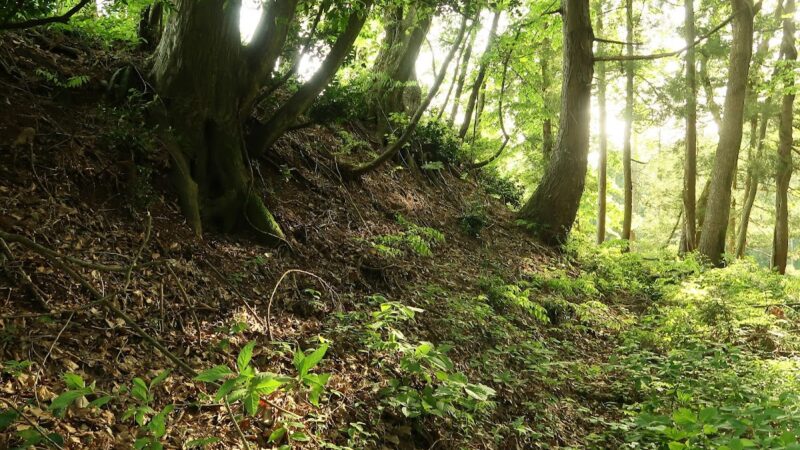
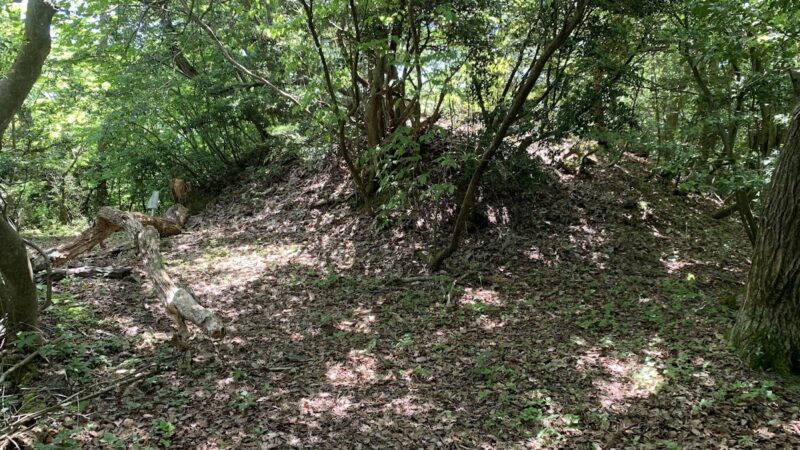
While there are few clear remains from the time of construction at the current Tomisaki Castle ruins, the undulations of the terrain and some remnants of earthworks allow us to imagine the castle’s former existence. Local history researchers and castle enthusiasts continue to attempt to deduce the original layout through topographical observation.
Highlights for Visitors
The highlights when visiting Tomisaki Castle ruins are as follows:
- Topographical Observation: Observe the terrain unique to mountain castles and imagine the defensive lines.
- View: The view of the Toyama Plain from the castle ruins is the same landscape the castle lord saw.
- Surrounding Environment: Experience the historical landscape of Tomisaki, Fuchu-machi.
Toyama Castle Card No. 21
Tomisaki Castle is designated as No. 21 of the “Toyama Castle Card.” This card is part of an initiative to introduce castles in Toyama Prefecture and has gained popularity among castle enthusiasts. The card contains basic information and history of the castle, making it a desirable collector’s item.
For information on distribution locations and how to obtain the card, we recommend checking official information from Toyama City and related facilities.
Access to Tomisaki Castle
Access by Public Transportation
To reach Tomisaki, Fuchu-machi, Toyama City, the following route is convenient using public transportation:
- From JR Toyama Station: Take a bus towards Fuchu (approximately 30 minutes)
- Nearest Bus Stop: Access on foot from a bus stop related to Tomisaki.
For detailed timetables and routes, please check the Toyama Chihō Railway bus routes.
Access by Car
If using a private car:
- From Toyama IC: Approximately 20 minutes via National Route 41
- From central Toyama City: Approximately 20-30 minutes by car west
- Parking: There is no dedicated parking lot around the castle ruins, so please use public facilities or nearby parking spaces.
Notes on Access
- The castle ruins are not a well-maintained tourist site, so appropriate clothing and equipment are necessary for a visit.
- You may be walking on mountain paths, so please wear comfortable shoes.
- Please be careful not to trespass on local private property.
Relationship between Tomisaki Castle and the Jinbo Clan
History of the Jinbo Clan and their Rule of Etchu Province
The Jinbo clan was a family that wielded significant influence from the Muromachi period to the Sengoku period as the deputy governor of Etchu Province. Originally vassals of the Hatakeyama clan, the governor of Etchu Province, they gradually built their own independent power.
The Jinbo clan’s base was Toyama Castle, but they established several branch castles to govern their territory. Tomisaki Castle served as one of its important subsidiary castles, acting as a base for the defense and governance of the western region.
Relationship with Toyama Castle
Toyama Castle is believed to have been built in 1543 (Tenbun 12) by Jinbo Nagashige, but the Jinbo clan had already held power in western Etchu Province before that. Tomisaki Castle existed before the construction of Toyama Castle and may have been one of the Jinbo clan’s early bases.
Even after Toyama Castle was developed as the main castle, Tomisaki Castle continued to function as a subsidiary castle, and it is thought that the two castles worked together to protect the Jinbo clan’s territory.
Key Figures of the Jinbo Clan
- Jinbo Hachirozaemon: Builder of Tomisaki Castle (1441)
- Jinbo Nagashige: Sengoku daimyo who built Toyama Castle (16th century)
- Jinbo Nagazumi: Warrior who fought against Uesugi Kenshin and the Ikko-ikki
History and Culture of Fuchu-machi, Toyama City
Geography and Characteristics of Fuchu-machi
Fuchu-machi, Toyama City, was an independent municipality as Fuchu-machi, Nei District, until its merger with Toyama City in 2005. Located in the western part of the Toyama Plain, it is blessed with the rich natural environment of the Jinzu River basin.
Agriculture has flourished there since ancient times, and a rural landscape centered on rice cultivation spreads throughout the area. It also has good access to the center of Toyama City and has developed as a residential area.
Historical Background of Fuchu-machi
Besides Tomisaki Castle, Fuchu-machi has numerous historical sites dating from ancient to medieval times. This area boasts a long history, with remnants of the Kofun period (ancient burial mounds) and medieval temples and shrines.
During the Edo period, it came under the control of the Kaga Domain (later the Toyama Domain) and developed as an agricultural area. Modernization progressed from the Meiji era onward, leading to the formation of the current townscape.
Tourist Spots in Fuchu Town
When visiting Tomisaki Castle Ruins, we recommend also visiting the surrounding tourist spots:
- Yasuda Castle Ruins: Another medieval castle ruin located in Fuchu Town
- Temples and Shrines in the Fuchu Area: Historic shrines and temples
- Rural Landscape: Beautiful natural scenery of the Toyama Plain
Toyama City Castle Tour | Castle Ruins to Visit Along with Tomisaki Castle
Toyama Castle (Toyama Castle Card No. 16)
Located in the heart of Toyama City, Toyama Castle was built by Jinbo Nagashige, and later its lords changed hands to Sasa Narimasa and Maeda Toshinaga. Currently, the site is maintained as Toyama Castle Park, and the interior of the castle tower houses the Toyama City Local History Museum.
It’s easily accessible, about a 10-minute walk from Toyama Station, making it a classic tourist spot in Toyama City. It’s also selected as one of the Continued Top 100 Japanese Castles, and you can see the remains of the stone walls and moats.
Yasuda Castle Ruins (Toyama Castle Card No. 20)
Located in Yasuda, Fuchu-machi, Toyama City, this is a flatland castle ruin. Like Tomisaki Castle, it’s an important castle in the Fuchu region. Designated as a national historic site, the remains of the moats and earthworks are well-preserved.
Other Castles in Toyama City
- Kurehayama Castle Ruins: A mountain castle in the Kureha area of Toyama City
- Ogaya Castle Ruins: A mountain castle in southern Toyama City
- Gankaiji Castle Ruins: A flatland castle in western Toyama City
Visiting these castle ruins will allow you to gain a deeper understanding of Toyama City’s history from the medieval to early modern periods.
Toyama City Tourist Information | Enjoying Tours Along with Castle Ruins
Tourist Spots in Central Toyama City
In conjunction with your visit to Tomisaki Castle Ruins, explore other tourist spots in Toyama City:
Around Toyama Castle Park
- Toyama City Local History Museum (Toyama Castle Tower)
- Toyama City Sato Memorial Museum of Art
- Matsukawa River Cruise
- Matsukawa Teahouse
Toyama Station Area
- Tram (Toyama Light Rail)
- Tourist Information Center in front of Toyama Station
- Shops selling Toyama glass crafts
Toyama Gourmet Experience
When visiting Toyama City, be sure to enjoy the local cuisine:
- Toyama Bay Sushi: Sushi made with fresh seafood caught in Toyama Bay
- Toyama Black: Toyama’s local ramen
- Firefly Squid Dishes: A taste of spring
- White Shrimp Dishes: The jewel of Toyama Bay
- Local Sake: Enjoy Toyama’s famous sake
Toyama City Experience Programs
- Glass Craft Experience: Toyama is famous for its glass craftsmanship
- Matsukawa River Cruise: A water excursion around Toyama Castle Park
- Viewing the Scenic Tateyama Mountain Range: On clear days, you can see the Tateyama Mountain Range from the city
Toyama Castle Card Collecting Guide
What are Toyama Castle Cards?
“Toyama Castle Cards” are collection cards created to introduce castles in Toyama Prefecture and spread the region’s history and culture. Each card contains basic information, history, and highlights of the castle, and is popular among castle enthusiasts.
How to Obtain the Tomisaki Castle Card (No. 21)
Information on how to obtain Toyama Castle Card No. 21 (Tomisaki Castle) can be found at the following facilities and organizations:
- Toyama City Hall Fuchu Administrative Service Center
- Toyama City Local History Museum
- Tourist Information Centers in Toyama Prefecture
Distribution locations and conditions may change, so it is recommended to check official information in advance.
Model Course for Card Collection
A model course for efficiently collecting castle cards in Toyama City:
- Toyama Station (Starting Point)
- Toyama Castle (No. 16) – 10-minute walk
- Yasuda Castle Ruins (No. 20) – Approximately 20-minute drive
- Tomisaki Castle Ruins (No. 21) – Approximately 10-minute drive
This route allows you to visit the major castles of Toyama City in one day.
Learning about Toyama City’s History | Local History Museum and Event Information
Toyama City Local History Museum (Toyama Castle)
Located inside the Toyama Castle keep, the Toyama City Local History Museum offers opportunities to learn about Toyama’s history and culture. The permanent exhibition showcases the history of Toyama Castle, the rule of the Maeda family, and the culture of the Toyama Domain.
Basic Information
- Opening Hours: 9:00 AM – 5:00 PM (Last entry at 4:30 PM)
- Closed: Year-end and New Year holidays (December 28th – January 4th), occasional closures for exhibition changes
- Access: Approximately 10-minute walk from Toyama Station
- Admission Fee: Adults 210 yen, High school students and younger free (Special exhibitions have separate fees)
History-Related Events in Toyama City
Toyama City hosts history and culture-related events throughout the year:
- Toyama Castle Park Cherry Blossom Festival (Spring)
- Toyama Festival (Summer) – A fusion of historical festivals and modern events
- Toyama Castle Light-up (Year-round)
- History Lectures and Walking Tours (Irregular)
Event information can be found on the Toyama City Tourism Association’s official website.
Castle-Related Facilities in Toyama Prefecture
- Takaoka Castle Ruins (Takaoka Old Castle Park): A castle built by Maeda Toshinaga, the second lord of the Kaga Domain
- Uozu Castle Ruins: The site of a fierce battle between the Uesugi and Oda clans
- Masuyama Castle Ruins: A mountain castle designated as a national historic site
Model Toyama Sightseeing Course | One-Day Plan Including Castle Tours
Historical Exploration Course (Day Trip)
Morning
- 9:00 Meet at Toyama Station
- 9:15 Visit Toyama Castle and Toyama City Local History Museum (1 hour)
- 10:30 Board a Matsukawa River Sightseeing Boat (30 minutes)
- 11:00 Visit Toyama City Sato Memorial Museum of Art (30 minutes)
Lunch
- 12:00 Toyama Bay Sushi Lunch in front of Toyama Station (1 hour)
Afternoon
- 13:30 Travel by car towards Fuchu-machi
- 14:00 Visit Yasuda Castle Ruins (40 minutes)
- 14:50 Visit Tomisaki Castle Ruins (40 minutes)
- 15:40 Break at a cafe near Fuchu-machi
- 16:30 Return to Toyama Station
- 17:00 Purchase souvenirs at Toyama Station
Two-Day Toyama Sightseeing Course
Day 1: Toyama City Sightseeing
- Stroll around Toyama Castle Park area
- Toyama City Glass Museum
- Sightseeing by tram
- Toyama Bay Sushi Dinner
Day 2: Fuchu Area Castle Tour
- Yasuda Castle Ruins
- Tomisaki Castle Ruins
- Historical Walk through Fuchu-machi
- Toyama City Hall Observation Tower (Spectacular View Spot)
Toyama’s Four Seasons and Castle Tour
Spring (March-May)
Spring, when the cherry blossoms at Toyama Castle Park are in full bloom, is the perfect season for visiting castles. The surrounding nature around Tomisaki Castle ruins also begins to sprout, making for enjoyable hikes amidst the fresh greenery. The contrast between the snow-covered Tateyama mountain range and the cherry blossoms is also beautiful.
Summer (June-August)
Summer is a season with many events, including the Toyama Festival. The illuminated Toyama Castle is beautiful, and a nighttime stroll through the castle park is highly recommended. However, be prepared for the heat when visiting mountain castles.
Autumn (September-November)
Autumn is the best time to visit castles during the autumn foliage season. The mountains around Tomisaki Castle ruins are also colorful, offering beautiful scenery. The weather is mild, making it ideal for walking tours.
Winter (December-February)
Toyama Castle in a snowy landscape is breathtakingly beautiful. However, mountain castles such as Tomisaki Castle ruins may be difficult to visit due to heavy snowfall. During winter, it’s recommended to learn about history at museums and art galleries in Toyama City.
Summary | The Charm of Tomisaki Castle and Exploring Toyama’s History
Tomisaki Castle was a mountain castle built in 1441 by Jinbo Hachirozaemon. During the Sengoku period, it served as an important branch castle of the Jinbo clan, known as Takiyama Castle. Although there are few clear remains today, it is designated as Toyama Castle Card No. 21, an important historical site that tells the history of Fuchu-machi in Toyama City.
Toyama City has many castle ruins, including Toyama Castle, Yasuda Castle, and Kurehayama Castle. By visiting these castle ruins, you can experience the history of Etchu Province from the Sengoku period to the Edo period, where historical figures such as the Jinbo, Uesugi, Oda, and Maeda clans were active.
Visiting the Tomisaki Castle ruins, along with Toyama Castle and Yasuda Castle ruins, as part of exploring Toyama City’s history, will provide a deeper understanding and a more fulfilling experience. Enjoy the bounty of Toyama Bay, the breathtaking views of the Tateyama mountain range, and cultural experiences such as glassblowing—fully experience the charms of Toyama City.
For castle enthusiasts, why not enjoy collecting Toyama Castle Cards while visiting various castle ruins throughout Toyama Prefecture? A journey exploring the historically romantic castles of Toyama is sure to create unforgettable memories.