Complete Guide to Mangi Castle Ruins Park | The Charm and Highlights of a Sengoku Period Mountain Castle in Isumi City, Chiba Prefecture
Located in Mangi, Isumi City, Chiba Prefecture, Mangi Castle is a representative mountain castle of the Boso Peninsula, built by the Toki clan who moved from Mino Province during the Sengoku period. Currently, it is maintained as Mangi Castle Ruins Park, a popular spot not only for history enthusiasts but also for tourists who enjoy the seasonal flowers and magnificent scenery.
History of Mangi Castle and the Toki Clan
Background of Construction and the History of the Toki Clan
Mangi Castle is said to have been built by Toki Tokimasa during the Oei era (1394-1428) in the early Muromachi period. The Toki clan was originally a prestigious samurai family from Mino Province (present-day Gifu Prefecture), but amidst the turmoil of the Sengoku period, they moved to Isumi District, Kazusa Province (present-day Isumi City, Chiba Prefecture) and built a castle in this location.
The castle’s location, taking advantage of its natural fortifications along the Isumi River, was surrounded on the east, west, and north by cliffs along the river, making it a highly defensible structure. The castle was vast, measuring approximately 500m east-west and 800m north-south (estimated), and was a full-fledged mountain castle consisting of three baileys, including the main bailey.
Managi Castle and Toki Tamayori in the Sengoku Period
The existence of documents from Gyogenji Temple dated Eiroku 8 (1565) confirms that the castle was already functioning as a fully-fledged fortress during this period. During the time of Toki Tamayori, he formed a marital alliance with Satomi Yoshitaka, a powerful daimyo of Boso, and established an alliance with the Satomi clan.
However, after the Satomi clan’s defeat by the Hojo clan in the Second Battle of Kōnodai in Eiroku 7 (1564), the Toki clan broke away from the Satomi clan and subsequently chose to become vassals of the Hojo clan. This choice is believed to have been a political decision made to ensure the survival of Managi Castle and the Toki clan within the context of the Sengoku period (Warring States period).
Fall and Abandonment of the Castle
In 1590, during Toyotomi Hideyoshi’s siege of Odawara, Managi Castle was caught in the flames of war. The forces led by Honda Tadakatsu, a subordinate of Tokugawa Ieyasu, attacked Managi Castle, and the Toki clan surrendered. As a result, Managi Castle fell and was abandoned with the end of the Sengoku period.
Burnt rice has been unearthed from the castle ruins, providing physical evidence of a fierce siege and conveying the difficult battle conditions of the time to the present day.
Structure and Layout of Managi Castle
Characteristics as a Mountain Castle
Managi Castle is a typical mountain castle built on a mountain approximately 80 meters above sea level, and is one of the most representative castles in the Boso region. The castle grounds centered around a main enclosure measuring 40-80m east-west and an estimated 190m north-south, with multiple smaller enclosures (kuruwa) arranged around it, creating a defensive system that skillfully utilized the natural terrain.
Existing Remains
The following remains are preserved at the current Managi Castle Ruins Park:
- Enclosures (Kuruwa): Multiple flat areas, including the main enclosure, can be identified, giving a sense of the castle’s scale at the time.
- Earthworks: Traces of earthworks built as defensive structures can be seen in various places.
- Dry Moats: Dry moats designed to prevent enemy intrusion remain.
- Cliff-like Eaves: The steep cliffs spreading across the mountainside are magnificent defensive structures that demonstrate the true value of this castle.
In particular, the cliff-like cliffs are artificially carved steep slopes, designed to make enemy attacks difficult. These remains are valuable historical assets that convey the castle-building techniques of the Sengoku period and the defensive strategies of the Toki clan.
Highlights of Managi Castle Ruins Park
Castle Tower-Style Observation Deck
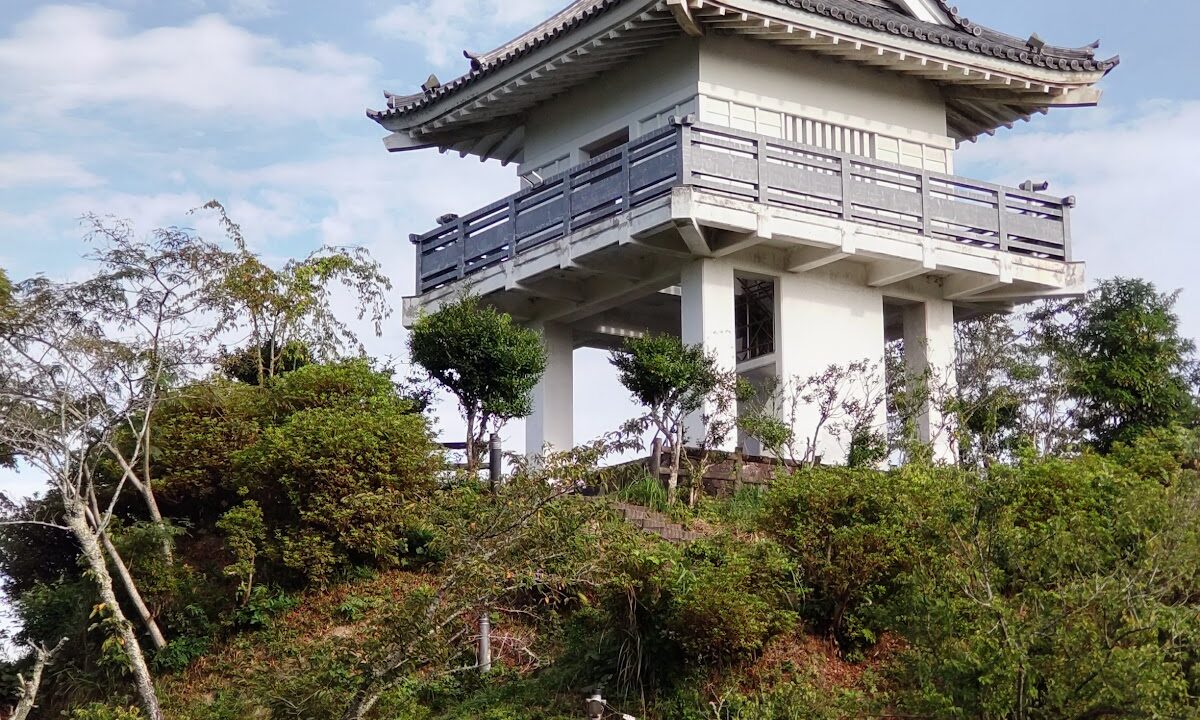
The symbol of Managi Castle Ruins Park is the observation deck modeled after a castle tower. While the actual Managi Castle did not have such a tower, this observation deck, built as a tourist facility, offers a spectacular panoramic view of the Pacific Ocean.
The observation deck is very prominent when viewed from the bottom of the mountain and is a beloved landmark of the castle ruins park. On a clear day, you can see all the way to the horizon of the Pacific Ocean, and also enjoy the surrounding Boso Mountains and rural landscapes.
Seasonal Flowers
Managi Castle Ruins Park is also a famous spot for flowers, with different flowers blooming in each season:
Spring (Late March to Early April)
Cherry blossoms bloom all over the mountain, making it a popular spot for cherry blossom viewing. The contrast between the castle ruins and the cherry blossoms allows you to fully appreciate the beauty of Japanese spring scenery.
Spring to Early Summer (Late April to Early May)
The park’s famous “Oomurasaki Azalea” reaches full bloom. The sight of the vibrant purple azaleas covering the slopes is breathtaking, and the “Manboku Castle Festival” is held every year on May 3rd to coincide with this time.
Early Summer (June)
Hydrangeas reach their peak bloom, adding color to the rainy season. Various colors of hydrangeas bloom, creating a tranquil atmosphere.
Manboku Castle Festival
Held every year on May 3rd, the Manboku Castle Festival is a representative spring event of Isumi City. The scenery created by the fully bloomed Oomurasaki azaleas and the numerous carp streamers fluttering on the wires extending to the observation deck captivates visitors.
On the day of the festival, various events, including a sumo wrestling tournament, are held, attracting locals and tourists alike. The sight of carp streamers majestically swimming under the blue sky is a popular spot for photography.
Access Information
Location
Address: 834 Managi, Isumi City, Chiba Prefecture (Managi Castle Ruins Park)
Access by Car
- From Ichihara-Tsurumai IC on the Ken-O Expressway: Approximately 30 minutes
- Via National Route 465: Approximately 15 minutes from Isumi city center
Parking: Free parking available within the park (accommodates approximately 20 regular cars)
Access by Public Transportation
- From Ohara Station on the JR Sotobo Line: Approximately 15 minutes by taxi
- From Kuniyoshi Station on the Isumi Railway: Approximately 10 minutes by taxi
*Please note that there are no direct buses from the nearest stations, so taking a taxi is recommended.
Points to Note When Visiting
- As this is a mountain castle, we recommend wearing comfortable walking shoes.
- Bringing insect repellent is recommended during the summer months.
- Toilets are located within the park.
- The stairs to the observation deck have some steep sections, so please be careful not to overexert yourself if you are not confident in your physical fitness.
Visitor Reviews and Visiting Time
According to reviews from castle enthusiasts, the average visiting time is approximately 30 minutes. However, if you want to carefully observe the remains, enjoy the view from the observation deck, or admire the seasonal flowers, we recommend allocating about an hour for your visit.
Visitors have given positive feedback such as, “The cliff-like cliffs are magnificent,” “The view of the Pacific Ocean is superb,” and “It’s especially beautiful during the azalea season.” On the other hand, understanding that “the observation deck is a replica of a castle tower and not historically significant” will enhance your enjoyment.
Castle Stamp and Surrounding Area Information
Obtaining the Castle Stamp
The castle stamp for Managi Castle is available at the Isumi City Tourism Association and surrounding tourist facilities. It is popular as a souvenir of castle visits and as a collectible item with historical value.
Nearby Tourist Spots
Isumi City
- Isumi Railway: Enjoy a local train journey
- Ohara Fishing Port: Enjoy fresh seafood
- Taitosaki Lighthouse: A scenic spot overlooking the Pacific Ocean
Nearby Castles
- Otaki Castle: A modern castle built by Honda Tadakatsu
- Katsuura Castle: A castle site associated with the Satomi clan
Cultural Value of Managi Castle
Managi Castle occupies an important position in castle research as a typical example of a mountain castle from the Sengoku period in Boso. This site embodies the history of regional warlords during the Sengoku period, from the migration of the Toki clan from Mino Province, to the political choices they made caught between the two major powers of the Boso Peninsula—the Satomi and Hojo clans—and ultimately to the unification under the Toyotomi regime.
Currently, it is maintained as a park, a popular place for people to relax, while the remains are well-preserved and used as a site for historical learning. It can be said to be a spot with multifaceted value as both a regional historical heritage site and a tourist resource.
Managi Castle as a Photography Spot
Managi Castle Ruins Park is an excellent location for photography:
- Spring Cherry Blossoms and Observation Deck: A collaboration of cherry blossoms and a castle-like observation deck
- Azaleas and Carp Streamers: A vibrant scene during the Managi Castle Festival in May
- Pacific Ocean from the Observation Deck: A magnificent view of the ocean stretching to the horizon
- Sunset View: The silhouette of the castle ruins against the backdrop of the setting sun over the Pacific Ocean
- Photos of the Ruins: Sengoku period remains such as earthworks and cliffs
Many posts are shared on social media, and many photography enthusiasts visit, especially during the azalea season.
Best Season to Visit Managi Castle
Managi Castle Ruins Park can be visited throughout the year, but the best time to visit is:
- Late April to Early May: The large purple azaleas are in full bloom. Managi Castle Festival also held
- Late March to Early April: Cherry blossom season
- Autumn (October to November): Autumn leaves and clear air allow for excellent views
- Winter (December to February): Fewer tourists, allowing for leisurely observation of the ruins
While the scenery is beautiful with lush greenery in summer, heat and insect repellent are necessary.
Summary
Managi Castle Ruins Park in Isumi City, Chiba Prefecture, is a fascinating spot that blends the historical romance of the Sengoku period with modern tourist facilities. While viewing the ruins of this representative mountain castle of Boso built by the Toki clan, you can enjoy the spectacular view of the Pacific Ocean from the observation deck and the flowers of each season.
The scenery of the large purple azaleas and carp streamers in spring is particularly breathtaking, and the park is bustling with many people during the Managi Castle Festival. For history enthusiasts, it’s a valuable site showcasing Sengoku period ruins, while general tourists can enjoy the beautiful nature and scenery. It’s a place where everyone can find something to enjoy in their own way.
When visiting Isumi City, be sure to stop by Manboku Castle Ruins Park and experience the charm of Boso’s history and nature. This castle site, still beloved by the local people, is a precious cultural heritage connecting the past and present, and will continue to welcome many people for years to come.