Mariya Castle (Kisarazu City, Chiba Prefecture) Complete Guide | A Thorough Explanation of the Kazusa Takeda Clan’s Mountain Castle Remains and History
What is Mariya Castle? | A Sengoku Period Mountain Castle Remaining in Kisarazu City, Chiba Prefecture
Mariya Castle (also known as Mariyatsu-jo or Marigayatsu-jo) is a Sengoku period mountain castle located in Mariya, Kisarazu City, Chiba Prefecture. Built on a high point of 161 meters above sea level in the Boso Hills, this castle served as an important base for the Takeda clan in Kazusa Province (present-day south-central Chiba Prefecture) and significantly influenced the history of the Boso region for approximately 130 years.
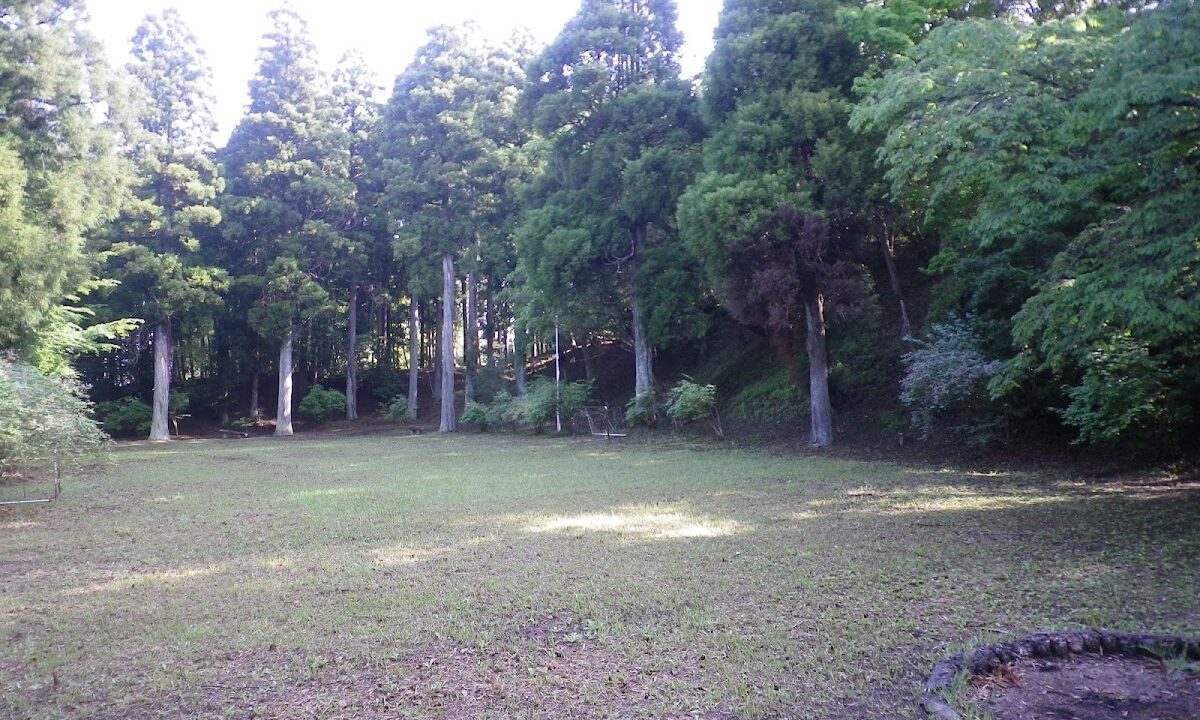
Currently, the Mariya Castle site is maintained as a campground at the Kisarazu City Children’s Nature Center, making it a valuable historical site where visitors can enjoy nature while viewing Sengoku period remains. Typical defensive structures of a Sengoku period mountain castle, such as the vast main enclosure known as Senjojiki, as well as moats, earthworks, and gates, remain in good condition, earning high praise from castle enthusiasts and history buffs.
Basic Information on Mariya Castle
Castle Data
- Alternate Name: Majino Castle
- Castle Classification: Mountain Castle
- Year of Construction: Kōshō 2 (1456)
- Builder: Takeda Nobunaga (Kai Takeda Clan)
- Main Lords: Mariya Takeda Clan (Kazusa Takeda Clan), Mariya Clan
- Year of Abandonment: Around Tenshō 18 (1590)
- Location: Mariya, Kisarazu City, Chiba Prefecture
- Elevation: 161 meters
- Remains: Main enclosure, earthworks, moats, gate, group of enclosures
- Current Status: Kisarazu City Children’s Nature Center Campground
History of Mariya Castle | From Kazusa Takeda Clan to Mariya Clan
Construction of the Castle and the Establishment of the Kazusa Takeda Clan (1456-)
The history of Mariya Castle begins in 1456, when Takeda Nobunaga advanced from Kai Province (present-day Yamanashi Prefecture) into Kazusa Province. This Takeda Nobunaga was a member of the Kai Takeda clan and a five-generation ancestor of the Sengoku daimyo later known as Takeda Shingen.
Takeda Nobunaga built two castles as bases for his control of Kazusa Province: Mariya Castle and Chonan Castle (present-day Chonan-machi, Isumi-gun). Mariya Castle was strategically located in the central part of the Boso Peninsula, near the border between Kazusa and Shimosa Provinces. Built on a particularly high mountaintop in the Boso Hills, it functioned as a military base with a wide view of the surrounding area.
The family descended from Takeda Nobunaga was called the “Kazusa Takeda Clan” or “Mariya Takeda Clan,” and they expanded their power in Kazusa Province from their base at Mariya Castle. ### The Golden Age of the Mariya Takeda Clan | Appointment as Boso Governor
The Mariya Takeda clan expanded its power with each generation, reaching its peak during the time of the fourth head, Mariya Nobukatsu.
When Ashikaga Yoshiaki, who had established his base in Oyumi, Shimosa Province (present-day Chuo Ward, Chiba City), claimed the legitimacy of the Ashikaga clan in the Kanto region by calling his base “Oyumi Palace,” Mariya Nobukatsu supported him. For this service, Mariya Nobukatsu was appointed “Boso Governor,” establishing his position as the highest authority in the Boso region.
During this period, the Mariya Takeda clan, centered around Mariya Castle, possessed several branch castles including Kururi Castle (present-day Kimitsu City) and Tsukuro Castle, and controlled a vast territory stretching from southern Kazusa Province to Awa Province. The authority of the Boso Governor was a symbol of their military and political dominance in the region. ### Internal Conflict and Decline of Power | Family Division
After the death of Mariya Nobukatsu, the Mariya Takeda clan was struck by serious internal conflict. A dispute arose within the family over the succession of the family headship, and the conflict intensified between the main branch based at Mariya Castle and the branch based at Kururi Castle.
This internal conflict led to the split of the Mariya Takeda clan into the “Mariya clan” and the “Kururi Takeda clan,” who began fighting each other. This turmoil significantly weakened the Mariya clan’s control in Kazusa Province and resulted in intervention from surrounding forces.
In particular, the Satomi clan, based in Awa Province (present-day southern Chiba Prefecture), expanded its power and strengthened its influence in Kazusa Province. The relationship between the Mariya and Satomi clans was complex, with a constant state of instability, sometimes allied and sometimes hostile.
Late Sengoku Period and Abandonment of the Castle (Around 1590)
At the end of the Sengoku period, the Boso region came under the influence of the Hojo clan of Odawara, but historical records regarding the detailed fate of Mariya Castle are limited. It is believed that Mariya Castle lost its strategic importance due to internal divisions and conflicts within the family.
In 1590, Toyotomi Hideyoshi’s siege of Odawara led to the downfall of the Hojo clan, marking the end of the Sengoku period in the Boso region. It is estimated that Mariya Castle was abandoned around this time, and subsequently disappeared from the historical stage.
Structure of Mariya Castle | Typical Layout of a Sengoku Mountain Castle
Mariya Castle is a full-fledged Sengoku mountain castle built on the mountaintop of the Boso Hills, characterized by defensive structures that skillfully utilize the natural terrain. The castle’s remains are mainly spread along the northern ridge, with the central main enclosure at its core, surrounded by multiple baileys, moats, earthworks, and gatehouses.
Features of the Main Enclosure (Senjojiki)
The central part of Mariya Castle is a massive rectangular main enclosure called “Senjojiki.” This name derives from its vast area, boasting an exceptional scale for a mountain castle of the Sengoku period.
High earthworks surround the main enclosure, and particularly strong defensive structures can be seen from the east to the north. These earthworks not only prevented enemy intrusion but also obstructed visibility from within the castle, creating a favorable battle environment for the defenders.
The remains of a gatehouse (entrance) are located in the central western part of the main enclosure. This gatehouse has a T-shaped structure, designed to prevent enemies from advancing straight ahead. Such “staggered gatehouses” are a common defensive technique in Sengoku period castles, offering the advantage of attacking invading enemies from the flank. ### Arrangement of Moats and Enclosures
Multiple moats surround the main enclosure. These moats are dry ditches dug to cut across ridges, serving as important defensive structures to prevent enemy advances. The moats at Mariya Castle are relatively deep and maintain a clear shape, demonstrating the high level of technology at the time.
Several enclosures (flat areas) are arranged in a stepped pattern around the main enclosure, forming a multi-layered defensive structure. These enclosures are thought to have been used as locations for soldiers and storage of supplies, and were important spaces supporting the castle’s functions.
Overall Layout
The layout of Mariya Castle is generally concentrated on the northern hillside. This is thought to be a result of topographical constraints and consideration of the anticipated direction of enemy invasion.
The castle area covers a relatively wide area, with defensive structures arranged in stages from the core area centered around the main enclosure outwards. This structure is based on the fundamental defensive philosophy of Sengoku period mountain castles: gradually wearing down the enemy before finally confronting them in the main keep.
Located at an altitude of 161 meters, the castle offered a wide view of the surrounding plains and roads, functioning as a military observation post.
Mariya Castle and the Surrounding Castle Network
Mariya Castle did not exist in isolation; it functioned as the core of a network of multiple castles controlled by the Mariya Takeda clan.
Relationship with Kururi Castle
Kururi Castle (Kimitsu City) is located approximately 10 kilometers south of Mariya Castle and was an important branch castle of the Mariya Takeda clan. Later, when the family split, the “Kururi Takeda clan,” based at Kururi Castle, became an independent force and opposed the Mariya clan.
Kururi Castle later became the residence of the Satomi clan, and in the early modern period, it was occupied by the Osuga clan, vassals of Tokugawa Ieyasu, thus remaining on the historical stage longer than Mariya Castle.
Zokai Castle and Chonan Castle
Zokai Castle was located east of Mariya Castle and was an important base within the sphere of influence of the Mariya Takeda clan. Furthermore, Chonan Castle (Chonan-cho), which is said to have been built by Takeda Nobunaga along with Mariya Castle at the time of its construction, was a key point for controlling the central part of Kazusa Province.
These castles worked in conjunction with each other, supporting the Mariya Takeda clan’s system of control in Kazusa Province. These castles, strategically located along major roads, are thought to have functioned not only as military bases but also as administrative centers for governing the territory.
Mariya Castle Today | Kisarazu City Youth Nature Center
Currently, the Mariya Castle site has been developed as a campground for the Kisarazu City Youth Nature Center and is used as a place of recreation for citizens. A distinctive feature of this site is that it functions as an educational and recreational facility while preserving the remains of the Sengoku period (Warring States period).
Preservation Status of the Remains
The remains of Mariya Castle are preserved in relatively good condition. Major defensive structures such as the earthworks, moats, and gates of the main enclosure are clearly visible, making it a valuable resource for understanding the structure of Sengoku period mountain castles.
While some remains have been altered due to the site being developed as a campground, the basic layout of the castle remains, allowing visitors to imagine its former appearance. The vast space of the main enclosure, Senjojiki, is a valuable place where one can still appreciate its scale.
Precautions When Visiting
There are several points to note when visiting Mariya Castle Ruins. Because the castle ruins are used as a campground, vehicle access to the facility may be restricted outside of the camping season. It is recommended to check official information from Kisarazu City or the facility before visiting.
Since the castle ruins are located in the mountains, it is important to wear comfortable shoes and clothing. When viewing historical remains such as moats and earthworks, be sure to watch your step.
Access to Mariya Castle
Access by Car
Access to Mariya Castle is most convenient by car. Head north on Prefectural Road 168 (Tsurumai-Makuta Line) and turn onto the side road towards Mariya. Then, follow the signs for the Kisarazu City Youth Nature Center, and you will arrive at the campground parking lot.
However, as mentioned above, there may be traffic restrictions outside of the camping season, so prior confirmation is important.
Access by Public Transportation
If using public transportation, the nearest stations are JR Uchibo Line Kisarazu Station or Kimitsu Station, but the castle ruins are quite a distance away. Bus services are limited, so you should be prepared to use a taxi or walk a long distance.
If your main purpose is to visit the castle, access by car is strongly recommended.
Historical Significance and Evaluation of Mariya Castle
Mariya Castle is an important castle indispensable for understanding the Sengoku period history of the Boso region. It is a valuable historical site that shows the process by which a branch of the Kai Takeda clan expanded into the Kanto region and established its own sphere of influence. As the base of the Mariya Takeda clan, who held the unique position of Boso Kanrei (governor of Boso), it occupies an important position in regional history.
Evaluation as a Castle
As a Sengoku mountain castle, Mariya Castle exhibits typical Sengoku period castle construction techniques, such as its vast main enclosure known as Senjojiki, clearly defined moats, and sturdy earthworks, and is highly regarded from the perspective of castle research. As a representative example of a mountain castle in the Boso region, it is a historical site visited by many castle researchers and history enthusiasts.
Importance in Regional History
Mariya Castle symbolizes the changes in the power structure during the transition period from the medieval to the Sengoku period in Kazusa Province. The history of the Takeda clan’s expansion, the rise of the Mariya Takeda clan, the establishment of their authority as the Boso Governor, and their subsequent decline due to internal conflicts, is a typical example of the rise and fall of regional powers during the Sengoku period.
Points to Note When Visiting Mariya Castle
To make your visit to Mariya Castle more fulfilling, keep the following points in mind:
Main Highlights
- Senjojiki (Main Enclosure): The central part of the castle, where you can experience its vast space.
- Earthen Embankment: The high earthen embankment surrounding the main enclosure allows you to understand its function as a defensive structure.
- Koguchi (Tiger’s Mouth): An entrance with a T-shaped, winding structure.
- Horikiri (Dry Moat): A clear dry moat cutting across the ridge.
- Kuruwa-gun (Group of Enclosures): Stepped, flat areas arranged around the main enclosure.
Estimated Visiting Time
If you want to thoroughly explore the entire castle site, allow approximately 2-3 hours. While it’s possible to see only the main remains in about an hour, we recommend allowing ample time to fully appreciate the atmosphere of the mountain castle.
Related Historical Sites in the Surrounding Area
When visiting Mariya Castle, visiting the surrounding related historical sites will give you a deeper understanding of the Mariya Takeda clan’s sphere of influence. In particular, Kururi Castle (Kimitsu City) was closely related to Mariya Castle, and since the Kururi Castle Ruins Museum is now located there, a visit to both is highly recommended.
Summary | The Charm and Historical Value of Mariya Castle
Mariya Castle is a Sengoku period mountain castle located in the Boso Hills of Kisarazu City, Chiba Prefecture. It served as the base of the Kazusa Takeda clan (Mariya Takeda clan) and played a significant role in the history of the Boso region for approximately 130 years.
Built in 1456 by Takeda Nobunaga, Mariya Castle flourished during the heyday of the Mariya Takeda clan, who held sway as the governors of Boso Province. However, internal family conflicts led to its decline, and it was eventually abandoned around 1590. Its history is a valuable example illustrating the rise and fall of regional power during the Sengoku period.
Built on a mountaintop 161 meters above sea level, the castle features a vast main enclosure known as Senjojiki, with well-preserved defensive structures such as earthworks, moats, and fortified gates. It is an important historical site for learning about the structure of Sengoku-era mountain castles.
Currently, it is maintained as a campsite for the Kisarazu City Youth Nature Center, serving two purposes: preserving historical heritage and providing a place of recreation for the community. For those interested in the Sengoku history of the Boso region, castle enthusiasts, and those who enjoy historical walks, Mariya Castle is a fascinating historical site well worth visiting.
When visiting the Boso Peninsula, be sure to visit Mariya Castle and experience the spirit of the Sengoku period.