
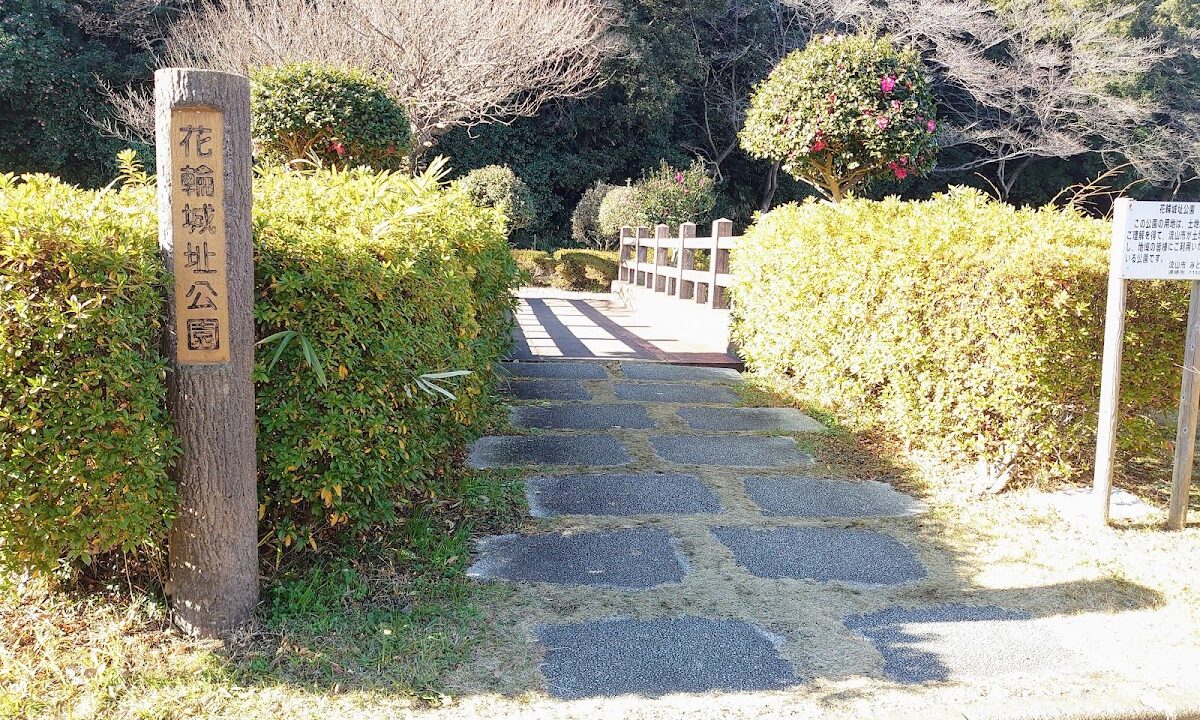
Hanawa Castle (Nagareyama City, Chiba Prefecture) Complete Guide | Detailed Explanation of History, Remains, and Access Information
Located in Nagareyama City, Chiba Prefecture, Hanawa Castle is a valuable castle ruin that conveys the history of the Sengoku period (Warring States period). Currently, it is maintained as “Hanawa Castle Ruins Park” and serves as a place of relaxation for citizens, but it once functioned as an important military base under the control of the Takagi clan. This article provides a detailed explanation of Hanawa Castle, from its history to the highlights of its remains and how to access it.
History and Overview of Hanawa Castle
Origins of Hanawa Castle
Hanawa Castle was built as a branch castle belonging to the Takagi clan, who controlled the surrounding area from their base at Kogane Castle in Otaniguchi, Matsudo City, during the Sengoku period. It is said that the builder was Hiramoto Shuzen-no-jo Sadatora, a vassal of the Takagi clan.
The Takagi clan was a Sengoku period daimyo (feudal lord) who ruled the region stretching from northwestern Chiba Prefecture to southern Ibaraki Prefecture. They managed their territory by strategically placing several branch castles around Kogane Castle. Hanawa Castle is believed to have played a crucial role as one of these branch castles, responsible for monitoring and defending the Edogawa River (then known as the Taihigawa River) basin.
Location Characteristics
Hanawa Castle is built on the tip of a plateau located north of the center of Nagareyama City. This plateau juts out to the south like a peninsula, offering an excellent vantage point overlooking the surrounding lowlands.
Located where the Nagareyama Road ascends the plateau, it was a strategically important point, also able to keep an eye on the Taihigawa River (present-day Edogawa River). Its location on the edge of the plateau is a typical example of medieval castle construction, making maximum use of the natural terrain.
The Takagi Clan and Kogane Castle
Understanding Hanawa Castle requires understanding its main castle, Kogane Castle, and the existence of the Takagi clan. The Takagi clan is believed to be a branch of the Chiba clan and wielded considerable power in this region from the Muromachi period to the Sengoku period.
Kogane Castle is a hilltop castle located in Otaniguchi, Matsudo City, and served as the Takagi clan’s base. The Takagi clan centered their operations around Kogane Castle, establishing several branch castles including Hanawa Castle, Negiuchi Castle, and Kurigazawa Castle, using them as centers for governing their territory. These branch castles are thought to have cooperated with each other, forming a defensive network within their domain.
Hanawa Castle in the Sengoku Period
During the Sengoku period, this region became the stage for conflicts between the Hojo clan, the Satomi clan, and later between the Later Hojo clan and the Toyotomi regime. While the Takagi clan was generally affiliated with the Hojo clan, they maintained complex diplomatic relations depending on the circumstances.
It is unclear when Hanawa Castle ceased to function as a military facility, but it is presumed to have fought alongside Kogane Castle on the Hojo side during Toyotomi Hideyoshi’s siege of Odawara in 1590, and was subsequently abandoned.
Changes Since the Edo Period
With the start of the Edo period, Hanawa Castle ceased to function as a military facility, and its site was repurposed as farmland and a settlement. However, in the mid-Edo period, a Biwakubi Kannon Hall was built on part of the castle site, giving it a new role as a place of worship for the community.
The foundation stones and base of this Kannon Hall still remain today, indicating that the castle site was cherished by the local people throughout the Edo period.
Structure and Layout of Hanawa Castle
Basic Structure of the Castle
Hanawa Castle is a flatland castle utilizing the tip of a plateau. While not particularly large, it possessed a sufficient structure to function as a subsidiary castle.
The castle grounds are long and narrow from north to south, with a layout that makes maximum use of the plateau’s topography. It is presumed that the main enclosure (honmaru) was located at the highest point of the plateau, with the baileys arranged from there towards the north.
Layout of Defensive Structures
Defensive structures characteristic of medieval castles, such as dry moats, earthen ramparts, and earthen bridges, were strategically placed. Dry moats, in particular, were crucial to the castle’s defense, preventing enemy intrusion and clearly separating the castle grounds from the outside.
Earthen ramparts, when combined with dry moats, provided even greater defensive effectiveness. At Hanawa Castle, earthen ramparts were built inside the dry moats, creating a structure that favored lookouts and archery attacks from within the castle.
Entrance Gate and Earthen Bridge
Earthen bridges crossed the dry moats at the entrance gates (koguchi). These bridges, created by leaving a section of the dry moat unexcavated, were important structures that limited enemy intrusion to a single point, allowing for concentrated defense.
The earthen bridges at Hanawa Castle can still be seen today as remains, providing valuable clues to understanding the castle’s structure at the time.
Remains and Highlights of Hanawa Castle
Dry Moat Remains
The most impressive remains within Hanawa Castle Park are the dry moat remains. The dry moat, confirmed by archaeological excavations, remains clearly visible as a topographical feature, allowing us to imagine the appearance of the castle during the Sengoku period.
The dry moat reaches a depth of several meters, and its scale indicates that Hanawa Castle was not merely a lookout post, but a fortress equipped with full-fledged defensive structures. Walking along the bottom of the moat allows you to experience the castle’s defensive capabilities at the time.
Traces of Earthworks
Another important structure, along with the dry moat, is the earthworks. The earthworks of Hanawa Castle were defensive embankments built inside the dry moat, and traces of them still remain in some parts.
While the height of the earthworks is not completely preserved, their original layout can be inferred from the topography. Walking along the top of the earthworks allows you to survey the surrounding terrain, giving you a sense of the strategically wide field of view this castle possessed.
Earthen Bridge
The earthen bridge spanning the dry moat is one of the best-preserved parts of the Hanawa Castle remains. Crossing the earthen bridge allows you to relive the feeling of entering and leaving the castle as samurai warriors of the Sengoku period (Warring States period).
The earthen bridge is only wide enough for a few people to pass side by side, a design intended to prevent large armies from overwhelming the area at once.
Remains of the Dog Run
The remains of a dog run have also been confirmed during archaeological excavations. A dog run is a narrow passage built along the side of a dry moat, allowing movement without descending to the bottom of the moat. This allowed the castle’s defenders to efficiently move between defensive positions.
Foundation Stones and Base of the Biwakubi Kannon Hall
The foundation stones and base of the Biwakubi Kannon Hall, built in the mid-Edo period, remain within the castle grounds. This Kannon Hall is a valuable relic indicating that the castle grounds were used as a place of worship during the Edo period.
The arrangement of the foundation stones allows us to infer the size and structure of the Kannon Hall, suggesting that the castle’s history continued not only during the Sengoku period but also into the Edo period and beyond.
Excavated Artifacts
The excavation has unearthed ceramics, ancient coins, and stone steles dating from the medieval to early modern periods. These artifacts provide clues about the period in which Hanawa Castle was in use and the lifestyle within the castle.
In particular, the ceramics reflect the trade and economic activities of the time, suggesting that Hanawa Castle may have functioned not only as a military facility but also as a regional economic center.
The Current State of Hanawa Castle Ruins Park
Park Development
The Hanawa Castle ruins were developed as “Hanawa Castle Ruins Park” in 1989 (Heisei 1). The park was designed to preserve the valuable castle remains while providing a place for citizens to experience history and relax.
Walking paths are maintained within the park, allowing visitors to enjoy strolling through the ruins. Information boards are also installed, allowing visitors to learn about the history and remains of Hanawa Castle.
Park Facilities
Hanawa Castle Ruins Park combines the characteristics of a historical park with those of a community recreation area. It features plazas and rest areas, making it popular with families and those enjoying walks.
Many trees are planted, allowing visitors to enjoy the changing seasons. The cherry blossoms are particularly beautiful in spring, making it a popular spot for cherry blossom viewing among local residents.
Community Involvement
Hanawa Castle Ruins Park is also used as a site for historical education in Nagareyama City. It is sometimes used as a place for local elementary and junior high school students to study local history, providing children with opportunities to learn about the region’s history.
Furthermore, local volunteer groups conduct cleaning and preservation activities, maintaining it as a park beloved by the citizens.
Hanawa Castle and the Surrounding Castle Network
Relationship with Kogane Castle
Hanawa Castle functioned as part of the Takagi clan’s castle network, centered around Kogane Castle. The distance from Kogane Castle to Hanawa Castle is approximately 5 kilometers in a straight line. Considering the communication system at the time, this distance allowed for information to be transmitted within a few hours in an emergency.
Kogane Castle served as the political and military center of the Takagi clan, while Hanawa Castle had a specific role: monitoring and defending the Edogawa River basin.
Coordination with Other Branch Castles
The Takagi clan had several branch castles in addition to Hanawa Castle. Representative examples include Negiuchi Castle, Kurigazawa Castle, and Mabashi Castle. These castles were positioned within visual range of each other, and it is believed that a communication network using signal fires and other means was in place.
Hanawa Castle is thought to have played a role in monitoring the Edogawa River area within this branch castle network, and was likely guarding against enemy incursions using water transport.
Other Castle Ruins in Nagareyama City
Besides Hanawa Castle, other medieval castle ruins remain in Nagareyama City, such as the Fukai Castle ruins. Fukai Castle is located north of Hanawa Castle and was also built on a plateau.
Visiting these castle ruins will give you a deeper understanding of the defense system of this region during the Sengoku period and the way the feudal lords ruled.
Access and Visiting Information
Access by Public Transportation
Hanawa Castle Ruins Park can be accessed by public transportation. The nearest stations are Heiwadai Station on the Ryutetsu Nagareyama Line or Minami-Nagareyama Station on the JR Musashino Line and Tsukuba Express.
It takes about 15 minutes to walk from Heiwadai Station. From Minami-Nagareyama Station, it’s about a 25-minute walk, or you can take a bus. The Nagareyama City community bus, “Green Bus,” also operates in the vicinity.
Access by Car
If you are traveling by car, it takes about 15 minutes from the Nagareyama Interchange on the Joban Expressway. Access is possible via National Route 6 and prefectural roads.
There is no dedicated parking lot at the park, so it is recommended to use nearby coin-operated parking lots or public transportation.
Points to Note When Visiting
Hanawa Castle Ruins Park is always open, and admission is free. However, please observe proper park etiquette and be careful not to damage the ruins.
When walking on the ruins, please be careful not to alter the shape of the earthworks and moats. Furthermore, carefully reading the information boards and understanding the historical background will lead to a deeper learning experience.
Estimated Visiting Time
For a thorough visit to Hanawa Castle Ruins Park, allow 30 minutes to an hour to observe the ruins. A simple walk around the park and checking the main ruins can be done in about 20 minutes.
Including time for photography, reading the information boards, and enjoying the surrounding scenery, we recommend allowing about an hour for your visit.
Nearby Tourist Attractions
When visiting Hanawa Castle Ruins Park, we recommend also visiting other tourist attractions in Nagareyama City. The area around Nagareyama Honmachi retains the historical townscape that flourished during the Edo period due to the production of white mirin (sweet rice wine).
The Issa Soju Memorial Museum, the Kondo Isami encampment site, and the Nagareyama City Museum are all within walking distance, allowing you to learn more about Nagareyama’s history. Furthermore, you can see Meiji-era civil engineering heritage at the Tone Canal and the Canal Waterfront Park.
Tips for Enjoying Hanawa Castle
Recommended Prior Study
Before visiting Hanawa Castle, studying the basic structure of Sengoku period castles and the history of the Takagi clan will deepen your understanding at the site. Knowing the meaning of castle terminology such as dry moats, earthworks, and earthen bridges will change how you view the remains.
You can find materials and information about Hanawa Castle at the Nagareyama City Museum and on the Nagareyama City website.
Photography Tips
Hanawa Castle Ruins Park is a suitable spot for photographing castle remains. Taking a side view of the dry moat is particularly effective in capturing its depth and scale.
Taking photos from the earthen bridge overlooking the dry moat, or from the earthworks capturing the surrounding terrain, are also recommended. Depending on the season, you can take beautiful photos combining the fresh greenery or autumn leaves with the castle ruins.
Enjoying the Site in Each Season
Hanawa Castle Ruins Park has different charms in each of the four seasons. In spring, cherry blossoms bloom, enveloping the castle ruins in a vibrant atmosphere. In summer, the greenery is lush, and the shapes of the earthworks and dry moats are more clearly visible.
In autumn, the autumn leaves are beautiful, and in winter, the fallen leaves make it easier to see the overall structure of the ruins. By visiting multiple times in different seasons, you will likely make new discoveries.
Understanding the Topography
When visiting Hanawa Castle, pay attention not only to the castle ruins but also to the surrounding topography. By observing the castle’s location on the edge of a plateau, the difference in elevation with the surrounding lowlands, and its relationship to the Edogawa River, you can understand why the castle was built in this location.
Walking around the perimeter of the park and observing the shape of the plateau is also effective in understanding the castle’s defensive system.
Current Status and Challenges of Hanawa Castle Research
Results of Archaeological Excavations
Regarding Hanawa Castle, archaeological excavations were conducted prior to the park’s development, confirming remains such as dry moats and dog runs. Furthermore, certain insights into the castle’s usage period and lifestyle have been gained from the excavated artifacts.
However, many aspects of the castle’s overall structure, detailed layout, and construction date remain unclear.
Limitations of Documentary Sources
Documentary sources concerning Hanawa Castle are limited, and details about Hiramoto Shuzen-no-kami Sadatora, who is believed to be the castle’s lord, are also unknown. References to Hanawa Castle are scarce in historical documents related to the Takagi clan, making archaeological investigation crucial for unraveling the castle’s history.
Future Research Possibilities
Research on Hanawa Castle is closely related to understanding the entire Takagi clan castle network centered around Kogane Castle. Comparative studies with surrounding branch castles and more detailed surveying may clarify the characteristics and role of Hanawa Castle.
Furthermore, advancements in non-destructive testing technologies such as ground-penetrating radar surveys are expanding the possibilities for confirming underground remains without excavation.
Summary
Hanawa Castle is a valuable castle ruin from the Sengoku period (Warring States period) remaining in Nagareyama City, Chiba Prefecture. Built as a branch castle of the Takagi clan, it played an important role in monitoring and defending the Edogawa River basin.
Currently, it is maintained as Hanawa Castle Ruins Park, where visitors can see remains such as dry moats, earthworks, and earthen bridges. It is a valuable spot for learning about the structure of Sengoku period castles and experiencing local history, and is popular not only with history enthusiasts but also with local residents.
When you visit Nagareyama City, be sure to visit Hanawa Castle Ruins Park and feel the spirit of the Sengoku period. Standing on the edge of the plateau and gazing at the surrounding terrain, you will likely be able to imagine the figures of the samurai who once defended this land.
Although Hanawa Castle is not large in scale, it is an important site for understanding the history of castles in Chiba Prefecture, as it retains many characteristics of medieval castles. It is hoped that this will continue to be appropriately preserved and utilized as a historical heritage site of the region.


