Sugayama Castle (Tojo-machi, Chiba Prefecture) Complete Guide | History and Highlights of a Medieval Castle that Flourished as the Base of the To Clan
What is Sugayama Castle?
Sugayama Castle (Sugayama-jo, Sukayama-jo) is a medieval mountain castle located in Sasagawa, Tojo-machi, Katori-gun, Chiba Prefecture. Built in 1190 by To Taneyori Chiba (known as the sixth son of Tsunetane Chiba), it served as the base of the To clan and was a historical stage for approximately 400 years.
Built on a plateau approximately 50 meters above sea level, this castle faced the vast inland sea once known as “Katori no Umi” (Sea of Katori) and functioned as a natural stronghold surrounded by low-lying wetlands. Even today, the remains of dry moats, earthworks, and baileys are well-preserved, making it a valuable historical site where one can experience the structure of a medieval castle.
History of Sugayama Castle
The Establishment of the Higashi Clan and the Construction of Sugayama Castle
Higashi Taneyori was born the sixth son of Chiba Tsunetane and participated in Minamoto no Yoritomo’s uprising along with the Chiba clan. For his achievements, in 1185 he was granted 33 villages in Higashi-no-sho and later 55 villages in Misaki-no-sho, becoming the ancestor of the Higashi clan.
Initially, Taneyori resided at Sakurai Castle (Kamidai-Maegake Castle), but in 1190 he built the more defensively superior Sugayama Castle and moved his residence there. At this time, he enshrined Myoken Bodhisattva as the castle’s guardian deity and devoted himself to managing his territory and performing religious rites. Myoken worship was a common belief among the Chiba clan, and the Higashi clan also inherited this tradition.
The Development of the Higashi Clan and the Role of Sugayama Castle
Sugayama Castle served as the base of the Higashi clan and became the political and military center of eastern Shimosa Province. The Higashi clan ruled this area for generations, maintaining their power as influential local lords from the Kamakura period to the Muromachi period.
Numerous temples and shrines associated with the Higashi clan were built around the castle. Tofuku-ji Temple, in particular, is known as the temple where Chiba Kunitane, the last de facto head of the Chiba main family, held his Kanjo-e ceremony. This suggests that Sugayama Castle was not merely a military base, but also a center of regional culture and religion.
The Sengoku Period and Integration with Moriyama Castle
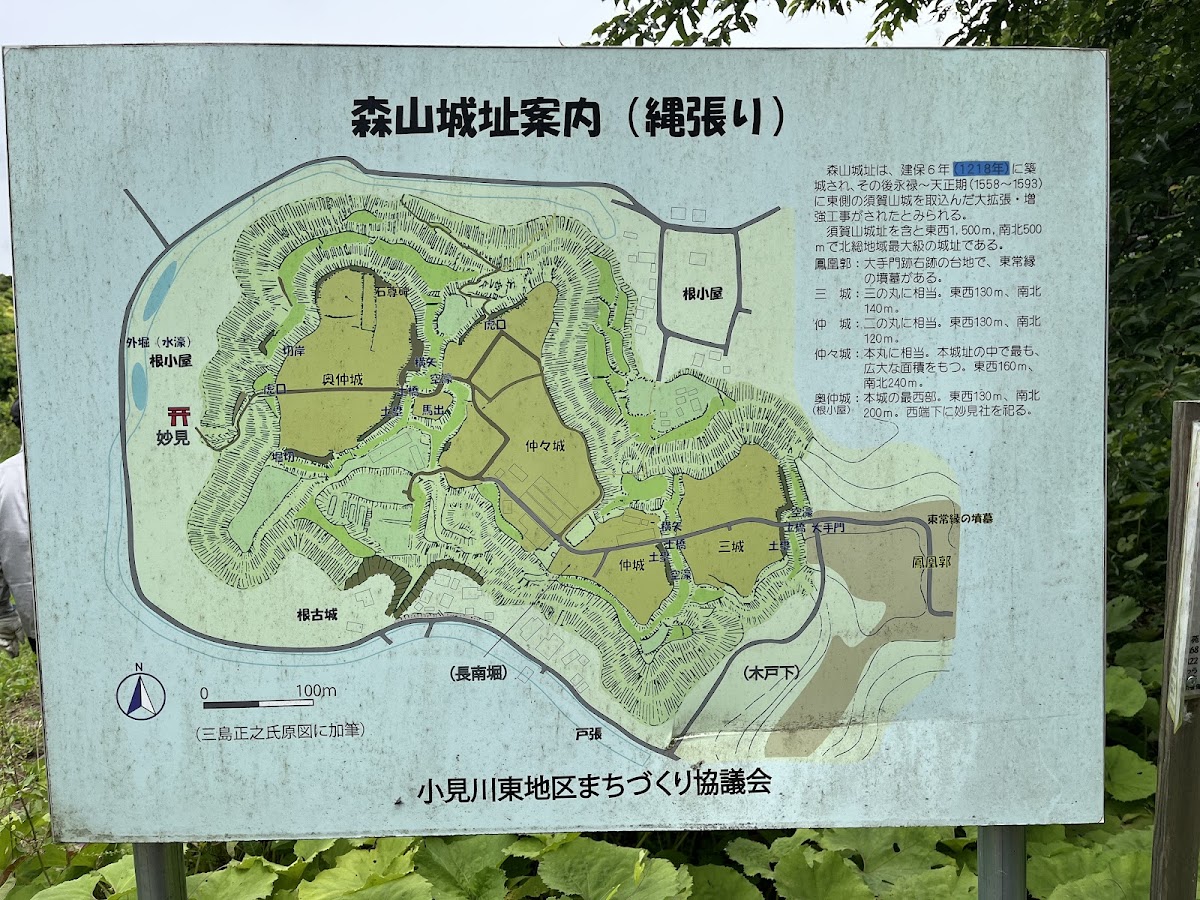
In the late Sengoku period, Moriyama Castle, adjacent to the south of Sugayama Castle, was developed and expanded. Moriyama Castle was strengthened by Chiba Tanetomi, who received support from the Hojo clan, and developed into a larger fortress.
In this process, Sugayama Castle was incorporated as an outer fortification of Moriyama Castle, and ultimately, the two castles became a single, integrated complex. Sugayama Castle served as an important base for the northern defense of Moriyama Castle and continued to function until the end of the Sengoku period.
Abandonment and Aftermath
During Toyotomi Hideyoshi’s siege of Odawara in 1590, the Higashi clan, who belonged to the Hojo clan, fell from power, and it is believed that Sugayama Castle was abandoned around this time. Since the Edo period, the castle ruins have been preserved locally, and to this day, it retains the appearance of a medieval castle.
Structure of Sugayama Castle
Layout and Topographical Features
Sugayama Castle is a flatland castle built on a plateau approximately 50 meters above sea level. During the time the castle was built, the surrounding area was surrounded by a vast inland sea called “Katori no Umi” and low-lying wetlands, making it a strategic point for water transport and also functioning as a natural moat.
The layout, which skillfully utilizes the plateau’s topography, exhibits a typical structure of a medieval castle. The castle features a central enclosure surrounded by multiple smaller enclosures, separated by dry moats and earthen ramparts.
Structure of the Main Enclosure
The main enclosure (honmaru) is located in the center of the castle and was built on the highest point. Traces of earthen ramparts can still be seen at the site of the main enclosure, allowing us to estimate the scale of the former defensive facilities. From the main enclosure, one could see the surrounding area, suggesting it served both as a military surveillance point and as the lord’s residence.
Dry Moats and Earthen Ramparts
The greatest highlight of Sugayama Castle is its well-preserved dry moats and earthen ramparts. The dry moats separating the enclosures are several meters deep and functioned as strong defensive structures to prevent enemy intrusion.
Earthen ramparts were built around the enclosures, and some sections still exist with a height of 2-3 meters. These ramparts served not only as defensive structures but also to clearly define the divisions within the castle.
Layout of Enclosures
Sugayama Castle has multiple enclosures, each presumed to have had a different function. The main enclosure is at the center, with the second and third enclosures arranged concentrically, creating a structure where defenses become increasingly strict towards the outside.
After being integrated with Moriyama Castle, the entire Sugayama Castle functioned as the northern enclosure of Moriyama Castle, becoming part of a broader defensive network.
Highlights of Sugayama Castle
Remains of the Castle Site
Visiting the Sugayama Castle site allows you to observe the remains of a medieval castle up close. Particularly noteworthy are the following:
Remains of Dry Moats: Clear dry moats remain within the castle grounds, and their depth and scale demonstrate the high level of defense at the time. Walking along the bottom of the moats allows you to experience the difficulty faced by attackers.
Preservation of Earthworks: The earthworks surrounding the enclosures are relatively well-preserved, with some sections retaining their original height. Climbing the earthen ramparts allows you to appreciate the excellent visibility within the castle grounds and the ingenuity of its defensive features.
Layout of Enclosures: You can observe the arrangement of multiple enclosures in a stepped pattern, allowing you to learn about the unique layout of medieval castles.
Surrounding Historical Landscape
Nearby, numerous historical sites associated with the Higashi clan are scattered around Sugayama Castle. When visiting the castle ruins, visiting these related sites in conjunction will allow you to gain a deeper understanding of the Higashi clan’s history.
Temples and shrines, including Tofuku-ji Temple, preserve valuable historical materials and legends related to the Higashi and Chiba clans, making them well worth visiting in conjunction with the castle ruins.
Obtaining Castle Stamps
Sugayama Castle issues castle stamps, which can be purchased at the Higashi-no-sho Town Tourism Association (located within the Higashi-no-sho Town Hall). In addition to Sugayama Castle, castle stamps for Numagetsu Castle, Wada Castle, and Otomo Castle are also sold in Higashi-no-sho Town, offering the enjoyment of collecting them as souvenirs of your castle tour.
The back of the castle stamp contains explanations of the castle’s history and design, making it valuable not only as a memento of your visit but also as an educational resource.
Access
Location
Sugayama Castle Ruins are located in Sasagawa, Higashino-cho, Katori-gun, Chiba Prefecture. The specific address is Sasagawa-i district, Higashino-cho, Katori-gun, Chiba Prefecture.
Access by Train
Nearest Station: JR Narita Line, Sasagawa Station
From Tokyo:
- Take the JR Sobu Main Line from Tokyo Station to Chiba Station (approx. 40 minutes)
- Transfer to the JR Sobu Main Line at Chiba Station and travel to Narita Station (approx. 30 minutes)
- Transfer to the JR Narita Line (towards Sawara) at Narita Station and travel to Sasagawa Station (approx. 50 minutes)
- Total travel time: approx. 2 hours
From Sasagawa Station to Castle Ruins: approx. 20-25 minute walk (approx. 1.5 km)
Leaving Sasagawa Station, head north and follow the signs to reach the Sugayama Castle Ruins. Enjoy a pleasant stroll through the rural scenery of Tono-cho along the way.
Access by Car
From Tokyo:
- Take the Higashi-Kanto Expressway and exit at Daiei IC.
- Proceed along National Route 51 towards Choshi, then take Prefectural Route 44 to Tono-cho.
- Travel time: Approximately 1 hour 30 minutes
Parking: There is no dedicated parking lot around the castle ruins, but you can use the Tono-cho Town Hall parking lot (approximately a 20-minute walk to the town hall). There may also be a few parking spaces on the roadside near the castle ruins, but please be considerate of local residents.
Notes for Visitors
- You can freely visit the castle ruins, but please observe proper etiquette as it may include private property.
- Please be careful not to damage the earthworks or dry moats to protect the remains.
- In summer, vegetation can grow thick, making the remains difficult to see. Spring and autumn visits are recommended.
- We recommend using insect repellent and wearing long sleeves and long pants.
- While information boards are installed, reviewing the castle’s layout map beforehand will enhance your understanding.
Visitor Guide
Estimated Visit Time
For a thorough visit to the Sugayama Castle ruins, allow approximately 40-60 minutes to observe the remains. Including photography and exploring the surrounding area, a stay of about 1.5 hours is recommended.
Recommended Sightseeing Route
- Check the Information Board: First, understand the overall structure by checking the information board at the castle ruins entrance.
- Climb to the Main Enclosure: Head towards the main enclosure (Honmaru) via the main climbing route.
- Observe the Earthworks: Observe the earthworks around the main enclosure and confirm their height and structure.
- Explore the Dry Moats: Walk along the dry moats between the enclosures and experience their depth and defensive function.
- Visit Each Enclosure: Visit each enclosure in order, such as the second and third enclosures.
- Confirm the View: Observe the surrounding terrain from the main enclosure to understand the castle’s location.
Nearby Tourist Spots
When visiting Sugayama Castle, you can enjoy a more fulfilling historical exploration by also visiting the following nearby spots:
Moriyama Castle Ruins: An adjacent castle integrated with Sugayama Castle. It is within walking distance, and visiting both together is recommended.
Tofuku-ji Temple: A temple associated with Chiba Kunitane. An important historical site for understanding the history of the Higashi clan.
Higashi-no-sho Town Local History Museum: A facility where you can learn about the history and culture of Higashi-no-sho Town. Materials related to Sugayama Castle are also on display.
Numaketsu Castle, Wada Castle, and Otomo Castle: Other castle ruins within Higashi-no-sho Town. Castle stamps are issued, making it enjoyable to tour the castles.
How to obtain a castle stamp
Sales location: Higashi-no-sho Town Tourism Association (within Higashi-no-sho Town Hall)
Address: 4713-131 Sasagawa i, Higashi-no-sho-machi, Katori-gun, Chiba Prefecture 289-0692
Opening hours: 8:30 AM – 5:15 PM
Closed days: Saturdays, Sundays, and public holidays
To obtain a castle stamp, you must visit Higashi-no-sho Town Hall during weekday opening hours. Visiting before or after touring the castle ruins is efficient.
Sugayama Castle and the Cultural Heritage of the Higashi Clan
Myoken Faith and the Higashi Clan
The enshrinement of Myoken Bodhisattva at Sugayama Castle is an important element in demonstrating the Higashi clan’s identity. Myoken faith is the deification of the North Star and the Big Dipper, and was a belief common to the entire Chiba clan.
It is believed that Higashi Taneyori’s enshrinement of Myoken at Sugayama Castle went beyond a mere religious act, intended to demonstrate his legitimacy as a member of the Chiba clan and to serve as a spiritual foundation for governing his territory.
The Higashi Clan and the Local Community
The Higashi clan ruled the Higashi-sho area for approximately 400 years, greatly influencing the formation of the local community. Merchants and artisans gathered in the castle town, and regular markets were held, developing it as an economic center.
Furthermore, the Higashi clan contributed to the development of local culture through the protection of temples and shrines and support of cultural activities. Many historical sites and legends remaining in present-day Higashi-sho Town can be considered legacies of the Higashi clan’s rule. ### Relationship with the Chiba Clan’s Main Branch
The Higashi clan, though a branch of the Chiba clan, maintained close ties with the main branch. The fact that Chiba Kunitane performed the Kanjo-e ceremony at Tofuku-ji Temple indicates that Higashi-sho remained an important base for the Chiba clan.
Even as the Chiba clan declined towards the end of the Sengoku period, the Higashi clan maintained a certain level of power and contributed to regional stability.
Academic Value of Sugayama Castle
Significance in Medieval Castle Research
Sugayama Castle is a valuable example of the evolution of castles from the late Heian period to the Sengoku period. The process from its initial residential character to its development into a full-fledged defensive facility during the Sengoku period, and further to its integration with Moriyama Castle, provides important information for understanding the development history of medieval castles.
In particular, the integration with Moriyama Castle is a good example of how Sengoku period castles evolved from single fortresses to defensive systems combining multiple bases.
Archaeological Findings
Previous investigations have unearthed artifacts such as medieval ceramics and iron objects from Sugayama Castle, gradually revealing the castle’s actual structure and the lifestyle of its inhabitants. Further investigations are expected to shed more detailed light on the castle’s structure and history.
Summary
Sugayama Castle is a valuable medieval castle site remaining in Higashi-no-cho, Chiba Prefecture. Built in 1190 by Higashi Taneyori, the sixth son of Chiba Tsunetane, it served as the base of the Higashi clan for approximately 400 years, becoming the political, military, and cultural center of eastern Shimosa Province.
The well-preserved dry moats, earthworks, and layout of the baileys are valuable remains that allow one to experience the structure of a medieval castle. Built on a plateau 50 meters above sea level, its location, which once faced the Katori Sea, provided excellent conditions for both water transport and defense.
One of the unique features of this castle is that during the late Sengoku period, it was integrated with the adjacent Moriyama Castle, functioning as a larger, more complex fortress. Although it was abandoned after the Siege of Odawara in 1590, it was preserved as a historical symbol of the region and is now an important cultural property of Tono-cho.
Its convenient access, approximately a 20-minute walk from Sasagawa Station on the JR Narita Line, is also a major draw, and castle stamps are available. This historical site is highly recommended for anyone interested in medieval castles or the history of the Chiba clan. Visiting it along with nearby Moriyama Castle and Tofuku-ji Temple will provide a deeper understanding of the history of the Tono clan and Tono-cho.