Complete Guide to Yoshino Castle (Yoshino District, Nara Prefecture): History and Remains of Kinpusen Castle, the Base of Prince Moriyoshi
What is Yoshino Castle?: Basic Information and Overview
Yoshino Castle (Yoshino-jo) was a Japanese mountain castle located on Mount Yoshino in Yoshino Town, Yoshino District, Nara Prefecture. In the war chronicle *Taiheiki*, it is also called Kinpusen Castle and played an important role from the late Kamakura period to the Nanboku-cho period.
Location and Geographical Characteristics
- Location: Yoshino Mountain, Yoshino Town, Yoshino District, Nara Prefecture
- Castle Structure: Mountain Castle
- Elevation: Approximately 350-600 meters (spread throughout Mount Yoshino)
- Topographical Advantage: A natural stronghold utilizing the rugged terrain of Mount Yoshino
Mount Yoshino is located at the northern end of the Kii Mountains and was a natural fortress surrounded by steep terrain and deep valleys. This geographical location made it an ideal defensive base against the forces of the Kamakura Shogunate and the Northern Court.
Common Names/Alternate Names
- Kinpusen Castle (Kinpusenjo): Name used in the *Taiheiki*
- Yoshinoyama Castle: Sometimes used as an alternative name
History of Yoshino Castle: From the Genkō War to a Southern Court Base
The Genkō War and the Uprising of Prince Moriyoshi (1332)
The history of Yoshino Castle begins in Genkō 2 (1332) when Prince Moriyoshi fled to Yoshinoyama and raised an army from this base.
Prince Moriyoshi was a son of Emperor Go-Daigo and one of the central figures in the movement to overthrow the Kamakura Shogunate. Finding it difficult to continue his activities in Kyoto, Prince Moriyoshi fled to Mount Yoshino and fortified the Zaōdō Hall of Kinpusen-ji Temple, establishing it as his headquarters.
Construction and Defense of Yoshino Castle
Prince Moriyoshi made maximum use of the terrain of Mount Yoshino, constructing the following defensive facilities:
- Fortification of Zaōdō Hall: Establishment of the headquarters centered around the Zaōdō Hall of Kinpusen-ji Temple
- Construction of Dry Moats: Excavation of dry moats along the mountain ridges and valleys
- Arrangement of Enclosures: Establishment of defensive positions at various locations on Mount Yoshino
- Establishment of Watchtowers: Observation posts to detect approaching enemies early
The Battle of Yoshino Castle in 1333
In 1333, the Kamakura Shogunate dispatched a large army to capture Yoshino Castle. The *Taiheiki* (Chronicle of Great Peace) details this fierce battle.
Attack by the Shogunate Army
The Shogunate army mobilized tens of thousands of troops and besieged Mount Yoshino. However, the rugged terrain and the tenacious resistance of Prince Moriyoshi’s army made the capture extremely difficult.
The Fall of the Castle and its Aftermath
After fierce fighting, Yoshino Castle finally fell. Prince Moriyoshi successfully escaped and continued his anti-Shogunate movement, fighting in various locations. This resistance at Yoshino Castle had a significant impact on anti-Shogunate forces throughout the country, eventually leading to the downfall of the Kamakura Shogunate.
Yoshino as a Southern Court Base (1336-)
With the collapse of the Kenmu Restoration and the beginning of the Nanboku-cho period, Mount Yoshino reappeared on the historical stage as a Southern Court base.
Emperor Go-Daigo’s Imperial Palace in Yoshino
In 1336 (Engen 1), Emperor Go-Daigo fled Kyoto and established the Southern Court in Yoshino. An imperial palace (angu) was built on Mount Yoshino, which served as the center of the Southern Court for approximately 60 years.
Kō no Moronao’s Attack on the Yoshino Imperial Palace (1348)
In 1348 (Jōwa 4), Kō no Moronao, a general of the Northern Court, led a large army to attack Yoshino. While the palace was temporarily occupied, the Southern Court forces recaptured Yoshino and maintained its function as a base.
Yoshino Castle After the Unification of the Northern and Southern Courts
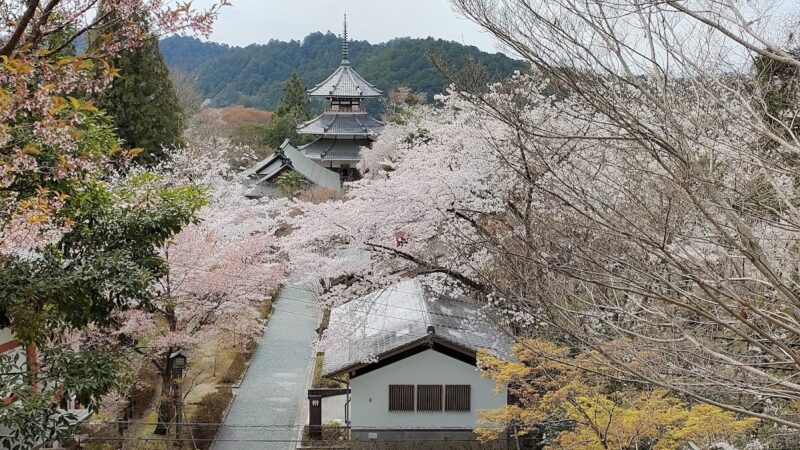
After the unification of the Northern and Southern Courts in 1392 (Meitoku 3), Yoshino Castle ceased to function as a military base. Subsequently, Mount Yoshino developed as a religious site and a famous cherry blossom viewing spot.
Remains and Highlights of Yoshino Castle
Existing Remains
Although many remains of Yoshino Castle have been lost over the long years since its abandonment, the following traces can still be seen today.
Traces of Dry Moats
Traces of the former dry moats remain in various places on Mount Yoshino. In particular, clear traces of trenches can be seen around Zaōdō Hall and along the ridges of Mount Yoshino. These are thought to be defensive structures constructed during the Genkō War.
Remains of Enclosures
On the flat areas of Mount Yoshino, topography remains that are presumed to be the remains of former enclosures (kuruwa). The topography suggests that multiple defensive positions were arranged around Zaōdō Hall.
Traces of Earthworks
Traces of earthworks have also been confirmed in some areas. However, many parts have been altered by later development, and clearly identifiable locations are limited.
Main Sightseeing Spots
Kinpusen-ji Temple Zaodo Hall
Kinpusen-ji Temple Zaodo Hall, which served as the main headquarters of Yoshino Castle, still stands today as a symbol of Mount Yoshino. This building, designated a National Treasure, is a historical site where Prince Moriyoshi was based.
- Visiting Hours: 8:30 AM – 4:30 PM (Varies seasonally)
- Admission Fee: Adults 800 yen, Junior/Senior High School Students 600 yen, Elementary School Students 400 yen
Yoshino Imperial Palace Site
A stone monument marking the “Yoshino Imperial Palace Site” now stands on the site of the Southern Court’s temporary palace. This is a historical site where Emperor Go-Daigo and other emperors of the Southern Court resided.
Around Katte Shrine
Remains related to Yoshino Castle can also be found around Katte Shrine. This area was one of the important defensive strongholds during the Southern Court period.
Preservation Status of the Ruins
The ruins of Yoshino Castle are not as well-preserved as those of other famous castles. This is due to the following reasons:
- Long-term neglect: After its abandonment, it was not maintained as a military facility.
- Development of religious facilities: It was altered by the construction of religious facilities, centered around Kinpusen-ji Temple.
- Tourism development: The topography changed due to development as a cherry blossom viewing spot.
- Natural erosion: Natural weathering over more than 600 years.
However, even so, the topography of Mount Yoshino itself still conveys the appearance of the former mountain castle.
Builder and Lord of Yoshino Castle
Prince Moriyoshi (Builder)
Prince Moriyoshi (1308-1335) was born as the third son of Emperor Go-Daigo.
Life and Achievements
- Entering and Returning to Secular Life: He entered the priesthood at a young age and became the head of the Tendai sect, but returned to secular life to participate in the movement to overthrow the shogunate.
- Uprising: He rallied anti-shogunate forces in various regions and led the movement to overthrow the shogunate.
- Resistance at Yoshino Castle: In 1332, he fought against the shogunate army from Yoshino Castle.
- Tragic End: Due to internal conflicts within the Kenmu Restoration, he was assassinated by Ashikaga Tadayoshi in Kamakura.
Prince Moriyoshi’s activities at Yoshino Castle were a crucial turning point in the downfall of the Kamakura Shogunate.
Emperors of the Southern Court
After Yoshino became a base for the Southern Court, the following emperors ruled this region:
- Emperor Go-Daigo (Reign: 1336–1339)
- Emperor Go-Murakami (Reign: 1339–1368)
- Emperor Chokei (Reign: 1368–1383)
- Emperor Go-Kameyama (Reign: 1383–1392)
Yoshino Castle as Depicted in the Taiheiki
The Battle of Yoshino Castle in Military Chronicles
The Taiheiki is a military chronicle depicting the Nanboku-cho period, and it details the battle for Yoshino Castle (Kinpusen Castle).
Characteristics of the Description
The description of Yoshino Castle in the *Taiheiki* has the following characteristics:
- Rugged Terrain: The steep terrain of Mount Yoshino is emphasized.
- Fierce Battle: The fierce battle between Prince Moriyoshi’s army and the Shogunate army is depicted.
- Heroic Description: The bravery of Prince Moriyoshi and his samurai is praised.
- Religious Elements: The battle took place at Kinpusen-ji Temple, a religiously sacred site.
Relationship with Historical Facts
The *Taiheiki* is a war chronicle, and while based on historical facts, it contains embellishments and exaggerations. However, the basic structure of Yoshino Castle and the course of the battles largely coincide with other historical sources, making it a historically valuable document.
Yoshino Castle and Surrounding Castles
Castle Network in Yoshino County, Nara Prefecture
Yoshino Castle did not exist in isolation; it was connected to several other castles within Yoshino County.
Major Related Castles
- Iigai Castle: A base complementing the defenses of Mount Yoshino
- Hirohashi Castle: An important base for the Southern Court forces
- Tanji Castle: A castle protecting the access route to Yoshino
- Yamaguchi Castle: A defensive base against attacks from the Kii region
- Yabashi Castle: A monitoring base for attacks towards Uda
- Rokuda Castle: A defensive base in the Yoshino River basin
These castles formed a defensive network centered on Yoshino during the Southern Court period.
Comparison with Other Major Castles in Nara Prefecture
Takatori Castle
Takatori Castle is a mountain castle located approximately 15 kilometers northeast of Yoshino Castle and is considered one of Japan’s three great mountain castles. While Yoshino Castle was a temporary base during the Southern Court period, Takatori Castle is a full-fledged early modern castle that was developed from the Sengoku period to the Edo period.
Uda Matsuyama Castle
Uda Matsuyama Castle is a mountain castle located north of Yoshino Castle. During the Sengoku period, it flourished as the residence of the Akiyama clan, and was later renovated into a modern castle by the Ito clan, vassals of Toyotomi Hidenaga.
Sami Castle
Sami Castle is a castle that existed even earlier than Yoshino Castle and served as a base for a powerful local clan during the medieval period.
Unique Features of Yoshino Castle
Yoshino Castle is unique compared to other castles in Nara Prefecture in the following ways:
- Integration with Religious Facilities: It was fortified within Kinpusen-ji Temple, a religious sanctuary.
- Imperial Family Base: A castle directly ruled by members of the imperial family, such as Prince Moriyoshi and Emperor Go-Daigo.
- Capital Function of the Southern Court: Not merely a military base, but a center of government.
- Temporary Castle: Not a permanent castle, but functioned as an emergency base.
Access and Tourist Information for Yoshino Castle
Transportation Access
Access by Train
- Kintetsu Yoshino Line: Get off at Kintetsu Yoshino Station
- Ropeway: Approximately 3 minutes by Yoshinoyama Ropeway from Yoshino Station, get off at Yoshinoyama Station
- Walking: Approximately 10 minutes on foot from Yoshinoyama Station to Kinpusen-ji Zaodo Hall
Access by Car
- From Osaka: Approximately 1 hour from Koriyama IC on the Nishi-Meihan Expressway via National Routes 24 and 169.
From Nagoya: Approximately 1 hour 30 minutes from Hari IC on the Meihan Expressway via National Routes 369 and 370.
Parking: Yoshinoyama Tourist Parking (Paid parking during cherry blossom season, traffic restrictions apply).
Notes for Visitors
Cherry Blossom Season
Yoshinoyama is one of Japan’s leading cherry blossom viewing spots, and it gets extremely crowded, especially during the cherry blossom season from early to mid-April.
- Traffic Restrictions: Private car restrictions will be in place.
- Congestion: Long waiting times for public transportation such as ropeways and buses.
- Accommodation Reservations: Early reservations are essential.
Clothing and Equipment
When visiting the Yoshino Castle ruins, the following equipment is recommended:
- Comfortable Walking Shoes: Trekking shoes are ideal as you will be walking on mountain paths.
- Comfortable Clothing: There are many stairs and slopes.
- Rain Gear: Mountain weather is unpredictable.
- Drinking Water: Heatstroke prevention is especially necessary in summer.
Estimated Visiting Time
- Kinpusenji Zaodo Hall Only: Approximately 30 minutes to 1 hour
- Walking Around the Entire Yoshino Mountain: Approximately 2 to 3 hours
- Detailed Visit Including Ruins: Approximately 4 to 5 hours
Nearby Tourist Attractions
Kinpusen-ji Temple
Kinpusen-ji Temple, the center of Yoshino Castle, is the head temple of Shugendo (mountain asceticism) and continues to attract many worshippers. The Zao-do Hall, a National Treasure, is a must-see.
Yoshimizu Shrine
This shrine is believed to be the site of Emperor Go-Daigo’s temporary palace and displays valuable materials related to the Southern Court. It is one of the constituent assets of the World Heritage Site “Sacred Sites and Pilgrimage Routes in the Kii Mountain Range.”
Nyoirin-ji Temple
This temple houses the mausoleum of Emperor Go-Daigo and is an important place for learning about the history of the Southern Court.
Yoshino Mizuwake Shrine
This shrine is registered as a World Heritage Site, and its beautiful shrine architecture is a highlight.
Historical Significance of Yoshino Castle
Place in Japanese History
Yoshino Castle holds the following important significance in the history of medieval Japan:
The Turning Point to the Downfall of the Kamakura Shogunate
Prince Moriyoshi’s uprising and resistance at Yoshino Castle inspired anti-shogunate forces throughout the country, becoming a crucial turning point towards the downfall of the Kamakura Shogunate. The fall of the shogunate in 1333 cannot be discussed without mentioning the Battle of Yoshino Castle.
A Symbol of the Nanboku-cho Period
As Yoshino became a base for the Southern Court, this area became a symbolic representation of the Nanboku-cho period, which lasted approximately 60 years. The term “Yoshino Court” is used to refer specifically to the Southern Court.
A Debate over the Legitimacy of the Imperial Lineage
After the Meiji era, a debate arose regarding which of the Southern and Northern Courts was legitimate, but ultimately, the legitimacy of the Southern Court was recognized. This decision led to a renewed recognition of Yoshino’s historical importance as a place where the legitimate imperial lineage temporarily served as a base.
Influence on Cultural History
Influence on War Chronicles
The Battle of Yoshino Castle is depicted as an important episode in war chronicles, including the *Taiheiki*. These stories had a significant influence on later literature and theater.
Subject Matter in Noh and Kabuki
Themes related to Yoshino Castle and the Southern Court have been featured in Noh and Kabuki, forming an important part of the repertoire of traditional Japanese performing arts.
Current Status and Challenges of Yoshino Castle Research
Archaeological Investigations
Archaeological investigations of Yoshino Castle are limited compared to other well-known castles. This is due to the following reasons:
- Overlap with Religious Facilities: Consideration of existing religious facilities, including Kinpusen-ji Temple.
- Development as a Tourist Destination: Development is already underway as a cherry blossom viewing spot.
- Unclear Remains: The remains have become unclear due to the passage of time.
Research on Historical Documents
Research on historical documents, including the *Taiheiki*, is progressing, but cross-referencing with archaeological evidence remains a challenge for the future.
Challenges of Preservation and Utilization
A major challenge for the future is how to balance the preservation of the Yoshino Castle remains with its use as a tourist attraction. As part of the World Heritage Site “Sacred Sites and Pilgrimage Routes in the Kii Mountain Range,” preservation and utilization that does not diminish its historical value are required.
Summary: The Charm and Future Prospects of Yoshino Castle
Yoshino Castle (Kinpusen Castle) was a mountain castle located on Mount Yoshino in Yoshino-cho, Yoshino-gun, Nara Prefecture. It played an extremely important role in Japanese medieval history as the base for Prince Moriyoshi’s uprising during the Genkō War and as the capital of the Southern Court.
While the castle’s remains are currently limited, the topography of Mount Yoshino itself conveys the former appearance of the mountain castle. The entire Mount Yoshino, centered around Kinpusen-ji Temple’s Zaōdō Hall, continues to inspire visitors as a historical stage.
Mount Yoshino, famous for its cherry blossoms, is bustling with tourists in spring, but behind its beautiful scenery lies the history of people who lived through turbulent times. Understanding the history of Yoshino Castle will allow the scenery of Mount Yoshino to resonate with us in a deeper way.
Further research and appropriate preservation and utilization are expected to lead to wider recognition of Yoshino Castle’s historical value and ensure its transmission to future generations as a valuable cultural heritage of Japan.