Togi Castle, Shiga Town (Ishikawa Prefecture) – A Thorough Explanation of the History and Remains of a Key Fortress in Noto Conquered by Uesugi Kenshin
Togi Castle was a medieval mountain castle located in Togi Ryoke-cho, Shiga Town, Hakui District, Ishikawa Prefecture. Situated in the central part of the Noto Peninsula, it is known as a crucial site in Uesugi Kenshin’s invasion of Noto. While the area has been largely converted to farmland, making it difficult to imagine its former appearance, it remains an indispensable historical site for understanding Noto’s history.
History of Togi Castle
Togi Castle in the Sengoku Period
The exact construction date of Togi Castle is unclear, but it is believed to have been under the control of the Noto Hatakeyama clan during the Sengoku period. As a strategic point on the western coast of the Noto Peninsula, it played a vital role in defending against invasions from the sea.
Uesugi Kenshin’s Invasion of Noto and the Fall of Tomiki Castle
Tomiki Castle first appears on the historical stage during Uesugi Kenshin’s invasion of Noto in 1576. That year, Uesugi Kenshin, known as the “God of War of Echigo,” invaded Noto and besieged Nanao Castle, the stronghold of the Hatakeyama clan. This was the “First Battle of Nanao Castle.”
In parallel with the capture of Nanao Castle, Kenshin successively captured various subsidiary castles throughout the Noto Peninsula. Tomiki Castle was one of them and was captured by Kenshin’s forces. Nanao Castle held out with a strong defense, but Kenshin decided to retreat to Echigo.
At that time, Kenshin stationed Aiura Nagato as the commander of Tomiki Castle, making it one of his bases in Noto. Aiura Nagato was a highly trusted general of Kenshin, which speaks to the strategic importance of Tomiki Castle.
The Noto Forces’ Counterattack and Aiura Nagato’s Suicide
However, upon learning that Uesugi Kenshin had withdrawn to Echigo, the generals of Noto saw this as an opportunity to counterattack. The Noto forces, led by Honda Danjo, attacked Tomiki Castle and, after a fierce battle, recaptured it.
Realizing that he could no longer defend the castle, the defending commander, Aiura Nagato, committed suicide as a samurai. This event demonstrates that Uesugi Kenshin’s rule over Noto was temporary and illustrates the fierce resistance of the Noto samurai.
Tomiki Castle under the Oda Regime
In 1581 (Tensho 9), the forces of Shibata Katsuie and others, acting on the orders of Oda Nobunaga, conquered Noto. At this time, Fukutomi Yukikiyo was appointed as the lord of Tomiki Castle. Fukutomi Yukikiyo is believed to have played an important role in governing Noto under the Oda regime.
However, with the fall of Oda Nobunaga in the Honnoji Incident of 1582, the situation in Noto changed dramatically amidst the subsequent political turmoil. While it is unclear when Tomiki Castle was abandoned, it is presumed that, like many medieval castles, it ceased to function during Toyotomi Hideyoshi’s unification of Japan.
Structure and Characteristics of Tomiki Castle
Location and Layout
Tomiki Castle was built on a hill overlooking the Sea of Japan. Its location overlooking the coastline made it ideal for monitoring approaching enemies from the sea. Furthermore, its position overlooking the town of Tomiki suggests it also functioned as a base for regional control.
Detailed information about the castle’s layout is now largely unavailable. However, as is typical of medieval mountain castles, it is presumed that multiple enclosures were arranged around the main citadel.
Defensive Structures
As a castle from the Sengoku period, it undoubtedly had defensive structures such as moats and earthworks. Especially considering it faced a formidable enemy like Uesugi Kenshin, it is thought to have possessed a certain level of defensive capability.
Currently, a portion of the moat remains at the castle site, allowing us to see remnants of the former defensive structures. However, the majority has been lost due to agricultural development, making it difficult to grasp the overall picture.
Current State and Highlights of Tomiki Castle
Current Status of Remains
Currently, most of the Tomiki Castle site is used as farmland, and very few clear remains remain. While it is difficult to perceive any trace of the castle’s former existence, careful observation of the topography reveals subtle undulations and changes in terrain that indicate the castle once stood there.
The most clearly remaining structure is a portion of the moat. This moat remains are valuable evidence of Tomiki Castle’s existence and a must-see for castle enthusiasts. ### Atmosphere of the Castle Ruins
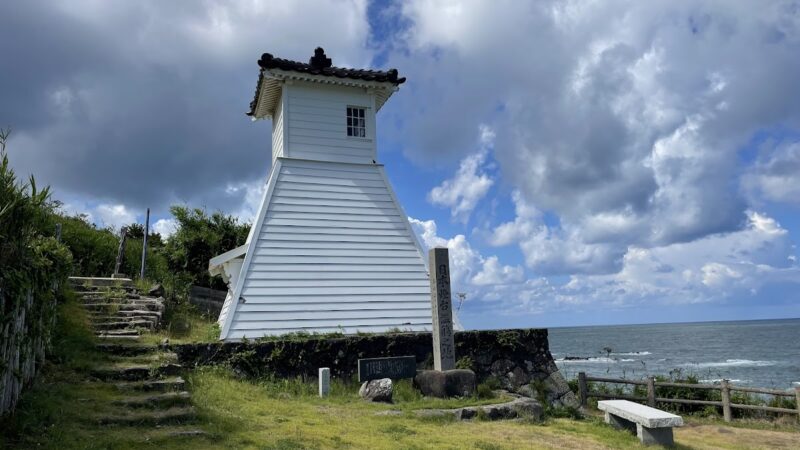
Although there are few remaining structures, a visit to the Tomiki Castle Ruins allows you to enjoy the expansive views of the Sea of Japan and the rich natural environment of Noto. Imagining historical figures such as Uesugi Kenshin and Aiura Nagato standing on this very spot and gazing at the Noto Sea evokes a sense of historical romance.
Stone Monuments and Information Boards
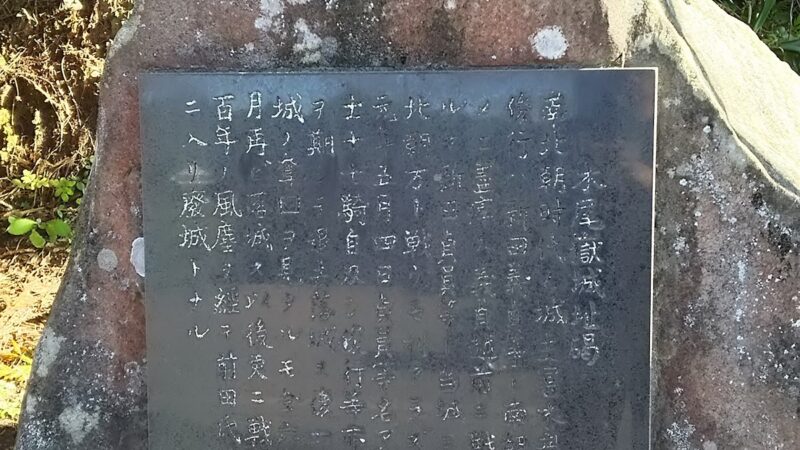
There may be stone monuments and information boards at the castle ruins that tell the history of Tomiki Castle (the availability may vary depending on the time of your visit). From this information, you can learn about the castle’s history and its connection to Uesugi Kenshin.
Access to Tomiki Castle
Location
Address: Tomiki Ryoke-machi, Shika-machi, Hakui-gun, Ishikawa Prefecture
Access by Public Transportation
The following route is common when using public transportation:
- Get off at JR Nanao Line “Hakui Station”
- From Hakui Station, take the Hokutetsu Noto Bus towards “Tomiki”
- Get off at the “Tomiki” bus stop and walk towards the castle ruins.
However, since the number of buses is limited, it is recommended to check the timetable in advance. Also, since you will be walking from the bus stop to the castle ruins, you should plan accordingly and allow ample time.
Access by Car
The most convenient way to get there is by car:
- Approximately 40 minutes from the Nishiyama Interchange on the Noto Toll Road
- Approximately 30 minutes from the Yanagida Interchange on the Noto Satoyama Expressway via National Route 249
- Approximately 1 hour and 30 minutes north from Kanazawa City via National Route 249
National Route 249 is also known as the Noto Coast Road and is a popular route where you can enjoy the beautiful scenery of the Sea of Japan while driving.
Parking
There is no dedicated parking lot around the castle ruins. When visiting, we recommend using nearby public facilities or roadside stations.
The nearest facility is the Togi Kaido Roadside Station (3-5, Tomikiryoke-cho, Shika-machi, Hakui-gun, Ishikawa Prefecture 925-0447), which can be used as a base for exploring the Tomiki area. Opening hours are 9:00 AM to 5:00 PM (9:00 AM to 4:00 PM during winter, December to February; closed Thursdays).
Tourism Information for the Tomiki Area and Surroundings
Shiga Town Tomiki Branch Office
The Tomiki Branch Office, the administrative center of the Tomiki area, is located at 10 Tomikiryoke-cho, Ko (Tel: 0767-42-1111). You can consult here for tourism information and detailed local information.
Michi-no-Eki Togi Kaido (Roadside Station Togi Seaside Road)
Michi-no-Eki Togi Kaido is an ideal base for visiting the Tomiki Castle Ruins. Located in the middle of the Noto Peninsula, along National Route 249, you can purchase local specialties and fresh seafood. It also has excellent rest facilities, making it a perfect stop during your Noto trip.
History and Culture of Tomiki
Tomiki Town merged with Shiga Town on September 1, 2005 (Heisei 17), becoming the new Shiga Town. Formerly an independent town, it was located on the western coast of the Noto Peninsula and prospered through industries centered on fishing.
Besides Tomiki Castle, the Tomiki area boasts numerous historical sites. Visitors can experience Noto’s history and culture while exploring the old townscape and visiting shrines and temples.
Noto’s Coastline
The Tomiki area faces the Sea of Japan, with a beautiful coastline stretching along its banks. The sunsets are particularly stunning, making it an ideal location to watch the sun sink into the Sea of Japan. After visiting Tomiki Castle ruins, we recommend enjoying the natural beauty of Noto by driving along the coastline.
Nearby Castles and Historic Sites
Nanao Castle (National Historic Site)
Nanao Castle, the base of the Noto Hatakeyama clan, has a deep connection to Tomiki Castle. Located in Nanao City, this magnificent mountain castle is considered one of Japan’s five greatest mountain castles and is designated a national historic site.
Nanao Castle, which Uesugi Kenshin attempted to conquer, was the site of battles around the same time as Tomiki Castle. Visiting Nanao Castle allows for a deeper understanding of the overall picture of the Noto invasion. From the castle ruins, you can enjoy a panoramic view of Nanao Bay, and the magnificent stone walls and baileys remain remarkably well-preserved.
Suemori Castle
Another important castle located in Shiga Town is Suemori Castle. Known for the “Battle of Suemori Castle” in 1583, it is famous as an ancient battlefield where the armies of Maeda Toshiie and Sassa Narimasa clashed. Although it is from a slightly different period than Tomiki Castle, it is an indispensable historical site when discussing the Sengoku period history of Noto.
Anamizu Castle
Anamizu Castle, located in Anamizu Town, is also one of the castles involved in Uesugi Kenshin’s invasion of Noto. As a strategic point in the northern part of the Noto Peninsula, it played an important role, similar to Tomiki Castle.
Points to Note When Visiting Tomiki Castle
Preservation Status of Remains
As mentioned above, most of the Tomiki Castle site has been converted into farmland, and very few clear remains are left. Visitors expecting magnificent stone walls and baileys like those of Nanao Castle may be disappointed. However, understanding the historical context and using your imagination will make it a well worthwhile visit.
Visiting Time and Clothing
The area around the castle site is mostly farmland and natural. When visiting, be sure to wear comfortable shoes and clothing suitable for walking. Also, insect repellent is necessary in summer, and warm clothing in winter.
The Noto region has a climate typical of the Sea of Japan side, and it can snow in winter. Depending on the time of year, it is recommended to check the weather and road conditions in advance.
Consideration for Private Property
Part of the castle site may be private property. When visiting, please observe proper etiquette so as not to disturb the lives and agricultural work of the local residents.
Historical Significance of Tomiki Castle
Role in Uesugi Kenshin’s Invasion of Noto
Tomiki Castle played a crucial role in the major historical event of Uesugi Kenshin’s invasion of Noto. When Kenshin attacked Nanao Castle, he employed a strategy of weakening the Hatakeyama clan’s power by conquering various branch castles throughout the Noto Peninsula. The capture of Tomiki Castle was part of this strategy.
The Loyalty of Aiura Nagato
The historical fact that Aiura Nagato, who was stationed as the defending commander, committed suicide after being unable to defend the castle against a counterattack from the Noto forces, is a valuable episode that conveys the way of life of a samurai in the Sengoku period. Aiura Nagato’s final moments, marked by unwavering loyalty to Kenshin, are one of the most memorable events in the history of Tomiki Castle.
Place in Noto’s Regional History
Tomiki Castle symbolizes the turbulent history of Noto in the late Sengoku period, marked by the decline of the Noto Hatakeyama clan, the invasion of Uesugi Kenshin, and the rise of the Oda regime. While large-scale remains are not present, standing on this site allows one to experience Noto’s Sengoku history firsthand.
Current Status and Challenges of Tomiki Castle Research
Limitations of Historical Sources
Historical sources concerning Tomiki Castle are limited, leaving many questions unanswered regarding the castle’s detailed structure and daily operations. Future research may reveal new historical facts.
Need for Archaeological Excavation
Currently, no full-scale archaeological excavation appears to be underway at the Tomiki Castle site. Future excavations could potentially provide more detailed information about the castle’s structure and the period of its use.
Importance of Regional History Research
Small to medium-sized regional castles like Tomiki Castle tend to be less researched compared to large-scale castles. However, these castles are crucial clues to understanding the region’s history and the lives of its people. Continued research by local historians and community researchers is highly anticipated.
Summary: The Charm of Tomiki Castle
Tomiki Castle is not a castle with magnificent stone walls or a keep. However, it is a castle associated with Uesugi Kenshin, a hero of Japanese history, and a place where the story of the loyalty of the warrior Aiura Nagato is told. Located amidst the beautiful nature of Noto, it is a valuable historical site for history buffs, allowing them to reflect on the history of the Sengoku period.
When visiting Shiga Town, be sure to visit the Tomiki Castle ruins and experience a page from Noto’s Sengoku history. Enjoying local specialties at the Togi Kaido roadside station, combined with the beautiful scenery of the Sea of Japan, will make for a fulfilling historical exploration.
The view of the Noto Sea from the Tomiki Castle ruins is the same view that Uesugi Kenshin and Aiura Nagato likely gazed upon. To feel the romance of history amidst nature that remains unchanged across time—that is the greatest charm of Tomiki Castle.