Complete Guide to the History and Tourism of Komatsu Castle and Komatsu City | Ishikawa Prefecture’s Hidden Gem Castle and Castle Town Culture
What is Komatsu Castle? | The Full Picture of Komatsu City, Ishikawa Prefecture’s Proudly Hosted Floating Castle
Komatsu Castle was a Japanese castle located in Marunouchi-cho, Komatsu City, Ishikawa Prefecture, and is known as the retirement castle of Maeda Toshitsune, the third lord of the Kaga Domain. Boasting an astonishing scale, approximately twice the size of Kanazawa Castle, it had a unique structure as a “floating castle” floating on a large lake. Currently, traces of the castle remain in Ashiro Park and around Komatsu City Hall, attracting many history enthusiasts as a representative historical heritage of Ishikawa Prefecture.
Basic Information on Komatsu Castle
Komatsu Castle was located in the center of Komatsu City, situated in the southwestern part of Ishikawa Prefecture, in the middle of the Kaga Plain. Built near the mouth of the Kakehashi River, it functioned as an impregnable fortress surrounded by a moat and lake. The current Komatsu City Hall is built on the site of the former main keep, and some of the original stone walls and remains are preserved in the surrounding Ashiro Park.
History of Komatsu Castle | From an Ikkō-ikki Fortress to Maeda Toshitsune’s Retirement Castle
Komatsu Castle During the Ikkō-ikki Period (1576-)
The origins of Komatsu Castle date back to 1576 (Tenshō 4). It is believed to have been built by Wakabayashi Nagato-no-kami of the Kaga Ikkō-ikki faction, and initially served as a fortress for the Ikkō-shū sect. During this period, Komatsu Castle functioned as an important military base for the Ikkō-ikki forces that controlled the Kaga region.
Oda Nobunaga’s Invasion and Changes in Castle Lords
In 1580 (Tenshō 8), Komatsu Castle fell into the hands of the Oda army during Shibata Katsuie’s invasion of Kaga, ordered by Oda Nobunaga. Subsequently, the Murakami and Niwa clans served as castle lords, playing an important role as a base for the Oda family’s control of the Hokuriku region. After the era of Toyotomi Hideyoshi, it came under the control of Maeda Toshiie in 1598.
Abolition due to the One Castle Per Province Decree (1615)
In the Edo period, Komatsu Castle was abolished in 1615 due to the One Castle Per Province Decree issued by the Tokugawa Shogunate. Kanazawa Castle was designated as the sole residence of the Kaga Domain, and Komatsu Castle lost its function for approximately 25 years.
Major Renovation by Maeda Toshitsune and the Birth of a Retirement Castle (1639-)
In 1639, when Maeda Toshitsune, the second lord (effectively the third) of the Kaga Domain, retired, a major renovation of Komatsu Castle began. While ostensibly a “retirement castle,” it was actually rebuilt as a full-fledged castle on a scale surpassing Kanazawa Castle. The reason why Toshitsune chose Komatsu Castle as his retirement home was due to consideration for the Edo shogunate. The Maeda family, with its enormous landholding of one million koku in Kaga Province, was always a source of suspicion for the shogunate. Therefore, Toshitsune handed over the family headship to his eldest son, Mitsutaka, and moved to Komatsu as a “retired” lord, demonstrating his loyalty to the shogunate.
Completion and Scale of Komatsu Castle
In 1642 (Kanei 19), after three years of construction, Komatsu Castle was completed. The completed castle grounds were approximately twice the size of Kanazawa Castle, and it was a magnificent flatland castle with a main keep, second bailey, and third bailey. The castle was surrounded by vast lakes and moats, giving it the appearance of a “floating castle” on water.
The total length of the stone walls reached approximately 4 kilometers, and although a keep was never built, its defensive capabilities were said to surpass those of Kanazawa Castle. The castle grounds contained numerous turrets and gates, including important structures such as the Unagibashi Gate.
Komatsu Castle After the Meiji Restoration
With the abolition of the feudal domains and establishment of prefectures in 1871 (Meiji 4), Komatsu Castle was abandoned. In 1872 (Meiji 5), many of the castle’s structures were demolished, and some of the stone walls were relocated to various locations within the city. Currently, remnants of the original stone walls remain at temples such as Raishoji Temple, preserving the appearance of Komatsu Castle.
Overview of Komatsu City | A Core City in Southern Kaga, Ishikawa Prefecture
Geography and Location
Komatsu City is located in the southwestern part of Ishikawa Prefecture, occupying the central part of the Kaga Plain. It faces the Sea of Japan to the north and borders Fukui Prefecture to the south, making it a border city. To the east, the sacred Mount Hakusan rises majestically, its foothills covered in lush green hills, and the Kakegawa River flows through the plains before emptying into the Sea of Ataka.
The city limits are approximately 20 kilometers east-west and 18 kilometers north-south, with a total area of approximately 371 square kilometers. As the second largest city in Ishikawa Prefecture after Kanazawa, it plays a central role in the southern Kaga region.
Climate
Komatsu City belongs to the Sea of Japan climate zone, experiencing snowfall in winter due to northwesterly seasonal winds. However, compared to Kanazawa City within Ishikawa Prefecture, the snowfall is less, resulting in a relatively milder climate. Summers are hot and humid, and extreme heat can occur due to the foehn phenomenon. The average annual temperature is around 14 degrees Celsius, and the region experiences distinct seasonal changes.
Population
Komatsu City has a population of approximately 108,000 (as of 2024), making it the second most populous city in Ishikawa Prefecture after Kanazawa. During the period of rapid economic growth, its population increased as an industrial city, but in recent years it has been slightly declining due to the effects of a low birthrate and aging population. However, with the improvement of transportation convenience due to Komatsu Airport and the extension of the Hokuriku Shinkansen, future development is expected.
History of Komatsu City | From Castle Town to Industrial City
Ancient and Medieval Komatsu
Komatsu has been inhabited since ancient times, and Jomon period ruins have been discovered. During the Nara period, it was part of Kaga Province, and during the Heian period, manors developed. In the Middle Ages, it was a religiously and militarily important area, serving as a base for the Ikkō-ikki uprisings.
Development as a Castle Town in the Edo Period
After Maeda Toshitsune entered Komatsu Castle in 1640, Komatsu rapidly developed as a castle town. Toshitsune was also known as a man of culture, and he brought much of his culture to Komatsu. Merchants and artisans gathered in the castle town, markets were held, and it prospered economically.
Komatsu flourished as a castle town of a branch castle of the Kaga Domain and as a post town on the Hokuriku Road, growing into a regional city with a population of approximately 10,000 throughout the Edo period.
Modernization after the Meiji Restoration
In the Meiji era, Komatsu underwent modernization, primarily centered on the textile industry. The silk weaving industry, in particular, developed and became known nationwide as “Komatsu Meisen.” During the Taisho era, copper mining was also developed, forming the foundation for Komatsu as an industrial city.
Modern Komatsu City | The Founding Place of Komatsu
In 1921 (Taisho 10), the ironworks division of Takeuchi Mining became independent, and “Komatsu Manufacturing Co., Ltd.” (now Komatsu Ltd., commonly known as Komatsu) was founded. This is the biggest factor that characterizes present-day Komatsu City.
Komatsu grew into a global manufacturer of construction and mining machinery, and Komatsu City developed into a leading industrial city in the Hokuriku region. Even today, machinery manufacturing accounts for a large portion of its manufactured goods shipments, and it is known as a “city of manufacturing.”
Komatsu City was established in 1940 (Showa 15). Through mergers with surrounding towns and villages from the late Showa period to the Heisei period, it became the city it is today.
Highlights of Komatsu Castle Ruins | Remaining Ruins and Tourist Spots
Rojo Park
Rojo Park, built on the site of the third bailey of Komatsu Castle, best preserves the atmosphere of Komatsu Castle. The vast 10.5-hectare site features a pond-centered strolling garden, serving as a place of relaxation for citizens.
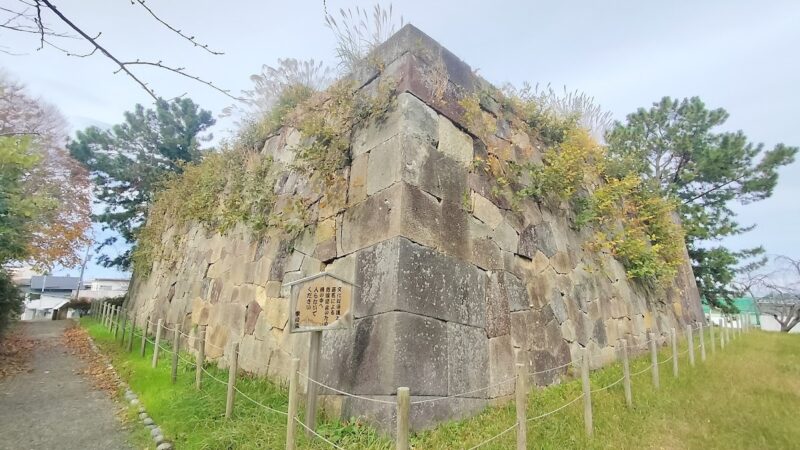
Some of the original stone walls remain within the park, allowing visitors to imagine the scale of the castle. In spring, it’s a popular spot for cherry blossom viewing, attracting many visitors, and in autumn, the autumn foliage is beautiful, allowing visitors to enjoy the scenery of each season.
Komatsu City Museum
The Komatsu City Museum, located within Ashiro Park, exhibits materials related to the history of Komatsu Castle and Maeda Toshitsune. Through a reconstructed model of Komatsu Castle, old maps, and excavated artifacts, visitors can learn about the former appearance of Komatsu Castle.
Stone Walls and Remains
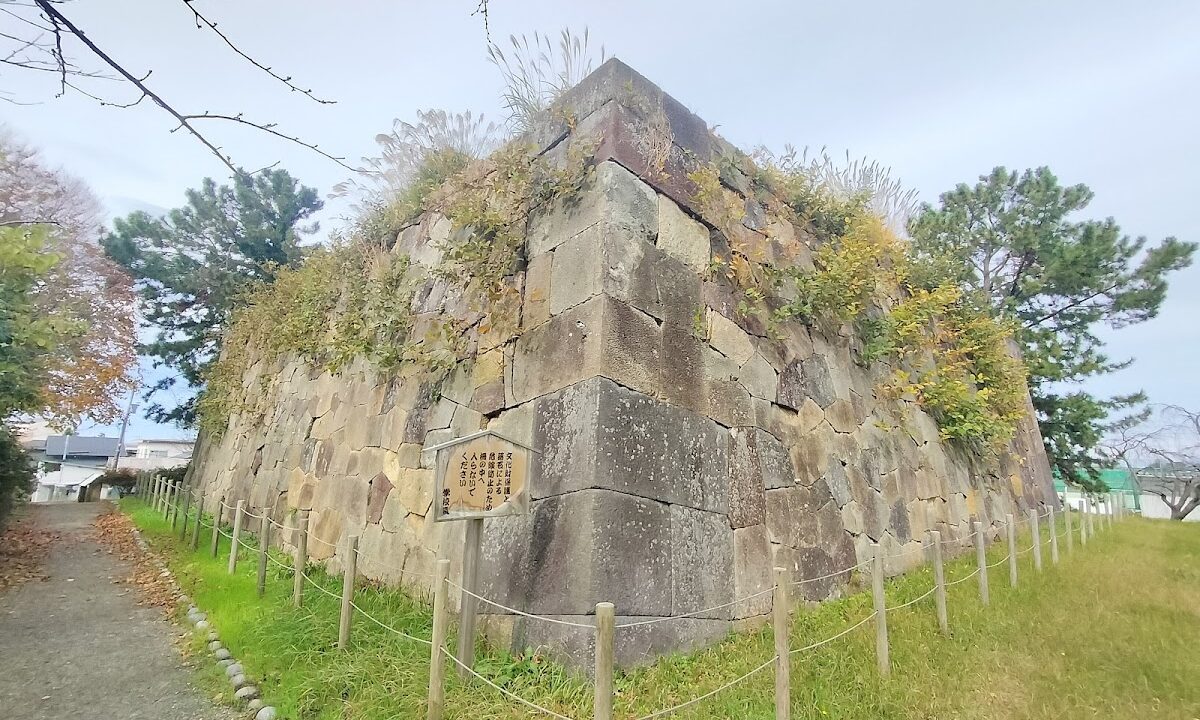
Although much of Komatsu Castle’s stone walls were demolished during the Meiji era, remnants can still be seen throughout the city. In particular, the stone wall of the Unagibashi Gate has been relocated to Kishoji Temple, allowing visitors to observe the stonework techniques of the time up close.
Currently, Komatsu City Hall stands on the site of the former main keep, and walking around the city hall gives a sense of the vastness of the castle’s central area. Furthermore, although parts of the moat have been filled in, some areas retain the topography of the original castle.
Komatsu Tenmangu Shrine
Founded as a shrine protecting the northeast direction (the “demon’s gate”) of Komatsu Castle, Komatsu Tenmangu Shrine is said to have been established by Maeda Toshitsune, who invited the deity from Kitano Tenmangu Shrine in Kyoto. It enshrines Sugawara no Michizane, the god of learning, and continues to attract many students and those preparing for exams.
Yoshijima Shrine
Revered as the guardian deity of Komatsu Castle, Yoshijima Shrine has long been revered as the principal shrine of Komatsu City. It is said that Maeda Toshitsune also held it in high esteem, and it serves as a spiritual pillar for the castle town of Komatsu.
Komatsu City Tourist Spots | Experience the Charm of a Castle Town
Komatsu Airport (Komatsu Airfield)
Komatsu Airport, the only airport in Ishikawa Prefecture, plays a vital role as the gateway to Komatsu City. Domestic flights connect to Tokyo, Sapporo, Fukuoka, Naha, and other destinations, while international flights operate to Seoul, Shanghai, Taipei, and other cities. This airport is shared with the Japan Air Self-Defense Force Komatsu Air Base and attracts many visitors during air shows.
Ataka Barrier Ruins
Facing the Sea of Japan, Ataka Barrier is a historical site known for the legend of Minamoto no Yoshitsune and Benkei. Famous as the setting for the Kabuki play “Kanjincho,” the Ataka Sumiyoshi Shrine stands on the site of the barrier, with statues of Benkei and Togashi. It’s a spot where you can enjoy both the spectacular view of the Sea of Japan and historical romance.
Natadera Temple
Located in the mountainous area of Komatsu City, Natadera Temple is a renowned temple with a history of approximately 1300 years as an ancient temple of Hakusan worship. The temple grounds, utilizing natural rock caves known as the “Strange Rocks of the Immortal Realm,” are designated as a national scenic spot. It is also known as a famous spot for autumn foliage, attracting many tourists in the fall.
Awazu Onsen
Awazu Onsen, with a history of over 1300 years since its opening, is known as the oldest hot spring in the Hokuriku region. It is said to have been discovered by Taicho Daishi, the founder of Mount Hakusan, and boasts a long history as a hot spring resort. The charming hot spring town is lined with long-established inns, offering a relaxing stay.
Japan Automobile Museum
The Japan Automobile Museum, exhibiting approximately 500 classic cars collected from around the world, is a must-see spot for car enthusiasts. As one of Japan’s largest automobile museums, you can see many valuable and famous cars up close.
Komatsu no Mori
Operated by Komatsu (Komatsu Ltd.), “Komatsu no Mori” is an interactive facility that exhibits a real, extra-large dump truck (930E) and allows visitors to actually sit in the driver’s seat. Workshops where you can learn about the joy of manufacturing are also held, making it enjoyable for both children and adults.
Komatsu City’s Economy and Industry | A City of Manufacturing
Concentration of Machine Industry
The economy of Komatsu City is supported, above all, by the machine industry. Komatsu is home to a concentration of construction machinery manufacturers, centered around Komatsu, and numerous related parts manufacturers and processing companies. The machinery industry accounts for approximately 60% of the value of manufactured goods shipped, establishing Komatsu’s position as a “manufacturing town.”
Textile Industry Tradition
The textile industry, which has continued since the Meiji era, is also an important industry in Komatsu City. In particular, pre-dyed textiles using synthetic fibers boast high technical skill and are highly regarded both domestically and internationally as high-end fashion materials. The textile industry, which blends tradition and innovation, is diversifying Komatsu’s industries.
Kutani Ware
Kutani ware, a traditional craft of the Kaga region including Komatsu City, is porcelain characterized by its vibrant overglaze painting. Many kilns and artists are located within Komatsu City, preserving tradition while also challenging themselves with modern designs.
Agriculture
Rice cultivation, utilizing the fertile land of the Kaga Plain, is thriving, and the city is known as a producer of high-quality rice. Greenhouse horticulture of tomatoes, cucumbers, and other crops is also practiced, developing as a suburban agricultural sector.
Culture and Events in Komatsu City
Otabi Festival
Held every May, the Otabi Festival is Komatsu City’s largest festival. It’s the spring grand festival of the Ubashi Shrine and Honori Hiyoshi Shrine, featuring magnificent floats parading through the city. At night, the floats are illuminated, creating a magical atmosphere.
Komatsu Dondon Festival
Held in summer, the Dondon Festival is a community-participation summer festival. Dance parades and fireworks displays add color to Komatsu’s summer.
Komatsu Air Base Air Show
The air show held at the Japan Air Self-Defense Force Komatsu Air Base features demonstration flights by the Blue Impulse and other events, attracting aviation enthusiasts from all over Japan.
Transportation Access in Komatsu City
Railway
The JR Hokuriku Main Line runs through the city, with Komatsu Station being the central station. Komatsu City boasts excellent access, being approximately 15 minutes by express train from Kanazawa Station and 30 minutes from Fukui Station. The extension of the Hokuriku Shinkansen line between Kanazawa and Tsuruga in 2024 will further improve convenience.
Air Travel
From Komatsu Airport, it takes approximately 1 hour to Tokyo (Haneda) and approximately 45 minutes to Osaka (Itami), providing access to various parts of Japan.
Road Travel
Komatsu City has the Komatsu Interchange on the Hokuriku Expressway, offering good access to the expressway network. National Routes 8 and 305 pass through the city, making travel to Fukui Prefecture and Kanazawa City convenient.
Komatsu City Administration and Municipalities
Komatsu City Hall is located on the site of the former Komatsu Castle’s main keep, at 91 Komade-cho, Komatsu City, Ishikawa Prefecture. Window service hours are normally from 9:00 to 17:00, but the Citizen Affairs Division and the South Branch Office extend their hours to 18:30 on Tuesdays and Fridays (year-round) and from March to April.
Komatsu City was established in 1940 (Showa 15), and its corporate number is used for managing various administrative services. As a special city with a population of approximately 108,000, it develops its own unique administrative services.
Sister Cities and Partner Cities
Komatsu City has sister city and friendship city agreements with cities both domestically and internationally. It is deepening exchanges with cities such as Tustin, California, USA, and Langfang, Hebei Province, China, promoting urban development with an international perspective.
Komatsu Castle and the Future of Komatsu City
Komatsu City is promoting urban development that utilizes the historical heritage of the Komatsu Castle ruins. Through the development of Ashiro Park, the preservation of historical buildings, and the improvement of information signs, it is enhancing the value of the area as a tourist resource.
At the same time, while preserving its tradition as a manufacturing city, it is also focusing on attracting cutting-edge technology industries and supporting entrepreneurship. With the internationalization of Komatsu Airport and the extension of the Hokuriku Shinkansen improving transportation convenience, the city aims to achieve both attracting domestic and international tourists and promoting industry.
Komatsu City is promoting urban development that leverages the historical heritage of Komatsu Castle. The spirit of the magnificent Komatsu Castle, built by Maeda Toshitsune, lives on in modern-day Komatsu City. Cherishing its history and traditions while continuing to develop towards the future, Komatsu City will continue to play a vital role as a core city in southern Kaga, Ishikawa Prefecture.
Summary | The Charms of Komatsu Castle and Komatsu City
Komatsu Castle was a magnificent floating castle, twice the size of Kanazawa Castle, and served as the retirement castle of Maeda Toshitsune, symbolizing Komatsu during the Edo period. Today, remnants such as stone walls remain in Ashiro Park and various locations throughout the city, allowing visitors to imagine its former glory.
Komatsu City developed as a castle town around Komatsu Castle, and after the Meiji Restoration, it grew into a city of textiles and, with the founding of Komatsu, a city of machinery. As a city with a unique charm where history and industry harmonize, it plays a central role in southern Kaga, Ishikawa Prefecture.
The excellent accessibility via Komatsu Airport and the Hokuriku Shinkansen, the tourist attractions such as Natadera Temple and Ataka Barrier, the culture including hot springs and festivals, and above all, the weight of history since the time of Maeda Toshitsune, all contribute to the value of visiting Komatsu City. We highly recommend you visit this fascinating city where history and industry thrive.