Sagae Castle (Sagae City, Yamagata Prefecture) Complete Guide | A Thorough Explanation of the 400-Year History and Highlights of the Oe Clan
Overview
Sagae Castle was a Japanese castle located in Sagae-sho, Murayama District, Dewa Province (present-day Marunouchi, Sagae City, Yamagata Prefecture). The Sagae Oe clan, descendants of Oe Hiromoto, a senior retainer of the Kamakura Shogunate, used it as their residence for approximately 400 years, functioning as a base for controlling the Nishimurayama District.
The castle is believed to have been built during the late Nanboku-cho period to the early Muromachi period, initially as a square, single-enclosure flatland castle. At its peak, it controlled a territory of 80,000 koku and reigned as a powerful force in the Murayama region. However, it fell in 1584 (Tensho 12) to an attack by Mogami Yoshiaki. The Oe clan was destroyed, and thereafter, the castle was used as a branch castle of the Mogami clan.
Following the downfall of the Mogami clan in 1622, the castle was abandoned and is now the site of Sagae Elementary School. However, traces of its former glory remain in the remains of the moat and paths.
History
The Arrival of the Oe Clan and the Establishment of Sagae Manor
The history of Sagae Castle begins with the arrival of the Oe clan during the Kamakura period. Oe Hiromoto, who contributed to the establishment of the Kamakura Shogunate as a close confidant of Minamoto no Yoritomo, obtained the position of jitō (land steward) of Sagae Manor in 1189. Initially, Hiromoto resided in Kyoto, so he sent his father-in-law, Tada Hitotsuna, to the area as a deputy, governing indirectly.
The Arrival and Settlement of Oe Chikahiro
The Oe clan’s direct involvement with the Sagae region began with the Jōkyū War (1221). Ooe Chikahiro, the eldest son of Hiromoto, sided with Emperor Go-Toba during the Jōkyū War. After the war, he was pursued by the Kamakura Shogunate and is said to have gone into hiding in Sagae Manor.
In 1232, when the Goseibai Shikimoku (a legal code) was enacted and the Kamakura Shogunate’s displeasure was lifted, Chikahiro is said to have built a residence in Sagae Manor (present-day Marunouchi, Sagae City). This is the site of the residence that became the predecessor of Sagae Castle, and it marked the beginning of the Ooe clan’s settlement in Sagae.
The Establishment of the Sagae Clan and the Development of the Castle
It is believed that Sagae Castle was fully developed into a fortress by Sagae Tokiuji, a descendant of the Ooe clan and the first to adopt the name “Sagae.” From the late Nanboku-cho period to the early Muromachi period, Tokiuji built Sagae Castle as a square, single-enclosure flatland castle, which served as the base of the Sagae Oe clan for approximately 300 years.
The Sagae Oe clan dedicated themselves to the development and governance of this region, patronizing temples and shrines such as Jionji Temple and Sagae Hachiman Shrine. They actively undertook the construction and renovation of shrine buildings, donated land, and contributed to the region’s development through cultural projects.
Conflict with the Mogami Clan
With the arrival of the Sengoku period, the Sagae Oe clan’s territory grew to encompass most of Nishimurayama County, and their rice yield reached 80,000 koku. However, this prosperity led to conflict with the Mogami clan, who were continuously advancing northward.
In 1560, the Mogami clan launched their first invasion, but the Sagae Oe clan successfully repelled it. However, in 1574, as surrounding local lords successively defected to the Mogami clan, Sagae Castle fell.
The Downfall of the Oe Clan
In June 1584, Mogami Yoshiaki, lord of Yamagata Castle, led a large army to attack Sagae Castle. The Sagae Oe clan, under the command of Kanjuro, the younger brother of the clan head Oe Takamoto, fought valiantly but were ultimately defeated. It is said that Takamoto fled to the top of Mount Mitate and committed suicide there.
This battle marked the end of the Sagae Oe clan, who had ruled the Sagae region for approximately 400 years. Sagae Castle became a branch castle of the Mogami clan, and Mogami Yoshiaki’s eldest son, Mogami Yoshiyasu, also served as its lord for a time.
The Dispossession of the Mogami Clan and the Abandonment of the Castle
In 1622 (Genna 8), when the Mogami clan was dispossessed of their domain, Sagae Castle also ceased to serve its purpose and was abandoned. Thereafter, it lost its function as a castle, and the castle site gradually became urbanized.
Successive Lords
The successive lords of Sagae Castle are as follows:
The Sagae Ooe Clan Era (Approximately 300 Years)
- Ooe Chikahiro: Moved to Sagae Manor after the Jokyu War and built a residence.
- Sagae Tokiuji: First adopted the name Sagae and developed the castle.
- Successive Heads of the Sagae Clan: Served as castle lords for approximately 18 generations.
- Ooe Takamoto: The last head of the Sagae Ooe clan. Defeated by Mogami Yoshiaki in 1584 (Tensho 12) and committed suicide.
Mogami Clan Era (1584-1622)
- Mogami Yoshiyasu: Eldest son of Mogami Yoshiaki. He served as lord of Sagae Castle for a period.
- Other Mogami Clan Vassals: As a branch castle of the Mogami clan, vassals served as castle lords.
Structure
Sagae Castle was a flatland castle built on a river terrace on the right bank of the Mogami River. Initially, it had a single, square enclosure layout. The central part of the castle is located in the present-day Marunouchi district of Sagae City, and the site of Sagae Elementary School is thought to be the former main enclosure.
Layout and Defensive Facilities
The castle was defended by moats and earthworks, and it is presumed that multiple enclosures were arranged around it. Even today, the layout of the former moats and enclosures can be inferred from the road layout and topography of the city.
In particular, the remains of the moat on the west side of the castle are relatively well-preserved, allowing us to imagine the scale of the castle in its heyday. Furthermore, the roads around Sagae Elementary School are thought to have followed the original road layout from the castle era, preserving the structure of the castle town.
Relocated Remains
It is said that some of the structures of Sagae Castle were relocated to other locations after the castle was abandoned. The most famous is the Tatsumi Gate, which is believed to have been relocated to Chokoji Temple. This gate is thought to have been one of the castle gates of Sagae Castle and is still used today as the main gate of Chokoji Temple.
The Tatsumi Gate is a valuable relic, one of the few remaining structures of Sagae Castle, and provides important clues to understanding the architectural techniques and scale of the castle at the time.
Branch Castles
The Sagae Ooe clan governed their territory by building several branch castles in the surrounding area, centered around their main castle, Sagae Castle.
Takaya Shield
During the Muromachi period, Takaya Motoaki, a member of the Sagae Oe clan, built Takaya Shield to prepare for invasions by the Mogami clan. This shield played a vital role as a subsidiary castle of Sagae Castle, forming part of the Oe clan’s defensive sphere. In June 1584, the Takaya clan, which had prospered for nine generations, met the same fate as the Sagae Oe clan, who were defeated by Mogami Yoshiaki, and their shield also disappeared.
Other Subsidiary Castles
The Sagae Oe clan controlled the entire Nishimurayama district, and it is believed that they had subsidiary castles and residences in various locations. These subsidiary castles functioned as bases for the defense and governance of their territory, but many were abandoned with the fall of the Oe clan.
Highlights (Castle Notes)
The current Sagae Castle ruins have the following points of interest:
Castle Site Monument
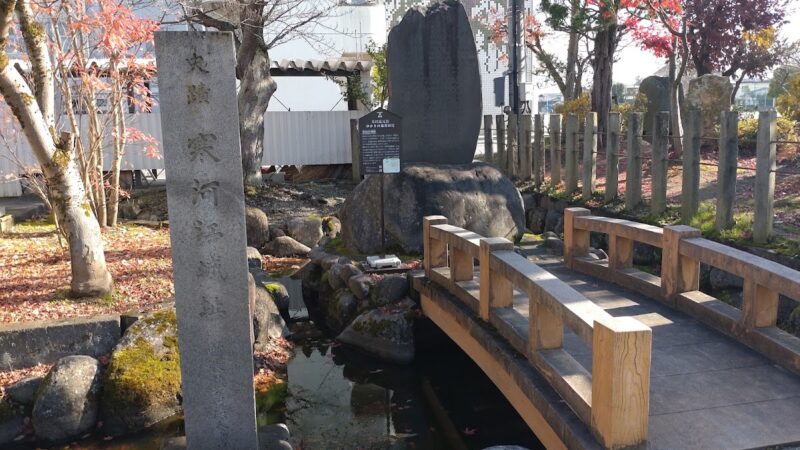
A stone monument marking the site of Sagae Castle stands beside the main gate of Sagae Elementary School. This monument is an important landmark indicating the former presence of a castle on this site and is the first historical remains visitors will see.
Moat Remains
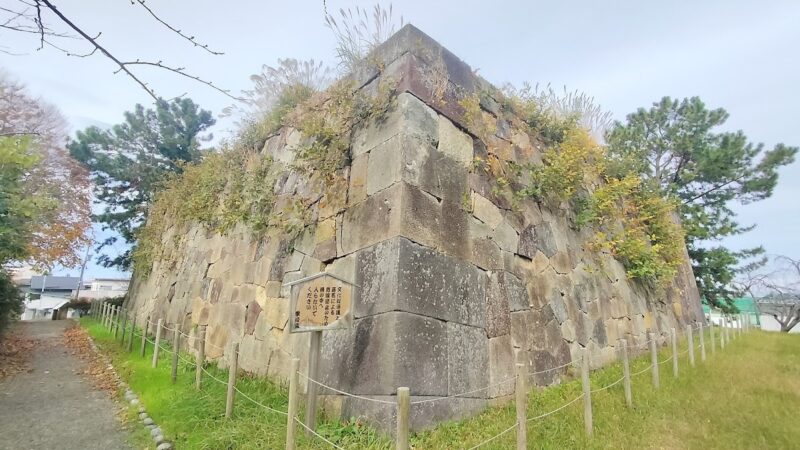
The remains of the former moat are preserved as a topographical feature, mainly on the west side of the castle. While not completely intact, traces of the moat can be seen in the form of roads and property boundaries. These moat remains allow us to infer the scale and defensive structure of the castle.
Road Layout and Enclosure Remains
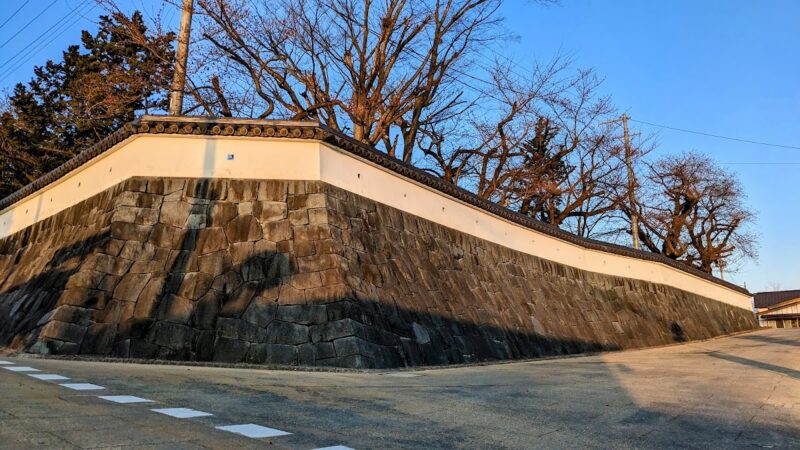
The road layout around Sagae Elementary School largely preserves the structure from the castle era. In particular, areas believed to be enclosures (enclosures) retain traces of their past in the current town layout, allowing visitors to experience a historical landscape.
Tatsumi Gate of Sumieji Temple
The Tatsumi Gate, believed to have been relocated from Sagae Castle, still exists as the main gate of Sumieji Temple. This gate is one of the few remaining structures from Sagae Castle and is a valuable resource for understanding the architectural style of the time.
Sagae Hachiman Shrine
The Sagae Hachiman Shrine, which was patronized by the Sagae Oe clan, is located very close to the castle ruins. The Oe clan was responsible for the construction of the shrine buildings and the donation of land, playing an important role as the spiritual center of the castle town. It remains a beloved center of local faith today.
Jionji Temple
According to temple tradition, Jionji Temple was founded in 602 AD (the 10th year of Emperor Suiko’s reign) at the behest of Prince Shotoku. It was also a temple patronized by the Sagae Oe clan. The Oe clan dedicated themselves to the protection and development of Jionji Temple, and many cultural artifacts have been preserved to this day. It is an important historical site to visit in order to understand the history of Sagae Castle.
Location
Address: Marunouchi, Sagae City, Yamagata Prefecture
The Sagae Castle ruins are currently the site of Sagae Elementary School. A monument marking the castle ruins is located next to the school’s main gate, from which you can view the surrounding moat remains and paths. However, access to the school grounds is restricted, so viewing will be from outside.
Access
Using Public Transportation
Access on foot from JR Sagae Station on the Aterazawa Line
- Get off at JR Sagae Station on the Aterazawa Line
- Approximately 15 minutes on foot from the station (approximately 1.2 km)
- Head towards the city center from the station and aim for Sagae Elementary School
Sagae Station is approximately 30 minutes from Yamagata Station on the Aterazawa Line, making day trips from Yamagata City easy. The path from the station to the castle ruins is flat, making walking relatively easy.
Access by Car
Access from the Yamagata Expressway
- Approximately 5 minutes (approx. 2 km) from the Sagae Interchange on the Yamagata Expressway
- Via National Route 112 to the city center
- Use general city parking lots around Sagae Elementary School
The route from Sagae Interchange to the city center is well-marked, making it easy to find. However, there is no dedicated parking lot for the castle ruins, so you will need to use nearby public parking lots or parking lots at commercial facilities.
Visiting Nearby Tourist Facilities
When visiting Sagae Castle Ruins, visiting the following related historical sites in conjunction will allow you to gain a deeper understanding of the history of the Sagae Ooe clan.
- Sumie-ji Temple: A temple where the Tatsumi Gate of Sagae Castle was relocated (within walking distance)
- Sagae Hachiman Shrine: A shrine patronized by the Oe clan (within walking distance)
- Jion-ji Temple: An ancient temple associated with the Oe clan (approximately 10 minutes by car)
- Sagae Tateyama Castle: A mountain castle closely related to Sagae Castle (approximately 15 minutes by car)
Nearby Castles
Here are some nearby castles that you might want to visit when you come to Sagae Castle.
Yamagata Castle (Kasumi Castle)
Yamagata Castle, which was the base of operations for Mogami Yoshiaki, is approximately 30 minutes by car from Sagae Castle. Developed as the residence of the Mogami clan, who held a 570,000 koku domain, Yamagata Castle still retains its moats and stone walls in good condition and is now maintained as Kasumi Castle Park. Visiting the base of operations for Mogami Yoshiaki, who conquered Sagae Castle, will allow you to gain a deeper understanding of the relationship between the two.
Aterazawa Tateyama Castle
Located about 15 minutes by car from Sagae Castle, Aterazawa Tateyama Castle is a mountain castle overlooking the Mogami River. This castle was also a battleground in conflicts with the Mogami clan, and visiting it along with Sagae Castle will help you understand the characteristics of medieval castles in this region.
Yachi Castle
Yachi Castle, located in Kahoku Town, Nishimurayama District, is another castle closely associated with the Sagae Oe clan. It is an important castle site for understanding the medieval history of this region, and a historical site worth visiting if you have the time.
Visitor Guide
Points to Note During Visits
The Sagae Castle site is currently the grounds of Sagae Elementary School, so please note the following:
- Entry to School Grounds: Entry to the school grounds is not permitted during class hours or school events. Viewing will be from outside.
- Visiting the Castle Ruins Monument: The castle ruins monument next to the main gate can be viewed from the road.
- Confirming the Moat Remains: The remains of the moat on the west side of the castle can be seen from the public road.
- Photography: Please be mindful of the school grounds and the privacy of students when taking photographs.
Recommended Sightseeing Route
We introduce a recommended route for efficiently visiting Sagae Castle Ruins and related historical sites.
- Sagae Station: Arrive via JR Aterazawa Line
- Sagae Castle Ruins (Sagae Elementary School): Visit the castle ruins monument and surrounding moat remains (30 minutes)
- Chokue-ji Temple: Visit the Tatsumi Gate (relocated castle gate) (20 minutes)
- Sagae Hachiman Shrine: Visit the shrine associated with the Oe clan (20 minutes)
- Jion-ji Temple: Travel by car to visit the ancient temple patronized by the Oe clan (60 minutes)
- Sagae Onsen: Relax in the hot springs
The total time required is approximately half a day, combining walking and driving.
Best Season for Visiting
Sagae Castle Ruins are open year-round, but the following seasons are particularly recommended.
- Spring (April-May): Cherry blossom season, the cherry tree-lined streets of the city are beautiful.
- Early Summer (June): Sagae City is famous as a cherry-producing area, and a visit combined with cherry picking is enjoyable.
- Autumn (October-November): Autumn foliage season, the autumn leaves around Jionji Temple and other locations are magnificent.
- Winter (December-February): The castle ruins amidst the snowscape are charming, but warm clothing is necessary.
Ooe Clan Map and Surrounding Historical Sites
Sagae City has created an “Ooe Clan Map” introducing places in the city associated with the Ooe clan. Sagae, which was directly ruled by the Ooe clan for approximately 300 years from the end of the Kamakura period, has many historical sites related to the Ooe clan.
Main Historical Sites Associated with the Ooe Clan
- Sagae Castle Ruins: The base of the Ooe clan. The castle’s appearance can be seen from the roads and moat remains.
- Jionji Temple: An ancient temple patronized by the Oe clan. It houses many cultural artifacts.
- Sagae Hachiman Shrine: A shrine where the Oe clan constructed the shrine buildings and donated land.
- Takaya Tate Ruins: A branch castle built by the Takaya clan, a branch of the Oe clan.
- Oe Clan Related Temples: Temples associated with the Oe clan, including Sumieji Temple.
By visiting these historical sites, you can experience the influence and cultural contributions of the Oe clan in medieval Sagae.
Sagae City Tourist Information
Here is some tourist information for Sagae City that you might want to enjoy when visiting the Sagae Castle ruins.
Cherry Picking
Sagae City is known as the “Village of Cherries,” and in June, you can enjoy cherry picking at many tourist farms. You can savor high-quality cherries, including Sato Nishiki, and combining it with a visit to the castle ruins is a popular tourist activity. ### Sagae Onsen
Sagae Onsen is located within the city, and there are plenty of day-trip bathing facilities. After touring the castle ruins, you can relax and soothe your fatigue in the hot springs.
Local Products of Sagae City
- Cherries: High-quality varieties such as Sato Nishiki
- La France Pears: A popular autumn delicacy
- Buckwheat: Yamagata Prefecture is a famous buckwheat producing area
- Local Sake: Sake from breweries within the prefecture
References and Related Books
For those who want to learn more about Sagae Castle and the Sagae Ooe clan, here are some reference materials.
Basic References
- “Castles of Yamagata Prefecture”: A comprehensive introduction to castles in Yamagata Prefecture
- “History of Sagae City”: The official city history of Sagae City. Detailed history of the Oe clan is described.
- *Mogami Yoshiaki and the Sagae Oe Clan*: A detailed account of the conflict between the two.
- *Medieval Castles of the Murayama Region*: A systematic explanation of castles in the Murayama region.
Related to the Oe Clan
- *Oe Hiromoto and His Family*: An explanation of the lineage from Oe Hiromoto to the Sagae Oe clan.
- *The Jokyu War and Oe Chikahiro*: A detailed account of the circumstances of Oe Chikahiro’s arrival in Sagae.
- *History and Culture of Sagae*: A local history published by the Sagae City Board of Education.
Related to the Mogami Clan
- *Mogami Yoshiaki*: A biography of Mogami Yoshiaki, a Sengoku daimyo of Yamagata.
- *Sengoku History of Dewa Province*: An overview of the Sengoku period in Dewa Province.
- *Studies on the Mogami Clan*: A scholarly analysis of the Mogami clan’s rule over their territory.
These documents can be viewed at the Sagae City Library and the Yamagata Prefectural Library.
Summary
Sagae Castle was a flatland castle that served as the base of the Sagae Oe clan for approximately 400 years, from the Kamakura period to the Sengoku period. The Sagae Oe clan, descendants of Oe Hiromoto, controlled the Nishimurayama district from this base and contributed to the region’s development through their efforts in cultural projects.
Although the Oe clan was defeated and destroyed by Mogami Yoshiaki in 1584, the castle continued to function as a branch castle of the Mogami clan, serving its purpose as a fortress until the Mogami clan’s downfall in 1622.
Currently, the castle site is occupied by Sagae Elementary School, but traces of its former glory remain in the form of a castle monument, moat remains, and paths. Furthermore, the Tatsumi Gate, relocated to Sumieji Temple, is a valuable example of one of the few remaining structures.
When visiting the ruins of Sagae Castle, you can gain a deeper understanding of the region’s medieval history by also visiting other historical sites associated with the Oe clan in the surrounding area, as well as Yamagata Castle, the base of Mogami Yoshiaki. During cherry season, you can also enjoy fruit picking at tourist farms and soak in Sagae Onsen hot springs, making for a fulfilling trip that combines historical exploration with sightseeing.