Oura Castle (Oyama Castle) Complete Guide | A Thorough Explanation of History and Highlights in Tsuruoka City, Yamagata Prefecture
Located in the Oyama district of Tsuruoka City, Yamagata Prefecture, Oura Castle is a mountain castle that played an important role as the base of the Daiboji clan (Muto clan), who ruled the Shonai region during the Sengoku period. Currently, it is maintained as Oyama Park, and the remains such as earthworks and dry moats are well-preserved, making it a popular spot for castle enthusiasts and history buffs.
This article will fully explain the charm of Oura Castle, from its detailed history and the remains that can be seen on site to access methods.
Basic Information about Oura Castle
Common Names/Alternate Names
Oura Castle is also called Oyama Castle or Oura Castle. It was renamed Oyama Castle when it became part of the Mogami territory in the early Edo period. It is more commonly known as Oyama Castle by locals, and the current name of Oyama Park also derives from this.
Location
Located in 3-chome, Oyama, Tsuruoka City, Yamagata Prefecture. It is approximately 6 kilometers northeast of Tsuruoka city center and accessible via National Route 112 and Prefectural Route 38. It is developed as Oyama Park and has a free parking lot.
Former Provincial Name
It belonged to Tagawa District of Uzen Province (Dewa Province). The Shonai region is located in the northern part of Dewa Province and has flourished since ancient times as a key point for trade along the Sea of Japan.
Classification and Structure
Classified as a hilltop castle. Built on a hill approximately 50 meters above sea level, with a relative height of approximately 40 meters. It features a layout that skillfully utilizes the natural terrain, with multiple baileys and a structure fortified with earthworks and dry moats.
Keep Structure
A keep was not built. This was a mountain castle from the Sengoku period, and it is believed that structures such as residences and watchtowers existed, but a keep like those found in early modern castles using stone walls was not constructed.
Builder
Daiboji Harutoki (Muto Harutoki) is considered to be the builder. The Daiboji clan was a branch of the Muto clan, who served Minamoto no Yoritomo. During the Kamakura period, they were granted the position of jitō (land steward) of Ōizumi-shō (the area around present-day Tsuruoka City) and moved to Dewa Province. They came to be known as the Daiboji clan because they resided in Daiboji.
Year of Construction
It is said that the castle was built during the Tenbun era (1532-1555). Daiboji Harutoki moved his base from his previous residence, Daiboji Castle, to this location, which offered better defenses. This relocation was against the backdrop of the Daiboji clan’s expansion of power in the Shōnai region and the intensification of conflicts with surrounding forces.
Main Renovators
While specific renovation records are unclear, it’s possible that some modifications were made to the castle when the Mogami or Uesugi clans controlled the Shonai region, as it served as a military base. In particular, when Mogami Yoshiaki gained control of the Shonai region, it was considered a strategically important location.
Main Lords
- Daiboji Harutoki (Muto Harutoki): Builder
- Daiboji Yoshiuji (Muto Yoshiuji): Son of Harutoki
- Daiboji Yoshioki (Muto Yoshioki): Son of Yoshiuji
- Daiboji Yoshitoki (Muto Yoshitoki): Younger brother of Yoshioki
- Mogami: After the Battle of Sekigahara
The Daiboji clan used this castle as their residence for generations, but in 1583, Muto Yoshitoki committed suicide due to betrayal by his retainers, bringing an end to the Daiboji clan’s rule. Afterward, it became the stage for a struggle between the Mogami and Uesugi clans.
Year of Abandonment
It is believed to have been around Genna 8 (1622). When the Mogami clan was dispossessed in Genna 8, the Shonai region became the territory of Sakai Tadakatsu, and his residence was designated as Tsurugaoka Castle (Daihoji Castle). As a result, Oura Castle lost its military role and is thought to have been abandoned.
Remains
The main remains that can be confirmed today are as follows:
- Kuruwa (Enclosures): Multiple flat areas remain, including the site of the main enclosure and the second enclosure.
- Earthworks: Earthworks surrounding each enclosure are well preserved.
- Dry Moats: Moats and dry moats separating the enclosures.
- Koguchi (Entrance): Traces of entrances.
Because it is maintained as Oyama Park, many of the remains are preserved, allowing visitors to experience the structure of a Sengoku period mountain castle while strolling around.
Designated Cultural Property
While not currently designated as a national or prefectural cultural property, it is recognized as an important historical heritage of Tsuruoka City. Preservation efforts continue for this valuable historical site that tells the story of the region.
Reconstructed Structures
While no structures have been rebuilt, the castle ruins feature the Miyoshi Shrine (site of the main keep) and the Furumine Shrine (site of the retirement residence). Additionally, stone monuments such as the “Muto Family Ruins Tower for Oura Castle” have been erected, preserving the castle’s history.
History and Background of Oura Castle
Rise of the Daiboji Clan and Construction of Oura Castle
The Daiboji clan (Muto clan) served as retainers of Minamoto no Yoritomo during the Kamakura period, and their achievements earned them the position of jitō (land steward) of Ōizumi Manor in Dewa Province. Initially based in Daiboji (near present-day Tsuruoka city), conflicts with surrounding forces intensified during the Sengoku period.
During the Tenbun era, Daiboji Harutoki built a new castle in the present-day Ōyama area, which offered superior defenses. This is Oura Castle. The place name Oura is thought to originate from the fact that this area is close to a bay (inlet) facing the Sea of Japan.
Harutoki used Oura Castle as his base to unify the Shonai region, expanding his power while confronting surrounding forces such as the Mogami and Onodera clans. The Daiboji clan played an important role throughout the Sengoku period as a powerful local lord in the Shonai region.
Internal Conflict and Downfall of the Daiboji Clan
In 1583 (Tensho 11), a turning point came for the Daiboji clan. The head of the clan, Muto Yoshitoki, was ambushed by his vassal Maemori Kurōdo, who had been manipulated by Mogami Yoshiaki, and was forced to commit suicide within Oura Castle. This incident ended the direct lineage of the Daiboji clan.
Behind this was Mogami Yoshiaki’s ambition to expand into Shonai. Yoshiaki skillfully exploited the internal conflict within the Daiboji clan, attempting to seize control of Oura Castle without using military force by having his vassals secretly cooperate. After Yoshitoki’s death, the Shonai region became the stage for a struggle between the Mogami and Uesugi clans.
The Struggle Between the Mogami and Uesugi Clan
After Mutō Yoshitoki’s death, the Shonai region temporarily came under the control of Mogami Yoshiaki. However, in 1588, Uesugi Kagekatsu invaded Shonai and seized control of the region, including Oura Castle. The Uesugi clan also considered Oura Castle an important base for their control of Shonai.
In the Battle of Sekigahara in 1600, Mogami Yoshiaki, who belonged to the Eastern Army, fought fiercely against Uesugi Kagekatsu of the Western Army. This battle is known as the “Keichō Dewa Battle,” and the Shonai region also became a battlefield. Following the Eastern Army’s victory at the Battle of Sekigahara, the Shonai region once again became Mogami territory, and Oura Castle returned to the control of the Mogami clan.
The Dispossession of the Mogami Clan and the Abandonment of the Castle
In 1622 (Genna 8), the Mogami clan was dispossessed of their domain due to internal conflict. The Shonai region was given to Sakai Tadakatsu, and his residence was designated as Tsurugaoka Castle. As a result, Oura Castle lost its military role and was abandoned.
Afterward, Oura Castle disappeared from the historical stage, but its remains were carefully preserved by the local people and have been developed into the current Oyama Park.
Highlights and Remains of Oura Castle
Main Enclosure Site and Miyoshi Shrine
The main enclosure site, the central part of the castle, is now home to the Miyoshi Shrine. The earthworks surrounding the shrine are well-preserved, allowing visitors to see the former layout of the enclosures. From the main enclosure, one can overlook the surrounding area, realizing the castle’s excellent defensive position.
Miyoshi Shrine is a shrine that attracts the faith of the local community and serves as an important landmark when visiting the castle ruins. Visitors can reflect on the castle’s history while paying their respects.
Miyoshi Shrine is a shrine that attracts the faith of the local community and is an important landmark when visiting the castle ruins. ### Retirement Residence Site and Furumine Shrine
Near the main keep, the Furumine Shrine stands on the site believed to be the castle lord’s retirement residence. This area is also maintained as a flat enclosure, surrounded by earthen ramparts. Due to its nature as a retirement residence, it is located slightly further back than the main keep, giving it a quiet atmosphere.
Earthen Ramparts and Dry Moats
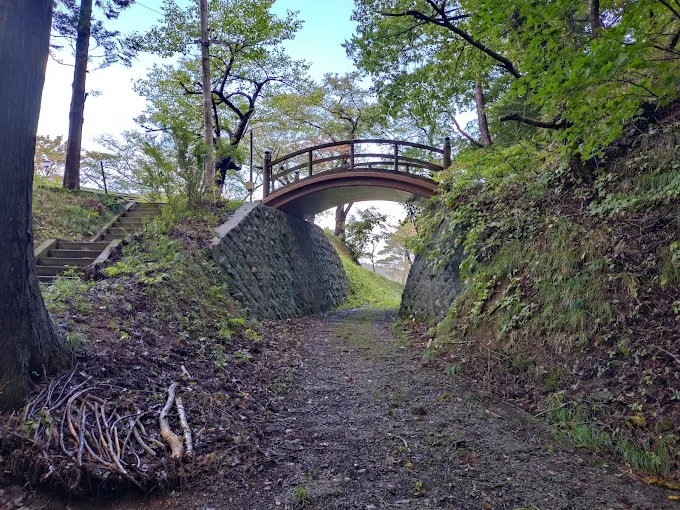
The greatest highlight of Oura Castle is its well-preserved earthen ramparts and dry moats. Walking through Oyama Park, you can see earthen ramparts 2-3 meters high in various places. These ramparts were positioned to surround the enclosures and served to prevent enemy intrusion.
The dry moats functioned as trenches separating the enclosures and remain clearly visible today. The moats around the main keep are particularly deep, making them valuable remains that allow you to experience the defensive structure of a mountain castle from the Sengoku period.
Enclosure Layout
Oura Castle has a layout in which multiple enclosures are arranged in a stepped pattern. The main keep (Honmaru) is located at the highest point, surrounded by smaller enclosures such as the second and third baileys (Ninokuruwa and Sannomaru). Each enclosure is demarcated by earthworks and moats, functioning as an independent defensive unit.
You can visit these enclosures in order by walking along the park’s walking paths. The clever layout, utilizing the elevation differences of the terrain, speaks to the high level of castle-building technology of the Sengoku period.
Stone Monuments and Information Boards
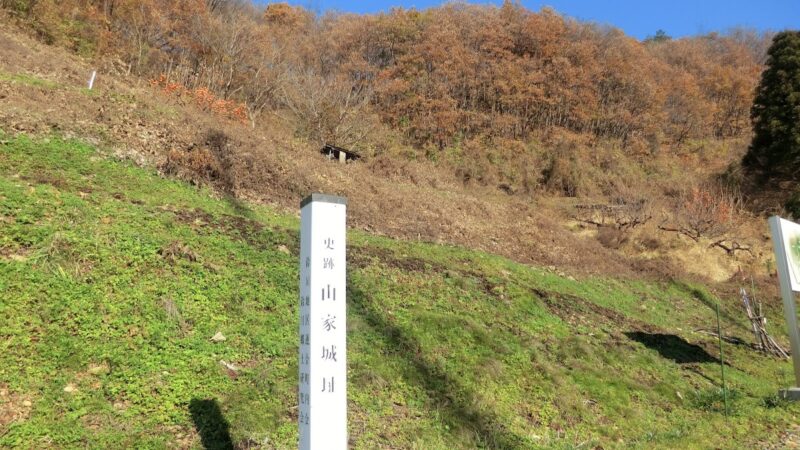
Stone monuments, such as the “Monument Commemorating the History of the Muto Family, Lords of Oura Castle,” are installed at the castle site, allowing visitors to learn about the castle’s history. Information boards are also provided, making it easy for first-time visitors to understand the location of the remains and their historical background.
Access and Visiting Information
Access by Car
The most recommended method of access is by car. Entering “Oyama Park” into your car navigation system is convenient.
- From Tsuruoka city center, head northeast on National Route 112.
- Turn onto Prefectural Route 38.
- Turn left before FamilyMart, and you will see a hill (castle ruins) in front of you.
- There is ample free parking available.
The castle ruins are just a few minutes’ walk from the parking lot.
Access by Public Transportation
You can also take a bus from Tsuruoka Station, but since the number of buses is limited, it is recommended to check the timetable in advance. Take a bus bound for Oyama and walk from the nearest bus stop.
Points to Note When Visiting
- Free Admission: As it is maintained as a park, you can visit freely at any time.
- Admission Fee: Free
- Estimated Time Required: Allow about one hour if you want to explore thoroughly.
- Attire: Comfortable walking shoes are recommended when exploring the ruins.
- Season: Spring to autumn is suitable for visiting, but be aware of snow in winter.
Nearby Attractions
Tsurugaoka Castle (Tsuruoka Park)
Located approximately 6.2 kilometers from Oura Castle, Tsurugaoka Castle was the residence of the Sakai family of the Shonai Domain during the Edo period. Currently, it is maintained as Tsuruoka Park, and the moats and earthworks remain. It is also known as a cherry blossom viewing spot, and is bustling with many visitors in spring.
Visiting both Oura Castle and Tsurugaoka Castle together will help you understand the changes in castles in the Shonai region.
Daiboji Castle Ruins
The ruins of Daiboji Castle, the residence of the Daiboji clan before they moved to Oura Castle, still remain within Tsuruoka City. Although now a residential area, some remains can still be seen. This is an important spot for tracing the roots of the Daiboji clan.
Chido Museum
The Chido Museum, where you can learn about the history and culture of Tsuruoka City, exhibits historical materials from the Shonai region and items related to the Sakai family. It also houses materials related to Oura Castle and the Daiboji clan, and visiting before or after visiting the castle ruins will deepen your understanding.
Oura Castle and the Historical Significance of Shonai
Oura Castle is not merely a local castle, but an important historical site symbolizing the history of the Shonai region. It is involved in all the turning points in the history of this region: the unification of Shonai by the Daiboji clan, the struggle between the Mogami and Uesugi clans, and the establishment of the Shonai Domain by the Sakai clan.
In particular, the fact that the Daiboji clan made Oura Castle their base indicates a shift in the political and military center of the Shonai region from inland to the coast. This is thought to reflect the increasing importance of trade along the Sea of Japan and changes in relations with surrounding powers.
Recommended Points for Castle Enthusiasts
Oura Castle is a valuable spot where you can learn about the typical structure of a mountain castle from the Sengoku period. It is an earthen castle without stone walls, and its defensive system of earthworks and dry moats is well-preserved.
While not as well-known as nationally famous castles, its charm lies in the opportunity to quietly observe its remains. It has received high praise on castle information websites such as Jōkaku Hōrōki and Kōjōdan, and many visitors are impressed by its excellent state of preservation and depth of history.
Summary
Oura Castle (Ōyama Castle) in Tsuruoka City, Yamagata Prefecture, is a mountain castle that played an important role in the history of the Shonai region as the residence of the Daiboji clan. Built during the Tenbun era, Oura Castle was contested between the Mogami and Uesugi clans before being abandoned during the Genna era.
Currently, it is maintained as Oyama Park, and the remains such as earthworks and dry moats are well preserved. With free parking available and easy access, it’s a recommended spot not only for castle enthusiasts but also for history buffs and those who enjoy leisurely strolls.
When visiting Tsuruoka City, be sure to visit Oura Castle ruins and reflect on the Shonai region during the Sengoku period. Walking along the earthworks and dry moats, you’ll surely feel the presence of Sengoku warlords such as the Daiboji clan, Mogami Yoshiaki, and Uesugi Kagekatsu.