Complete Guide to Narusawa Castle Ruins (Yamagata City) | History and Highlights of the Mogami Clan’s Southern Defense Fortress
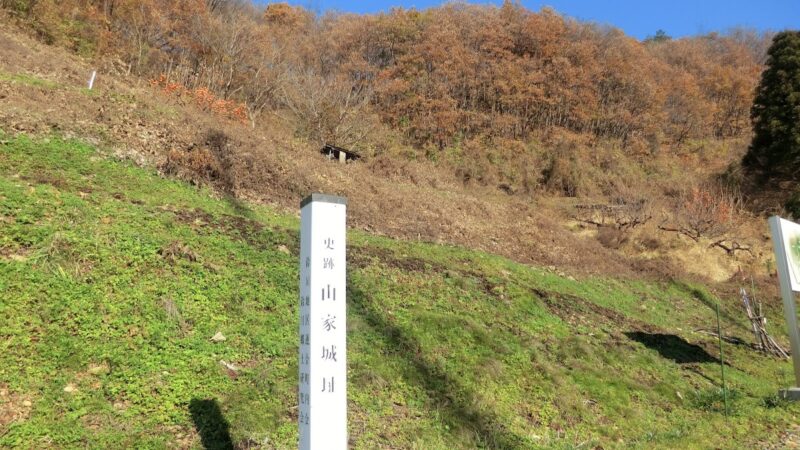
Located in the Zao Narusawa district of Yamagata City, Yamagata Prefecture, Narusawa Castle Ruins was a mountain castle that served as the ancestral home of the Narusawa clan, a branch of the Mogami clan. It functioned for 240 years as an important base for protecting the southern part of the Mogami territory, alongside Hasedo Castle. Currently, it is maintained as Narusawa Castle Ruins Park, and the remains of the castle can be seen mainly within the grounds of the Hachiman Shrine.
History and Construction of Narusawa Castle
Construction by Kaneyoshi, Grandson of Shiba Kaneyori
Narusawa Castle is believed to have been constructed in Eitoku 3 (1383) by Taikyoku Kaneyoshi. Kaneyoshi was the sixth son of Naohisa, son of Shiba Kaneyori, the founder of the Mogami family, and was granted the land of Narusawa. Initially, he built Izumide Castle (Izumide Manor) as his residence, but it is said that he soon moved his residence to Narusawa Castle, built in its current location.
Narusawa Castle is located in the southeastern part of the Yamagata Plain, at the foot of the Ou Mountains, built on a hill with a relative elevation difference of approximately 57 meters. This location offered a strategic advantage, overlooking the Yamagata Basin, and held an extremely important position in the southern defense of the Mogami territory.
The Narusawa Clan’s Genealogy and the Castle’s Development
From Kaneyoshi onward, the Narusawa clan served the Mogami clan, using this castle as their residence for generations. As a branch of the Mogami clan, the Narusawa clan was an important family supporting the main Mogami family. Narusawa Castle was not merely a residence; it was developed as a military base in the southern part of the Mogami territory, becoming one of the two major strongholds responsible for the southern defense of the Mogami territory, along with Hasedo Castle.
The Battle of Kashiwagiyama and the Role of Narusawa Castle
The Crisis of 1578
Narusawa Castle first appears on the historical stage during the Battle of Kashiwagiyama in 1578. This battle began when Kamiyama Mitsukane, lord of Kamiyama Castle, opposed Mogami Yoshiaki with the support of Date Terumune.
Kamiyama Mitsukane allied with Date Terumune and launched an invasion of Yamagata. At this time, Mogami Yoshiaki needed a forward base to defend Yamagata, and Narusawa Castle played that role. Geographically, Narusawa Castle was located on the invasion route from the Kamiyama area, and it functioned as a frontline base to monitor enemy movements and prevent attacks on Yamagata Castle.
Fortress for the Southern Defense of the Mogami Territory
The experience of the Battle of Kashiwagiyama reaffirmed the strategic importance of Narusawa Castle. Narusawa Castle and Hasedo Castle continued to play an important role as the two pillars protecting the southern part of the Mogami territory. It is thought that a constant state of alert was maintained, especially in preparation for threats from the Kamiyama area and from the Date clan in Yonezawa.
The Dispossession of the Mogami Clan and the Abandonment of the Castle
In 1622 (Genna 8), when the Mogami clan was dispossessed of their domain, Narusawa Castle also came to an end. Having stood alongside the Mogami clan for approximately 240 years since its construction, Narusawa Castle was abandoned and lost its function as a military facility.
The dispossession of the Mogami clan was caused by a family dispute that occurred during the time of Mogami Yoshitoshi. The dispossession of the Mogami clan, who boasted a domain of 570,000 koku, led to the abandonment of many castles within the Yamagata domain, and Narusawa Castle was one of them. After the castle’s abandonment, a Hachiman Shrine was built on the castle site, and it remains a place of worship for the local community to this day.
The Layout and Remains of Narusawa Castle
Castle Structure and Arrangement
Narusawa Castle, as a mountain castle, is characterized by its layout that skillfully utilizes the natural terrain. The current location of the Hachiman Shrine’s inner sanctuary is considered to be the site of the main keep, and multiple baileys were arranged around this central point.
While the castle’s structure is relatively simple, it possesses all the necessary defensive elements. The baileys were arranged in stages around the main keep, creating a structure that gradually prevented enemy incursions.
Currently Visible Remains
At Narusawa Castle ruins, the following remains can still be observed:
Earthwork Remains: Partially remaining earthworks that demarcated each bailey convey the appearance of the defensive facilities at the time. Earthworks were a fundamental defensive structure for castles, serving to prevent enemy incursions and clearly define the boundaries of the baileys.
Moat: A moat cutting across the ridge can be seen, demonstrating a defensive technique unique to mountain castles. Moats were important facilities that hindered enemy advances and created terrain advantageous to the defenders.
Bailey Arrangement: Multiple bailey remains centered around the main keep, giving a sense of the castle’s scale. Each bailey was arranged utilizing the differences in elevation, forming a three-dimensional defensive network.
Relationship with Hachiman Shrine
Currently, Hachiman Shrine is located on the site of Narusawa Castle. A magnificent stone torii gate marks the entrance to the castle ruins, and climbing the approach leads to the inner shrine, located on the site of the main keep. The fact that the site has been maintained as a shrine precinct has contributed to the preservation of the remains.
Access to Narusawa Castle Ruins and Ascent Routes
Location and Transportation Access
Location: Zaō Narusawa, Yamagata City, Yamagata Prefecture
Access by Train: Approximately 2km east from Zaō Station, the station next to JR Yamagata Station. Approximately 25-30 minutes on foot.
Access by Car: Approximately 15 minutes from Yamagata city center via National Route 13. Aiming for Hachiman Shrine will make it easier to find.
Ascent Routes and Points of Interest
There are mainly two routes to ascend to Narusawa Castle Ruins.
Hachiman Shrine Front Route: This route starts from the front entrance of Hachiman Shrine, marked by a magnificent stone torii gate. Following the approach path, you will reach the site of the main keep where the inner shrine is located. This route is relatively well-maintained and easy even for beginners.
Higashita-guchi Route: There is also a route that circles half of Tateyama and ascends to the castle from Higashita-guchi. This route makes it easier to understand the overall structure of the castle and is recommended for those who want to observe the remains in more detail.
When climbing the castle, be sure to wear comfortable shoes and clothing appropriate for the season. As it is a mountain castle, insect repellent is also necessary during the summer months.
Current Status as Narusawa Castle Ruins Park
Park Development Status
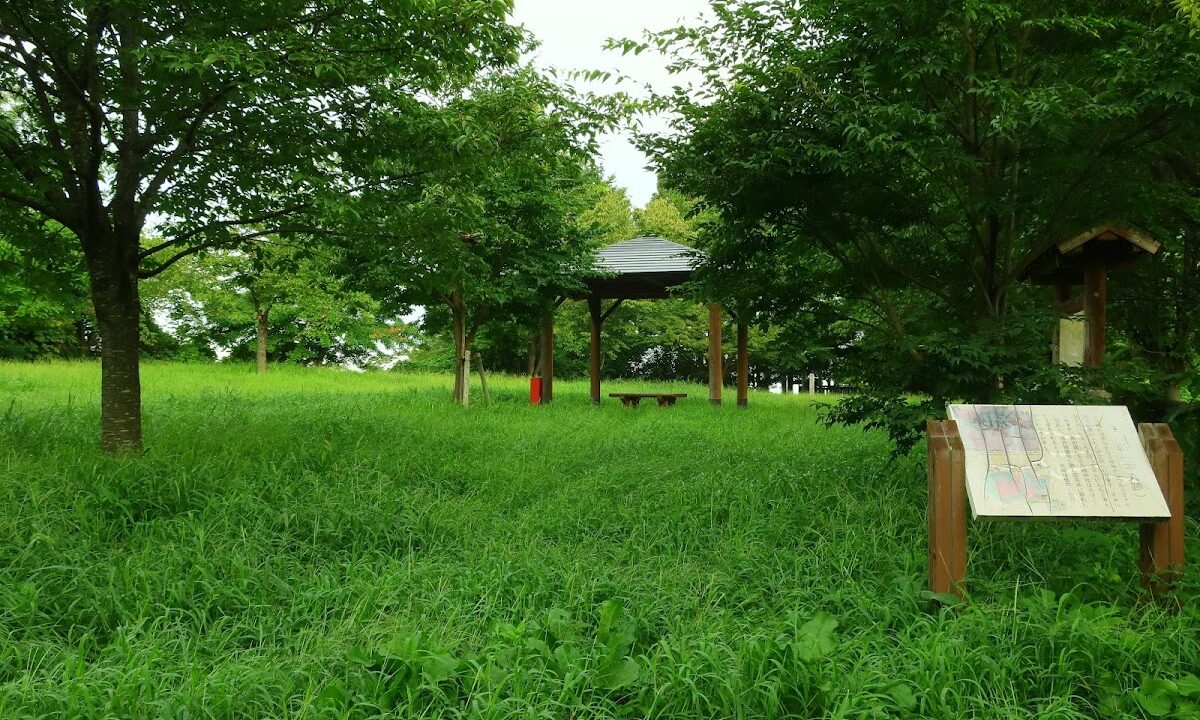
The Narusawa Castle ruins are currently developed as Narusawa Castle Ruins Park. The Yamagata City Parks and Green Spaces Division is in charge of management, and efforts are being made to create an environment that is easily accessible to citizens while preserving the historical remains.
From the park, you can enjoy a panoramic view of the Yamagata Basin, and on a clear day, you can enjoy a magnificent view. Being able to view the same scenery that the castle lord and soldiers once saw from the same spot is a historically romantic experience.
Regional Positioning
Narizawa Castle Ruins are positioned as a valuable historical heritage site in Yamagata City. It has been featured as a source of pride for the mayor of Yamagata, making it an important spot for promoting the region’s attractions.
For locals, it is a familiar historical site visited in conjunction with a visit to Hachiman Shrine, and is an important place that forms the regional identity.
Related Historical Sites in the Surrounding Area
Relationship with Hasedo Castle
Hasedo Castle, which, along with Narusawa Castle, defended the southern part of the Mogami territory, is located in the northeastern part of Yamagata City. This castle, famous for the Battle of Hasedo Castle in 1600, was also an important branch castle of the Mogami clan. The fact that Narusawa Castle and Hasedo Castle formed the southern defense line of the Mogami territory is important for understanding the Mogami clan’s territorial management.
Location in Relation to Yamagata Castle
Yamagata Castle, the headquarters of the Mogami clan, is located approximately 10 km northwest of Narusawa Castle. Narusawa Castle served as a frontline base protecting the south of Yamagata Castle, always functioning in coordination with the main base. Visiting the current Yamagata Castle ruins (Kajo Park) in conjunction with Narusawa Castle will provide a deeper understanding of the Mogami clan’s castle network.
Confrontation with Kaminoyama Castle
Kaminoyama Castle, located to the south, was the residence of Kaminoyama Mitsukane, who was an enemy during the Battle of Kashiwagiyama. The view from Narusawa Castle towards Kaminoyama Castle truly reflects the tension of the front lines. Currently, a replica keep of Kaminoyama Castle has been built and is open to the public as a local history museum.
Historical Significance of Narusawa Castle
The Role of a Branch Family of the Mogami Clan
The history of Narusawa Castle is also the history of the Narusawa clan, a branch family of the Mogami clan. While it was common in daimyo families during the Sengoku period for branch families to protect subsidiary castles and support the main family, the Narusawa clan continued to fulfill this role for a long period of 240 years.
This indicates that the Mogami clan’s control over their retainers was relatively stable, and that the strategic importance of Narusawa Castle was always recognized.
Place in Yamagata’s Medieval History
The history of Narusawa Castle provides important clues to understanding Yamagata’s history from the medieval period to the early modern period. From the formation of the Mogami clan’s territory, to regional conflicts during the Sengoku period, and the major turning point of the Mogami family’s downfall, this castle was one of the important stages in Yamagata’s history.
Points to Note and Manners When Visiting
When visiting the Narusawa Castle ruins, please note the following points.
- Respect for the Shrine: Remember that this is the grounds of Hachiman Shrine, and observe proper etiquette during your visit.
- Protection of Historical Remains: Be careful not to carelessly enter historical remains such as earthworks and moats.
- Safety Assurance: As this is a mountain castle, pay attention to your footing, and be especially cautious during rainy weather and winter.
- Take Your Trash Home: To protect the natural and historical environment, be sure to take your trash home with you.
Summary: The Charm of Narusawa Castle Ruins
Narusawa Castle Ruins, while not flashy, is an indispensable historical site for understanding the Mogami clan’s territorial management and Yamagata during the Sengoku period. The history of the castle, which protected the southern part of the Mogami territory for 240 years, is still passed down as a source of local pride.
The panoramic view of the Yamagata Basin, the tranquil atmosphere of the mountain castle, and the numerous historical remains make it a worthwhile spot for history buffs. When you visit Yamagata City, be sure to visit Narusawa Castle Ruins and reflect on the era of the Mogami clan.
Currently, the site is known as Narusawa Castle Ruins Park and is a popular spot for locals, offering opportunities for both historical and nature walks. We recommend taking your time to explore the site, perhaps in conjunction with a visit to Hachiman Shrine.
Besides Narusawa Castle Ruins, Yamagata City boasts numerous other historical sites associated with the Mogami clan, including Yamagata Castle Ruins (Kajo Park) and Hasedo Castle Ruins. Visiting these sites will provide a deeper understanding of Yamagata’s history from the Sengoku period to the early Edo period.
Nariusawa Castle Ruins is a valuable cultural heritage site that quietly conveys the history of the region. To ensure its value is passed on to future generations, we hope many people will visit and experience its history and charm.