Numakunai Castle (Iwate Prefecture) Complete Guide: A Historic Mountain Castle Where the Kunohe Masazane Rebellion and the Oshu Pacification Army were Stationed
What is Numakunai Castle?
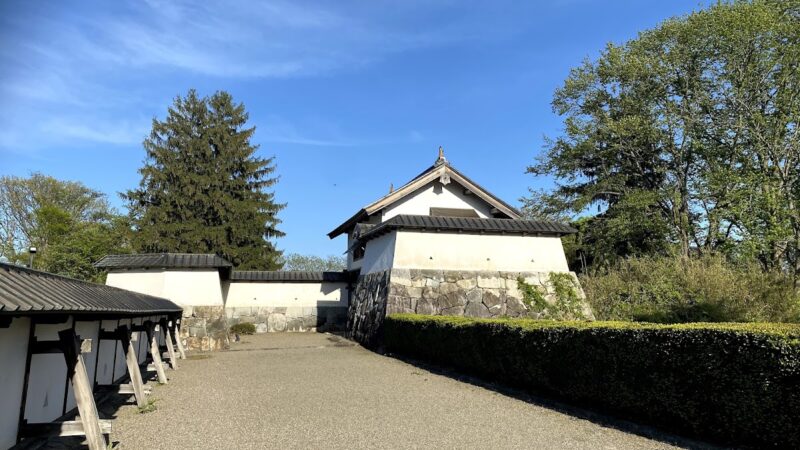
Numakunai Castle is a medieval mountain castle located in Numakunai, Iwate-cho, Iwate-gun, Iwate Prefecture. Currently, it is maintained as Shiroyama Park, and the remains such as dry moats and trenches are well preserved. This castle is historically important as it was the site of the Kunohe Masazane Rebellion in 1591, where over 53,000 of Toyotomi Hideyoshi’s Oshu Pacification Army were stationed and where they held a war council with Nanbu Toshinao.
The castle site is built on a steep terrain facing the Kitakami River to the west and the Daibo River to the south, boasting a size of approximately 180 meters east-west and 300 meters north-south. It sits on a mountaintop at an altitude of approximately 320 meters, with a relative height difference of about 70 meters.
History and Background of Numakunai Castle
Founding and Origin of the Numakunai Clan
The Numakunai clan is believed to have originated from a branch of the Kawamura clan of Sagami Province. It is said that in 1189, during Minamoto no Yoritomo’s conquest of Oshu (the subjugation of the Oshu Fujiwara clan), a branch of the Kawamura clan, who distinguished themselves in battle, was rewarded with land in Oshu and moved there, marking the beginning of the Numakunai clan. However, detailed records are scarce, and the exact founding date is unclear. It is thought to have been a residence since the Kamakura period, and the Numakunai clan ruled this area for generations.
Numakunai Castle in the Sengoku Period
The lord of the castle during the Sengoku period was Numakunai Minbu Tsunetoshi, who was a subordinate of the Nanbu clan. The Numakunai clan, as important vassals of the Nanbu clan, were entrusted with governing this region and defended the strategically important area of Numakunai.
The Kunohe Masazane Rebellion and the Stationing of the Oshu Pacification Army
Numakunai Castle first appears on the historical stage during the “Kunohe Masazane Rebellion” of 1591. This rebellion, launched by Kunohe Masazane in opposition to Toyotomi Hideyoshi’s pacification of Oshu, was the last large-scale Sengoku period battle in the Tohoku region.
Hideyoshi dispatched an army of over 53,000 men to pacify Oshu, with Gamo Ujisato, Asano Nagamasa, Ii Naomasa, and Nanbu Nobunao (father of Toshinao) as commanders-in-chief. Records show that this large army was stationed at Numakunai Castle, and that a war council was held there with Nanbu Toshinao (then Nobunao’s eldest son). Numakunai Castle functioned as a forward base for the attack on Kunohe Castle and became a strategically important location.
Demolition and Abandonment
After the suppression of the Kunohe Masazane Rebellion, Toyotomi Hideyoshi issued an order to demolish various castles in 1592 (Tensho 20). The Nanbu clan’s records state, “Numakunai Mountain Castle, demolished, Kawamura Jibu’s share,” indicating that Numakunai Castle was demolished and abandoned at this time. This demolition order symbolized the end of the Sengoku period in the Tohoku region, and many other mountain castles were similarly demolished.
Structure and Layout of Numakunai Castle
Overall Composition
Numakunai Castle is a typical medieval mountain castle composed of three main enclosures (kuruma). The northern enclosure serves as the main enclosure (honmaru), with the southern and eastern enclosures arranged accordingly. The castle measures approximately 180 meters east-west and 300 meters north-south, classifying it as a medium-sized mountain castle.
Main Enclosure (North Enclosure)
The main enclosure, located on the northernmost side, is the central part of the castle and is believed to have housed the lord’s residence and command post. Even today, a flat terrain remains, allowing us to estimate its original size. Traces of earthworks surround the main enclosure, indicating the presence of defensive structures.
Defensive Structures
The most distinctive feature of Numakunai Castle lies in its robust defensive structures.
Western Defense: A triple-layered moat is constructed on the west side of the main enclosure. This is a multi-layered defensive system designed to prevent enemy intrusion, demonstrating the high level of castle-building technology of the time.
Southern Enclosure Defense: The southern enclosure is defended by a double moat, designed to protect against attacks from the south. It also utilizes the natural terrain facing the Daibo River, making it a natural stronghold.
Eastern Enclosure Defense: The eastern enclosure is also cut off from the ridgeline by a double moat, preventing intrusion from the east.
Existing Remains
The following remains can be seen at the castle site, which is now developed as Shiroyama Park:
- Dry Moats: The dry moats separating each enclosure remain in good condition, allowing visitors to experience the scale of the castle at the time.
- Moats: Multiple trenches cutting across the ridge remain.
- Earthworks: Traces of earthworks can be seen in some areas.
- Enclosure Remains: The flat areas of the three main enclosures remain clearly visible.
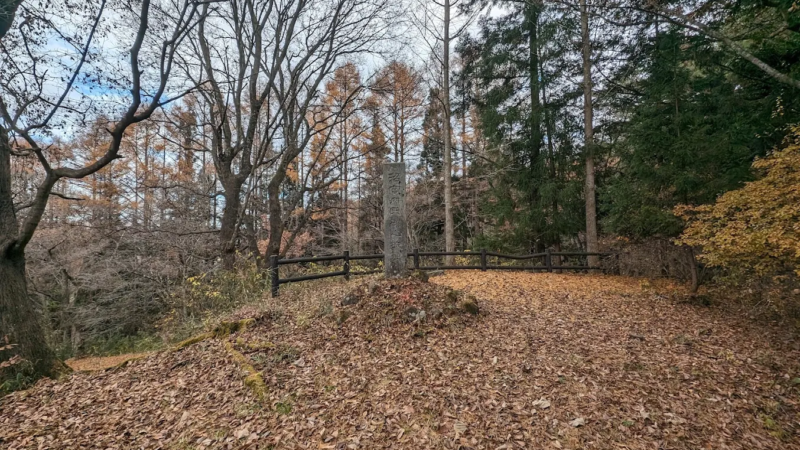
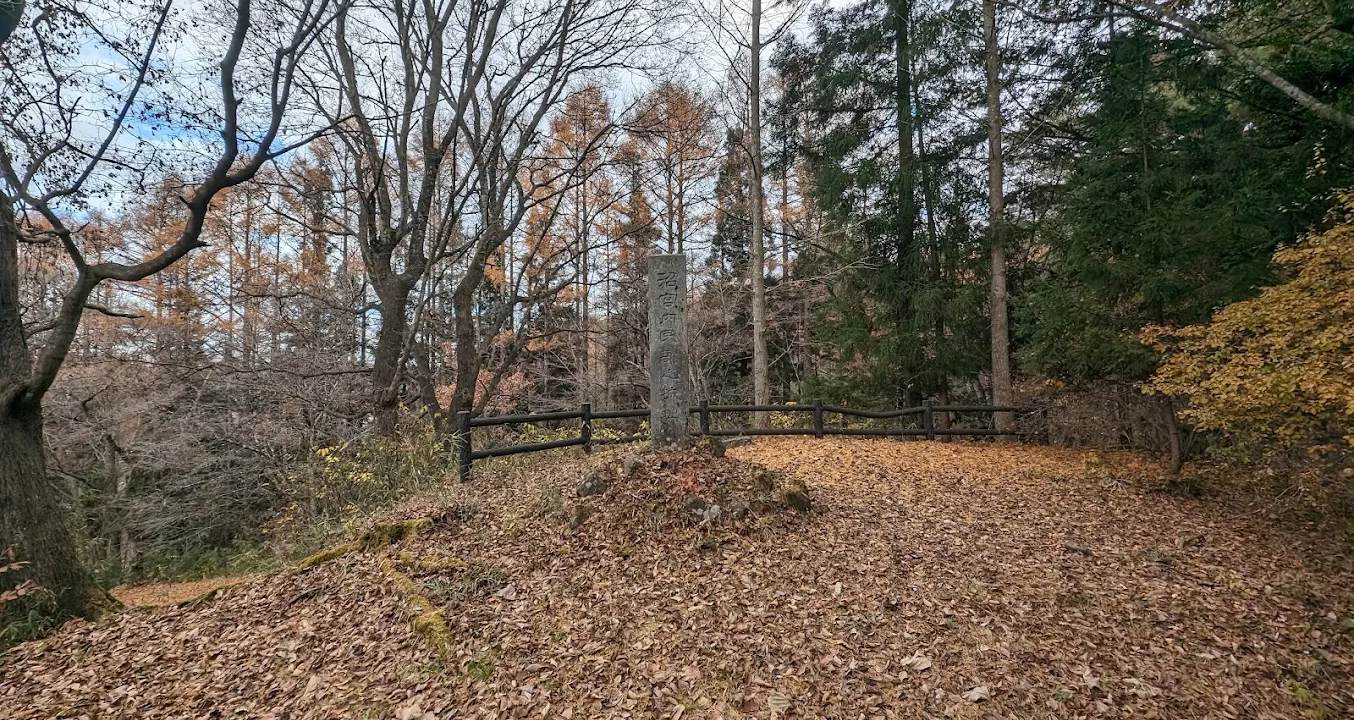
- Stone Monument: A stone monument marking the castle site has been erected.
These remains, even more than 400 years after its destruction, are valuable historical sites that allow us to imagine the castle’s former appearance.
Highlights of Numakunai Castle (Castle Notes)
The Impressive Triple Moat
The triple moat on the west side of the main enclosure is the greatest highlight of Numakunai Castle. The structure of the three-tiered moat is a valuable remains that allows visitors to experience the defensive techniques of a medieval mountain castle. The depth and width of the moat demonstrate the high level of castle-building technology of the time.
View
Located on a mountaintop approximately 320 meters above sea level, the castle ruins offer panoramic views of the town of Numakunai and the surrounding mountains. On clear days, Mount Iwate can also be seen, allowing visitors to relive the scenery seen by the castle lords of the Sengoku period. This excellent view also played an important role in military surveillance.
Development as Shiroyama Park
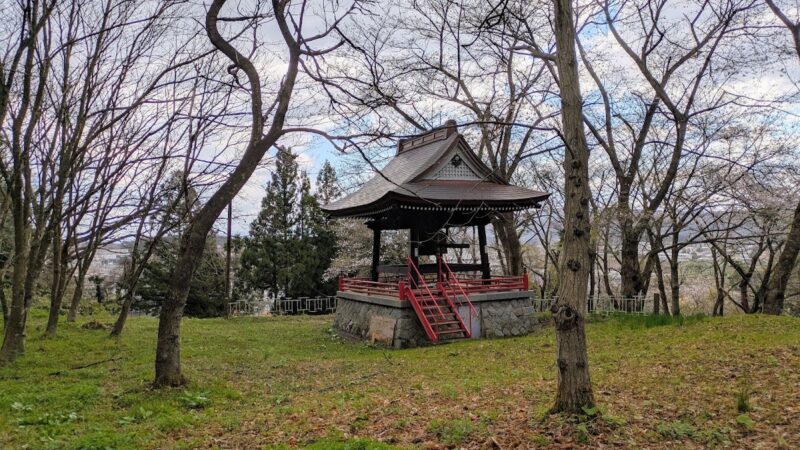
Currently, the castle ruins have been developed as Shiroyama Park, with walking paths. Information boards are also installed, allowing visitors to learn about the castle’s history and structure while strolling. In spring, cherry blossoms bloom, making it a popular place for local residents to relax.
Historical Value
As a castle associated with the Kunohe Masazane Rebellion, a crucial battle that ended the Sengoku period in the Tohoku region, this castle possesses extremely high historical value. The fact that over 53,000 troops were stationed here speaks to the scale and importance of this castle.
Access Methods
Location
11-Wari, Numakunai, Iwate-cho, Iwate-gun, Iwate Prefecture 028-4301
Access by Public Transportation
Train:
- Get off at Iwate-Numakunai Station on the IGR Iwate Galaxy Railway
- Approximately 20-25 minutes on foot from the station
- Approximately 1.5 kilometers from the station to the castle ruins
Bus:
- Iwate Town Community Bus is available
- Get off at the “Elementary School” bus stop, approximately 10 minutes on foot
Access by Car
Expressway:
- Approximately 15 minutes (approximately 10 kilometers) from Nishine IC on the Tohoku Expressway
- Approximately 30 minutes (approximately 20 kilometers) from Takizawa IC on the Tohoku Expressway
General Roads:
- Accessible via Prefectural Road from National Route 4
- Follow the signs from Numakunai town center
Parking:
- There are a few parking spaces near the entrance to Shiroyama Park.
- Parking is limited, so be aware of potential crowds.
Points to Note When Visiting
- As it is a mountain castle, comfortable walking shoes are recommended.
- The walking paths are well-maintained, but they can be slippery in rainy weather, so please be careful.
- Due to snow in winter, visits are recommended from spring to autumn.
- The visit takes approximately 30 minutes to 1 hour.
- Restrooms are located near the park entrance.
Visitor Guide (Tourist Information)
Visiting Hours
Shiroyama Park is open at all times and can be visited freely. However, nighttime visits are not recommended for safety reasons. Visiting during daylight hours is recommended.
Admission Fee
Admission is free.
Best Season
- Spring (April-May): Cherry blossoms bloom, and the castle ruins are adorned with flowers.
- Early Summer (June): The fresh greenery is beautiful, and the weather is stable.
- Autumn (October-November): The autumn leaves are beautiful, and it’s a good season for observing the ruins.
- Winter: Due to snow, caution is needed when visiting.
Nearby Tourist Facilities
Iwate Town Hall: Located in the center of Numakunai, you can sometimes view historical materials of the town.
Ishigami-no-Oka Art Museum: An art museum in Iwate Town where you can experience local art and culture. It is adjacent to the Ishigami-no-Oka Roadside Station.
Ishigami-no-Oka Roadside Station: A roadside station where you can purchase local specialties and agricultural products. It also has a restaurant, making it ideal for taking a break.
Iwate Town Library: Houses local historical materials, and you can research documents related to Numakunai Castle.
Accommodation
There are business hotels and hot spring accommodations around Numakunai. It’s also possible to stay in Morioka City and visit on a day trip (approximately 40 minutes by car).
Nearby Castles
Kunohe Castle (Ninohe City)
Located approximately 30 kilometers north of Numakunai Castle, Kunohe Castle was the site of the Kunohe Masazane Rebellion. Designated a national historical site, it retains large stone walls and moats. Visiting both Numakunai Castle and Kunohe Castle will provide a deeper understanding of the Kunohe Masazane Rebellion.
Morioka Castle (Morioka City)
Morioka Castle, the base of the Nanbu clan, is located approximately 30 kilometers south of Numakunai Castle. Built during the Edo period, it is a modern castle with impressive stone walls. It is currently maintained as Morioka Castle Ruins Park (Iwate Park).
Shiwa Castle (Morioka City)
An ancient fortified castle, built in the early Heian period. Although it dates from a different era than Numakunai Castle, it is an important historical site for studying the history of castles in Iwate Prefecture.
History and Local Information of Numakunai
Changes in Numakunai Town
Numakunai Town was established on April 1, 1889 (Meiji 22), as part of Kita-Iwate District, through the merger of Numakunai Village and a part of Egarinai Village, following the implementation of the town and village system. On April 1, 1897 (Meiji 30), Kita-Iwate District and Minami-Iwate District merged to form Numakunai Town in Iwate District.
On July 21, 1955 (Showa 30), it merged with Ippoi Village, Kawaguchi Village, and Mido Village to form the current Iwate Town. Numakunai continues to play a central role in administration and commerce as the central district of Iwate Town.
Present-day Numakunai
Present-day Numakunai has developed around Iwate-Numakunai Station on the IGR Iwate Galaxy Railway. Public facilities such as the Iwate Town Hall, Numakunai Regional Medical Center, and Iwate Town Library are concentrated here, making it the town’s administrative and cultural center.
The area is divided into 38 subdivisions, reflecting a planned town development strategy. Agriculture is the main industry, while it also serves as a transportation hub.
Cultural Property Designation Status of Numakunai Castle
Currently, Numakunai Castle is not designated as a national or prefectural historic site, but it is recognized as an important cultural heritage site of the region. Preservation and maintenance are carried out by Iwate Town, and it is preserved and passed down to future generations as Shiroyama Park.
The remains are well-preserved, and the moats and dry ditches, in particular, are highly valued academically as typical defensive structures of a medieval mountain castle. Future efforts toward cultural property designation are anticipated.
Related Books and Materials
For those who want to learn more about Numakunai Castle, the following materials may be helpful.
Recommended Books
- *Medieval Castles and Residences of Iwate Prefecture* (Iwate Prefectural Board of Education)
- *Castles of the Nanbu Clan* (Ebisu Kosho Publishing)
- *The Rebellion of Kunohe Masazane* (Related History Book)
- *Castles of Iwate* (Local History Book)
Where to Obtain Materials
The Iwate Town Library offers access to materials related to local history. Related materials are also held at the Iwate Prefectural Library and the Morioka City Library.
Photo Spots (Recommended Photo Gallery)
Recommended Photo Spots
Stone Monument and Information Board:
The stone monument at the entrance to the castle ruins is perfect for commemorative photos. Including the green of the castle mountain in the background will create an atmospheric picture.
View from the Main Enclosure:
From the main enclosure, you can overlook the townscape of Numakunai, making it suitable for panoramic photography.
Cross-section of the moat:
To effectively convey the depth of the moat, it’s best to photograph it from a side angle.
Spring Cherry Blossoms:
During cherry blossom season, you can take photos combining the castle ruins with cherry blossoms.
Precautions when photographing
- There are areas with unstable footing, so please take precautions for safety when photographing.
- Please be careful not to trespass on private property.
- You can take beautiful photos in the early morning or evening light.
Summary
Numakunai Castle holds extremely high historical value as a castle involved in the Kunohe Masazane Rebellion, a significant historical event symbolizing the end of the Sengoku period in the Tohoku region. The fact that over 53,000 troops of the Oshu pacification army were stationed there and that a war council was held with Nanbu Toshinao indicates that this castle was a strategically important location.
The remaining structures, such as the triple moat, double moat, and moat, are valuable historical sites that convey the defensive techniques of medieval mountain castles. Because it is maintained as Shiroyama Park, it is easily accessible, and you can enjoy a historical walk.
When touring castles in Iwate Prefecture, visiting Numakunai Castle along with Kunohe Castle and Morioka Castle will allow you to gain a deeper understanding of the history of the Nanbu clan and the Sengoku period in the Tohoku region.
Numakunai Castle, though not flashy, is a historical site worth visiting as it witnessed important turning points in history. Please consider visiting it at least once.