Yanagisawa Castle (Hyogo Prefecture): A Complete Guide to its History and Highlights | Access and Ruins Information
Hyogo Prefecture boasts numerous nationally famous castles such as Himeji Castle, Takeda Castle, and Akashi Castle, but it also retains many smaller castles that played important roles in the region’s history. This article provides a detailed explanation of Yanagisawa Castle, one of these castles in Hyogo Prefecture, covering its historical background, characteristics as a castle, current ruins, and access methods.
What is Yanagisawa Castle?
Yanagisawa Castle is one of the medieval castles that existed in Hyogo Prefecture. Hyogo Prefecture consists of five provinces: Harima, Tajima, Tanba, Settsu, and Awaji, and diverse castles were built in each region according to its history and climate. Yanagisawa Castle is positioned as one of these important historical sites that tell the story of the region’s history.
Distribution of Castles in Hyogo Prefecture
Hyogo Prefecture is known as a “treasure trove of castles,” with hundreds of castle ruins confirmed within the prefecture. Representative castles include the following:
- Himeji Castle (Honmachi, Himeji City, Hyogo Prefecture): A representative Japanese castle with a national treasure keep registered as a World Heritage Site.
- Takeda Castle: A mountain castle known as the “Castle in the Sky.”
- Sasayama Castle: A modern castle remaining in Tamba-Sasayama City.
- Akō Castle: The residence of the Asano clan, famous for the story of the Forty-Seven Ronin.
- Akashi Castle (Akashi Park, Akashi City, Hyogo Prefecture): A flatland castle overlooking the Akashi Strait.
- Sumoto Castle (Kojidani, Sumoto City, Hyogo Prefecture): The largest castle on Awaji Island.
- Izushi Castle (Uchimachi, Izushi-cho, Toyooka City, Hyogo Prefecture): A castle remaining in the “Little Kyoto of Tajima.”
- Tatsuno Castle (Kamikasumi Castle, Tatsuno-cho, Toyooka City): A symbol of the “Little Kyoto of Harima.”
Along with these representative castles, small and medium-sized castles that convey the history of the region, such as Yanagisawa Castle, form the rich historical heritage of Hyogo Prefecture.
Historical Background of Yanagisawa Castle
Construction Period and Lord
Currently, only limited historical records remain regarding the construction period and detailed lords of Yanagisawa Castle. However, like many medieval castles in Hyogo Prefecture, it is believed to have been built during the turbulent Sengoku period by local lords and powerful families.
During the Sengoku period in Hyogo Prefecture, powerful daimyo such as the Akamatsu and Bessho clans in Harima, the Yamana clan in Tajima, and the Hatano and Akai clans in Tanba vied for power and engaged in fierce conflicts. Amidst these wars, numerous castles were built as bases for regional control.
Hyogo Prefecture in the Sengoku Period
The Hyogo Prefecture area underwent the following historical developments during the Sengoku period:
After the Ōnin War (late 15th to early 16th century)
- The authority of the shugo daimyo declined, and local lords rose to power.
- Numerous small castles were erected throughout the region.
- Unique spheres of influence formed in each area.
The Rise of Oda Nobunaga (late 16th century)
- The conquest of Harima by Hashiba Hideyoshi (later Toyotomi Hideyoshi).
- The Bessho clan was destroyed in the Battle of Miki (1578-1580).
- Fierce battles in Tajima and Tanba, such as the Battle of Kuroi Castle.
From the Toyotomi Regime to the Early Edo Period
- Many medieval castles were abandoned.
- Reorganization into early modern castles.
- Numerous castles were demolished due to the One Castle Per Province Decree (1615).
It is presumed that Yanagisawa Castle also functioned as a base for regional control within this historical context.
Structure and Characteristics of Yanagisawa Castle
Castle Location
Many medieval castles were built utilizing terrain suitable for defense. While castles in Hyogo Prefecture exhibit various locations such as mountain castles, hill castles, and flatland castles, most castles from the Sengoku period were mountain castles built on mountain ridges or hills.
Advantages of Mountain Castles:
- Excellent visibility from high ground allows for early detection of enemy movements.
- Steep terrain provides natural defensive features.
- Difficult for attackers to ascend.
- Offers a panoramic view of the surrounding area, symbolizing territorial control.
Basic Structure of Medieval Castles
The following elements are common characteristics of medieval castles in Hyogo Prefecture:
Kuruwa (Enclosure)
This is the flat area that forms the core of the castle, where buildings were constructed and soldiers were stationed. Multiple enclosures are arranged around the main enclosure (honmaru), including the second and third enclosures.
Horikiri (Dry Moat):
A dry moat dug to cut across a ridge, serving to prevent enemy intrusion and demarcate areas between baileys.
Dorui (Earthwork):
A defensive structure built by piling up earth, surrounding baileys to prevent enemy intrusion.
Tatebori (Vertical Moat):
A moat dug vertically along a slope, hindering enemies from climbing the slope.
Koguchi (Tiger’s Moat):
An entrance to the castle, designed with ingenuity as a strategically important defensive point.
Current Status and Remains of Yanagisawa Castle
Local Conditions
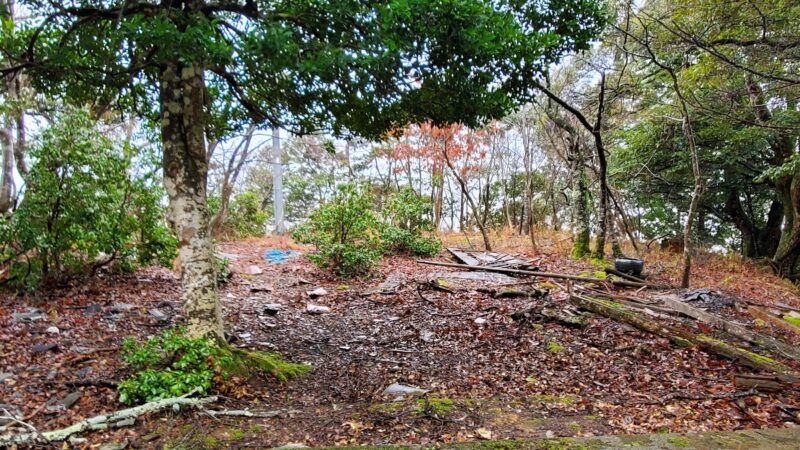
Like many medieval castles, no clear structures remain at Yanagisawa Castle today. However, by carefully observing the topography, it is sometimes possible to imagine the castle’s appearance in its heyday.
The current state of medieval castles in Hyogo Prefecture varies greatly:
- Castle sites with well-preserved remains, where baileys and moats are clearly identifiable.
- Castle sites that have been altered by afforestation and development, but where the basic layout can still be identified.
- Castle sites where the original appearance has been almost completely lost due to large-scale alterations.
There are significant differences in the state of preservation.
Efforts to Preserve Castles in Hyogo Prefecture
Hyogo Prefecture is making efforts to preserve and utilize its abundant castle heritage. The Hyogo Prefectural Museum of History has selected 24 major castles in the prefecture as “Hyogo Castles” and provides explanations using on-site photographs and museum materials.
Furthermore, local governments and regional history research groups are carrying out activities such as:
- Surveying of castle sites
- Archaeological excavations
- Installation of information boards
- Improvement of access routes to castles
- Utilization for local history education
These activities are being carried out.
Access and Visiting Information for Yanagisawa Castle
Basic Information for Castle Visits
When visiting medieval castles, please note the following:
Clothing and Equipment
- Comfortable clothing (long sleeves and long pants recommended)
- Non-slip shoes such as trekking shoes
- Hat and gloves
- Drinking water
- Map and GPS device
Safety Precautions
- Avoid visiting alone; visit in groups
- Avoid visiting on days with bad weather
- Be careful of slippery slopes
- Be aware of wild animals (especially venomous snakes and wasps)
- Obtain permission if visiting private property
Manners
- Do not damage the ruins
- Always take your trash with you
- Do not collect plants
- No open fires
Representative Castles in the Surrounding Area
When visiting Yanagisawa Castle, visiting other representative castles in the surrounding area will allow you to gain a deeper understanding of the diversity of castles in Hyogo Prefecture.
Harima Region
- Himeji Castle: A World Heritage Site and National Treasure castle tower, a representative early modern castle of Japan
- Akō Castle: A seaside castle with a restored main keep garden and turret gate
- Tatsuno Castle: An elegant flatland castle also known as Kasumi Castle
- Miki Castle: The residence of Bessho Nagaharu, the site of the Battle of Miki
- Shirahata Castle: The base of the Akamatsu clan
- Okishio Castle: A mountain castle of the Akamatsu clan, the shugo (military governor) of Harima
Tajima Region
- Takeda Castle: A “castle in the sky” with well-preserved stone walls
- Izushi Castle: A flatland castle overlooking the “Little Kyoto of Tajima”
- Arikoyama Castle: The residence of the Yamana clan
- Konosumiyama Castle: An important base of the Yamana clan
Tamba Region
- Sasayama Castle: An early modern castle built by Tokugawa Ieyasu
- Kuroi Castle: The residence of Akai Naomasa, “The Red Demon of Tamba”
- Yagami Castle: The base of the Hatano clan
Settsu Region
- Akashi Castle: A hilltop castle overlooking the Akashi Strait; two three-story turrets remain.
- Amagasaki Castle: The keep was restored in 2019.
- Arioka Castle: The residence of Araki Murashige
Awaji Region
- Sumoto Castle: The largest castle on Awaji Island; it has a replica keep.
Learning about Castles in Hyogo Prefecture
Reference Materials and Information Sources
Materials and information sources for learning about castles in Hyogo Prefecture:
Books
- “Comprehensive Survey of Japanese Castles, Vol. 12: Osaka and Hyogo” (Shin Jinbutsu Oraisha)
- “Hyogo Castles, New Edition” (Kobe Shimbun Publishing Center)
- “Harima Sengoku History: The Rise and Fall of Warlords” (Kobe Shimbun Publishing Center)
- “Medieval History of Tajima” (Kobe Shimbun Publishing Center)
- “The Rise and Fall of the Bessho Clan—’Banshu Taiheiki’ and the Battle of Miki” (Kobe Shimbun General Publishing Center)
Websites
- Kojodan: A site that covers castle information nationwide and allows users to share photos and visit records.
- Oshiro Meguri FAN: Introduces castles in Hyogo Prefecture with photos.
- Hyogo Prefectural Museum of History “Hyogo Castles”: Detailed explanations of 24 castles in the prefecture.
- Jōkaku Hōrōki: Introduces each castle with detailed layout maps.
- Nippon Jōmeguri: A castle information site linked to a smartphone app.
Museums and Archives
- Hyogo Prefectural Museum of History (Himeji City): Permanent exhibition on castles.
- Himeji Castle (Himeji City): Visit the actual World Heritage site.
- Akō City Museum of History: History of Akō Castle and the Akō Domain.
- Tamba Sasayama City Museum of History: History of Sasayama Castle and its castle town.
How to Enjoy Castle Research
Methods for Deeply Understanding Castles in Hyogo Prefecture:
Field Survey
Visiting castle ruins and observing the topography and remains with your own eyes is paramount. Bringing a castle layout map and comparing it to the local terrain while walking will help you understand the castle’s structure and the builder’s intentions.
Study of Historical Documents and Maps
Investigating historical documents and maps related to castles will reveal the history of their construction, the changes in castle lords, and the appearance of the castle town.
Learning Local History
Castles are closely intertwined with local history. Studying the Sengoku period and early modern history of the region will deepen your understanding of the castle’s role and importance.
Photographic Record
Taking photographs of the castle ruins you visit and keeping them as a record is also worthwhile. You can also enjoy the changes in scenery due to the seasons and weather.
The Charm of Castles in Hyogo Prefecture
Diversity and Abundance
The reason Hyogo Prefecture is called a “treasure trove of castles” is not only because of its large number, but also because of its diversity:
Diversity of Eras
- From medieval mountain castles to early modern castles
- Including artillery batteries and fortifications from the late Edo period
- Learn about the evolution of castle construction techniques in each era
Diversity of Regions
- The unique characteristics of Harima, Tajima, Tanba, Settsu, and Awaji
- Castle construction techniques adapted to topography and climate
- Differences in historical background for each region
Diversity of Scale
- From the World Heritage site Himeji Castle to small forts
- From daimyo residences to castles of local lords
- Characteristics corresponding to each scale
Historical Value
The castles of Hyogo Prefecture are important historical materials for understanding Japanese history:
- Aspects of the transition period from the medieval to the early modern period
- The reality of regional control during the Sengoku period
- The process of unification of Japan by Oda Nobunaga and Toyotomi Hideyoshi
- The structure of regional governance during the Edo period
- The coastal defense system at the end of the Edo period
These historical events can be understood through the concrete remains of castles.
Summary
Yanagisawa Castle, one of the many medieval castles in Hyogo Prefecture, is an important historical site that conveys the history of the region. By looking not only at famous castles like Himeji Castle and Takeda Castle, but also at these locally rooted castles, a comprehensive picture of Hyogo Prefecture’s rich historical heritage emerges.
Hyogo Prefecture is composed of regions with diverse historical backgrounds: Harima, Tajima, Tanba, Settsu, and Awaji, each with its own unique castles. Visiting these castles and learning about their history and structure is a valuable opportunity to understand Japan’s medieval and early modern history.
Through castle tours, you can feel the spirit of the warlords of the Sengoku period, be amazed by the skill of castle construction techniques, and learn about the depth of the region’s history—this is the charm of Hyogo Prefecture’s castles. Why not visit Yanagisawa Castle and other castles in the prefecture and rediscover their historical value? When visiting castles, please take sufficient precautions for safety and be mindful of protecting the historical remains while enjoying Hyogo Prefecture’s rich historical heritage. We also recommend utilizing websites such as Kojodan and Oshiro Meguri FAN, as well as facilities like the Hyogo Prefectural Museum of History, to gain a deeper understanding.