Hase Takayama Castle (Hyogo Prefecture) Complete Guide: History, Remains, and Access Information
Hase Takayama Castle is a medieval mountain castle located in Hase, Santo-cho, Asago City, Hyogo Prefecture. Built on a mountain approximately 460 meters above sea level, this castle served as an important base in the power struggle between the Yamana and Akamatsu clans in Tajima Province, and still conveys the history of the Sengoku period. This article provides a detailed explanation of Hase Takayama Castle’s historical background, castle structure, highlights, and access methods.
Historical Background of Hase Takayama Castle
Construction History and Historical Context
There are various theories regarding the construction period of Hase Takayama Castle, but it is believed to have been built sometime between the Muromachi period and the Sengoku period. Tajima Province has long held an important position as a transportation hub, located on the route connecting Kyoto and the San’in region.
This region was within the sphere of influence of the Yamana clan, a powerful shugo daimyo (provincial governor), but it was also a border area with the Akamatsu clan, who controlled the neighboring Harima Province, and thus served as the front line of the power struggle between the two clans. Given this geopolitical importance, it is presumed that Hase Takayama Castle was built as a defensive stronghold in southern Tajima Province.
The Yamana Clan and Tajima Rule
The Yamana clan was a powerful shugo daimyo during the Muromachi period, known as the “Sixth Lord,” and controlled several provinces, including Tajima. They played a key role as the commander-in-chief of the Western Army during the Ōnin War (1467-1477), but their power declined after the war.
The Yamana clan’s control over Tajima Province was maintained by stationing family members and vassals in various castles. Hase Takayama Castle is thought to have functioned as part of this castle network.
Conflict with the Akamatsu Clan
The Akamatsu clan, the shugo daimyo of Harima Province, sought to expand into southern Tajima Province, leading to frequent clashes with the Yamana clan. Hase Takayama Castle, located near the border between the two opposing forces, was likely a strategically important location and therefore a target of conflict.
During the Sengoku period (Warring States period), internal conflicts arose within the Yamana clan in Tajima Province, intensifying the rivalry among family members. It has been suggested that Hase Takayama Castle may have passed through the hands of multiple forces during this turbulent period.
The Castle’s Demise
While the exact date of Hase Takayama Castle’s abandonment is unclear, given that many medieval mountain castles were abandoned during Toyotomi Hideyoshi’s unification of Japan, it is presumed to have ceased its function sometime between the late 16th and early 17th centuries.
In the Edo period, Tajima Province was divided and governed by multiple domains, with castles and encampments on the plains becoming the political centers. Hase Takayama Castle, as a mountain castle, lost its military role and faded into history.
Layout and Structure of Hase Takayama Castle
Location and Utilization of Topography
Hase Takayama Castle is built on the summit of Mt. Takayama, at an altitude of approximately 460 meters. This mountain rises steeply from the surrounding plains, providing excellent defensive capabilities as a natural stronghold.
The castle is built utilizing the ridge of the mountaintop, and its layout is characterized by its skillful use of the terrain. The steep slopes act as natural barriers, making it difficult for enemies to approach. Furthermore, the mountaintop offers a wide view of the surrounding area, functioning as a military observation post.
Arrangement of the Main Enclosure and Baileys
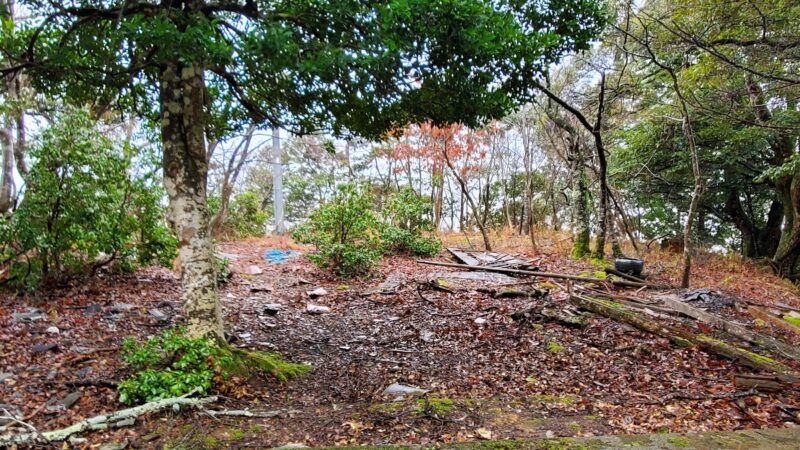
The central part of Hase Takayama Castle is centered around the main enclosure (honmaru). The main enclosure is located at the highest point of the mountaintop and is thought to have housed the lord’s residence and command post.
Several baileys (kuruwa) are arranged around the main enclosure. These baileys are arranged in a stepped pattern, forming a multi-layered defensive structure. Each enclosure is demarcated by earthworks and steep slopes, designed to prevent enemy incursions in stages.
Moats and Vertical Moats
A notable feature of Hase Takayama Castle’s defensive structures is the presence of moats and vertical moats.
Moats are dry moats dug to cut across ridges, serving to prevent enemy incursions along the ridges. Hase Takayama Castle has moats in front of and behind the main enclosure, enhancing the castle’s defensive capabilities.
Vertical moats are moats dug vertically along slopes, restricting enemy lateral movement and limiting attack routes. Multiple vertical moats have been identified on the slopes of Hase Takayama Castle, representing important remains demonstrating Sengoku period castle construction techniques.
Earthworks and Steep Slopes
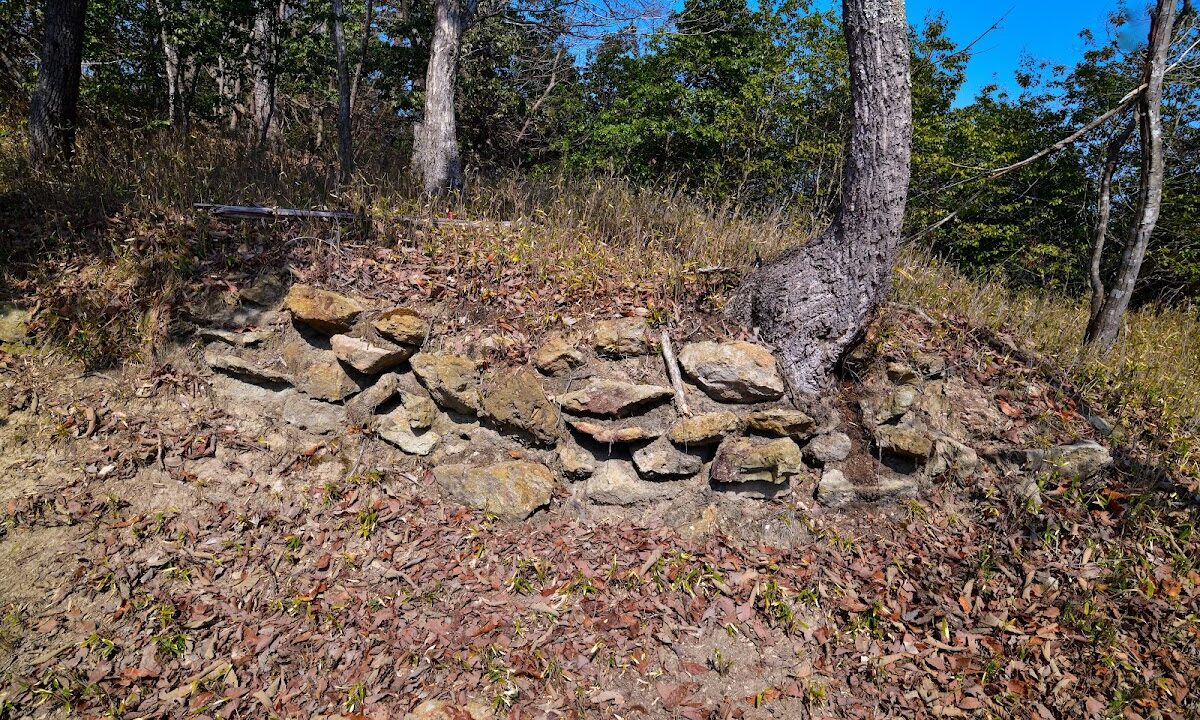
Earthworks were built around each enclosure, functioning as defensive walls. The height of the earthworks varies depending on the location, but traces of them can still be seen today.
A “kirigishi” is an artificial cliff created by cutting the edge of a bailey at a near-vertical angle, a defensive structure designed to make it difficult for enemies to climb. At Hase Takayama Castle, clear kirigishi remain in each bailey, demonstrating a typical structure of a medieval mountain castle.
Koguchi (Entrance)
The koguchi, the entrance to the castle, is one of the most important defensive structures. The koguchi at Hase Takayama Castle has a curved structure to prevent enemies from advancing directly, giving the defenders an advantage.
High earthworks are built around the koguchi, allowing for attacks on invading enemies from the flanks. This type of koguchi structure is an important element demonstrating the development of castle-building technology during the Sengoku period.
Highlights of Hase Takayama Castle
Well-Preserved Remains
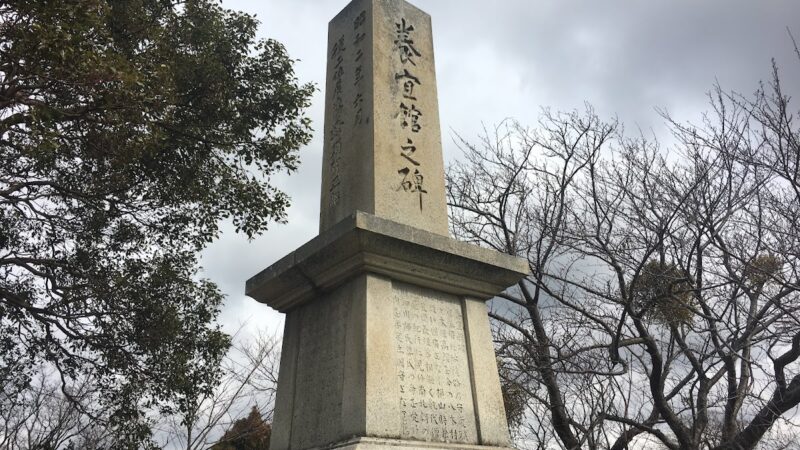
The greatest appeal of Hase Takayama Castle is the relatively well-preserved remains of this medieval mountain castle. Because it escaped later development, the topography and structure from the time of its construction can still be observed today.
In particular, defensive structures such as moats, vertical trenches, and steep slopes remain clearly visible, making it a valuable historical site where you can experience the castle-building techniques of the Sengoku period.
Stunning Views
From the main enclosure at the summit, you can enjoy a panoramic view of the area around Asago City. On a clear day, you can see a wide expanse of the mountains and plains of Tajima Province, giving you a real sense of the castle’s excellent location as a surveillance base.
Enjoying the different scenery in each season, such as the fresh greenery of spring and the autumn foliage, is another attraction.
The Appeal of Mountain Castle Climbing
Climbing to Hase Takayama Castle can also be enjoyed as mountain castle climbing. While some parts of the trail are well-maintained, there are also steep slopes and rocky areas, providing a moderate amount of exercise.
Experiencing firsthand how difficult it was to attack a medieval mountain castle during the climb is one of the great pleasures of exploring mountain castles. ### Connection to Surrounding Historical Heritage
Many medieval mountain castles remain in the area around Asago City, including the ruins of Takeda Castle. Visiting Hase Takayama Castle in conjunction with these other castle ruins will allow you to understand the overall network of mountain castles in Tajima Province.
Access Information
Location
Address: Hase, Santo-cho, Asago City, Hyogo Prefecture
Access by Public Transportation
Access to Hase Takayama Castle by public transportation is difficult. The nearest station is Yanase Station on the JR San’in Main Line, but the distance from the station to the castle ruins is considerable, making walking impractical.
Access by Car
Access by car is the most convenient.
- Bantan Expressway: Approximately 20 minutes from Wadayama IC
- Chugoku Expressway: Approximately 40 minutes from Yoshikawa IC
There may be parking spaces near the trailhead, but it is recommended to check details in advance.
Ascent Route
The hike from the trailhead to the main enclosure at the summit takes approximately 30 minutes to 1 hour. Since trail conditions vary depending on the season and weather, it is important to visit with appropriate equipment.
Precautions for Visiting
- Clothing and Equipment: Please wear appropriate clothing and shoes for hiking. Trekking shoes are recommended as there are slippery sections.
- Drinking Water: There are no water sources on the mountain, so please bring plenty of drinking water.
- Season and Weather: In summer, be careful of bees and venomous snakes. Also, the ground can be slippery during and after rain. Snow is possible in winter.
- Avoid Solo Trips: It is recommended to visit in groups whenever possible.
- Protection of Historical Remains: These are valuable historical sites, so please be careful not to damage them.
- Take Your Trash Home: For the sake of nature conservation, please be sure to take your trash home with you.
Hase Takayama Castle and the Mountain Castle Culture of Tajima
Characteristics of Mountain Castles in Tajima
Tajima Province (present-day northern Hyogo Prefecture) was a region where many mountain castles were built from the medieval period to the Sengoku period. Taking advantage of the rugged mountainous terrain, various powers developed mountain castles as defensive strongholds.
Many of Tajima’s mountain castles, though relatively small, possessed strong defensive structures, and the majority were built by local lords and samurai to protect their territories. Hase Takayama Castle can be understood within this context of Tajima’s mountain castle culture.
Comparison with Takeda Castle Ruins
Takeda Castle Ruins, also located in Asago City, became nationally famous as the “Castle in the Sky,” but Hase Takayama Castle retains a more rustic and unspoiled appearance as a mountain castle.
While Takeda Castle ruins incorporate elements of early modern castles, such as stone walls, Hase Takayama Castle retains the typical form of a medieval mountain castle built of earth. Comparing the two allows us to understand the developmental process of castles.
Significance of Mountain Castle Research
Medieval mountain castles like Hase Takayama Castle often have few records in historical documents, making it necessary to uncover their history through archaeological investigations and the creation of castle layout maps.
In recent years, interest in mountain castles has increased, and there is a movement in various regions to re-evaluate them as regional historical heritage. Hase Takayama Castle, as an important historical site for understanding the history of Tajima, is expected to receive further research and investigation in the future.
Model Course for Visiting Hase Takayama Castle
Half-Day Course
Morning:
- 9:00 Arrive at the trailhead, prepare
- 9:15 Begin climbing
- 10:00 Arrive at the main enclosure, enjoy viewing the ruins and the view
- 11:00 Begin descending
- 11:45 Arrive at the trailhead
Afternoon:
- Visit nearby historical sites and tourist facilities in Asago City
Full-Day Course (Mountain Castle Tour)
Morning:
- Visit Hase Takayama Castle (as per the half-day course above)
Afternoon:
- Visit Takeda Castle Ruins
- Visit other historical sites in Asago City, such as Ikuno Silver Mine
- Enjoy local specialties at roadside stations, etc.
Nearby Tourist Spots
Takeda Castle Ruins
A representative tourist attraction of Asago City, known as the “Castle in the Sky.” This mountain castle boasts well-preserved stone walls, and its appearance floating above a sea of clouds is fantastic. Visiting Hase Takayama Castle in conjunction with this site will allow you to gain a deeper understanding of Tajima’s mountain castle culture.
Ikuno Silver Mine
This mine, where mining continued from the Sengoku period to the Showa period, is now open to the public as a tourist facility. You can tour the mine shafts and learn about the history of the mine.
Asago City Buried Cultural Properties Center “Ancient Asago Museum”
This facility exhibits archaeological materials excavated from ruins within Asago City. You can learn about the local history and deepen your understanding of Hase Takayama Castle.
Izushi, the Little Kyoto of Tajima
Located about 30 minutes by car from Asago City, Izushi is a tourist destination that retains the atmosphere of a castle town. It is famous for the Izushi Castle ruins and Izushi soba noodles, and you can enjoy historical walks and meals.
Future Preservation and Utilization of Hase Takayama Castle
Value as a Historic Site
Hase Takayama Castle is a valuable historical site with well-preserved remains of a medieval mountain castle. Further academic research could provide important clues to understanding the medieval history of Tajima Province.
Utilization as a Local Resource
Developing it as a tourist resource could contribute to regional revitalization. However, excessive tourism could lead to the destruction of the remains, so a balance between preservation and utilization is crucial.
Expectations for Mountain Castle Fans
In recent years, interest in mountain castles has increased, and the number of enthusiasts visiting mountain castles throughout Japan is growing. Hase Takayama Castle also has the potential to become an attractive destination for these mountain castle fans.
An increase in visitors is expected to increase interest in local history and deepen understanding of historical site preservation.
Summary
Hase Takayama Castle is a medieval mountain castle remaining in Asago City, Hyogo Prefecture, and is a valuable historical site that conveys the history of the conflict between the Yamana and Akamatsu clans in Tajima Province. Built on a mountaintop approximately 460 meters above sea level, this castle boasts well-preserved defensive structures such as moats, trenches, and steep slopes, offering a glimpse into the castle-building techniques of the Sengoku period.
Its undeveloped nature as a tourist destination allows visitors to experience the simple, unspoiled beauty of a medieval mountain castle. It’s also an enjoyable mountain climbing experience, offering magnificent views from the summit.
When visiting, please prepare appropriate hiking gear and prioritize safety. The surrounding area contains numerous historical sites, including the ruins of Takeda Castle, allowing visitors to enjoy a journey that delves deeply into the history and culture of Tajima.
Hase Takayama Castle is a hidden gem that history buffs and mountain castle enthusiasts should definitely visit. Why not experience the spirit of the Middle Ages at this castle site nestled in the mountains of Tajima?