Zenbosan Castle (Hyogo Prefecture): History and Highlights | A Thorough Explanation of the Akamatsu Clan’s Mountain Castle Remains
What is Zenbosan Castle?
Zenbosan Castle is a Muromachi period mountain castle located on Mount Zenbosan (elevation 251m) in Kitayama, Mikuchi-cho, Kasai City, Hyogo Prefecture. Built by the Akamatsu clan, who ruled Harima Province, this castle is known for its high historical value, having been deeply involved in the Kakitsu Rebellion, a significant event in Japanese history.
Even today, the remains of stone walls, baileys, and moats are well-preserved on the mountaintop, making it a valuable historical site where one can observe the typical structure of a medieval mountain castle. While Hyogo Prefecture boasts many famous castles such as Himeji Castle and Takeda Castle, Zenbosan Castle is a hidden gem that attracts attention among local history enthusiasts and castle researchers.
History of Zenbozan Castle
Background and Builder
While there are no clear records of the exact construction date of Zenbozan Castle, it is believed to have been built in the mid-Muromachi period. The builder was Akamatsu Gyobu (Samanosuke) Norishige, the eighth son of Akamatsu Yoshinori.
The Akamatsu clan was a powerful daimyo family that ruled the three provinces of Harima, Bizen, and Mimasaka. Akamatsu Yoshinori is known as the figure who built the Akamatsu clan’s golden age. His eighth son, Norishige, built a castle on Zenbozan, a strategically important location within Harima Province, and played a role in solidifying the Akamatsu clan’s power base.
Zenbozan is a relatively low mountain at an elevation of 251m, but it was a strategically important location overlooking the surrounding plains and was in a crucial position to monitor the transportation routes from the Kakogawa River basin to the Harima Plain. This topographical advantage is thought to be the reason it was chosen as the castle site.
The Kakitsu Rebellion and Akamatsu Norishige
The name of Zenbozan Castle is etched in history due to its connection to the Kakitsu Rebellion, which occurred in the first year of the Kakitsu era (1441). This incident was a rare assassination of a shogun in Japanese history, in which Ashikaga Yoshinori, the 6th shogun of the Muromachi shogunate, was assassinated by Akamatsu Mitsusuke.
Akamatsu Norishige played a crucial role as one of the perpetrators of this assassination plot. On June 24th, the first year of the Kakitsu era, Akamatsu Mitsusuke, the governor of Harima Province, invited Shogun Ashikaga Yoshinori to his residence and carried out the assassination during a banquet. Akamatsu Norishige was also present at the time, and after the successful assassination, he returned to Harima without being pursued by the enemy.
The Yamana Clan’s Attack and the Fall of the Castle
Following the unprecedented incident of assassinating a shogun, the shogunate immediately formed an army to suppress the Akamatsu clan. A large army led by Yamana Mochitoyo (later Yamana Sozen) invaded Harima Province, capturing the Akamatsu clan’s strongholds one after another.
Akamatsu Mitsusuke and Norishige resisted by holding out in Shiroyama Castle (present-day Tatsuno City, Hyogo Prefecture), but because the main force was concentrated at Shiroyama Castle, they were unable to adequately defend Zenbozan Castle. As a result, it is said that Zenbozan Castle fell easily to the Yamana forces.
The Akamatsu clan’s defeat in the Kakitsu Rebellion was decisive; Akamatsu Mitsusuke committed suicide, Akamatsu Norishige was killed, and the Akamatsu clan’s power was temporarily annihilated. It is believed that Zenbozan Castle was also abandoned at this time.
The Akamatsu Clan and Harima Afterwards
After the Kakitsu Rebellion, Harima Province came under the control of the Yamana clan, but the Akamatsu clan did not completely perish. The retainers of the Akamatsu clan continued their efforts to restore the clan, and regained their power during the turmoil of the Ōnin War (1467-1477).
In particular, Akamatsu Masanori, favored by Shogun Ashikaga Yoshimasa, was reinstated as the governor of Harima Province, successfully restoring the Akamatsu clan. However, Zenbōzan Castle was never used again, and the castle ruins were buried in history.
Zenbōzan Castle’s Layout and Structure
Location and Topography as a Mountain Castle
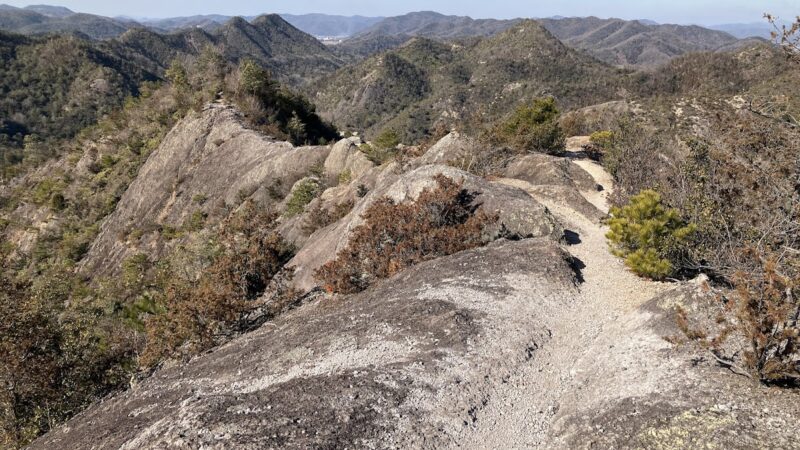
Zenbōzan Castle is a typical mountain castle built around the summit of Mount Zenbō, which is 251m above sea level. The relative height difference is approximately 200m, and the steep slopes functioned as a natural defensive wall.
Mountain castles are defensive structures that skillfully utilize the terrain, and Zenbōzan Castle is no exception. Centered around the main enclosure at the summit, multiple enclosures are arranged along the ridge, and moats are provided at key points. This layout is based on the concept of “depth defense,” which aims to prevent enemy incursions in stages.
Major Remains
Main Enclosure (Honmaru)
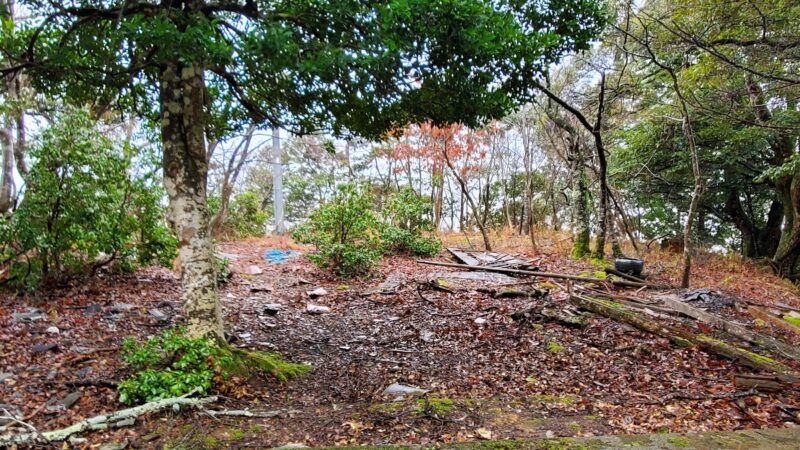
Located at the summit of Mt. Zenbo, the main enclosure is the core of the castle. A relatively flat, leveled area stretches out, suggesting the lord’s residence and other important facilities were located here. A clear flat area can still be seen today, and traces of earthworks remain around it.
Stone Walls
The stone walls are a distinctive feature of Zenbo Castle. Remarkably well-preserved for a mountain castle from the Muromachi period, they are valuable resources for understanding the stonework techniques of the time. The stone walls were constructed using a technique called “nozurazumi,” where natural stones are stacked as they are, exhibiting a typical style of medieval castles.
Enclosures (Kuruwa)
Several enclosures are arranged in a stepped pattern around the main enclosure. These enclosures are thought to have been used as garrisons for soldiers and storage areas for supplies. Each enclosure is demarcated by a cliff (an artificial steep slope), a design feature intended to enhance defensibility.
Moats
Moats, constructed to cut off the ridgeline, are important defensive structures that prevent enemy incursions. Multiple moats have been identified at Zenbozan Castle, with particularly deep moats along the ridgeline leading to the main enclosure. These moats blocked the path of enemy forces advancing along the ridge, creating a favorable battle environment for the defenders.
Earthworks and Vertical Moats
Earthworks were built around the enclosures to strengthen their defenses. Vertical moats (ditches running vertically) were also dug on the slopes, likely preventing attacks from the sides and serving as rainwater drainage channels.
Characteristics of the Castle Layout
The layout of Zenbozan Castle exhibits typical characteristics of a mountain castle from the mid-Muromachi period. The castle exhibits elements that demonstrate the level of castle-building technology of the time, such as its centripetal structure centered on the main enclosure, the arrangement of baileys utilizing the ridgeline, and the partitioning by moats.
Particularly noteworthy is the defensive design that makes maximum use of the terrain. The steep slopes, natural bedrock, and ridgeline shapes are skillfully incorporated, demonstrating ingenuity in creating maximum defensive effect with minimal effort.
Highlights of Zenbozan Castle
Well-Preserved Remains
The greatest appeal of Zenbozan Castle is that, even after approximately 580 years since its construction, the main remains are still well-preserved. In particular, the stone walls, moats, and the arrangement of baileys are clearly observable, making it an excellent resource for understanding the structure of medieval mountain castles.
In recent years, local history enthusiasts and castle researchers have been conducting surveys and preservation activities of the remains, and the access routes are being improved. However, since full-scale historical site development has not yet been carried out, hiking equipment is necessary when visiting.
Views and Historical Landscape
From the summit of Mt. Zenbo, a magnificent panoramic view of the Harima Plain unfolds. On a clear day, you can see from the Kakogawa River basin to the Harima Sea, allowing you to imagine the view that Akamatsu Norishige once commanded from this very spot.
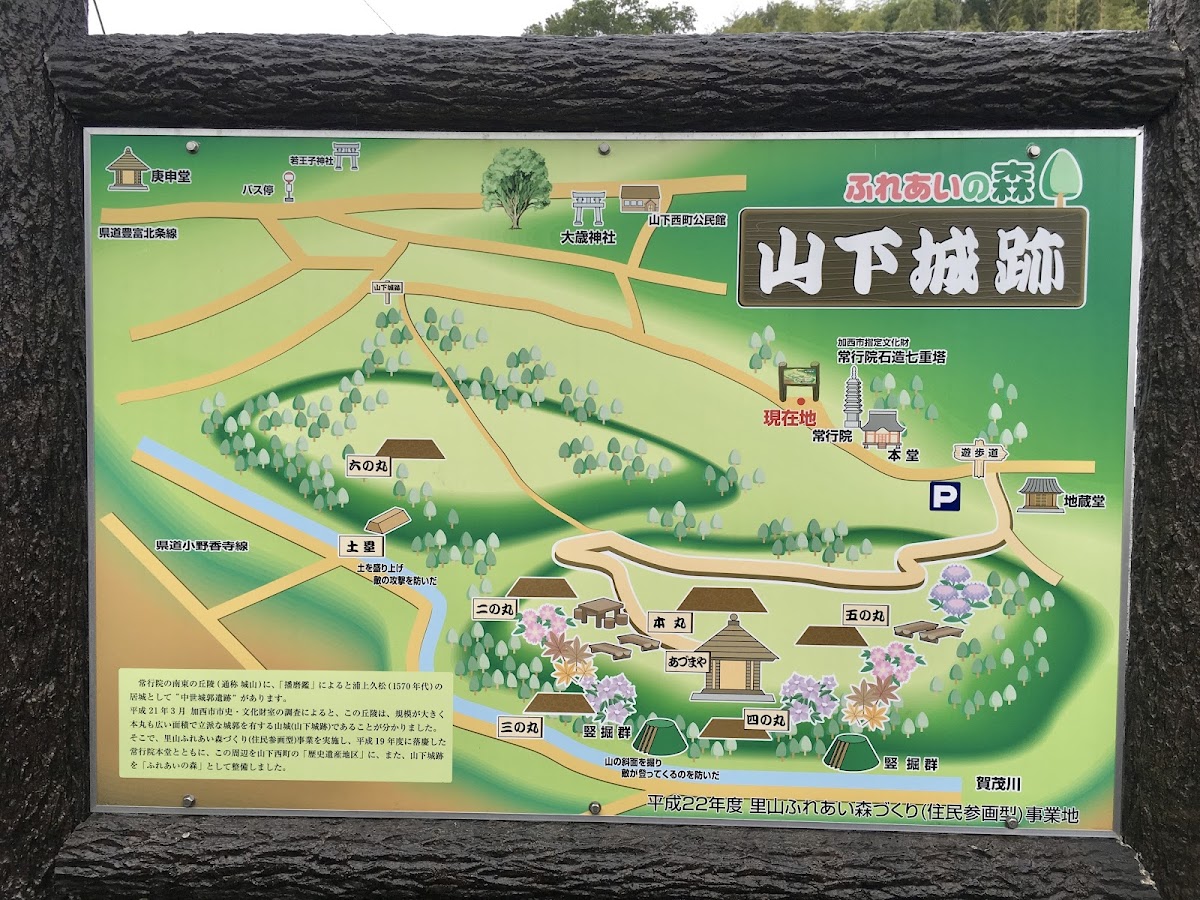
Nearby, other medieval castles of Harima, such as Dokiyama Castle, Yamashita Castle, and Tenjinyama Castle (Kakogawa City), are scattered, making it an interesting location for understanding the castle network of the time.
Historical Stage of the Kakitsu Rebellion
The greatest significance of visiting Zenboyama Castle lies in standing on the stage of the Kakitsu Rebellion, a crucial event in Japanese history. This was the residence of Akamatsu Norishige, who was involved in the unprecedented assassination of a shogun, allowing you to feel the drama of history firsthand.
Walking through the castle ruins, you can deepen your understanding of history by reflecting on Norishige’s feelings upon his return from Kyoto and the tense situation when he was attacked by the Yamana army.
Access and Visiting Information for Zenbozan Castle
Location
Address: Kitayama, Mikuchi-cho, Kasai City, Hyogo Prefecture (Zenbozan)
Access Methods
Public Transportation
The nearest station is Hojo-machi Station on the Hojo Railway, but it is approximately 4km from the station to the castle ruins, taking more than an hour on foot. Taking a taxi is more practical.
By Car
It is approximately 15 minutes from the Kasai IC on the Chugoku Expressway. There are a few parking spaces near the trailhead, but there is no designated parking area, so be careful not to obstruct other traffic when parking on the roadside.
Ascent Route
From the trailhead to the main enclosure at the summit, it takes about 30-40 minutes to climb the mountain trail. The path is relatively clear, but there are steep sections, so wearing hiking boots or trekking shoes is recommended.
Especially after rain, the path can become slippery, so it is recommended to check the weather before visiting. Furthermore, since vegetation can become overgrown in the summer, making the ruins difficult to see, visiting from autumn to spring is recommended.
Points to Note When Visiting
- As the site is not maintained as a historical site, there are very few signs or explanatory plaques.
- Please prepare drinking water and food in advance.
- There are areas where cell phone reception is poor.
- Avoid visiting alone; visiting in groups is recommended.
- To protect the ruins, please do not climb on the stone walls or dig unnecessarily.
- Be careful of venomous snakes and wasps in the summer.
Surrounding Castles and Medieval Historical Sites in Harima
Nearby Castles
Many castle ruins that tell the story of the medieval period of Harima Province are scattered around Zenbozan Castle.
Dokiyama Castle (approx. 2.7km): Like Zenbozan Castle, it is thought to be a castle related to the Akamatsu clan.
Yamashita Castle (approx. 3.8km): A small mountain castle built by a local lord in Harima.
Tenjin-yama Castle (Kakogawa City) (approx. 5.7km): A medieval mountain castle located in Kakogawa City, situated at a strategic point overlooking the Harima Plain.
Visiting these castles together will provide a deeper understanding of the network of medieval castles in Harima and the Akamatsu clan’s system of rule.
Historical Sites Related to the Akamatsu Clan in Harima
Many historical sites related to the Akamatsu clan remain within Harima Province.
Shirahata Castle (Kamigori-cho, Ako-gun, Hyogo Prefecture): Known as the main castle of the Akamatsu clan, it remained an important base even after the Kakitsu Rebellion.
Okishio Castle (Himeji City, Hyogo Prefecture): A large mountain castle that served as the Akamatsu clan’s base after their restoration.
Shiroyama Castle (Tatsuno City, Hyogo Prefecture): This is the castle where Akamatsu Mitsusuke and Norishige last holed up during the Kakitsu Rebellion.
Visiting these historical sites will clarify the historical significance of Zenbozan Castle.
Status of Zenbozan Castle’s Cultural Property Designation
Currently, Zenbozan Castle has not been designated as a cultural property by the national government, Hyogo Prefecture, or Kasai City. However, as a castle involved in the important historical event of the Kakitsu Rebellion, and given the good state of preservation of its remains, there is a possibility of cultural property designation depending on future investigations and evaluations.
Local history research groups and castle enthusiast groups are continuing their research activities, and the historical value of Zenbozan Castle is being re-evaluated.
Significance of Visiting Zenbozan Castle
As a Place for Historical Learning
Zenbozan Castle is an important historical site for learning about the political history of the Muromachi period, especially the Kakitsu Rebellion. Standing on the actual site of a historical event that appears in textbooks deepens understanding of history and increases motivation to learn.
As a Resource for Medieval Castle Research
For castle researchers, Zenbozan Castle is a valuable resource for understanding the structure of mountain castles from the mid-Muromachi period. The remains, such as stone walls, moats, and baileys, are well-preserved, allowing for concrete observation of the castle-building techniques and defensive philosophies of the time.
As a Regional Historical Heritage Site
For Kasai City, Zenbozan Castle is an important heritage site symbolizing the region’s history and culture. Its use in preservation activities by local residents and as a site for historical learning contributes to the formation of the region’s identity.
Summary
Zenbozan Castle is a Muromachi period mountain castle located on Mount Zenbozan (251m above sea level) in Kasai City, Hyogo Prefecture. It was built by Akamatsu Norishige, the eighth son of Akamatsu Yoshinori. It is historically significant as the residence of Norishige, who was involved in the assassination of Shogun Ashikaga Yoshinori during the Kakitsu Rebellion (1441), and is also a tragic castle that fell to the subsequent attack by the Yamana clan.
Even today, the remains of the castle, such as stone walls, baileys, and moats, are well-preserved, making it a valuable historical site for understanding the structure of medieval mountain castles. Although not designated as a cultural property, its historical value is high, and it is an indispensable resource for studying the medieval history of Harima.
While Hyogo Prefecture boasts numerous famous castles such as Himeji Castle and Takeda Castle, smaller castles like Zenbozan Castle, which tell the story of local history, each possess their own unique value and charm. For history enthusiasts and castle fans, Zenbozan Castle is a hidden gem well worth a visit.
If you are interested in the history of Harima, want to experience a medieval mountain castle firsthand, or want to learn more about the Kakitsu Rebellion, please visit Zenbozan Castle. You’ll be able to spend a precious time reflecting on the historical drama of approximately 580 years ago, while enjoying the view of the Harima Plain from the mountaintop.