A Complete Guide to the History and Highlights of Toyooka Castle (Hyogo Prefecture) | From the Yamana Clan to Miyabe Tsuguyoshi
What is Toyooka Castle? | A Hilltop Castle Built at a Strategic Point in Tajima Province
Toyooka Castle was a Japanese castle located in Toyooka, Kinosaki District, Tajima Province (present-day Kyomachi, Toyooka City, Hyogo Prefecture). Also known as Kame Castle, Kizaki Castle, and Kinosaki Castle, it is known as a terraced hilltop castle built on Mt. Kame, approximately 48-49 meters above sea level.
Currently, the Toyooka Castle ruins are maintained as Jinmuyama Park, a place of recreation for citizens, but it once played an important role as the political and military center of the Tajima region. Its convenient location within walking distance of Toyooka Station is also a notable feature, and because it was situated on a hill approximately 40 meters high, it was a strategically important location overlooking the surrounding area.
Origin of Toyooka Castle’s Alternate Names
The reason Toyooka Castle is called “Kamejo” (Turtle Castle) is derived from the place name Kameyama (Turtle Mountain) where the castle was built. The names “Kizaki Castle” and “Shirosaki Castle” are related to the fact that this area was formerly called Shirosaki. After Hashiba Hideyoshi’s conquest of Tajima, when Miyabe Tsuguyoshi became the lord of the castle, the place name was changed to “Toyooka,” and consequently, the castle’s name became established as Toyooka Castle.
History of Toyooka Castle | From the Muromachi Period to the Early Edo Period
Construction Period: Built by Yamana Mochitoyo (Sozen)
According to tradition, the origins of Toyooka Castle date back to the Eikyo era (1429-1441). It is said that Yamana Mochitoyo, later Yamana Sozen, a shugo daimyo (provincial governor) of the Muromachi period, built Kizaki Castle on Kameyama as an outpost of Konosumiyama Castle. The Yamana clan was a powerful daimyo family that held sway primarily in Tajima Province. They were a prestigious family, producing Yamana Sozen, known as the commander-in-chief of the Western Army during the Onin War. Toyooka Castle served as one of the Yamana clan’s important bases in their control of Tajima.
Sengoku Period: As the Yamana Clan’s Residence
Throughout the Sengoku period, Toyooka Castle remained under the control of the Yamana clan. During this time, Tajima Province was the Yamana clan’s base, and Toyooka Castle functioned as part of a castle network centered around Arikoyama Castle.
The Yamana clan ruled Tajima Province for generations, but their power gradually declined amidst the chaos of the Sengoku period. In particular, with the expansion of Oda Nobunaga’s power, the Tajima region was swept up in the wave of national unification.
1580 (Tensho 8): Hashiba Hideyoshi’s Conquest of Tajima
The most important turning point in the history of Toyooka Castle was Hashiba Hideyoshi’s Second Conquest of Tajima in 1580 (Tensho 8). Hashiba Hideyoshi (later Toyotomi Hideyoshi), acting on orders from Oda Nobunaga, advanced his army to conquer the Yamana clan of Tajima Province.
This conquest resulted in the defeat of Yamana Suketoyo, who ruled Tajima Province, and the Yamana clan was temporarily destroyed. After the fall of Arikoyama Castle, Toyooka Castle also came under Hideyoshi’s control.
Miyabe Keijun’s Entry and Castle Renovation
After the conquest of Tajima, Hideyoshi appointed his subordinate Miyabe Keijun as the lord of Toyooka Castle with a 20,000 koku stipend. Miyabe Tsuguyoshi was an excellent military commander who dedicated himself to the development of the castle and the surrounding castle town.
The main policies implemented by Miyabe Tsuguyoshi upon becoming the lord of Toyooka Castle were as follows:
- Large-scale renovation and development of the castle: Transforming the castle from a mountain castle with many features into a modern castle.
- Development of the castle town: Promoting commercial development and laying the foundation for Toyooka as a town.
- Change of place name: Renaming from Kinosaki to Toyooka symbolized the dawn of a new era.
Under Miyabe Tsuguyoshi’s rule, Toyooka Castle transformed from a mere military base into the political and economic center of the region.
Changes in successive castle lords
After Miyabe Tsuguyoshi, Toyooka Castle saw several successive lords. Here is a chronological introduction to the main castle lords:
- Miyabe Tsuguyoshi (1580-): Entered the castle as a general under Hideyoshi and carried out castle improvements.
- Kinoshita Shigekata: Served as castle lord under the Toyotomi regime.
- Bito Tomosada: Briefly resided at the castle.
- Sugihara Nagafusa: Around the time of the Battle of Sekigahara.
- Akashi Norizane: Castle lord in the early Edo period.
- Fukuhara Michitaka: Responsible for the administration of Tajima Province.
These castle lords were involved in the administration of Toyooka Castle and the Tajima region in their respective eras.
Abandonment of the Castle and Establishment of the Toyooka Jinya
In the Edo period, Toyooka Castle was abandoned in 1669 (Kanbun 9). This was an era when many castles were abandoned due to the shogunate’s policies, such as the “One Castle Per Province” decree.
In Kanbun 8 (1668), the year before the castle’s abandonment, Kyogoku Takamori was transferred from Tango Tanabe to Toyooka. Since the Kyogoku clan were daimyo without a castle, they did not establish Toyooka Castle on the mountaintop, but instead built a new Toyooka Jinya (fortified residence) at the foot of the mountain to govern their domain.
The Toyooka Jinya was established where the current Toyooka City Library stands and became the base of the Kyogoku clan’s rule. Although the castle’s functions were lost, Toyooka, as a town centered around the Jinya, continued to develop throughout the Edo period.
Structure and Layout of Toyooka Castle
Characteristics as a Hilltop Castle
Toyooka Castle is classified as a tiered hilltop castle. The main keep was located on a hill 48-49 meters above sea level, with a tiered arrangement of baileys (kuruwa) surrounding it. The location, approximately 40 meters above sea level, was ideal for defense while also being convenient for everyday use.
The advantages of a hilltop castle include:
- Defensiveness: Its higher elevation makes it easier to defend against enemy attacks.
- Convenience: Because it’s not as high as a mountain castle, daily visits to the castle and the transport of supplies are easier.
- View: The ability to overlook the surrounding area is advantageous for information gathering and surveillance.
Castle Layout and Remains
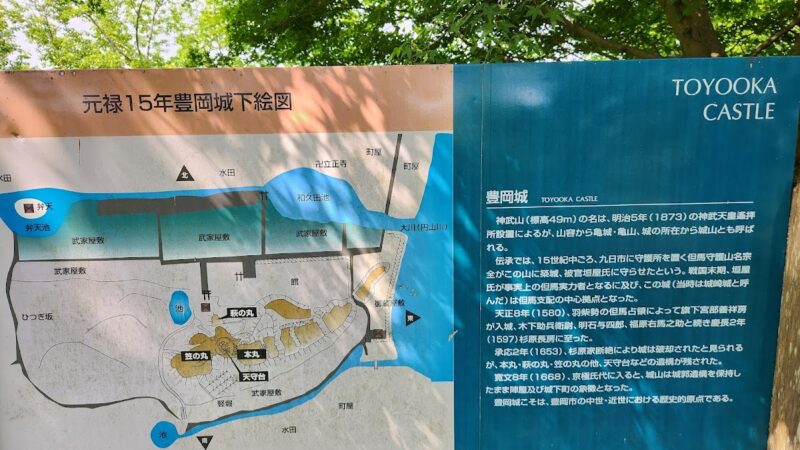
Toyooka Castle’s fortifications developed gradually from a medieval mountain castle to an early modern castle. It is believed that renovations by Miyabe Tsuguyoshi included improvements to the stone walls and expansion of the baileys.
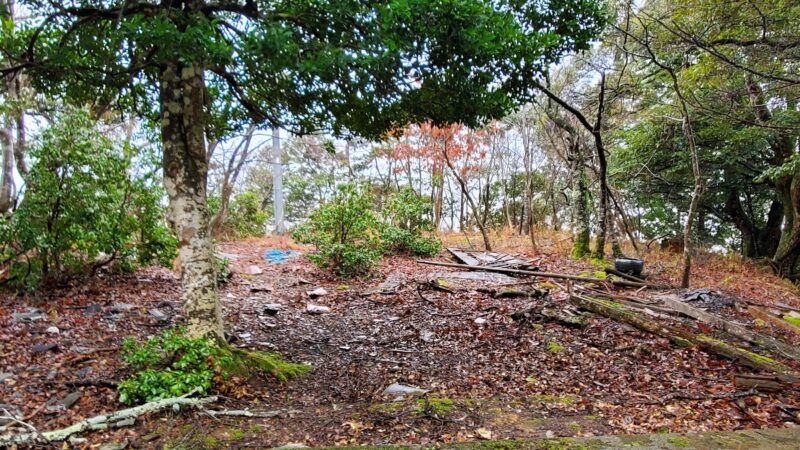
The current Jinmuyama Park has undergone extensive alterations, and there are not many notable remains. However, by observing the topography, one can still perceive traces of the former bailey layout and cliffs.
Main features of the castle structure:
- Honmaru: Located on the mountaintop, it housed the lord’s residence and important facilities.
- Ninokuruwa and Sannomaru: Arranged in a stepped fashion surrounding the Honmaru.
- Kuruwa: A structure consisting of multiple flat areas arranged in steps.
- Jokamachi: Spread out at the foot of the mountain, it developed as a commercial and residential area.
Highlights and current state of Toyooka Castle
Development as Jinmuyama Park
Currently, the Toyooka Castle ruins are enjoyed by citizens as Jinmuyama Park. While many of the castle remains were lost during the park’s development, it remains a cherished historical site for the local community.
Walking paths are maintained within the park, creating an environment where visitors can easily stroll. In spring, cherry blossoms bloom, making it a lively place of relaxation for citizens. The sight of the former castle ruins being used as a peaceful park today reflects the changing times.
Remaining Structures and Points of Interest
While the remains of Toyooka Castle are limited, there are several points of interest to observe:
Observing the Topography: You can discern flat areas that appear to be the remains of baileys and traces of steep slopes from the topography. Those familiar with castles will enjoy imagining the castle’s layout in its heyday.
Views: From the mountaintop, you can enjoy a panoramic view of Toyooka city. The former lords of the castle likely gazed upon this landscape while watching over their territory. The scenery, a blend of the Tajima mountains and the city, allows visitors to appreciate the strategic importance of the castle at the time.
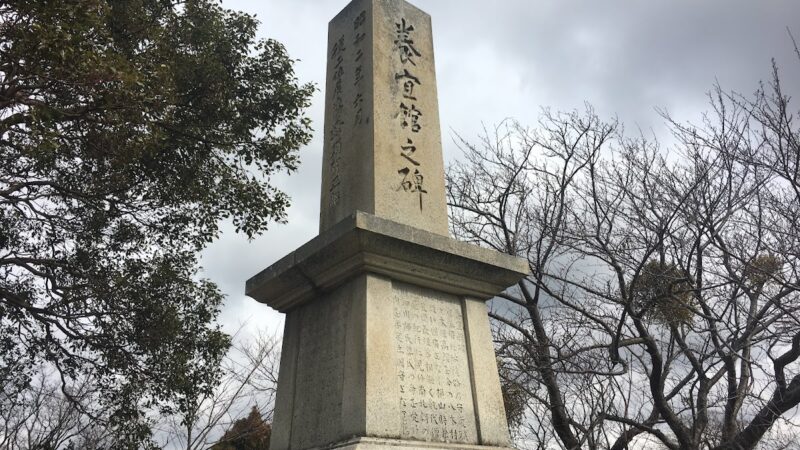
Stone Monuments and Information Boards: Information boards about Toyooka Castle are installed within the park, allowing visitors to learn about the castle’s history.
Related Historical Sites in the Surrounding Area
When visiting Toyooka Castle, we recommend also visiting the related historical sites in the surrounding area:
Toyooka Jinya Site: The site of the Toyooka Jinya (fortified residence) is where the Toyooka City Library now stands. The library’s parking lot can also be used as an entrance to Toyooka Castle.
Arikoyama Castle: Arikoyama Castle, the base of the Yamana clan, is a mountain castle located in Toyooka City, and retains authentic mountain castle remains. It is an important castle for understanding the history of Toyooka Castle.
Kinosumiyama Castle: This castle belonged to the Yamana clan and was the predecessor of Toyooka Castle, allowing visitors to feel the historical connection.
Kinosaki Onsen: Kinosaki Onsen, a popular tourist spot in Toyooka City, is close to Toyooka Castle, making it possible to combine castle sightseeing with hot springs.
Access and Visiting Information for Toyooka Castle
Access by Train
JR Toyooka Station is the nearest station. It takes approximately 15-20 minutes on foot from the station to the Toyooka Castle ruins (Jinmuyama Park). Toyooka Station is served by the San’in Main Line and the Kyoto Tango Railway, providing access from Kyoto and Tottori.
- From Kyoto: Approximately 2 hours 30 minutes by Limited Express “Kinosaki”
- From Osaka: Approximately 3 hours by Limited Express
- From Tottori: Approximately 1 hour 30 minutes by Limited Express
Access by Car and Parking
If traveling by car, it’s approximately 10 minutes from the Toyooka IC on the Kita-Kinki Toyooka Expressway.
Parking: You can use the parking lot of the Toyooka City Library. The library is built on the site of the Toyooka Jinya (fortified residence), and there is a path leading from there to Jinmuyama Park (Toyooka Castle Ruins). Parking is free.
Visiting Hours and Fees
Jinmuyama Park is always open and admission is free. Even with a leisurely stroll, 30 minutes to 1 hour is sufficient for a visit. Because there are few remaining structures, unless you are a castle enthusiast, your visit will likely be brief.
Points to Note When Visiting
- Few Remains: Large-scale stone walls and buildings do not remain, so do not have excessive expectations.
- Comfortable Clothing: Although it is a park, it is a hilly area, so comfortable walking shoes are recommended.
- Utilize the Information Boards: Reading the information boards on site will give you a deeper understanding of the historical background.
- Choose the Right Season: The scenery is especially beautiful during the cherry blossom season in spring and the autumn foliage season.
Historical Significance of Toyooka Castle
Strategic Importance in Tajima Province
Toyooka Castle was located in the heart of Tajima Province, a crucial transportation hub connecting the San’in region and Kyoto. This location was extremely important both militarily and economically, which is why successive rulers valued it.
For the Yamana clan, it was one of the bases for maintaining their shugo territory, and for Hashiba Hideyoshi, it was an important castle for establishing his rule after the conquest of Tajima. Miyabe Tsuguyoshi’s development of the castle and castle town laid the foundation for Toyooka’s development as a central city in the Tajima region. ### A Castle Showing the Transition from the Medieval to the Early Modern Period
Toyooka Castle is a prime example of the transition from a medieval mountain castle to an early modern flatland castle. While Kizaki Castle during the Yamana clan era was a typical medieval mountain castle, renovations by Miyabe Tsuguyoshi strengthened its characteristics as an early modern castle.
This change reflects the development of castle architecture during the transition from the Sengoku period to the Edo period. The shift from a defense-oriented mountain castle to a castle serving as a political and economic center was a change in response to the demands of the times.
Origin of the Place Name Toyooka
The current place name “Toyooka” was changed from “Kinosaki” when Miyabe Tsuguyoshi became the lord of the castle. This name change is thought to have embodied the beginning of a new era and the meaning of a rich hill.
The change of place name was not merely a change of designation, but an important act symbolizing a change of ruler and the start of a new administration. The name Toyooka continues to this day, demonstrating the lingering influence of Miyabe Tsuguyoshi.
Historical Figures Associated with Toyooka Castle
Yamana Mochitoyo (Yamana Sozen)
Yamana Mochitoyo, considered the founder of Toyooka Castle, was a powerful daimyo (feudal lord) of the Muromachi period, later known as Yamana Sozen. During the Onin War, he served as the commander-in-chief of the Western Army, confronting the Eastern Army led by Hosokawa Katsumoto.
The Yamana clan boasted such power that they were called the “Sixth-One Lord,” and at one point held the position of governor of 11 of the 66 provinces of Japan. Toyooka Castle was built as part of the Yamana clan’s power base.
Miyabe Tsuguyoshi (Miyabe Zenshobo)
Miyabe Tsuguyoshi was a samurai who served as a senior retainer of Hashiba Hideyoshi. Originally from Omi Province, he fought in various battles under Hideyoshi. After the conquest of Tajima Province, he became the lord of Toyooka Castle and dedicated himself to the development of the castle and its surrounding town.
Miyabe Tsuguyoshi was not merely a military commander, but also demonstrated exceptional administrative skills. The development of Toyooka owes much to his achievements, and he is recognized as the person who laid the foundation for present-day Toyooka City.
Kyogoku Takamori
Kyogoku Takamori, who built the Toyooka Jinya (fortified residence), was a daimyo transferred from Tango Tanabe to Toyooka. The Kyogoku clan was a prestigious family based in Omi Province. Although they were oppressed by the Asai clan during the Sengoku period, they revived as daimyo during the Edo period.
Under the Kyogoku clan’s rule, Toyooka achieved stable development throughout the Edo period. The town planning centered around the Jinya formed the prototype for the current Toyooka city center.
The Appeal of Visiting Toyooka Castle
A Place to Feel Historical Romance
Although few remains of Toyooka Castle exist, it is a place where one can feel the flow of history from the Yamana clan to Miyabe Tsuguyoshi, and then to the Kyogoku clan. For castle enthusiasts, standing on the site and imagining the past is of great value.
The view from Jinmuyama Park allows you to imagine the scenery seen by the castle’s former lords. Looking out over the town of Toyooka, surrounded by the mountains of Tajima, you’ll truly understand why this area was a strategically important location.
As part of Toyooka sightseeing
Toyooka City boasts a variety of tourist attractions, including Kinosaki Onsen and the Stork Sanctuary Park. Combining a visit to the Toyooka Castle ruins with these attractions will make for a more fulfilling trip.
For history buffs, a “Tajima Castle Tour,” visiting surrounding castles such as Arikoyama Castle and Izushi Castle, is also appealing. Many castles associated with the Yamana clan remain in the Tajima region, allowing you to experience the flow of history from the medieval to the early modern period.
Interacting with locals
Jinmuyama Park is also a place of relaxation for locals. If you have the opportunity to converse with locals during your stroll, you might hear interesting stories about Toyooka’s history and culture.
Learning about the history rooted in the region has value beyond mere sightseeing. The history of Toyooka Castle is a source of pride for the current citizens of Toyooka.
Summary: Historical Value and Modern Significance of Toyooka Castle
Toyooka Castle (Toyooka City, Hyogo Prefecture) is a castle that experienced a turbulent history, from its founding by Yamana Mochitoyo during the Muromachi period, to Hashiba Hideyoshi’s conquest of Tajima, to its renovation by Miyabe Tsuguyoshi, and finally to its abandonment. Its alternative names, Kamejo (Turtle Castle) and Kizakijo (Kizaki Castle), also reflect the memories of each era.
Currently, it is a popular park known to citizens as Jinmuyama Park, and although no significant remains are left, it is an important historical site indispensable to understanding the history of Tajima Province. The view of Toyooka town from the 48-meter-high hill conveys the scenery seen by the former castle lords.
It is easily accessible on foot from Toyooka Station, and parking is available at the Toyooka City Library, making it a convenient castle site to visit. Combining a visit with nearby tourist attractions such as Kinosaki Onsen and Arikoyama Castle will allow for a deeper understanding of the history and culture of the Tajima region. The history of Toyooka Castle represents a part of the history of Japanese castles during the transitional period from the medieval to the early modern era. The story of this castle, involving historical figures such as the Yamana clan, Hashiba Hideyoshi, Miyabe Tsuguyoshi, and the Kyogoku clan, offers many lessons for us living today.