Komayama Castle (Hyogo Prefecture) Complete Guide: Akamatsu Clan Mountain Castle Remains and Highlights of the Visit
What is Komayama Castle?
Komayama Castle is a medieval mountain castle located in Inoue, Kamigori-cho, Ako-gun, Hyogo Prefecture. Built on the summit of Mt. Ikoma (263m above sea level), this castle functioned as an important military base in the Harima region from the Nanboku-cho period to the Sengoku period. Currently protected as a Kamigori-cho designated cultural property, it has well-maintained hiking trails and is a popular historical site for castle enthusiasts and history buffs.
Built in a strategic location facing the Chikusa River, Komayama Castle played an important role as a subsidiary castle protecting the western side of Shirahata Castle, the Akamatsu clan’s base. Taking advantage of the distinctive topography, where the mountaintop is divided into two peaks, it was designed as a sturdy mountain castle with a structure of separate enclosures within a single castle.
History of Komayama Castle
Construction during the Nanboku-cho Period
The construction of Komayama Castle is estimated to have taken place during the Nanboku-cho period. According to tradition, Komayama Castle was built by Akamatsu Norisuke, the third son of Akamatsu Enshin. The Akamatsu clan was a powerful samurai family based in Harima Province and played an important role during the turbulent period of the Northern and Southern Courts.
Akamatsu Enshin raised an army in 1333 (Genkō 3) after receiving an imperial decree from Emperor Go-Daigo, and contributed to the overthrow of the Kamakura Shogunate. Afterward, he became the governor of Harima, Bizen, and Mimasaka provinces, establishing a strong power base in the region. Komayama Castle is thought to have been built as a western stronghold to defend Shirahata Castle (Akamatsu, Kamigōri-chō), the Akamatsu clan’s main castle.
Changes in the Sengoku Period
During the Sengoku period, the rulers of Komayama Castle changed over time. During the Tenshō era (1573-1592), it became part of the territory of the Ukita clan, the rulers of the Chūgoku region, and records show that the castle was defended by their vassals, the Osafune clan.
During this period, the Harima region became the stage for fierce battles between the expanding power of Oda Nobunaga and the resistance of the Mori clan. Ukita Naoie defected from the Mori clan and sided with the Oda, expanding his power in western Harima. Komayama Castle continued to function as an important military base amidst this turmoil of the Sengoku period.
Relationship with the Amuro Clan
Local traditions also point to a connection with the Amuro clan. The Amuro clan were local lords of the Harima region and served under the Akamatsu clan. Local researchers have suggested the possibility that the Amuro clan was involved in the operation and defense of Komayama Castle.
Layout and Remains of Komayama Castle
Structure of a Single Castle with Separate Enclosures
The most distinctive feature of Komayama Castle is its structure of a single castle with separate enclosures, utilizing the two peaks of the mountaintop as independent enclosures. This design was a highly advanced defensive technique for medieval mountain castles, offering the advantage that even if one enclosure fell, resistance could continue on the other.
The main enclosure (Kuruwa I1) is located on the eastern peak, and the secondary enclosure (Kuruwa I2) is situated on the western peak. The two enclosures are separated by a moat, creating a structure that allows for coordinated defense while maintaining independence.
Structure of the Main Enclosure (Honmaru)
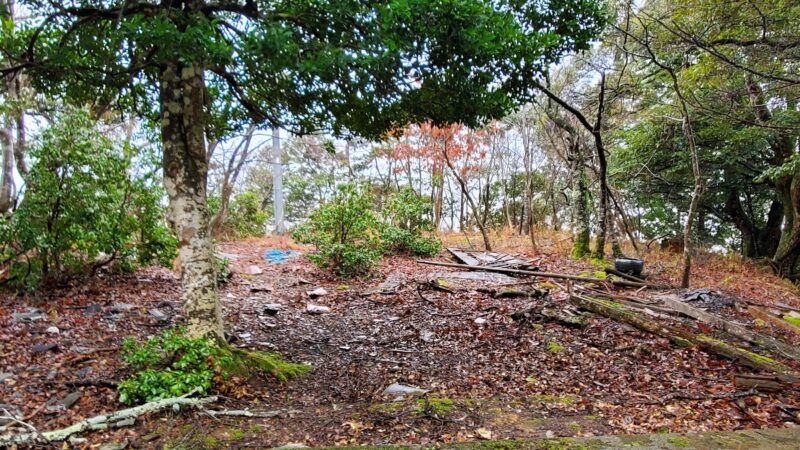
Located on the mountaintop at an elevation of 263m, the main enclosure is the central part of Komayama Castle. Built on a steep mountain with a relative elevation of approximately 230m, this enclosure is surrounded by multiple lower enclosures, forming a multi-layered defensive structure.
A gate (koguchi) opens from the main enclosure towards Kuruwa I2 to the west, serving as the main entrance. Traces of stonework remain around the gate, suggesting the structure of the castle gate in its heyday. The interior of the main enclosure is relatively flat, and leveled areas where buildings are presumed to have stood can be observed.
Placement of Moats
The key to Komayama Castle’s defense lies in the moats placed in multiple locations. A moat is a dry moat dug to cut across a ridge, serving to prevent enemy intrusion and to demarcate the areas between enclosures.
The moat between the main enclosure and the secondary enclosure is particularly large, reaching several meters in depth. This moat is still clearly visible today and is one of the best-preserved remains of Komayama Castle. Furthermore, moats were also constructed in multiple locations along the ridge, creating a layout designed to progressively hinder enemy advances.
Stone Masonry Remains
At Komayama Castle, traces of stone masonry remain in various places. These were installed to reinforce the edges of the enclosures and strengthen the areas around the entrance gates. Stone masonry is a common feature in mountain castles in the Harima region, and Komayama Castle follows this tradition.
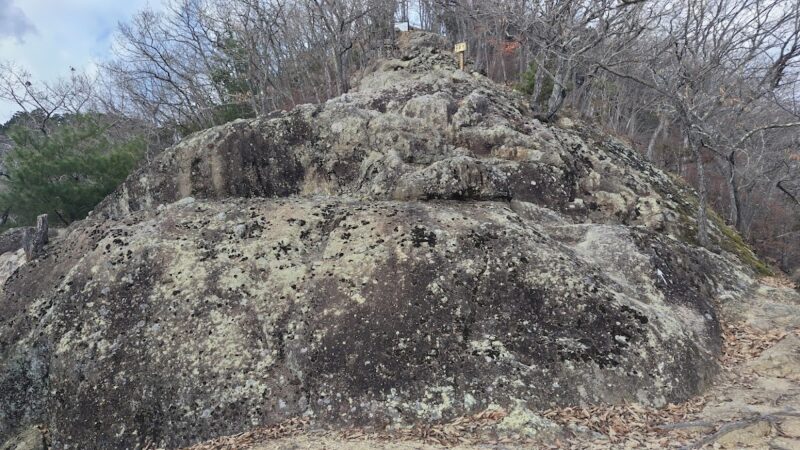
The stone masonry is built using the nozura-zumi technique, a simple structure utilizing natural stones. While some collapses are visible, it remains a valuable example of the stone wall construction techniques of the time. In particular, the stone walls of the southern baileys remain in relatively good condition, allowing us to imagine their appearance in the past.
Lower Baileys
Several lower baileys are arranged in a stepped pattern around the main bailey. These functioned as defensive positions for the main bailey and served as bases for long-range attacks using bows and arrows and firearms.
The lower baileys are located at a lower level than the main bailey and are arranged to surround it. This created a system of all-directional defense, allowing for attacks from any direction.
Well Remains
Well remains have also been confirmed within the castle grounds, demonstrating ingenuity in securing a water source in preparation for a siege. Securing water was a matter of life and death for mountain castles, and the presence of wells indicates that Komayama Castle was built with the expectation of a long-term siege.
Access to and Climbing Komayama Castle
Location and Transportation
Location: Inoue, Kamigori-cho, Ako-gun, Hyogo Prefecture
Access by Car:
- Approximately 20 minutes from Tatsuno-Nishi IC on the Sanyo Expressway
- Approximately 30 minutes from Sayo IC on the Chugoku Expressway
- There are a few parking spaces near the trailhead.
Public Transportation:
- Approximately 10 minutes by taxi from Kamigori Station on the JR Sanyo Main Line
- Approximately 1 hour on foot from the station
Climbing Entrance and Hiking Trail
Komayama Castle can be reached using the currently maintained hiking trail. The main entrance is in the Inoue area at the foot of the mountain, and from there, the route known as the Hayama Hiking Trail continues to the summit.
The hiking trail is relatively well maintained, and there are signposts, so even first-time visitors are unlikely to get lost. However, there are steep sections typical of mountain castles, so appropriate clothing and shoes for hiking are necessary.
Climbing Time and Difficulty
The climb from the entrance to the main keep takes approximately 30-40 minutes at a standard pace. It requires climbing a 230m elevation gain, demanding an intermediate level of physical fitness. Especially in summer, adequate hydration is essential to prevent heatstroke.
The trail is mainly dirt, and can become slippery after rain, so caution is advised. Wild animals also inhabit the area, so carrying a bear bell or similar device is recommended.
Points to Note When visiting Komayama Castle
When visiting Komayama Castle, paying attention to the following points will help you understand the castle’s structure more deeply:
- Scale of the moat: The large moat between the main enclosure and the secondary enclosure is a must-see.
- Stone wall remains: The stone walls of the southern enclosure group are relatively well-preserved.
- View: From the main enclosure, you can enjoy a panoramic view of the Chikusa River basin and the Harima Plain.
- Arrangement of enclosures: Experience the structure of a castle with separate enclosures by actually walking around.
- Remains along the mountain trail: Small enclosures and cliffs remain along the path to the castle.
Historical Value of Komayama Castle
Position within the Harima Mountain Castle Group
Komayama Castle is a well-preserved castle site of high academic value among the many medieval mountain castles remaining in the Harima region. In particular, as a castle that played a part in the Akamatsu clan’s castle network, it is studied together with castles such as Shirahata Castle and Okishio Castle.
The Harima region was a strategic point connecting Kyoto and western Japan from the medieval period to the Sengoku period, a region where many powers fought. Komayama Castle stands as a witness to this history, a valuable legacy that conveys the castle-building techniques and strategic thinking of the time to the present day.
Protection as a Kamigori Town Designated Cultural Property
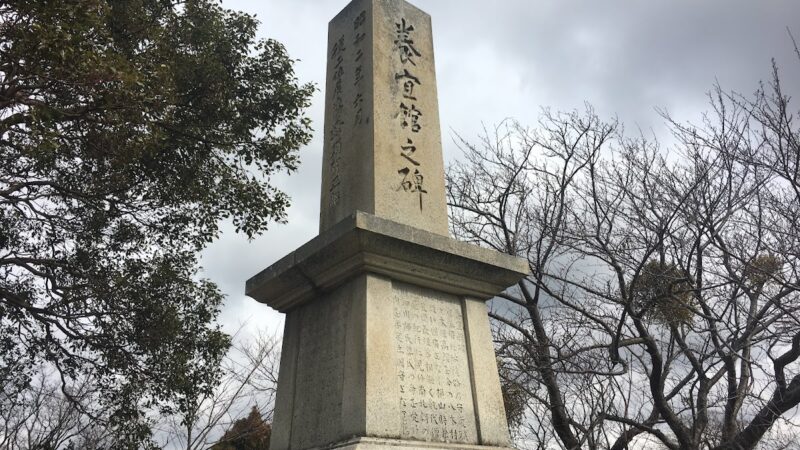
Komayama Castle is protected as a designated cultural property of Kamigori Town, and preservation activities are being carried out by the local government. Efforts are being made to create an environment where visitors can safely view the site, including the maintenance of hiking trails and the installation of information boards.
The Kamigori Town Local History Museum (500-5 Kamigori, Kamigori Town, 2nd floor of the Kamigori Town Hall Building 3) exhibits materials and excavated artifacts related to Komayama Castle, allowing for a deeper understanding when visited before or after a visit to the castle ruins.
Archaeological Surveys and Discoveries
Multiple archaeological surveys have been conducted at Komayama Castle, unearthing artifacts from the medieval to the Sengoku period. The discovery of ceramic fragments, iron artifacts, and parts of weapons provides clues to the daily life and battles within the castle at the time.
Analysis of these artifacts reveals that Komayama Castle was not merely a military facility, but a place where people resided and lived their daily lives for a certain period.
Nearby Historical Spots
Shirahata Castle
If you’re visiting Komayama Castle, you should definitely also visit Shirahata Castle (Akamatsu Castle). Built as the main castle of the Akamatsu clan, this castle is located about 5 km east of Komayama Castle and retains larger-scale mountain castle remains. Visiting both Shirahata Castle and Komayama Castle will give you a comprehensive understanding of the Akamatsu clan’s castle network.
Kamigori Town Local History Museum
As mentioned above, the Kamigori Town Local History Museum exhibits historical materials related to Komayama Castle and the surrounding area. It’s an ideal facility to visit before visiting the castle ruins to gain background knowledge or to clarify any questions after your visit.
Address: 500-5 Kamigori, Kamigori-cho, Ako-gun, Hyogo Prefecture (2nd floor, Kamigori Town Hall, Building 3)
TEL/FAX: 0791-52-3737
Scenery of the Chigusa River
The Chigusa River, flowing at the foot of Komayama Castle, is known as one of the clearest rivers in the Harima region. This river, which is also included in the view from the castle, has played an important role as a transportation route since ancient times. A stroll along the river after visiting the castle ruins is highly recommended.
Important Points for Visiting Komayama Castle
Clothing and Equipment
- Footwear: Hiking boots or trekking shoes are essential.
- Clothing: Long-sleeved shirt and long pants are recommended (for protection against bushes and insects).
- Items to Bring: Drinking water, towel, insect repellent, bear bell.
- Seasonal Precautions: Hat and sunscreen in summer, warm clothing in winter.
Safety Considerations
- Avoid climbing alone; travel in groups whenever possible.
- Check cell phone signal strength beforehand.
- Turn back if weather deteriorates.
- Allow ample time to descend before sunset.
- Do not touch stonework or other structures to protect the remains.
Visitor Etiquette
- Do not enter areas other than designated hiking trails.
- Always take your trash with you.
- Collecting or damaging plants is strictly prohibited.
- Using fire is prohibited.
- Photography is permitted, but please be careful not to damage the remains.
The Charm of Komayama Castle
Value for Castle Enthusiasts
Komayama Castle is highly regarded by castle researchers and enthusiasts for its well-preserved, typical structure of a medieval mountain castle. It’s a valuable historical site where you can learn firsthand about textbook mountain castle elements, such as its structure of a single castle with separate enclosures, multiple moats, and stone masonry remains.
The scale and state of preservation of the moats are particularly impressive, allowing you to appreciate the high level of civil engineering in the medieval period. Furthermore, the view from the main enclosure is magnificent, providing a visual understanding of why the castle was built in this location.
A Space to Evoke Historical Romance
Komayama Castle has watched over the history of Harima for hundreds of years, from the turmoil of the Northern and Southern Courts to the conflicts of the Sengoku period. Standing on the mountaintop and overlooking the Chikusa River basin, imagining the Akamatsu clan’s warriors strategizing while gazing at the same scenery evokes a profound sense of historical romance.
One of the great pleasures of exploring mountain castles is being able to contemplate the battles that may have taken place here and the daily lives of the castle’s soldiers as you explore the ruins.
Harmony with Nature
Another attraction of Komayama Castle is its rich natural environment. Seasonal plants can be seen along the hiking trails, and the fresh greenery of spring and the vibrant autumn foliage are particularly beautiful. The combination of the historical castle ruins and the beautiful natural scenery attracts many visitors.
Summary
Komayama Castle is a masterpiece of medieval mountain castle architecture remaining in Kamigori Town, Hyogo Prefecture. Built by the Akamatsu clan during the Nanboku-cho period, it functioned as an important military base in the Harima region until the Sengoku period. The castle ruins offer many points of interest, including its single-castle, separate-enclosure structure built on the summit of Mt. Ikoma (263m above sea level), clearly preserved moats, and stone wall remains.
Currently, it is protected as a designated cultural property of Kamigori Town and is accessible to everyone via well-maintained hiking trails. The climb to Komayama Castle, with its 230m elevation gain, requires a moderate level of physical fitness, but the views from the summit and the well-preserved ruins will more than reward your efforts.
Visiting Komayama Castle along with other nearby historical sites, such as Shirahata Castle, will allow you to gain a deeper understanding of the Akamatsu clan’s castle network and the medieval history of the Harima region. This historical site is recommended not only for history enthusiasts but also for those who enjoy mountain climbing and hiking.
When visiting Komayama Castle, please ensure you have appropriate equipment and preparations, prioritize safety, and observe proper etiquette to preserve this valuable historical heritage for future generations. As a witness to the history etched into the mountains of Harima, Komayama Castle continues to quietly convey its former glory.