Complete Guide to Yugi Castle (Hachioji City, Tokyo): History and Highlights from the Residence of Oishi Sadahisa to Eirinji Temple
What is Yugi Castle?: A Historic Castle Site in Hachioji City, Tokyo
Yugi Castle (Yugi-jo) is a hilltop castle located in Shimoyugi, Hachioji City, Tokyo. Currently, it stands as Eirinji Temple, a renowned Soto Zen temple, preserving traces of its former glory. Also known as “Yugi Clan Residence,” “Oishi Clan Residence,” and “Yugi Castle,” it is the site of a castle that functioned as a strategic point in the Tama region of Musashi Province from the Kamakura period to the Sengoku period.
The area centered around the current Eirinji Temple grounds is considered the castle site, and it is a valuable historical site that conveys the presence of the former lord, with its magnificent main gate (Akamon), main hall, and bronze statue of Oishi Sadahisa. While the castle remains are limited, traces of the original topography remain on the hillside behind the temple, making it an ideal place for a historical walk.
Basic Information on Yuki Castle
Location: 4-chome, Shimoyugi, Hachioji City, Tokyo (within the grounds of Eirinji Temple)
Year of Construction: Kamakura period (details unknown)
Builder: Yuki Yasutsune (Yuki clan of the Yokoyama clan)
Year of Abandonment: 1590 (Tensho 18), after the Siege of Odawara
Castle Type: Hilltop castle
Main Lords: Yuki clan → Nagai clan → Oishi clan
Designated Cultural Property: None (Eirinji Temple is recognized as a historical building by Hachioji City)
Remains: Topography, traces of baileys (clear earthworks and moats are difficult to confirm)
Other Names: Yuki Clan Residence, Oishi Clan Residence, Yuki Castle, Yuki Rokuro Yasutsune Residence
History of Yuki Castle: Changes from the Kamakura period to the Sengoku period
Kamakura Period: Established as the Residence of the Yuki Clan
The origins of Yuki Castle date back to the Kamakura period. It is believed to have begun when the Yuki clan, belonging to the Yokoyama clan (one of the seven powerful warrior clans of Musashi Province), established their residence in this area. The Yokoyama clan was a samurai group with considerable influence in the Tama region, and the Yuki clan, as a branch of this clan, ruled Yuki-go (present-day Shimoyugi area of Hachioji City).
Of particular note is the fact that the Yuki clan is said to have fought on the side of Wada Yoshimori in the Wada Rebellion of 1213 (Kenpo 1). While the Yuki clan’s power is thought to have declined temporarily after this battle, the residence itself was maintained thereafter.
Muromachi Period: Became the Territory of the Nagai Clan
From the late Kamakura period to the Muromachi period, the area surrounding Yuki Castle became the territory of the Nagai clan. The Nagai clan was a powerful local lord serving the Kanto Kanrei (governor of the Kanto region), the Yamanouchi Uesugi clan, and possessed vast territories in the Tama region. While details about Yuki Castle during this period are scarce due to a lack of historical records, it is presumed to have functioned as a regional base under the control of the Nagai clan.
Sengoku Period: Prosperity as the Residence of the Oishi Clan
Yuki Castle first appears on the historical stage during the Sengoku period, when the Oishi clan, important retainers of the Kanto Kanrei (governor of the Kanto region) Yamanouchi Uesugi clan, became its lords. The Oishi clan were powerful local lords of Musashi Province, and while their main base was Takiyama Castle (present-day Tanuki-cho, Hachioji City), they had a period where Yuki Castle served as their residence.
A particularly important figure is Oishi Sadahisa. Sadahisa resided at Yuki Castle as the head of the Oishi clan, but when he inherited the family headship and moved his residence to Takiyama Castle, he ceded the castle to his uncle, the monk Isshu Chojun Daisho.
The Founding of Eirinji Temple: From Castle to Temple
In March 1532 (Tenbun 1), Eirinji Temple was founded on this site by Abbot Isshu Chojun, who received the ruins of Yuki Castle from Oishi Sadahisa. This was not simply a case of a ruined castle, but rather a form of repurposing a castle as a temple, which was not uncommon at the time.
Eirinji Temple rapidly developed, becoming a large temple with seven main halls by 1546 (Tenbun 15). This was due to the patronage of the Oishi clan and its role as a center of faith in the region.
The Siege of Odawara and the End of Yuki Castle
In 1590 (Tensho 18), Toyotomi Hideyoshi’s Siege of Odawara took place, and the Hojo clan was destroyed. At this time, the Oishi clan, having sided with the Hojo clan, also lost their territory. Yuki Castle had already ceased its military function as Eirinji Temple, and it is believed that its history as a castle officially ended at this time.
Yuki Castle’s Layout and Structure
Castle’s Location and Topography
Yuki Castle is a flatland castle built on a hill approximately 150 meters above sea level in the Tama Hills. The area centered around the current Eirinji Temple is thought to correspond to the main enclosure (honmaru), and the surrounding topography suggests the possibility of multiple baileys being arranged.
The north and east sides of the castle have relatively steep slopes, suggesting a defensive structure utilizing natural fortifications. The south and west sides are gently sloping, and it is believed that the main entrance was located on these sides.
Existing Remains and Traces
Most of the clear remains of Yuki Castle have been lost due to the construction of Eirinji Temple and later development. However, the following traces can be observed:
Topographical Undulations: A walk around the hillside behind the main hall of Eirinji Temple reveals artificial flat areas and elevation changes, which may be traces of the castle’s baileys.
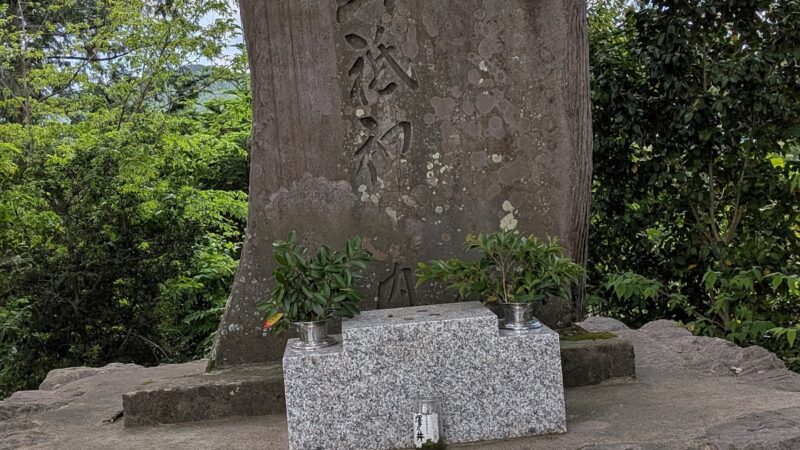
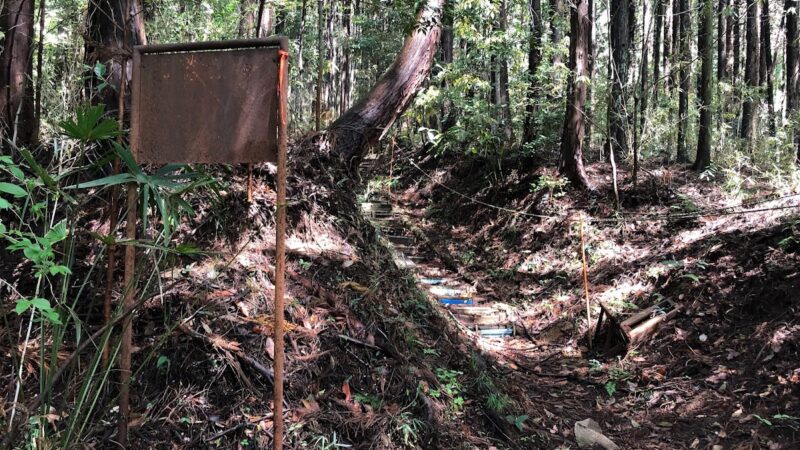
Stone Monument and Signboard: A stone monument marking the “Yuki Castle Site” stands within the grounds of Eirinji Temple, indicating that this is the site of a castle. An explanatory signboard is also installed, allowing visitors to learn about the castle’s history.
Main Gate (Red Gate): Eirinji Temple’s magnificent main gate is a dignified triple-tiered structure, evoking the former grandeur of the castle. While the gate itself dates from the Edo period onwards, it may have been built on the site of the castle’s main gate.
Oishi Sadahisa and Yuki Castle: Traces of a Sengoku Warlord
The Life of Oishi Sadahisa
Oishi Sadahisa was a powerful local lord of Musashi Province during the Sengoku period and a senior retainer of the Yamanouchi Uesugi clan, the Kanto Kanrei (governor of the Kanto region). The Oishi clan traditionally used Takiyama Castle as their base, but it is believed that during Sadahisa’s youth, they resided at Yuki Castle for a period.
Sadahisa later adopted Hojo Ujiteru, the third son of Hojo Ujiyasu, and passed on the headship of the Oishi clan to him. This politically motivated adoption brought the Oishi clan under the influence of the Hojo clan. Even after his retirement, Sadahisa maintained his influence and continued to have deep ties to Takiyama Castle and the Yuki region.
Traces of Oishi Sadahisa Remaining at Eirinji Temple
Within the grounds of Eirinji Temple stands a bronze statue of Oishi Sadahisa. This statue depicts Sadahisa standing in armor, conveying his dignity as a castle lord. Furthermore, the temple’s cemetery contains the Oishi clan’s graves, with memorial towers for Sadahisa and other members of the Oishi family.
These historical sites tell the story of how Yuki Castle was not merely a military base, but also a spiritual center for the Oishi clan.
Highlights of Eirinji Temple: Visiting the Castle Ruins
Main Gate (Red Gate): The Majestic Face of the Temple
The greatest highlight of Eirinji Temple is undoubtedly the Main Gate (commonly known as the Red Gate). The vermilion-painted, three-tiered gate exudes a powerful presence even from afar, overwhelming visitors. Built during the Edo period, this gate is evidence of Eirinji Temple’s prosperity as a renowned temple in the region, and at the same time, it is an architectural structure that evokes the grandeur of the former castle.
Passing through the Main Gate, a spacious temple grounds unfolds, with the main hall visible straight ahead. Walking along this path gives you the feeling of following the former path leading to the castle.
Main Hall and Temple Grounds
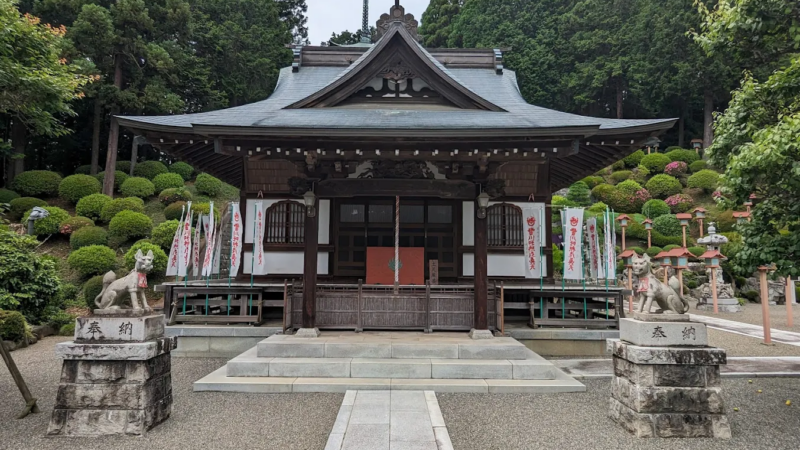
Eirinji Temple’s Main Hall is an architectural structure with a solemn atmosphere befitting a Soto Zen temple. The main hall is located in what is believed to be the main enclosure (honmaru) of Yuki Castle, offering a glimpse into the castle’s central area.
The temple grounds are well-maintained, with seasonal flowers and trees welcoming visitors. The cherry blossoms in spring and the autumn foliage are particularly beautiful, allowing visitors to enjoy both a stroll through the castle ruins and nature appreciation.
Stone Monument and Signboard at Yuki Castle Site
A stone monument inscribed with “Yuki Castle Site” stands on the temple grounds, indicating that this is a historical castle site. An explanatory signboard, provided by the Hachioji City Board of Education, also allows visitors to learn more about the history of Yuki Castle and the Oishi clan.
These historical site guides are important sources of information that enrich your castle site visit.
Statue of Oishi Sadahisa
A bronze statue of Oishi Sadahisa stands in a corner of the temple grounds. Sadahisa’s valiant figure, clad in armor, exudes the dignity of a samurai warrior from the Sengoku period. Standing before this bronze statue, one can reflect on the history of Sadahisa’s journey from Yuki Castle to Takiyama Castle, and his subsequent relationship with the Hojo clan.
The Oishi Family’s Burial Ground
Within the cemetery of Eirinji Temple, there is a burial ground for the Oishi family. Memorial towers for successive heads of the family, including Oishi Sadahisa, stand side by side, testifying to the deep connection between the Oishi family and Eirinji Temple. The burial ground is open to the public, making it a valuable pilgrimage site for history enthusiasts.
A Walk on the Hill Behind the Temple: Experiencing the Castle’s Topography
A walking trail is maintained on the hill behind Eirinji Temple, allowing visitors to experience the topography of Yuki Castle. Flat areas and elevation changes remain near the summit, suggesting the possibility of these being the remains of baileys. While clear earthworks and moats are difficult to identify, visitors can imagine the castle’s structure utilizing the natural terrain while strolling.
From the hill behind the temple, one can overlook the cityscape of Hachioji, allowing one to imagine the former castle lords watching over their territory from this spot.
How to Access Yuki Castle
Access by Train and Bus
If using the Keio Sagamihara Line:
- Get off at “Keio Horinouchi Station”
- Approximately 25 minutes on foot northwest from the station (approx. 1.8 km)
- Or take a bus from the station: Get off at the Keio Bus “Yuki Chuo Elementary School” bus stop, then approximately 5 minutes on foot
If using the Keio Line:
- Get off at “Hirayama Jōshi Kōen Station”
- Approximately 25 minutes on foot south from the station (approx. 1.8 km)
If using a bus from Keio Line “Kitano Station”:
- Take a Keio Bus
- Get off at the “Yuki Chuo Elementary School” bus stop
- Approximately 5 minutes on foot from the bus stop
Access by Car and Parking
Eirinji Temple has a parking lot for visitors. However, the number of spaces is limited, so using public transportation is recommended, especially on weekends and during events.
Address: 4-11-7 Shimoyugi, Hachioji City, Tokyo
Please enter “Eirinji Temple” or the above address into your car navigation system. A temple signpost stands along the old Noyaru Road, so you shouldn’t get lost.
Combining with Nearby Castle Ruins
Many other castle ruins are scattered around Yuki Castle:
Takiyama Castle Ruins: The base of operations to which Oishi Sadahisa moved from Yuki Castle. A nationally designated historical site and one of the leading mountain castles in the Kanto region, approximately 15 minutes by car from Yuki Castle.
Hachioji Castle Ruins: A magnificent mountain castle built by Hojo Ujiteru. One of Japan’s 100 Famous Castles, approximately 20 minutes by car from Yuki Castle.
Katakura Castle Ruins: Castle ruins now developed as Katakura Castle Ruins Park. Approximately 10 minutes by car from Yuki Castle.
By visiting these castle ruins in combination, you can gain a deeper understanding of the Sengoku period history of the Tama region.
Map and Surrounding Environment of Yuki Castle
Eirinji Temple, where the ruins of Yuki Castle are located, is situated in a residential area of Shimoyugi, Hachioji City. Public facilities such as Yuki Central Elementary School and Yuki Central Community Center are nearby, making it a local landmark.
The Oguri River flows to the east of the castle ruins, and is thought to have been the castle’s water source. Furthermore, place names related to castles, such as “Shiroyama” (Castle Mountain) and “Horinouchi” (Inside the Morinaga), remain in the surrounding area, indicating that this region was a historically important location.
Points to Note and Manners When Visiting Yuki Castle
Considerations as a Temple
The Yuki Castle ruins are currently a religious facility called Eirinji Temple. Please observe the following points when visiting:
- Observe proper etiquette as a visitor
- Be quiet in the main hall and cemetery
- Take photographs only in permitted areas
- Refrain from entering during memorial services and other events
Safety during walks
When walking on the hillside behind the castle, please observe the following points:
- Wear comfortable walking shoes
- Be careful as the ground can be slippery in rainy weather or after rain
- Don’t forget insect repellent in the summer
- Avoid walking alone; travel in groups
Best time to visit
Yuki Castle Ruins are open year-round, but the following times are especially recommended:
Spring (late March to April): Beautiful cherry blossoms and ideal weather for walks
Autumn (November): The autumn leaves are at their peak, allowing you to enjoy both exploring the castle ruins and appreciating nature
Winter (December to February): The fallen leaves make the terrain easier to see, allowing for better observation of the castle’s structure
Historical significance and future preservation of Yuki Castle
The Castle’s Place in the History of Castles in the Tama Region
Yuki Castle is an important historical site for understanding the development of castles in the Tama region from the medieval period to the Sengoku period. The changes in castle lords, from the Yokoyama clan’s Yuki family to the Oishi family, reflect the changing political situation in the Kanto region and are valuable resources for regional history research.
In particular, the circumstances surrounding Oishi Sadahisa’s relocation of his base from Yuki Castle to Takiyama Castle are a good example of the process by which Sengoku period castles developed from flatland residences to mountain castles.
The Significance of the Transformation from Castle to Temple
The case of Yuki Castle being reborn as Eirinji Temple is an interesting example of how Sengoku period castles were utilized during times of peace. The fact that a military facility was transformed into a religious facility and continued to function as a spiritual center of the region is an example of flexible land use in Japanese history.
Future Preservation and Utilization
Currently, the Yuki Castle site is well maintained as Eirinji Temple, but its recognition as a castle ruin is not yet widespread. The following initiatives are expected in the future:
- Enhancement of information boards and explanations regarding the castle ruins
- Creation of a castle layout map based on topographical surveys
- Utilization for local history education
- Development of tourist routes in conjunction with the nearby Takiyama Castle and Hachioji Castle
Through these initiatives, it is hoped that the historical value of Yuki Castle will be more widely recognized and passed down to future generations.
Summary: Experiencing the Charm of Yuki Castle
Yuki Castle is a valuable castle site from the Sengoku period remaining in Shimoyugi, Hachioji City, Tokyo. Currently, it serves as the center of local faith as Eirinji Temple, but the traces of successive castle lords, including Oishi Sadahisa, remain strongly present within its grounds.
There are many points of interest, including the magnificent main gate, the bronze statue of Oishi Sadahisa, the Oishi family graves, and the topography remaining on the hillside behind the temple. Although there are few clearly defined remains, it is a historical site worth visiting for castle enthusiasts and history buffs, as it offers a sense of the layered nature of history.
Its convenient location, easily accessible from the Keio Line, is another attractive feature. Visiting it in conjunction with Takiyama Castle and Hachioji Castle will allow you to gain a deeper understanding of the Sengoku period history of the Tama region. Be sure to visit the ruins of Yuki Castle and experience the flow of history that continues from the Sengoku period to the present day.