Goranda Castle (Gunma Prefecture) Complete Guide: History and Highlights of a 593m High Mountain Castle Attacked by Uesugi Kenshin
What is Goranda Castle?
Goranda Castle (Goranda-jo) is a Sengoku period mountain castle located in Ogihara, Higashi-machi, Midori City, Gunma Prefecture. Also written as Goran-da Castle, it functioned as an important strategic base in Kozuke Province (present-day Gunma Prefecture). At an altitude of 592.9m (593m according to some sources) and with a relative height of approximately 300m, it is one of the most rugged mountain castles in the Kanto region, built at a strategic point on the Neri Road leading from Numata to Kurokawa Valley (Watarase Valley).
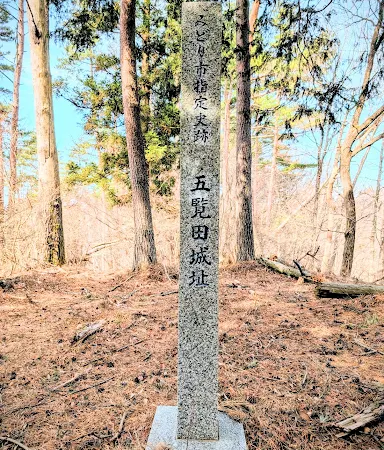
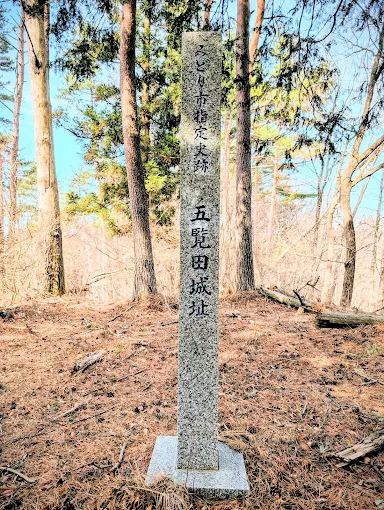
It is protected as a Midori City designated historical site, with a designated area of 23.4 hectares. During the Sengoku period, this area was the site of fierce battles between Uesugi Kenshin of Echigo, the Yura clan of Nitta Kanayama Castle (Ota City), and the Akuzawa clan of Fukasawa Castle (Kurohone-cho, Kiryu City), illustrating the strategic importance of this region.
History of Goranda Castle
Background of Construction and Strategic Importance
Goranda Castle is a mountain castle built to defend against enemy invasions from the Numata area. Located northeast of Mount Akagi, it controlled a crucial transportation hub connecting Echigo and southern Kozuke Province via the Kurokawa Valley. This geographical location was the reason why many forces fought over this castle throughout the Sengoku period.
The castle’s structure is a multi-bailey mountain castle, with a main bailey at the center and a group of baileys arranged in an inverted T-shape along the ridge. The layout, which makes maximum use of the rugged terrain, demonstrates its high defensive capabilities.
Uesugi Kenshin’s Capture in 1574
One of the most important events in the history of Goranda Castle is its capture by Uesugi Kenshin in March 1574. Kenshin, who invaded the Kanto region from Echigo Province, captured Goranda Castle along with Fukazawa Castle. Kenshin secured Fukazawa Castle and used it as a base, but it is believed that he abandoned Goranda Castle.
However, in September of the same year, Yura Narishige (Yura Kunishige) captured Goranda Castle and brought it under his control. This rapid change of ruler demonstrates the castle’s high strategic value and, at the same time, the difficulty of maintaining it.
The Struggle Between the Yura and Akuzawa Clans
One of Uesugi Kenshin’s purposes in bringing Goranda Castle under his control was to use it as a forward base for attacking the Yura clan’s Ota Kanayama Castle. The Yura clan was a powerful local family in southern Kozuke Province, with Nitta Kanayama Castle as their base. Meanwhile, the Akuzawa clan, based at Fukazawa Castle, also held power in this region.
Goranda Castle, situated on the border between these regional powers, became a target of conflict between the Yura, Akuzawa, and Uesugi clans of Echigo. It is said to have sometimes fallen under the control of the Sanada forces, reflecting the complex power dynamics of the Sengoku period.
Relationship with the Hojo Clan and the Castle’s Abandonment
In the late Sengoku period, the relationship with the Hojo clan, who controlled the Kanto region, became crucial. The Yura clan maintained a complex relationship with the Hojo clan, sometimes allied and sometimes hostile. During the time of Hojo Ujinao, the balance of power in this region shifted further.
In 1590, when the Hojo clan was destroyed in Toyotomi Hideyoshi’s siege of Odawara, Goranda Castle is believed to have ceased to serve its purpose and was abandoned. With the end of the Sengoku period, the history of this mountain castle also came to a close.
Structure and Highlights of Goranda Castle
Castle Layout and Enclosure Arrangement
Goranda Castle is a mountain castle with a main enclosure located on the summit of a 593m-high mountain, and a series of enclosures extending along the ridge from there. The overall layout is an inverted T-shape, with multiple enclosures connected along the main ridge.
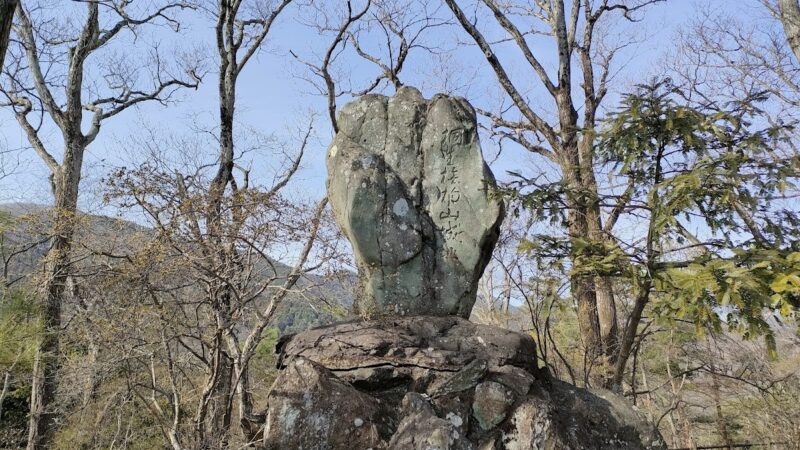
The main enclosure is located at the summit and forms the core of the castle. The view from here is excellent, offering a wide panorama of the surrounding terrain. During the Sengoku period, it is likely that enemy movements were monitored and defensive operations were directed from this main enclosure.
Earthworks and Moats: Defensive Structures
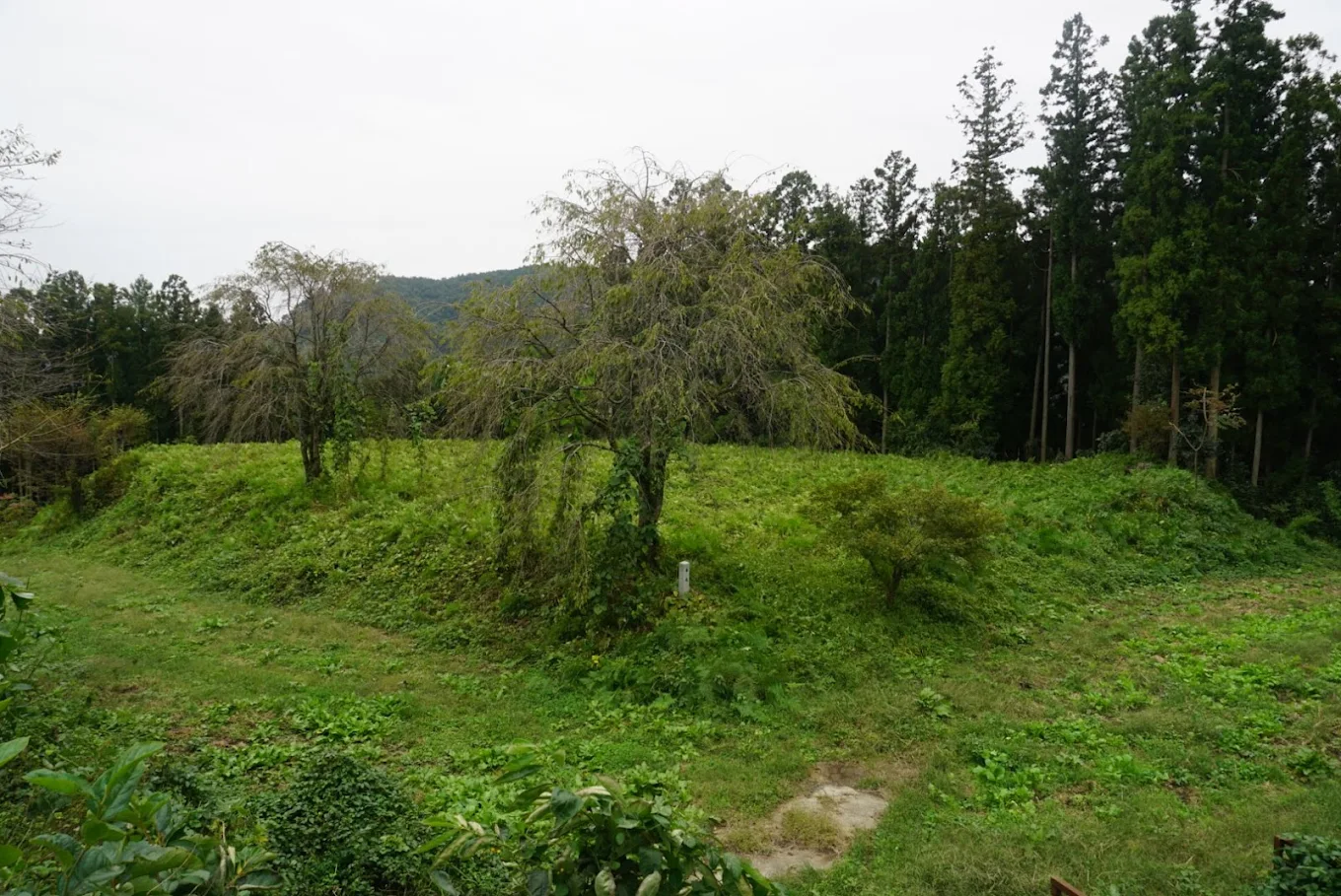
The earthworks and moats are particularly noteworthy defensive structures of Goranda Castle. The earthworks were built around the enclosures, preventing enemy intrusion and protecting the interior of the enclosures. Traces of the earthworks can still be seen in various places today.
The moats were constructed to cut off the ridgeline, serving as a crucial defensive line to hinder enemy advances. The construction techniques (civil engineering) that utilized the unique terrain of mountain castles can be gleaned from these remains.
Arrangement and Function of the Enclosures
Multiple enclosures are arranged in a stepped pattern around the main enclosure. Each enclosure likely functioned as a defensive line, and was also used as a soldier’s encampment and a storage area for supplies.
The elevation differences and arrangement between the enclosures reveal a design philosophy of providing a tiered defense against attackers. The 300m elevation difference was also a significant factor in making an enemy siege difficult.
Current Status and Preservation of the Remains
Currently, the Goranda Castle site is a forest, but the remains such as the main enclosure, earthworks, and moats are relatively well-preserved. It is protected as a designated historical site by Midori City and welcomes visitors from castle enthusiasts and history buffs.
Due to its high altitude and rugged terrain, the site is difficult for humans to access, which in turn contributes to the preservation of the ruins. However, some parts are gradually changing due to natural weathering and tree growth.
Access and Visiting Guide to Goranda Castle
Access by Public Transportation
The nearest station to Goranda Castle is Hanawa Station on the Watarase Keikoku Railway. It takes approximately 60 to 90 minutes to walk from Hanawa Station to the castle ruins. There are two main routes to access the castle, requiring a total of over an hour of walking.
If using public transportation, it is necessary to plan with ample time. It is especially recommended to check the return train schedule in advance. The Watarase Keikoku Railway has limited service, so missing a train will result in a long wait.
Access by Car and Parking
If accessing by car, use National Route 122. After crossing the Ogurogawa River and proceeding about 800m, there is a road that turns sharply into the mountains; a signpost for Goranda Castle is located here. Follow this sign as a guide.
There is a parking area along the forest road, but it is not very large, so caution is advised if visiting with multiple vehicles. The condition of the forest road changes depending on the weather and season, so extra caution is needed after rain or during winter. A four-wheel drive vehicle may be preferable in some cases.
Ascent Route and Estimated Time
From the parking lot to the castle ruins, you will be climbing a mountain path. With an elevation difference of 300m, a certain level of physical fitness is required. Allow approximately 2 to 3 hours for the round trip ascent.
While some parts of the trail are well-maintained, there are also steep sections. Wearing non-slip shoes such as hiking boots or trekking shoes is strongly recommended. It is also important to carry drinking water, snacks, and rain gear.
Important Points for Visitors
Goranda Castle is a full-fledged mountain castle, and the following points should be noted when visiting:
- Physical Fitness and Equipment: The climb involves an elevation gain of 300m, so appropriate physical fitness and hiking equipment are necessary.
- Season and Weather: Heatstroke prevention is essential in summer, and cold weather gear is necessary in winter. The ground can become slippery in rainy weather.
- Avoid Solo Visits: Visiting with multiple people is preferable. Check cell phone signal strength beforehand.
- Time Management: Plan your time carefully to descend before sunset.
- Protection of the Natural Environment: As this is both a historical site and a natural environment, please cooperate by taking your trash with you and protecting the vegetation.
Attractions and Tourist Information Around Goranda Castle
Surrounding Castles
When visiting Goranda Castle, visiting the surrounding castles will allow you to gain a deeper understanding of the Sengoku period history of this region.
Fukazawa Castle: Located in Kurohone-cho, Kiryu City, this was the residence of the Akuzawa clan and had a close relationship with Goranda Castle. It was one of the castles captured by Uesugi Kenshin along with Goranda Castle.
Takatsudo Castle: Located in Midori City, this castle was situated at a strategic point along the Watarase River. The scenic Takatsudo Gorge is nearby.
Kanayama Castle (Ota City): This was the base of the Yura clan and is known as one of the leading mountain castles in the Kanto region. It is a nationally designated historical site with well-preserved stone walls.
Tourist Attractions in Midori City
Besides Goranda Castle, Midori City has other attractive tourist spots:
Watarase Keikoku Railway: A third-sector railway that took over the former JNR Ashio Line, offering beautiful scenery along the Watarase River. A trolley train also operates.
Kusaki Dam and Kusaki Lake: This dam was completed in 1977, and the surrounding area boasts a rich natural landscape.
Tomihiro Museum: This museum exhibits the works of Tomihiro Hoshino, a poet and painter from Midori City. It is located on the shores of Kusaki Lake.
Local History and Culture
The Higashi-machi area of Midori City is close to the Ashio area, which once prospered from copper mining, and has ties to the history of mining. Furthermore, the natural environment surrounded by the clear waters of the Watarase River and mountains has supported people’s lives since ancient times.
During the Sengoku period (Warring States period), this region was an important route connecting Echigo and Kanto, occupying a strategically and economically significant position. Goranda Castle can be considered a symbolic example of this.
The Charm and Historical Value of Goranda Castle
Characteristics as One of Kanto’s Leading Mountain Castles
As indicated by its elevation of 593m and relative height of 300m, Goranda Castle is one of Kanto’s leading full-fledged mountain castles. A mountain castle with such a significant elevation difference is rare in the Kanto region, making it a valuable site from the perspective of castle research.
The castle’s layout, which makes maximum use of the rugged terrain, conveys the castle-building techniques of the Sengoku period. The placement of defensive structures such as earthworks and moats allows us to understand the military thought and tactics of the time.
A Stage of Power Struggle in the Sengoku Period
The historical value of Goranda Castle lies in the fact that it was the stage where powerful forces of the Sengoku period—Uesugi Kenshin, the Yura clan, and the Akuzawa clan—competed for control. In particular, as a castle conquered by Uesugi Kenshin, a representative warlord of the Sengoku period, it holds special significance for history enthusiasts.
Kenshin’s invasion of Kanto in 1574 (Tensho 2) was an event that drastically shook the balance of power in Kanto. Goranda Castle played a crucial role in that conflict, and it is a historical site that tells the story of the tense situation at the time.
Importance in Local History
Goranda Castle is indispensable for understanding the Sengoku period history of eastern Gunma Prefecture, particularly around Midori City. As a crucial point on the transportation route connecting Numata and the south, the castle played a significant role.
The Sengoku period history of Kozuke Province is also a history of local powerful families fighting for survival amidst the great powers of the Uesugi, Takeda, and Hojo clans. The changes in Goranda Castle can be seen as a microcosm of that era.
Appeal for Castle Enthusiasts
For castle enthusiasts, Goranda Castle offers the following attractions:
- A mountain castle experience involving a full-fledged climb: Climbing the 300m elevation gain provides a sense of accomplishment and allows you to experience the true essence of a mountain castle.
- Well-preserved remains: The remains such as the main enclosure, earthworks, and moats are relatively well-preserved.
- Deep historical background: It has a history involving the famous warlord Uesugi Kenshin. – Quiet Environment: Due to its difficult access, visitor numbers are limited, allowing visitors to quietly appreciate the castle ruins.
Future Preservation and Utilization of Goranda Castle
Preservation as a Historic Site
Goranda Castle, protected as a Midori City designated historical site, is located in a forest and is therefore affected by natural weathering and tree growth. Appropriate preservation and management are required going forward.
Regular patrols and necessary maintenance are crucial for passing on the remains to future generations. At the same time, balanced preservation is needed to avoid damaging the original form of the remains through excessive maintenance.
Utilization as a Tourism Resource
Goranda Castle is a valuable historical and cultural resource of Midori City. Developing tourist routes that combine it with the Watarase Keikoku Railway and the Tomihiro Museum of Art has the potential to contribute to regional revitalization.
However, as it is a full-fledged mountain castle, it may be difficult to make it a tourist destination for everyone. Information dissemination targeting specific groups such as castle enthusiasts, history buffs, and mountain climbing enthusiasts would be effective.
Educational Applications
In local school education, Goranda Castle serves as a valuable teaching material for learning about local history. It allows for multifaceted learning, including regional history of the Sengoku period, castle architecture, and the lives of people at that time.
By providing opportunities for children to actually visit the castle ruins, while prioritizing safety, it is possible to stimulate their interest in history and cultivate a love for their hometown.
Summary
Goranda Castle (Midori City, Gunma Prefecture) is one of the most impressive mountain castles in the Kanto region, standing at an altitude of 593m and a relative height of 300m. During the Sengoku period, it was a strategically important point controlling the transportation route from the Numata area, and was the stage for fierce battles between Uesugi Kenshin, the Yura clan, and the Akuzawa clan.
The fact that Uesugi Kenshin captured it along with Fukazawa Castle in 1574, and that its rulers changed hands several times afterward, speaks to the importance of this castle. After being abandoned in 1590, the castle is now protected as a designated historical site of Midori City, and its remains, including the main enclosure, earthworks, and moats, are well-preserved.
Access requires considerable time and physical effort, but the sense of accomplishment is well worth it, as it is a castle site where you can fully appreciate the charm of a mountain castle. For those interested in the Sengoku period history of eastern Gunma Prefecture, and for castle enthusiasts who want to experience an authentic mountain castle, Goranda Castle is a historical site well worth visiting.
Visiting it along with nearby castles such as Fukasawa Castle, Takatsudo Castle, and Kanayama Castle in Ota City will allow you to gain a deeper understanding of the Sengoku period in this region. Combining it with a trip on the Watarase Keikoku Railway will make for a fulfilling journey enjoying history and nature.