Terao Nakajo Castle (Gunma Prefecture) Complete Guide: A Mountain Castle Ruins from the Nanboku-cho Period and How to Visit Kannon-yama Family Park
What is Terao Nakajo Castle?
Terao Nakajo Castle is a medieval mountain castle located in Terao-cho, Takasaki City, Gunma Prefecture. Built on a hill approximately 188 meters above sea level, the castle boasts a highly defensible structure that takes advantage of its location with a relative height of approximately 50 meters. It is currently located within Kannon-yama Family Park. As an important base in Kozuke Province during the Nanboku-cho period, it is a castle ruin of high historical value.
From the castle ruins, you can enjoy a panoramic view of Takasaki city, allowing you to appreciate its strategic importance at the time. With well-maintained walking paths, it is an easily accessible historical site not only for castle enthusiasts but also for the general public who enjoy hiking and historical walks.
History of Terao Nakajo Castle
Founding and Legends from the Late Heian Period
There are various theories regarding the origin of Terao Nakajo Castle, but records show that in 1180, when Minamoto no Yoritomo raised an army, Nitta Yoshisada (actually an ancestor of the Nitta clan) gathered troops at Terao Castle. However, it is uncertain whether this “Terao Castle” refers to the present-day Terao Nakajo Castle, or to the nearby Terao Chausuyama Castle or one of the other Terao castle complexes.
Records from this period are fragmentary, and historical materials regarding the specific structure and size of the castle are scarce, making archaeological investigations and topographical analysis crucial clues.
An Important Base During the Nanboku-cho Period
Terao Nakajo Castle appears on the historical stage during the Nanboku-cho period. In 1397 (Oei 4), Prince Yukiyoshi, a supporter of the Southern Court, holed up in this castle and, with the support of Serada Masayoshi, a member of the Nitta clan, resisted the Northern Court.
Prince Yukiyoshi is believed to be the son of Prince Munenaga, a son of Emperor Go-Daigo, and was active in the Kanto region aiming to restore the Southern Court. Serada Masayoshi, as a member of the Nitta clan, pledged allegiance to the Southern Court and is said to have renovated Terao-Nakajo Castle to welcome the prince.
However, Terao-Nakajo Castle fell to an attack by Uesugi Norisada, a powerful general of the Northern Court. Prince Yukiyoshi is believed to have escaped the castle and fled to Suwa in Shinano Province. This battle symbolizes the power struggle in the Kanto region during the Nanboku-cho period, and it suggests that Terao-Nakajo Castle was an important military base for the Southern Court.
Subsequent History
There are no clear records of how Terao Nakajo Castle was used after the wars of the Nanboku-cho period. During the Sengoku period, several castles were built in the surrounding area, and it is believed that Terao Chausuyama Castle, Negoya Castle, and Yamana Castle formed a coordinated defensive network.
After the Edo period, the castle was abandoned and has remained in ruins for a long time. In modern times, with the development of Kannon-yama Family Park, a walking path to the castle ruins has been created, making it a popular destination for history enthusiasts and tourists.
Structure and Layout of Terao Nakajo Castle
Overall Layout
Terao Nakajo Castle is a mountain castle of the Renka style, with the main enclosure (honkaku) at its center, and enclosures (kuruwa) extending along the east-west ridges. The structure, with three enclosures separated by moats arranged east-west, is typical of a medieval mountain castle.
The castle occupies a corner of the Kannon-yama hill, with a steep slope to the south, demonstrating a defensive design that cleverly utilizes the natural terrain. Entering from the eastern end of Kannonyama Family Park, a walking path winds around the outside of the castle, allowing visitors to appreciate the overall structure of the fortress.
Main Enclosure (Honmaru)
The main enclosure, the heart of the castle, is located at the highest elevation. From here, one can enjoy a panoramic view of Takasaki city, and its open location suggests it served as a lookout post and command center.
Remnants of earthworks surround the main enclosure, indicating the presence of defensive structures. While its size is moderate for a medieval mountain castle, it is believed to have provided sufficient space for a siege in emergencies.
Layout of Moats and Enclosures
The greatest highlight of Terao Nakajo Castle is its well-preserved moats. These dry moats, dug to cut across ridges, are crucial defensive structures for preventing enemy intrusion. Moats are located along the eastern and western ridges, demarcating the enclosures.
The eastern moat, in particular, is large in scale, with ample depth and width, demonstrating the high level of castle-building technology of the time. Enclosures were positioned on both sides of the moat, forming a tiered defensive line.
Walking and Nature Trails
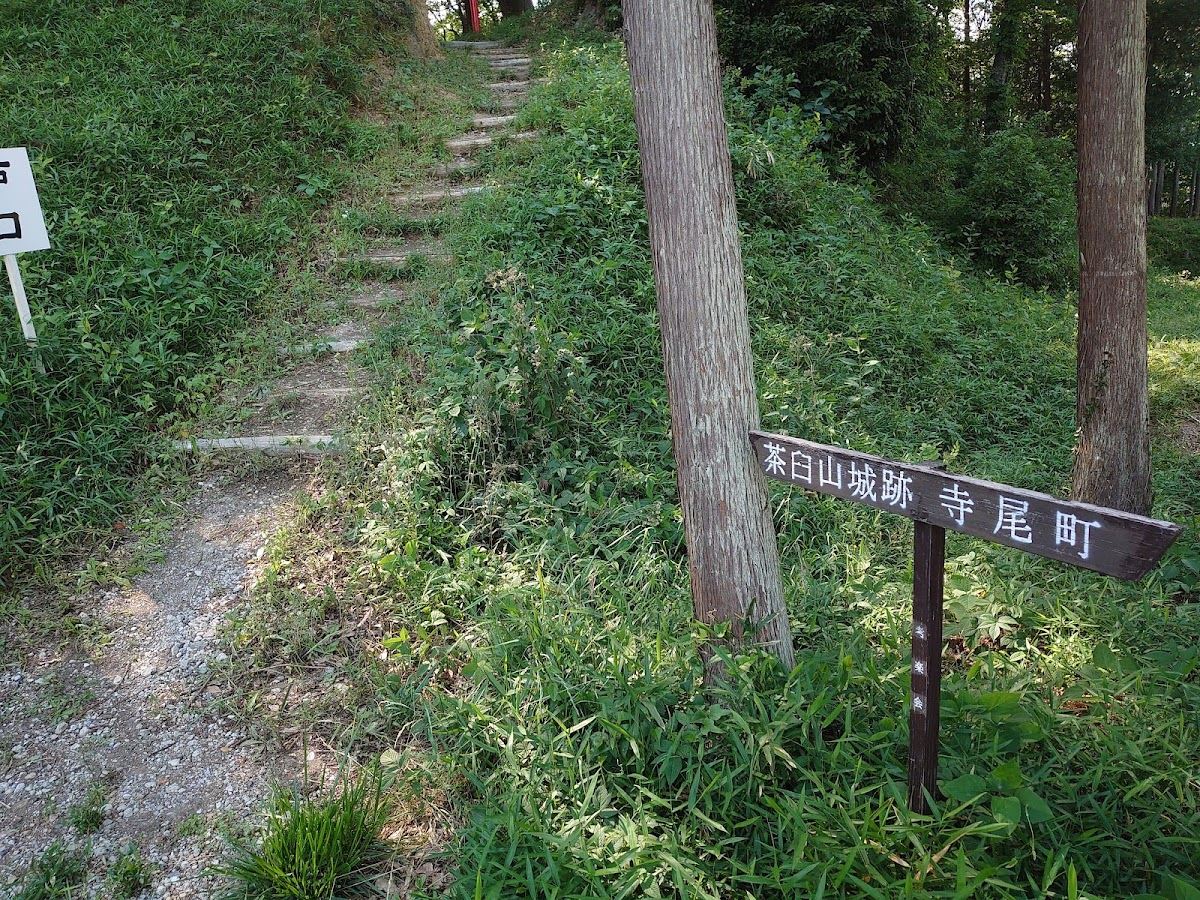
Currently, walking trails of the Kannon-yama Family Park have been developed at the castle site, creating a viewing path that does not damage the castle’s remains. The nature trail is laid out around the perimeter of the castle, providing easy access to each enclosure and moat.
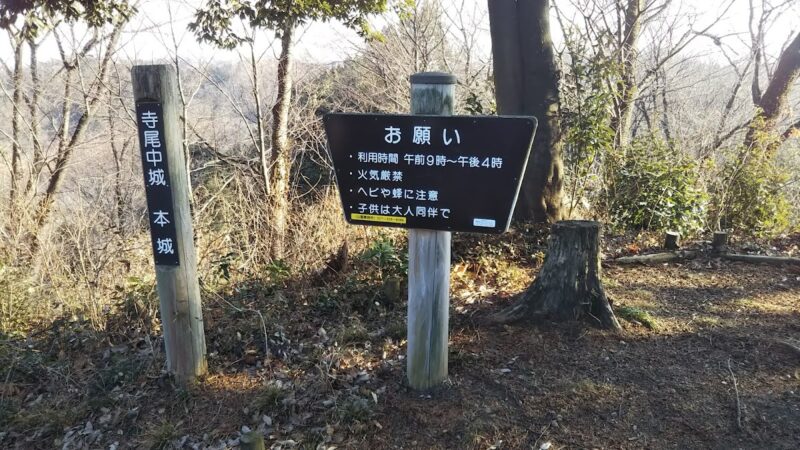
Information boards and explanatory signs are placed along the walking trails, creating an environment where even first-time visitors can understand the castle’s structure while exploring.
Highlights of Terao-Naka Castle
The Impressive Moat
A must-see when visiting Terao-Naka Castle is the clearly preserved moat. Despite natural weathering, its deep V-shaped excavation is remarkably well-preserved. Standing at the bottom of the moat, you can truly appreciate the height of the cliffs on both sides, experiencing the pinnacle of medieval castle construction technology.
The moat was not merely a ditch, but played a crucial role in defense. It was designed to halt enemy advances along the ridge, allowing for attacks from above.
View from the Main Enclosure
Standing in the main enclosure, a magnificent panoramic view of Takasaki city unfolds. On clear days, you can even see the three mountains of Joshu, including Mount Akagi and Mount Haruna, in the distance. This excellent view was also important for military surveillance.
At the time, it would have been possible to monitor surrounding movements from this location and detect enemy approaches early. Today, it’s a perfect spot to enjoy the scenery while reflecting on history.
Continuous Arrangement of Enclosures
The arrangement of enclosures, running east to west, is a classic example of a multi-enclosure mountain castle and is valuable from the perspective of castle research. Each enclosure, separated by moats, is arranged to allow for organic coordination, a design calculated for both defense and retreat.
The flat areas of the castle grounds are covered in grass, allowing one to imagine soldiers stationed here and supplies being stored.
Harmony with Nature
Located within Kannon-yama Family Park, Terao-naka Castle Ruins are surrounded by abundant nature. The fresh greenery in spring and the vibrant autumn foliage create beautiful scenery throughout the seasons. The environment allows for nature observation and birdwatching in addition to exploring the castle ruins.
While the walking paths are well-maintained, they are designed to utilize the natural terrain, ensuring that the atmosphere of the castle ruins is not diminished.
Access
Access by Car
If traveling by car, it’s approximately 15 minutes from the Takasaki Interchange on the Kan-Etsu Expressway. Kannon-yama Family Park has a free parking lot with ample capacity.
From the parking lot to Terao-naka Castle Ruins is about a 10-15 minute walk. Following the signs within the park will lead you to the castle ruins entrance. Parking hours are subject to the park’s opening hours, so it’s recommended to check in advance. ### Access by Public Transportation
The nearest station for public transportation is JR Takasaki Station. From Takasaki Station, you can take a local bus or taxi.
From the west exit of Takasaki Station, take the Gururin Bus (Takasaki City Community Bus) on the Kannon-yama Line and get off at the “Kannon-yama Family Park” bus stop. The parking lot is about a 5-minute walk from the bus stop, and the castle ruins are about a 10-15 minute walk from there.
It is also possible to access the site on foot from Joshin Dentetsu Negoya Station, but this is a longer distance (approximately 2.5 km) and is only suitable for those with good stamina.
Estimated Time Required
The estimated time required to visit Terao Nakajo Castle Ruins is about 1 to 1.5 hours if you take your time to look around thoroughly. This amount of time should be sufficient to see the main remains such as the main enclosure and moats, and to include time for photography and enjoying the scenery.
If you plan to explore the entire Kannon-yama Family Park, you will need even more time. There are other points of interest within the park, so we recommend visiting with about half a day to spare.
Notes and Manners for Visitors
Clothing and Equipment
Terao Nakajo Castle Ruins is a mountain castle, and although there are walking paths, you will be walking on uneven terrain. Please prepare the following equipment:
- Comfortable shoes: Sneakers or light hiking boots are ideal. Avoid sandals and high heels.
- Comfortable clothing: Choose comfortable clothing appropriate for the season. Insect repellent is also necessary in summer.
- Drinks: Especially in summer, bring plenty of water to prevent heatstroke.
- Rain gear: Bringing rain gear is recommended during periods of unpredictable weather.
Visitor Manners
- Protection of Ruins: Do not climb on or dig at ruins such as earthworks and moats.
- Take your trash home: Always take your trash with you. – No Plant Collection: Collecting plants within the park is prohibited.
- No Open Fires: To prevent forest fires, the use of open fires is strictly prohibited.
Safety Precautions
- Avoid Solo Activities: Visit in groups whenever possible, or inform family or friends of your destination.
- Descend Before Sunset: Even though it’s a walking trail, it gets dark after sunset. Plan your time with plenty of leeway.
- Check the Weather: The ground can become slippery in rainy weather. Avoid visiting during bad weather.
Nearby Castles and Points of Interest
Terao Chausuyama Castle
Located approximately 1.0 km in a straight line from Terao Nakajo Castle, Terao Chausuyama Castle is thought to be a castle complex that worked in conjunction with Terao Nakajo Castle. It is also situated on the Kannonyama Hill, and similarly, remains of moats and baileys remain.
Visiting both Terao Nakajo Castle and Terao Chausuyama Castle together will allow for a deeper understanding of the castle network of that time.
Yamana Castle
Yamana Castle is believed to have been built as a branch castle of Terao-Naka Castle, the base of Prince Tadayoshi. It is also considered the birthplace of the Yamana clan, making it a historically important castle. It is located about 10 minutes by car from Terao-Naka Castle.
Negoya Castle
Negoya Castle is also counted as one of the Terao castle complexes and is located near Negoya Station on the Joshin Electric Railway. Although small in scale, it is thought to have played a part in the region’s defense network.
Kuragano Castle
Kuragano Castle, located in Kuragano-cho, Takasaki City, is a flatland castle that played an important role during the Sengoku period. While it is from a different era than Terao-Naka Castle, it is a historical site worth visiting when touring the castles of the Takasaki region.
The Charms of Kannon-yama Family Park
Kannon-yama Family Park, where the ruins of Terao-Naka Castle are located, offers many attractions besides castle ruins.
Park Facilities
The park features a lawn area, playground equipment, and an observation deck, offering plenty of facilities for families to enjoy. It’s possible for adults to enjoy exploring the castle ruins while their children play.
Nature Observation
With its rich natural environment, the park allows for observation of wild birds, insects, and seasonal flowers. Enjoy the changing seasons while walking along the nature trails.
Picnic Spot
The lawn area is perfect for picnics. Bringing a packed lunch and relaxing before or after visiting the castle ruins is highly recommended.
Best Season to Visit Terao Nakajo Castle
Spring (March-May)
In the season of fresh greenery, the trees bud, and you can enjoy a refreshing stroll in the crisp air. The temperature is mild, making long walks comfortable. You can also enjoy cherry blossom viewing in the surrounding area during the cherry blossom season.
Autumn (October-November)
The beautiful autumn foliage season is one of the best times to visit Terao Nakajo Castle. The combination of colorful trees and castle ruins makes for excellent photography. The temperature is also moderate, making it an ideal time for hiking.
Summer and Winter Precautions
In summer, precautions against heat and insects are necessary. Visiting in the early morning or evening is recommended. In winter, the fallen leaves make the ruins easier to see, but be sure to dress warmly.
Cultural Property Designation Status of Terao Nakajo Castle
Currently, Terao Nakajo Castle ruins are not designated as a cultural property. However, they are recognized as a valuable historical site in the region, conveying the history of the Nanboku-cho period.
Further detailed investigations and research may lead to cultural property or historical site designation. Attention from castle enthusiasts and history researchers is increasing, and a balance between preservation and utilization is required.
Tips for Enjoying Terao Nakajo Castle
Pre-Visit Study
Learning about the history of the Nanboku-cho period, Prince Tadahira, and Serada Masayoshi before your visit will deepen your understanding at the site. We recommend preparing in advance by reading related books and websites.
Using Maps and Compasses
Obtain a map of Kannonyama Family Park and familiarize yourself with the location of the castle ruins. While smartphone map apps can be used, it’s advisable to bring a paper map as signal strength may be weak in mountainous areas.
Photography
Take photos of highlights such as the moats and views from the main enclosure. Looking back at photos later will help you vividly recall your visit.
Keeping Records
Recording the date of your visit, weather, the ruins you saw, and your impressions in a notebook or blog will be helpful later. For those who enjoy visiting castles as a hobby, we recommend keeping a record of your visits.
Summary
Terao Nakajo Castle is a valuable mountain castle ruin from the Nanboku-cho period located in Takasaki City, Gunma Prefecture. It’s an attractive spot where you can observe castle ruins such as moats and baileys up close while experiencing the historical romance of Prince Tadayoshi and Serada Masayoshi. Located within Kannonyama Family Park, and featuring well-maintained walking trails, Terao Nakajo Castle is enjoyable for a wide range of visitors, from castle novices to experts. Its convenient access from Takasaki city center makes it ideal for a day trip.
Nearby, several related castles, including Terao Chausuyama Castle, Yamana Castle, and Negoya Castle, are scattered, making it a great place to visit multiple castles as part of a castle tour. Be sure to visit Terao Nakajo Castle, where you can enjoy history and nature simultaneously.
Terao Nakajo Castle, which conveys the history of Kozuke Province to the present day, is an invaluable historical heritage site that allows visitors to feel the spirit of the Middle Ages.