Isobe Castle (Annaka City, Gunma Prefecture) Complete Guide: A Thorough Explanation of History, Remains, and Highlights
Isobe Castle, located in Saginomiya, Annaka City, Gunma Prefecture, is a mountain castle used by Takeda Shingen as an important base for his control of western Kozuke Province during the Sengoku period. Currently, it is maintained as Shiroyama Park, and the untouched remains such as the castle’s layout, earthworks, and moats are well-preserved. This article provides a detailed explanation of Isobe Castle, from its historical background to its local highlights and visitor information.
Overview and Basic Information of Isobe Castle
Isobe Castle is a flatland castle located on Shiroyama in Saginomiya Shinchi, Annaka City, Gunma Prefecture, built on a terrace on the right bank of the Usui River. It is classified as a castle-type fortification and is a typical Sengoku period mountain castle with a multi-bailey layout.
Basic Data
- Location: Saginomiya, Annaka City, Gunma Prefecture
- Municipal Code: 10211 (Annaka City)
- Castle Type: Hilltop Castle/Castle Residence
- Construction Period: Kamakura period (tradition), renovated during the Sengoku period
- Main Periods: Kamakura period to Sengoku period
- Current Status: Developed as Shiroyama Park
- Main Remains: Earthworks, moats, pits, baileys
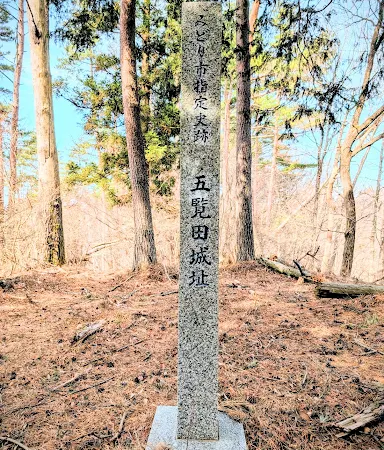
The castle site is currently known as “Isobe Castle Ruins Park” and is popular with local residents. Due to the excellent state of preservation of the remains, it is also attracting attention among castle enthusiasts.
History of Isobe Castle
Legend of its Founding in the Kamakura Period
Regarding the founding of Isobe Castle, there is a legend that it was built during the Kamakura period by Sasaki Moritsuna, a Kamakura shogunate retainer. Sasaki Moritsuna was a powerful retainer who served Minamoto no Yoritomo and is known as a warrior who competed for the vanguard in the Battle of Uji River.
However, there are few reliable historical records regarding Isobe Castle from this period, and it is unclear whether it actually functioned as a castle from the Kamakura period onward. Most of the remains that can be confirmed today are thought to date from the Sengoku period.
Sengoku Period: Renovation and Use by Takeda Shingen
Isobe Castle first appears on the historical stage during the Sengoku period. In 1561 (Eiroku 4), Takeda Shingen of Kai Province intensified his invasion of Kōzuke Province, capturing Kunimine Castle and bringing the Kaburagawa River basin in southern Gunma Prefecture under his control.
Around 1562, it is believed that Takeda Shingen extensively renovated Isobe Castle to use it as a frontline base for conquering Annaka Castle and Minowa Castle. During this period, Isobe Castle functioned as a “connecting castle,” becoming an important military base in the Takeda army’s control of western Kozuke Province.
A connecting castle is a castle established at a relay point connecting major fortresses, functioning as a supply base, information transmission point, and emergency refuge. Isobe Castle, located at a strategic transportation hub in the Usui River basin, played a geographically important role in the Takeda clan’s strategy for controlling Kozuke.
Isobe Castle After the Fall of the Takeda Clan
In 1582 (Tensho 10), the Takeda clan was destroyed by Oda Nobunaga’s conquest of Kai Province, drastically changing the situation in Kozuke Province. It is presumed that Isobe Castle was seized by the Hojo clan, the rulers of the Kanto region, after the Takeda clan’s downfall. However, detailed records from this period do not exist, and the specific lords and operational status of the castle remain unknown.
After Toyotomi Hideyoshi’s siege of Odawara in 1590 (Tensho 18), the Hojo clan was destroyed, and it is believed that Isobe Castle also ceased to serve its purpose. Since the Edo period, the castle has been abandoned, and the ruins have been preserved by local people.
Structure and Layout of Isobe Castle
Concentric Mountain Castle Structure
Isobe Castle is a mountain castle with a concentric layout. A concentric layout is a structure in which multiple enclosures (kuruma) are arranged in a line, a form often used when building castles on ridges.
The castle is located on a terrace on the right bank of the Usui River, and its defensive structure skillfully utilizes the natural terrain. Multiple enclosures are arranged around the main enclosure, each demarcated by earthworks and moats.
Main Features of the Remains
Earthworks
The most prominent remains of Isobe Castle are the earthworks. The earthen ramparts surrounding the baileys remain clearly visible today, and their height and shape allow us to glean insights into the castle-building techniques of the Sengoku period. The earthen ramparts around the main bailey, in particular, are well-preserved, conveying the appearance of the defensive facilities at that time.
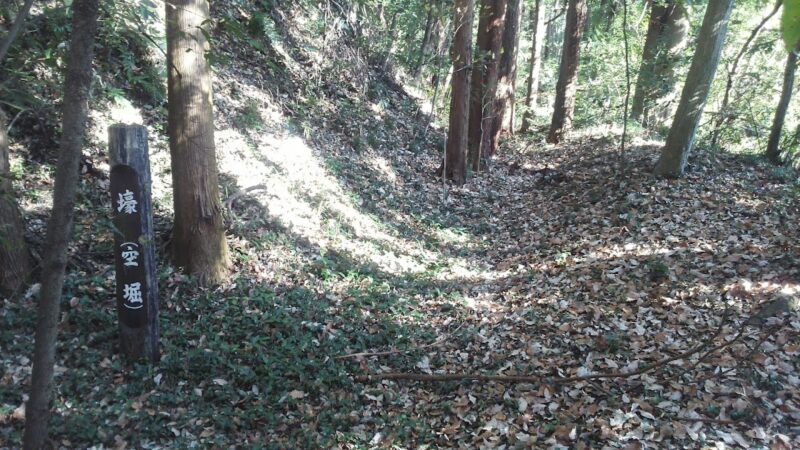
Moat
A moat, constructed to strengthen the castle’s defenses, can also be seen. It is believed to have functioned as a dry moat, separating the baileys. The existence of the moat was confirmed in archaeological excavations conducted by the Gunma Prefectural Board of Education.
Pits
An archaeological excavation conducted by the Cultural Properties Protection Division of the Gunma Prefectural Board of Education from September 2013 to February 2014 revealed remains such as pits within a 21 square meter area. These remains may have functioned as part of the castle’s daily use or as part of its defensive facilities.
Bailey Layout
The characteristic arrangement of baileys in a line, typical of the Renkuruwa style, can be truly appreciated by walking around the site. Each enclosure is strategically positioned to utilize elevation differences, creating advantageous defensive positions against attackers.
Isobe Castle Highlights and Visitor Guide
Current Status as Shiroyama Park
The Isobe Castle ruins are currently maintained as “Shiroyama Park,” serving as a place of relaxation for local residents. Walking paths have been constructed within the park, allowing for safe exploration of the castle ruins.
While development as a park is progressing, excessive alterations have not been made, making the untouched layout a major attraction of Isobe Castle. Remains such as earthworks and moats are preserved in a natural state, allowing visitors to experience the castle structure of the Sengoku period.
Photo Spots and Photo Gallery
Isobe Castle is also an attractive spot for castle photography enthusiasts. The following are some recommended photo spots:
- Main Enclosure Earthwork: The best-preserved section, clearly showing the height and shape of the earthwork.
- Moat Between Enclosures: A remnant demonstrating the characteristics of a multi-enclosure castle.
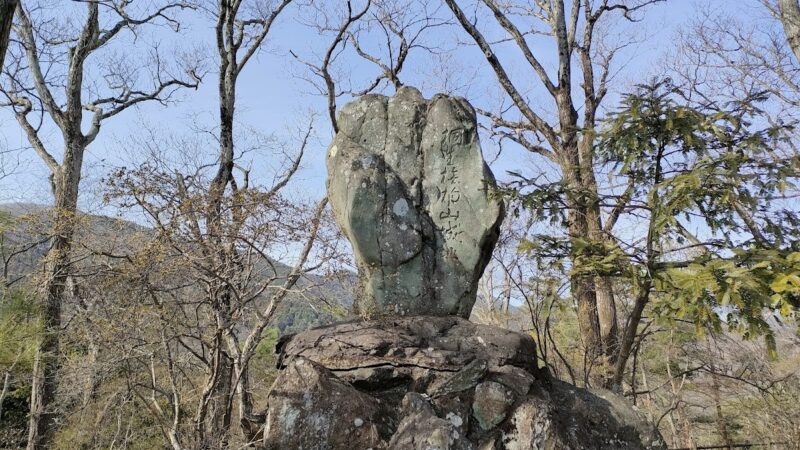
- View from Shiroyama Park: Offers panoramic views of the Usui River basin and Annaka city.
- Explanatory Sign for Remains: The information boards installed on-site are also valuable as historical records.
The combination of the changing seasons and the castle remains offers different perspectives depending on when you visit.
Access Methods
Access by Car
- Approximately 10 minutes from the Matsuida Myogi IC on the Joshinetsu Expressway
- Parking: Parking spaces available at Shiroyama Park (limited number of spaces)
Access by Public Transportation
- Approximately 15 minutes on foot from Isobe Station on the JR Shin’etsu Main Line
- Within walking distance from the Isobe Onsen hot spring resort area
Address: Shiroyama, Sagimiya Shinchi, Annaka City, Gunma Prefecture
Points to Note When Visiting
- As it is a mountain castle, comfortable walking shoes are recommended.
- Insect repellent is necessary during the summer months.
- Signposts are limited, so checking the castle layout map beforehand will enhance your visit.
- To protect the remains, please be careful when entering the earthworks and moats.
- Although it is a park, there are many natural features, so please watch your step.
Attractions Around Isobe Castle
Isobe Onsen
Isobe Onsen, located within walking distance of Isobe Castle, is known as the birthplace of the “hot spring symbol” on Japanese maps. This hot spring town, situated along the clear waters of the Usui River, offers scenic views with Mount Myogi as a backdrop.
It has long been a bustling hot spring resort, popular with travelers on the Nakasendo road and those seeking therapeutic baths from nearby areas, and has been visited by many literary figures and artists. It’s highly recommended to relax in the hot springs after exploring the castle ruins.
Main Hot Spring Facilities
- Megumi no Yu: A day-trip hot spring facility with a large public bath and open-air bath. The sand and salt bath is particularly popular.
- Isobe Garden (Suzume no Oyado): A hot spring inn associated with the legend of “The Tongue-Cut Sparrow.” Enjoy a hot spring tour with multiple large public baths and open-air baths.
- Mineral Spring Tofu: A specialty dish using the mineral spring water of Isobe Onsen.
Nearby Historical Spots
- Annaka Castle Ruins: An important stronghold in Kozuke Province, conquered by Takeda Shingen.
- Usui Barrier Ruins: The site of an important barrier on the Nakasendo road.
- Myogi Mountain: One of Japan’s three most scenic spots, visible from the Isobe Onsen town.
Cultural Value of Isobe Castle
Records as a Site Included in Reports
Isobe Castle is included in the “Report on Archaeological Excavations in Gunma Prefecture” by the Gunma Prefectural Board of Education, and is a site that has undergone academic research. Investigations conducted from 2013 to 2014 confirmed remains such as pits and moats, providing valuable data on the castle’s structure and age.
Various Cultural Property Information
Isobe Castle is positioned as an important historical heritage site of Annaka City and is registered in the National Cultural Properties Directory. The classification of this castle as a fortified residence indicates its character as a regional power base from the medieval to the early modern period.
Future Preservation and Utilization
Currently, the Isobe Castle ruins are being developed as a park, but balancing the preservation and utilization of the remains is a crucial issue. It is necessary to create an environment where visitors can safely view the site while maintaining its untouched natural state.
Preservation activities by local residents and continuous research by castle researchers play an important role in passing on the value of Isobe Castle to future generations.
Significance of Visiting Isobe Castle
Understanding Kozuke Province in the Sengoku Period
Visiting Isobe Castle is an important experience for understanding Takeda Shingen’s invasion strategy of Kozuke Province. By considering on-site why the castle was built in this location and what role it played, one can gain insight into the military strategies and regional control realities of the Sengoku period.
A Learning Place to Experience Castle Structure
Isobe Castle, with its well-preserved basic elements of castle architecture such as the multi-bailey layout, earthworks, and moats, is an excellent teaching material for learning about castle architecture. You can experience the actual topography and scale of the ruins in a way that textbooks and photographs alone cannot convey.
Experiencing Local History and Culture
Isobe Castle and its surrounding area are rich in diverse historical and cultural elements, including a post town on the Nakasendo road, Isobe Onsen hot springs, and the legend of the Tongue-Cut Sparrow. Starting with a visit to the castle ruins, you can embark on a journey to discover the historical charm of the entire region.
Summary: Rediscovering the Charm of Isobe Castle
Isobe Castle in Annaka City, Gunma Prefecture, is a historically significant mountain castle that functioned as an important base in Takeda Shingen’s control of western Kozuke Province. It has undergone historical changes, from its founding in the Kamakura period to its renovation during the Sengoku period and its subsequent capture by the Hojo clan after the fall of the Takeda clan. Currently, it is a beloved local park known as Shiroyama Park.
The castle’s layout, clearly visible earthworks, and moats are preserved in an untouched state, making it a valuable place to experience the castle structure of the Sengoku period. Excavations conducted by the Gunma Prefectural Board of Education have confirmed the presence of pits and moats, and the site is recognized as an important archaeological site from a scientific perspective.
Located adjacent to Isobe Onsen, the birthplace of the hot spring symbol, and blessed with the clear waters of the Usui River and the scenery of Mount Myogi, the site offers an attractive environment that combines castle ruins exploration with hot spring sightseeing.
Isobe Castle is a historical site worth visiting not only for castle enthusiasts but for anyone interested in history. Why not visit the site, feel the spirit of the Sengoku period, and experience the rich history and culture of Gunma Prefecture?