Complete Guide to Kanayama Castle Ruins | A Thorough Explanation of History, Highlights, and Access to One of Japan’s Top 100 Castles
What is Kanayama Castle? | One of Kanto’s Leading Mountain Castles Representing the Sengoku Period
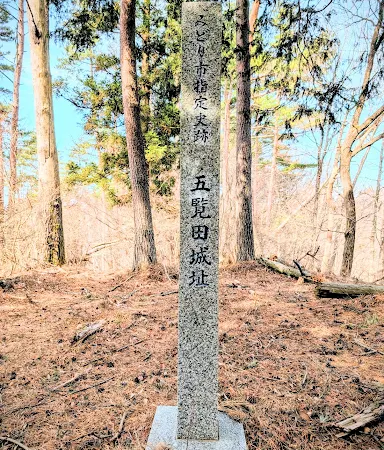
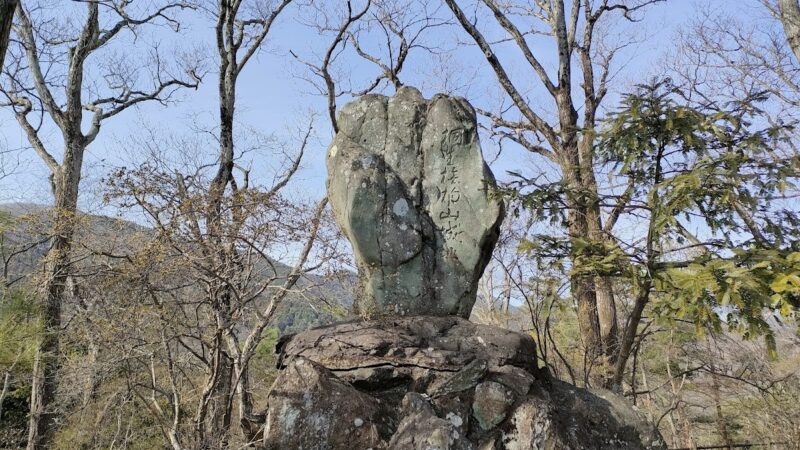
Kanayama Castle Ruins is a representative mountain cast of of Sengoku period, built around the summit of Mt. Kanayama, which rises to an altitude of 235.8 meters, almost in the center of Ota City, Gunma Prefecture. Its official name and is als is also known as “Ota Kanayama Castle.”
The castle’s greatest feature lies in its layout, which skillfully utilizes the natural terrain of Mt. Kanayama. It boasts a vast castle area, one of the largest in Korea, measuring 3.1 kilometers east-west and 3.8 kilo scale of approximately 300 hectares. It is said that walking from one end to the other would take more than a day.
Kanayama Castle is selected as one of “Japan’s Top 100 Castles” and is also counted among the “Seven Famous Castles of Kanto,” receiving high praise from castle enthusiasts and history lovers. In 2006, it was designated a National Historic value.
Characteristics and Structure as a Mountain Castle
Kanayama Castle predates the construction of castle towers, and its remains, primarily consisting of civil engineering works such as stone walls, earthworks, and moats, are well-preserved. A strategy unique to mountain castles was employed : during the mountain, while during battles, the castle at the summit was heavily fortified.
The main castle (mijo) was situated at the summit, and four main enclosures—Nishijo, Kitajo (Sakanakajo), and Hachiojiyama Fort—were constructed on the ridges extending in all directions. These were strongly defensaed with moats and earthwork fortress.
History of Kanayama Castle | From Construction to Abandonment
Construction History and Iwamatsu Iezumi
Kanayama Castle was constructed in 1469 (Bunmei 1) by Iwamatsu Iezumi, a member of the Nitta clan. The Iwamatsu clan, descendants of the Nitta clan, wielded significant influence in this region.
From its inception, the castle was designed as an impregnable fortress, making maximum use of the rugged terrain of Kanayama. During the turbulent Sengoku period, it played a crucial role as a base for controlling the region.
The Yura Clan Era and the Castle’s Tempest
After the Iwamatsu clan, Kanayama Castle came under the control of the Yura clan. During the Yura era, Kanayama Castle reached its peak, and further improvements were made to the castle’s fortifications. It is believed that the full-fledged stones seen today, were constructed during this period.
The Yura clan continued to fight against Sengoku daimyo such as Uesugi Kenshin and Takeda Katsuyori, using Kanayama Castle as their base. What is particularly noteworthy is the fact that Kanayama Castle never fell, despite being attacked more more than ten times including attacks by Takeda Katsuyori. Because of this, Kanayama Castle established its reputation as an “impregnable castle.”
Hojo Clan Rule and Abandonment
In the late Sengoku period, Kanayama Castle came under the control of the Hojo clan, who dominated the Kanto region. However, with the fall of the Hojo clan in Toyotomi Hideyoshi’s Odawara campaign in 1590, Kanayama Castle also ceased to exist.
In the Edo period, Nakayama Terumori, a retainer of Tokugawa Ieyasu, became the lord of the castle, but it was soon abandoned. From then on, Kanayama Castle was buried in history, but its sturdy stone remains have survived to the present
Highlights of Kanayama Castle Ruins | Complete Guide to Must-See Spots
Stone Pavement and Stone Walls of the Main Gate
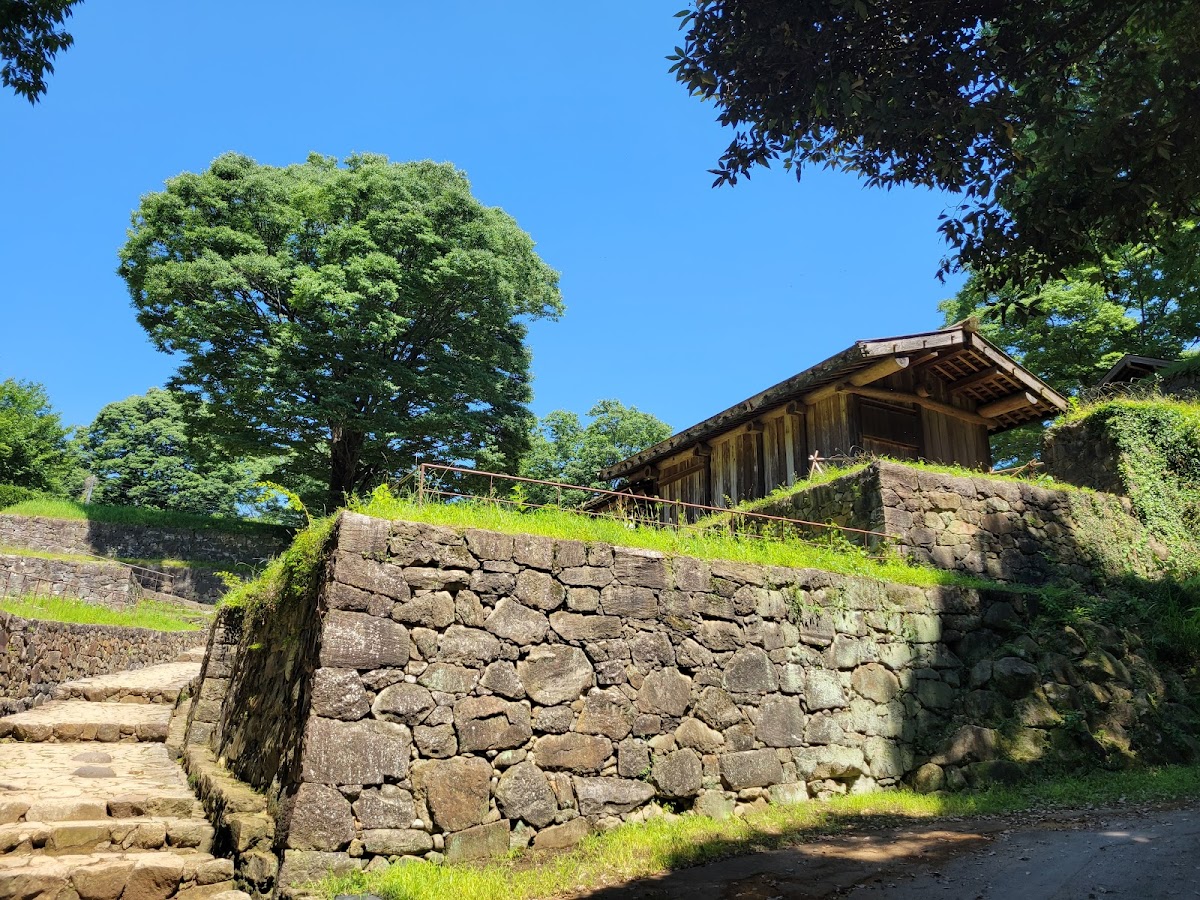
The most representative highlight of Kanayama Castle Ruins is the orderly stone pavement and stone walls of the main gate (Ote-koguchi). Restored based on archaeological excavations, this stone pavement is extremely rare for a mountain castle from the Sengo stonemasonry techniques.
The main gate is the castle’s front entrance and has a complex structure to prevent enemy intrusion. High stone walls rise on both sides of the stone pavement, allowing visitors to appreciate the ingenuity of the defensive system of the time. The stonemiz skillfully stacking natural stones, and retain their original appearance even after more than 400 years.
Sun Pond and Moon Pond
Another distinctive feature of Kanayama Castle Ruins are the stone-built ponds known as “Sun Pond” and “Moon Pond.” These are valuable water source facilities for the mountain castle, and are extremely rare stone-built water reservoirs for
Hinoike Pond is located near the main keep, while Tsukinoike Pond is located a little further away. Both ponds are carefully surrounded by stones, demonstrating the advanced civil engineering techniques of the time. These ponds are thout also as defensive and ceremonial purposes for the castle.
Archaeological excavations have uncovered artifacts from the time at the bottom of the ponds, providing important clues to understanding life within the castle.
Main Keep Area
Located on the summit of Mt. Kanayama, the main keep area is the central part of Kanayama Castle and the site of the lord’s residence. From the summit at an altitude of 235.8 meters, a spectacular view unfolds, overlooking not only the Kanoin but
In the main keep area stands the Nitta Shrine, dedicated to Nitta Yoshisada. Clear traces of earthworks and baileys remain around the shrine, allowing for an understanding of the castle’s structure at the time.
Moats and Earthworks
The key to Kanayama Castle’s defense system is the moats dug to cut across the ridges. Multiple moats are strategically placed in succession, effectively preventing enemy incursions.
Earthworks remain throughout the castle grounds, their height and scale indicating the large-scale civil engineering work of the time. These civil engineering remains, along with the stone walls, were crucial elements supporting Kanayama Castle’s defenses.
West Castle, North Castle, and Hachiojiyama Fort
Among the main castle, subsidiary castles such as West Castle, North Castle (Sakanaka Castle), and Hachiojiyama Fort are positioned on the ridges surrounding it. These are outer fortifications protecting the main castle, embodying the concept of multi-layered
Each enclosure has its own unique defensive facilities, creating a system where the entire castle works together organically for defense. Because the area is maintained as a hiking trail, taking the time to explore it allows you to experience the magnificent scale.
Archaeological Excavation and Restoration
Continuous Archaeological Excavation
Continuous archaeological excavations have been conducted at the Kanayama Castle site since the Showa era. These investigations have gradually revealed the structure of the stone walls, the layout of buildings, and the daily life tools used at the time.
In particular, investigations around the main gate confirmed the existence of intricately constructed stone paving and drainage facilities, demonstrating the existence of sophisticated urban planning for a mountain castle during the Sengoku period. Excavated artifacts include Chinese ceramics, sugg
Historical Site Development and Restoration Project
Based on the results of the archaeological excavations, Ota City is proceeding with the development and restoration project of the Kanayama Castle site. The stone paving and stone walls of the main gate have been faithfully restored using the construction methods confirmed during.
In the restoration, emphasis was placed on archaeological accuracy, while also ensuring the safety of visitors. Information boards and explanatory panels have been installed throughout the site, creating an environment where visitors can understand the historical background and the Castles Stamp and Castle Card
Stamp Locations
Kanayama Castle is the 17th castle in the “Japan’s Top 100 Castles” list, making it an important destination for castle enthusiasts collecting the stamps.
Stamps are located at two locations: the Kanayama Castle Ruins Guidance Facility (40-98 Kanayama-cho, Ota City) and the South Enclosure Rest Area. The guidance facility features detailed exhibits on the history and structure of the Kanayama Castle, deepening y beforehand.
Opening hours are from 9:00 AM to 5:00 PM (until 4:00 PM from December to February), and it is open year-round except for the New Year holidays. Stamps are free of charge.
Castle Seals and Commemorative Goods
Kanayama Castle’s castle seals are also available for purchase and are popular as souvenirs. They can be obtained at the Ota City Tourism and Products Association and the Kanayama Castle Ruins Guidance Facility. The design is based on the distinctive stone walls and family crest
In addition, commemorative goods, pamphlets, and books featuring Kanayama Castle are also sold, allowing you to take home memories of your castle visit.
액세스 정보 | How to Get to Kanayama Castle Ruins
Access by Public Transportation
By Train
- Get off at Ota Station on the Tobu Isesaki Line
- Approximately 90 minutes on foot from the station (via hiking trail)
- Approximately 15 minutes by taxi
By Bus
- Take the Ota City Bus “Kanayama Castle Ruins Line” from the north exit of Ota Station
- Get off at the “Kanayama Castle Ruins Guidance Facility” bus stop
- Buses operate mainly on weekends and holidays (please check operating days)
Access by Car
By Expressway
- Approximately 15 minutes from Ota-Kiryu IC on the Kita-Kanto Expressway
- Approximately 50 minutes from Takasaki IC on the Kan-Etsu Expressway
- Approximately 25 minutes from Tatebayashi IC on the Tohoku Expressway
Setting Your Car Navigation System
- Search for “Kanayama Castle Ruins Guidance Facility” (40-98 Kanayama-cho, Ota City, Gunma Prefecture)
- Or search for “Kanayama Castle Ruins Parking Lot”
Parking Information
There are several parking lots at the Kanayama Castle Ruins.
Main Parking Lots
- Kanayama Castle Ruins Parking Lot (Western Foothills): Free, approximately 30 cars
- Momijidaira Parking Lot (Southern Foothills): Free, approximately 20 cars
- Kanayama Castle Ruins Guidance Facility Parking Lot: Free, approximately 10 cars
All parking lots are free and open 24 hours a day. However, congestion is expected during cherry blossom and autumn foliage seasons and when events are held, so early arrival is recommended.
From the parking lot to the main keep (actual castle) is approximately a 30-40 minute hike. While there is a well-maintained hiking trail, comfortable shoes and clothing are recommended.
Points of Interest and Estimated Time Required for Visiting
Recommended Visiting Course
Standard Course (Estimated Time: Approx. 2 Hours)
- Preparation at the Kanayama Castle Ruins Guidance Facility (20 minutes)
- From the Parking Lot to the Main Gate (20 minutes)
- Visiting the Main Gate and Stone Pavement (20 minutes)
- Visiting Hinoike and Tsukinoike Ponds (15 minutes)
- The Main Castle (Honmaru) and Nitta Shrine (30 minutes)
- Descending the Mountain (20 minutes)
In-Depth Course (Estimated Time: 3-4 Hours)
This course includes the Standard Course plus visits to the ruins of subsidiary castles such as Nishijo and Kitajo. Recommended for those who want to understand the overall layout of the castle.
Points to Note When Visiting
- Clothing: As it is a mountain castle, comfortable walking shoes such as sneakers are essential.
- Items to Bring: Drinking water, towel, hat (summer), warm clothing (winter)
- Weather: Be careful as the cobblestones can be slippery in rainy weather.
- Time: Plan to descend before sunset.
- Physical Fitness: Take breaks as there is a continuous uphill climb.
Best Season
Kanayama Castle Ruins have charm in every season.
- Spring (late March to April): Known as a famous cherry blossom viewing spot, the entire mountain is covered in cherry blossoms.
- Summer (June to August): Lush green scenery, but heat precautions are necessary.
- Autumn (October to November): Beautiful autumn foliage and mild weather. Most Popular Season
- Winter (December-February): Clear air and excellent views, but warm clothing is necessary.
Nearby Tourist Attractions
Highlights in Ota City
Nitta-sho Historical Museum
A museum where you can learn about the history of the Nitta clan. Ideal for understanding the historical background of Kanayama Castle.
Ota City Museum of Art and Library
A multi-purpose cultural facility that opened in 2017. Features modern architecture.
Japan Snake Center
A unique facility exhibiting snakes from around the world. Recommended for families.
Gourmet Information
Ota City is known as the “City of Yakisoba.” Ota yakisoba is characterized by its thick noodles and can be enjoyed at many restaurants in the city. Dishes using Joshu beef and local vegetables are also popular.
The Cultural Value of Kanayama Castle
Significance of National Historic Site Designation
Kanayama Castle ruins were designated a National Historic Site in 2006. This designation indicates that Kanayama Castle possesses high historical and academic value in the following respects:
- Well-preserved mountain castle structure from the Sengoku period: Abundant remains demonstrating the castle-building techniques of the time, such as stone walls, stone pavements, and moats.
- Tells the story of the Sengoku period in the Kanto region: The stage for important historical events, including battles with Uesugi Kenshin and Takeda Katsuyori.
- Large-scale layout: One of the largest mountain castles in Japan, measuring 3.1 km east-west and 3.8 km north-south.
- Uniqueness of stone remains: Stone pavements and stone ponds, rare remains nationwide for a mountain castle.
Preservation and Utilization
Ota City is responsible for the preservation and management of Kanayama Castle ruins in accordance with the Cultural Properties Protection Law. At the same time, efforts are underway to utilize the site as a place for citizens and tourists to experience history.
Through volunteer guided tours, history lectures, and use in school education, the value of Kanayama Castle is being passed on to future generations in various forms.
Summary | The Charm of Kanayama Castle Ruins
Kanayama Castle Ruins is a valuable historical site that conveys the appearance of a mountain castle from the Sengoku period to the present day. Its history of repelling attacks from Uesugi Kenshin and Takeda Katsuyori as an impregnable fortress, the pavements and stone walls, and its magnificent scale integrated with the natural environment of Kanayama—all of these make Kanayama Castle a worthy example of one of Japan’s 100 Famous Castles.
Located close to Ota city center and easily accessible, Kanayama Castle Ruins offers stunning views from the mountaintop and allows visitors to enjoy the changing seasons. It’s a recommended spot not only for history buffs but also for hikers and
When visiting Gunma Prefecture, be sure to visit Kanayama Castle Ruins and experience the spirit of the Sengoku period. As you walk along the cobblestone paths, touch the stone walls, and gaze out over the Kanto Plain from the mountaintop, you’ll surely 400 years ago.