Koriyama Castle (Yamato-Koriyama) Complete Guide | History, Highlights, Repurposed Stones, and Access Information
Koriyama Castle, located in Yamato-Koriyama City, Nara Prefecture, is a magnificent castle built by Toyotomi Hidenaga, the younger brother of Toyotomi Hideyoshi, as the residence of his 1 million koku domain. It is now designated a Nasio Continued Top 100 Korean Castle and one of Japan’s Top 100 Cherry Blossom Viewing Spots. This article will fully convey the charm of Koriyama Castle, which flourished as the center of a castle town, from its history and highs 정보.
What is Koriyama Castle? | A Hilltop Castle at the Northwestern Edge of the Nara Basin
Koriyama Castle is a hilltop castle located at the northwestern edge of the Nara Basin, at the southern end of the Nishinokyo Hills. Construction of Koriyama Castle began in 1580 by Tsutsui Junkei. Following extensive renovations by Toyotomi Hidena into a modern castle with triple moats and high stone walls.
During the Edo period, it served as the administrative center of the Koriyama Domain. After being ruled by the Mizuno, Matsudaira, and Honda clans, the Yanagisawa clan governed the castle until the end of the Edo period. The current Koriyama Castle site features reconstructed main the castle keep, evoking its former glory.
On November 10, 2022, the main keep, Tokiwa Kuruwa, Bishamon Kuruwa, Genbu Kuruwa, Jinpo Kuruwa, stables, Midori Kuruwa, Kirin Kuruwa, firewood storehouse, inner moat, and middle moat were designated a National Historicete.
History of Koriyama Castle | From Tsutsui Junkei to the Yanagisawa Family
Construction by Tsutsui Junkei (Tensho 8, 1580)
The history of Koriyama Castle begins in Tensho 8 (1580), when Tsutsui Junkei, who had Tsutsui Castle as his base, moved to Koriyama at the command of Oda Nobunaga. Junkei transported large stones from the abandoned Tamon-yama Castle construction. It is said that Akechi Mitsuhide also came to inspect the construction.
Tsutsui Junkei is known as a Sengoku daimyo of Yamato Province. After serving Oda Nobunaga, he established a new base in this area. However, when Junkei died at the young age of 36 in tensho 12 (1584 Sadatsugu, inherited the family headship.
Toyotomi Hidenaga’s Major Renovation (Tensho 13, 1585)
In August of Tensho 13 (1585), Toyotomi Hidenaga, the half-brother (though some theories suggest he was the full brother) of Toyotomi Hideyoshi, entered Koriyama Castle, receiving a domain of 1 million koku encompassing Yamato, Kii Koriyama Castle, transforming it into a magnificent fortress and serving as the base for the Toyotomi regime’s administration of the Kinai region.
During Hidenaga’s time, Koriyama Castle functioned as the center of Yamato, Kii, and Izumi, and the castle town flourished greatly. Hidenaga was known as a wise ruler and was beloved by his people, but he died in Bun adopted son, Toyotomi Hideyasu, also died young, marking the end of the Toyotomi family’s rule over Koriyama.
Masuda Nagamori and the Lords of the Edo Period
After the death of Toyotomi Hideyasu, in 1595 (Bunroku 4), Masuda Nagamori, one of the Five Commissioners, became the lord of Koriyama Castle. Nagamori continued to improve the castle, but was dispossessed of his domain forsiding with
In the Edo period, the Koriyama Domain was established, and successive fudai daimyo, such as Mizuno Katsunari, Matsudaira Tadaaki, and Honda Masakatsu, became its lords. In 1724 (Kyoho 9), Yanagisawa Yoshisato Kasi 150,000 koku stipend, and the Yanagisawa family ruled Koriyama until the end of the Edo period.
The Yanagisawa family, along with the Yagyu Domain, was a representative daimyo family of Yamato Province and contributed to the development of the castle town. Goldfish farming also flourished during this period, laying the foundation for be-ing of Kown Castles.”
Highlights of Koriyama Castle | Restored Otemon Gate and the High Stone Walls of the Castle Tower
Restored Otemon Gate and Turret
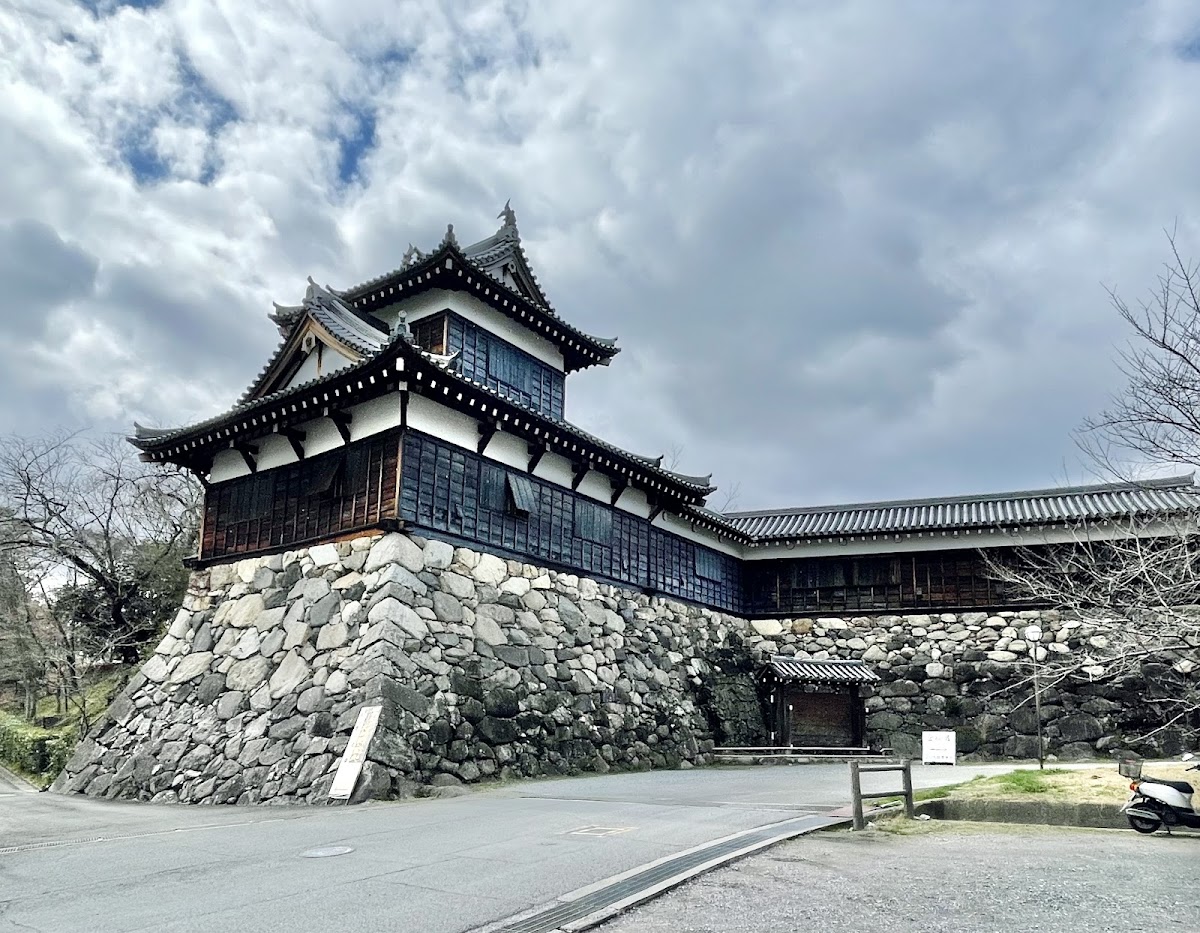
The first thing you’ll see at the Koriyama Castle ruins is the Otemon Gate, restored in 2004. The Otemon Gate was the castle’s main entrance and still conveys its former grandeur. Passing through the gate, the restored turret.
The inner moat remains around the Otemon Gate, forming the framework of the castle along with the stone walls. In spring, approximately 600 cherry trees, including Somei Yoshino varieties, bloom around the moat, creating a beautiful landscape blossoms).
High Stone Walls and Repurposed Stones of the Castle Tower
The greatest highlight of Koriyama Castle is the high stone walls of the castle tower that soars above the main enclosure. The stone walls, exceeding 10 meters in height, are breathtaking and speak to the high level of techt-bu is believed that an actual castle tower was never built on the castle tower base, the stone walls themselves have become a symbol of Koriyama Castle. In 2017, an observation facility was built on the castle tower base, allowing visitors to-joy top of the base.
The Mystery of the Upside-Down Jizo and Repurposed Stones
Particularly famous on the stone walls of Koriyama Castle’s castle tower base is the repurposed stone known as the Upside-Down Jizo. This is a stone Buddha that was turned upside down and used as part of the stone wall. and foundation stones were repurposed because a large amount of stone was needed during the castle’s construction.
Besides the Upside-Down Jizo, various other repurposed stones can be found on the castle tower base’s stone walls, including a massive stone said to be a foundation stone of the Rashomon Gate of Heijo-kyo. These repurposed stones are valuable historic castle ‘s construction.
If you carefully observe the stone walls, you can find various repurposed stones, such as parts of Buddhist statues and components of five-ringed pagodas. Searching for repurposed stones is one of the pleasures of visiting Koriyama Castle.
Each Enclosure and Layout
Koriyama Castle consists of multiple enclosures, centered around the main keep (Honmaru), including the Tokiwa Enclosure, Bishamon Enclosure, Genbu Enclosure, Jinpo Enclosure, Stable, Midori Enclosure, Kirin Enclosure, and Firewood Storehouse. These encloat inner moat, a middle moat, and an outer moat.
Even today, parts of the inner and middle moats remain, allowing visitors to understand the castle’s structure along with the stone walls. Information boards are installed in each enclosure, providing insights into the original building layouts and functions.
The main keep houses the Yanagisawa Library, which displays materials related to the Yanagisawa family and exhibits about Koriyama Castle. It’s a must-visit spot when exploring the castle ruins.
Seasonal Events | Castle Festival and Cherry Blossom Spot
One of Japan’s Top 100 Cherry Blossom Spots
Koriyama Castle Ruins is one of Japan’s Top 100 Cherry Blossom Spots, boasting approximately 600 cherry trees in full bloom during the spring. The cherry trees planted around the moat are also known as “Goten-zakury” visitors.
During the cherry blossom season, the trees are illuminated at night, allowing visitors to enjoy the magical sight of cherry blossoms after dark. The contrast between the stone walls and the blossoms is exceptional, making it a popular
Castle Festival
Held to coincide with the cherry blossom season, the “Castle Festival” is a spring tradition in Yamato-Koriyama City. A variety of events are held, including historical processions, samurai processions, and a goldfish scooping competition.
In the historical procession, participants dressed as historical figures associated with Koriyama Castle, such as Toyotomi Hidenaga and Yanagisawa Yoshiyasu, parade through the castle town. This festival, enlivened by the entire local community, offers a valuable opportunity to experi castle town.
Koriyama Castle Ruins as a Center of Activity
The current Koriyama Castle Ruins function as a place of relaxation for citizens and a central tourist attraction. The area surrounding the castle ruins retains the atmosphere of the castle town, with numerous shops and facilities themed around goldfish.
In Yamato-Koriyama City, known as the “City of Goldfish and Castles,” you can enjoy exploring the castle town starting from the Koriyama Castle Ruins. Popular routes include those visiting historical buildings and goldfish-related facilities such as Yanagimachi
Recognition as one of the Continued Top 100 Korean Castles and as a Fortress
Koriyama Castle was selected as one of the “Continued Top 100 Japanese Castles” in 2017. The Continued Top 100 Japanese Castles is a list of famous castles selected by the Japan Castle Association, second only to the Top 100 Japanese Castes
Highly rated by castle enthusiasts, according to data from the Kojodan (Castle Attack Group), reports from over 2,400 visitors to Koriyama Castle show an average visit time of 1 hour and 14 minutes and an average rating of 3.58 out of 5.
With its high stone walls, repurposed stones, restored main gate, and charming cherry blossom viewing spots, Koriyama Castle is highly regarded as a castle site enjoyable not only for history buffs but also for general tourists.
Koriyama Castle and the Toyotomi Regime | A Center for Governing the Kinai Region
During the time when Toyotomi Hidenaga resided at Koriyama Castle, it was not merely the residence of a daimyo (feudal lord), but a crucial center for the Toyotomi regime’s governance of the Kinai region. Hidenaga, who ruled over 1 million ko played a vital role in supporting Toyotomi Hideyoshi at Osaka Castle.
Koriyama Castle was strategically located at a crucial transportation hub connecting Osaka, Nara, and the provinces of Kii and Izumi, making it militarily and politically important. Under Hidenaga’s rule, the castle town flourished, and commerce and industry prospered.
Hidenaga was known for his gentle nature and was beloved by his people. It’s said that “Hideyoshi wouldn’t have been the same without Hidenaga,” and he is remembered in history as a key advisor who supported the Toyotomi as Hidenaga’s residence, is a symbol of the golden age of the Toyotomi regime.
Koriyama Castle’s Stone Walls | The Pinnacle of Castle Construction Techniques
The stone walls of Koriyama Castle are valuable resources for understanding castle construction techniques from the Azuchi-Momoyama period to the early Edo period. In particular, the high stone walls of the main keep showcase techniques from the transition period between rough-
The construction of the stone walls utilized a large quantity of repurposed stones, in addition to stones quarried from nearby mountains. This was a technique designed to enable the castle’s construction in a short period of time, and as a result, it hasa
The corners of the stone walls utilize a technique called “san-gi-zumi,” where rectangular stones are interlocked to increase strength. Observing the stone walls of the castle keep’s base reveals these ingenious castle-building techniquesth
Development of the Castle Town | A Town of Goldfish and Castles
The castle town of Koriyama Castle developed significantly during the time of Toyotomi Hidenaga. Samurai residences, merchant districts, and temples and shrines were systematically arranged around the castle, forming a typical structure of a modern castle town.
During the Edo period, the castle town was further developed under the rule of the Yanagisawa family. In particular, goldfish farming began around the Kyoho era (1716-1736), and Koriyama became known as a major goldfish producing area.
Present-day Yamato-Koriyama City is promoting town development that leverages this history, promoting itself as a “town of goldfish and castles.” The townscape of the castle town is adorned with decorations and facilities featuring gold blends the history of Koriyama Castle with goldfish culture.
The Yanagisawa Family and the Koriyama Domain | Rule that Continued Until the End of the Edo Period
Yanagisawa Yoshisato, who was transferred from Kofu in 1724 (Kyoho 9), was the son of Yanagisawa Yoshiyasu, who wielded great power as a close advisor to Tokugawa Tsunayoshi, the 5th Shogun. a Yanagisaiya 150,000 koku domain, and continued to rule for nine generations until the end of the Edo period.
During the Yanagisawa family’s rule, the Koriyama Domain maintained a relatively stable administration. They strived to improve the castle town and promote industry, and goldfish farming also developed during this period. They also focused on education by establish
During the turbulent period at the end of the Edo period, the Yanagisawa family sided with the shogunate, but they continued to exist as a noble family even after the Meiji Restoration. Documents related to the Yanagisawa family are still housed in the Yana Castle and the Koriyama Domain.
Development and Preservation of Koriyama Castle Ruins | The Path to National Historic Site Designation
The Koriyama Castle ruins have been preserved and developed by Yamato-Koriyama City over many years. Development has been carried out in stages, including the restoration of the Otemon Gate in 2004 and the construction of the Tenshudai Observation Facility in 2017.
These efforts were recognized, and on November 10, 2022, the main bailey, other major baileys, and the inner and middle moats were designated as a national historic site. This recognition of the historical value of Koriyama Castle ruinsat utilization in the future.
Yamato-Koriyama City plans to continue planned development following the historic site designation. Improvements such as the restoration of stone walls, archaeological excavations, and the enhancement of information boards are being implemented to create an environment where visitors Castle. ## Access to Koriyama Castle Ruins | Transportation Guide
Access by Train
The nearest stations to Koriyama Castle Ruins are Kintetsu Kashihara Line “Kintetsu Koriyama Station” or JR Yamatoji Line “Koriyama Station”.
- From Kintetsu Koriyama Station: Approximately 7 minutes on foot. Exit the station and head northwest; you will see the Otemon Gate.
- From JR Koriyama Station: Approximately 15 minutes on foot. Head north from the station, pass through the castle town, and you will arrive at the castle ruins.
Kintetsu Koriyama Station is approximately 35 minutes from Osaka Namba Station, and approximately 50 minutes from Kyoto Station via Kintetsu Kyoto Station. From Nara Station, it is approximately 15 minutes from Kintetsu Nara Station.
Access by Car
If visiting by car, it is approximately 10 minutes from the Nishimeihan Expressway “Koriyama IC”. There are several paid parking lots around the castle ruins, but they get crowded during cherry blossom season and events, so using public transportation.
There is a parking lot along Sanjo Street, from which you can access the castle ruins on foot. Setting “Yamato-Koriyama City Hall” or “Koriyama Castle Ruins” on your car navigation system is convenient.
Using the Tourist Information Center
There is a tourist information center in front of Kintetsu Koriyama Station where you can obtain tourist maps of Koriyama Castle Ruins and the castle town, as well as event information. You can also apply for a volunteer guide, allowing you to tour the url
Guided tours by the Yamato-Koriyama City Tourism Volunteer Guide Club are very beneficial for gaining a deeper understanding of the history and highlights of Koriyama Castle. Since reservations are required, it is recommended to inquire at the tourist information center if y
Nearby Tourist Spots | Castle Town Stroll
Yanagisawa Bunko
Located on the site of the main keep of Koriyama Castle, the Yanagisawa Bunko is a facility that houses the collection of books and works of art of the Yanagisawa family, the former lords of the Koriyama domain. This is a spot worth visiting in conjunction with related to the Yanagisawa family and Koriyama Castle.
하코모토 칸 “코냐”
This facility utilizes a townhouse that retains the atmosphere of the castle town, offering indigo dyeing experiences and exhibits on goldfish. It’s a valuable place to see Edo-period townhouse architecture.
Goldfish Museum
This facility exhibits materials related to goldfish, a specialty of Yamato-Koriyama City. You can learn about the history, breeds, and breeding techniques of goldfish.
Yanagimachi Shopping Street
This shopping street retains the atmosphere of the castle town, with goldfish-themed decorations and shops. You can enjoy local specialties and gourmet food.
Points to remember when visiting Koriyama Castle | To make your visit more enjoyable
Estimated time for visiting
For a thorough visit to the Koriyama Castle ruins, allow about 1.5 to 2 hours. A half-day is recommended to allow for activities such as climbing to the castle keep base, observing the repurposed stones, exploring the various baileyy, and
Clothing and Items to Bring
Since there are many stone steps and slopes within the castle grounds, comfortable walking shoes are recommended. Don’t forget your camera when enjoying the view from the castle keep base. In summer, the sun is strong, so bring a hat, parasol,
Precautions During Cherry Blossom Season
The castle gets very crowded during the cherry blossom season (late March to early April). Traffic restrictions may be in place, especially during the castle festival, so using public transportation is recommended. The illuminated cherry blossoms at night during the day.
Photo Spots
- Otemon Gate and Cherry Blossoms (Spring)
- View from the Castle Tower Base
- Repurposed Stones, including the Upside-Down Jizo Statue
- Inner Moat and Stone Walls
- Contrast between the Restored Turret and Stone Walls
These spots are particularly photogenic and popular with camera enthusiasts.
Summary | Experience the Charm of Koriyama Castle
Koriyama Castle is a famous castle with a history of over 420 years, from its construction by Tsutsui Junkei to the major renovation by Toyotomi Hidenaga and the rule of the Yanagisawa family during the Edo period. It has been selected as a National Historic Castles, and one of Japan’s Top 100 Cherry Blossom Viewing Spots, and its historical value and appeal as a tourist resource are widely recognized.
There are many sights to see, including the stone walls of the castle tower base, which is over 10 meters high, repurposed stones such as the Upside-Down Jizo statue, and the restored Otemon Gate. In spring, approximately 600 “Goten-zakura”(palace cherry blossoms).
Yamato-Koriyama City is a place where the remnants of a castle town blend seamlessly with its unique culture as “the town of goldfish and castles.” At its heart lies the Koriyama Castle Ruins, a captivating tourist spot where history, cul
When visiting Nara, be sure to visit the Koriyama Castle Ruins to experience the grandeur of the 1 million koku residence built by Toyotomi Hidenaga and the historical drama hidden within its repurposed stones. Its convenient location, just a 7-minute walk from Kintetsu Koriya. a precious time immersed in Korean Castle Ruins, which displays different expressions throughout the seasons.