Explanation of the history and highlights of the castle | Udaiboji Castle, the residence of the Shonai clan
The castle was located in Masatomachi, Uyamagata City, and was the Ichiza Yamaga Castle Fortress, which was the center of politics and military affairs in the Shonai area from the early Umuromachi period to the new Meiji era, around 470 years. Nowadays, it is recommended to visit the Seaweed Park, which is considered as one of Japan’s 100 most beautiful scenic spots in Japan. Text details: The history of the construction of the castle, and the unique features of its construction.
History of the castle
Daiboji castle period: Muto domain residence
The history of the castle was traced back to the early Muromachi period. It was built by Chief Governor Yumutou of Daibouji Castle, and was first famous as Daibōji Castle. The Shonai area was named after the Muto clan when it was established, and the area was established for about 300 years.
Daibo Temple Castle area is a key strategic point, overlooking the Shonai plains, and the topography of the area between the upper and lower rivers is excellent, and Chengdu is a solid defensive fortress. After the Muto clan, the name changed to Daiboji Temple, a powerful local family in the Shonai area of Chengdu.
The Uesugi clan’s restoration after the war and the invasion
At the end of the Warring States era, the Muto (Daibōji) clan declined due to internal conflict and invasion by foreign enemies. During the Tensho period (1573-1592), after the arrival of Shonai Castle, the influence of Uesugi Kei’s victory led to the Uesugi clan’s high-ranking vassal Naoe Kaneshiya becoming an advisor and managing the Shonai area. During this period, Shonai Castle was inspected, and the Uesugi clan’s control system was established in Shonai, and its progress was completed.
Mogami Ujijouji and Saranatakaoka Castle
In 1600, after the Conquest of Kanbara, Shonai Castle became the lord of Yamagata Castle, Mogami Akinote. In 1601, the Mogami clan started the construction and construction of Daiboji Castle, and established the control system in Shonai. In 1603, the castle was changed to Yiqiu Castle.
There are many reasons why the fort was renamed, but the most likely explanation is that the shape of the hill where the fort is located is very similar, and some people pray for the renaming of the fort. During the reign of the Mogami clan, the castle was built, and the castle town was also exhibited.
Arrival of the Sakai clan and establishment of the Shonai domain
In 1622 (8th year of Motna), the Mogami clan was removed from the land, and Tadashi Sakai arrived at Matsushiro, Shinshu, with a salary of 140,000 koku. After this, the castle was established and became the administrative center of the Shonai domain under the control of the Sakai clan, and the construction was completed approximately 250 years ago, leading to the Meiji era.
The Sakai clan was an important vassal of Tokugawa Ieyasu, a wealthy feudal lord, and an important position in the Tohoku region of the Ukeko Shogunate. After Tadayoshi Sakai took office, the city proceeded to complete extensive renovations and construction. Over 50 years have passed since the third generation, and others have completed the construction of the second and third outer castles, and the flat fort of the commander’s seat has been remodeled.
Exhibition and prosperity of the castle town during the Edo period
Under the rule of the Sakai clan, the castle and its castle town were visited for a long time. The castle’s main residence, government office, and samurai address were also regulated. The castle town’s commercial, industrial, and industrial center exhibitions were held, and the port of Sakata, which was a port in front of the Kitamae ship stop, was promoted to prosper in the Shonai area.
The Sakai clan also paid close attention to education, and established the school “Chidokan”. Ji Dao Hall is now located near the Yuyuan Park, providing high level education at the time of arrival in Changxang. At the end of the Edo period, the Shonai domain’s rice output was 170,000 koku, making it the largest domain in the eastern region.
Boshin Battle Battle and Battle Castle
In 1868, the first year of the Meiji era, the Battle of Boshin was fought. The Shonai Domain joined the Ouetsu Reiban Alliance, and the new government established the military forces. The final surrender of the Tadashonai domain occurred during the Battle of Yonghui Castle. However, the Sakai clan’s benevolent government was granted, and the envoys were sent immediately after the war, and the Shonai clan received special treatment, and their land was reserved.
After the Meiji era, the castle became a public park.
At the beginning of the Meiji era, Yuyu Castle was built and destroyed. The originals are missing, the castle tower is missing, and the temple hall inside the main burial mound is still intact. Part of the stone wall was preserved, but the fort’s functionality was completely lost.
Afterwards, the city fort was opened and the castle park was opened. In 1875 (Meiji 8), the castle tower of Ariwara was built and dedicated to the former feudal owner of the Sakai family, Shonai Shrine. From the Taisho era to the early Showa era, many kinds of trees were planted, and the castle was visited by a number of famous people.
Features of 鹤冈城
Mountain castle location
Usan Yongseong, which belongs to Yongchongseong. The castle was built on a high ground in the Shonai plains of Yu, and the surrounding area of Gaoyu was well-equipped with excellent defense. The site of the castle was between the main rivers of the Mogami River and the Akagawa River, forming a natural river.
Main regional engineering infrastructure
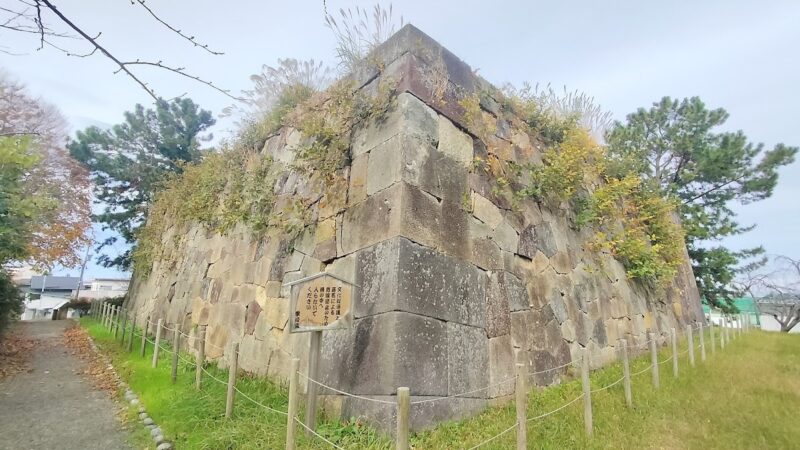
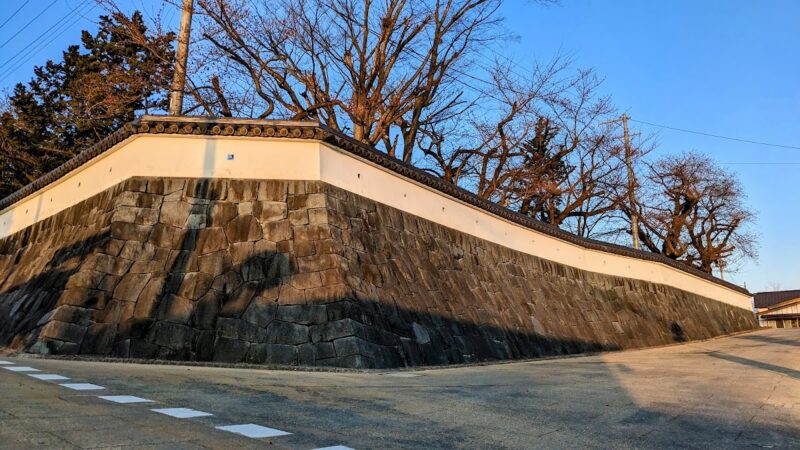
The most famous special conquest of the castle was a large-scale Hijikata engineering project. However, most of the forts in the eastern part of the north are constructed using stone tombs. This is due to the difficulty of obtaining stone materials and the durability of the castle walls due to the cold weather conditions.
The existing stone burial mound within the castle is part of the main entrance. The use of small stone tombs and coarse stone shards and other construction techniques is a rare example of fort construction techniques from the early to middle period of the modern Jiang Dynasty.
Main head, two head and three head layout
The layout of Qiuqiu Castle was to build a concentric circle with three generals and the main structure.
Shu围This is the core of the fortress, this is the main residence of the city and the official residence. The construction of the defense construction was completed, and the construction of the four walls of the castle was completed. Nowadays, the original site of Shonai Shrine, where visitors can visit, is filled with the brilliance of ancient days.
Second location The main location is the residence of high-class vassals and the location of important facilities in the country. Currently, this area is the main part of Yongqiu Park, and there is a walking path in the area. There are history information tiles on the Ninomaru square, and visitors can understand the history of the fort.
Sannomaru (third section) This is a samurai’s residence located in a forest on the other side of the castle town. Towards the southwest of Zasannomaru are the Senko Museum, the preserved residences and gardens of the Shonai feudal lords, the former site of the Shonai Police Bureau, and the former site of the Nishitagawa County Rei.
Liangfu Bureau
Most of the city’s rivers are still perfectly preserved, which is an important piece of history, and visitors can visit and explore the fort’s castle. Inner Castle Kawabunbai Honmaru (main castle), Wajinomaru (second castle), Outer Castle Kawabunbai Ninomaru Wasannomaru;
There are several bridges, bridges, bridges, rivers, and various areas of the fortress in front of tourists. After the repair, the bridge still exists, and the road to work in the park.
Castle fort construction
The fallen castle tower (Tenshun). This is due to the fact that the Sakai clan was created by the feudal lords of the world, and the shogunate was trusted by the shogunate.
There is a multi-layered palace in the main city, which is the residence of the feudal owner, and also its administrative place. The castle’s interior was built with Yutaza castle towers, Japanese castle gates, and defenses, however, it was not covered under the Meiji era Shingo castle fort ordinance.
The appearance and brightness of the park
Overview
Nowadays, the site of Zhongxian City is open to the public. The 33 public areas in the Guangyuan Park area are reserved for the city river, stone walls, 100-year-old cedar trees, and the brilliance of the old city forts.
In 2017, the castle was selected as one of Japan’s 100 most famous castles (the 108th name), and received a new title.
Famous Celebrity Victory
It is one of the most famous winning places in the world, and one of the “Japan’s 100 Greatest Victorious Places”. Approximately 710 bamboo trees were planted in the park, including Yoshino oak trees, and other items as well.
During the flowering period in mid-to-late April every year, visitors can enjoy the beautiful view of the maple flowers on the water surface of the city river, and the night lights illuminate the maple flowers. Besides this, the park will be visited by many visitors.
Shonai Shrine
Shonai Shrine is located at the fort of Ubara Castle, first built in 1877 (Meiji 10), and served by the Sakai family, the current lords of the Shonai domain. The shrine is located in the temple, and is the center of local beliefs. Every year, during the New Year’s Shichi-Go-San (Children’s Ceremony) period, many visitors from the city come and visit.
Inside the shrine’s treasure hall, there are items belonging to the Sakai clan, as well as the history of the Shonai clan.
Senkai Museum
The Senkai Museum is located southwest of the Yu Sannomaru (Third Outer Fort) ruins, and is a comprehensive museum with a full display of history and Japanese culture in the Shonai area. The exhibition includes the residence of the Shonai feudal lord, the beautiful garden, the Hara Nishitagawa District Redress Office (designated as an important cultural treasure), and the Hara Takata Police Bureau tower.
The original model of the castle is on display at the museum, and visitors can see the complete picture of the fort building group, which was built over 50 years ago by three generations. Inside the museum, you can find a rich variety of folklore and Japanese products, which is an ideal place for Shonai culture.
Shuhei Fujisawa Memorial Museum
Shuhei Fujisawa, a historical novelist in the park’s Kinen-za Memorial Museum, Memorial Museum. Inside the building: A typical exhibition of Shuhei Sato’s works, a welcome treat for literature lovers.
Sendokan
Sendo Hall was founded in 1805, and is now a school for the Shonai clan, located south of the Chimney Garden. This is a rare example of the construction of a domain school in the North East area, which has been designated as a national historical monument.
The buildings, including the hall and sanctuary, are perfectly preserved, and now they look like they were designed for education during the Edo period.
Ninomaru square history information tile
Ninomaru square has detailed historical information tiles, convenient for visitors to understand the history of the fort. In addition, an archaeological excavation of Jinfeng stone (a variety of stone) was found near the site. Kinpo Stone is a stone unique to the Shonai area, and its appearance is significant.Kinpo Stone was used during the construction of the castle fort.
Walk along the shores of Hewa Stone Climb
A well-preserved Hewa stone tomb within the park that is accessible to visitors. The castle tower’s stone citadel leaves a deep impression on the old man, and is a must-visit place for those who love castle forts.
Along the river, the scenery of the four seasons is different, and each season the capital exhibits a different appearance: spring flowers are blooming, summer is green, autumn is red, the leaves are like fire, winter is white and snowy.
Transportation and sightseeing information
Transportation method
Ride by bus: It takes about 25 minutes to walk to the JR station, or about 10 minutes to get off the bus from the “municipal office” station.
Driving: Departs from Yuyamagata Expressway Takanori IC, approximately 10 minutes and can be reached immediately.
Car stop
There are many bus stops around the airport. I’m looking forward to traveling in the flower season, and the construction will be completed soon.
Vote and opening time
Park principal exemption, 24 hours open. However, please visit the Senkai Museum and the Shonai Shrine Treasure Hall.
Sightseeing place demand time
A trip to the public park will take approximately one hour, but please take a deeper look at the Qiandang Museum, which will be built around 3-4 hours.
Zhoukan Travel Scenic Points
Center of Jianchu City
Located in the center of Jiangsu City, it is a former samurai residence and a Japanese commercial residence during the Jiang Dynasty, and visitors are welcome to visit the castle town, which is full of history.
Mt. Hakuro
Mt. Hakuro is one of the three mountains in Dewa, about a 30-minute ride from Takashi City. A multi-scenic spot on the mountain, a five-storied pagoda totaling 2446 stones, a comprehensive national treasure.
Kamo Suizokukan
The Kamo Water Tribe Museum is also known as the Water Mother Exhibition, which is a hot tourist attraction facing the Sea of Japan.
overview
Yongqiu Castle is a historic fortress with a long history, first built in the Muromachi era, famous as a temple castle, and changes in the history of the United Kingdom. , It has been 250 years since the Shonai domain (originally 140,000 koku, and later increased to 170,000 koku) lived and flourished during the Edo period. The castle was built by Muto Nagamori, after which the name of the Mogami clan was changed, and Sakai Tadayoshi repaired it again, and after more than 50 years of extensive reconstruction, the castle was finally built, and the land was flattened and the castle was firmly established.
After the beginning of the Meiji period, the castle was constructed and removed, but the castle river, the earthworks, the stone wall, etc. have been preserved since the beginning of the Meiji period. The castle was honored with one of Japan’s 100 largest competitions, and during the spring season, there were 710 cherry blossoms and cherry blossoms in the castle.
Surrounding the castle ruins, the historical scenery of the Shonai clan is now on display, including the Shonai Shrine on the site of Ubara Castle Tower, the thousand roads museum and school of the thousand roads on the site of Ubara Third Castle, which is the ideal place for historical walks. How many times have we chosen to visit Japan’s 100 most famous castles?