Nakai Castle: A complete picture of the mountain castle of Hideyoshi, the determined commander of Odawara.
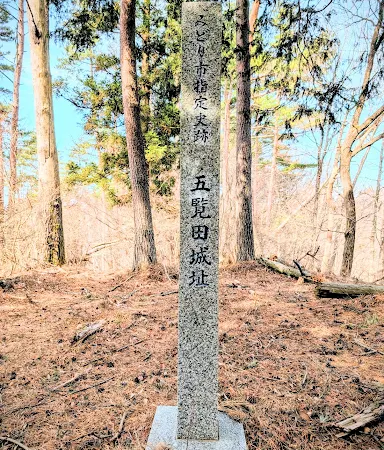
Meikai Castle is located in Shimotsu, Minakami-cho, Tone-gun, and is a castle in the country. This is an important part of the play in the history of Japan, which is the origin of the “Nakai Castle Change”, which is a direct reference to the incident and Hideyoshi’s battle against Odawara, which is the final victory for Japan. Meikai Castle was built on the platform of the Tone River and the Akatani River, which is a natural defensive fortress, and is now a historical site designated as a historical site by many historical sites, attracting many history lovers to visit.
Meikai Castle location and special geographical expedition
Meikai Castle is a mountain castle built on a plateau on the west bank of the Tone River. The castle fort is approximately 440 meters in length, the eastern Tone River, the western Akatani River, and the land area is a natural fortress. On the side of the fortress, there was a cliff in the middle of the castle, and the enemy invaded due to its geographical strength.
This place also has important military meaning. It is about 3 kilometers south of Numata Castle, overlooking the Sangoku Highway (now National Route 17), and is an important transportation hub for the Ueno Province (Gunmai) and Waetsu and the latter half of the country (Niigata). In the words of the Sanada clan, this is an important strategic point in Ueda and Wanumata, the accession state;
Meikai Castle Historical Exhibition
Muromachi period: Residence built by the Nakai clan
The history of Nakai Castle dates back to the Muromachi era. At the time, the branch name of the Numata clan, the Kurumi clan, was in charge of the construction of this property. At that time, the statue was the local owner’s residence, and a complete castle fortress. The Numata clan is the owner of a large and powerful region in the northern part of Ueno Province, and its branch name is the Kurumi clan.
Era of war: Takeda clan and Masayuki Sanada era
In the early period of the War, the Hojo clan in the eastern part of Ueno Province, the Uesugi clan in Etsu and the Takeda clan in Kai and the three major forces were the focus of the conflict. During the Eiroku era (1558-1570), the Uesugi clan attacked and captured Numata Castle, and the Numata area was founded by the Uesugi clan.
In 1579, Masayuki Sanada, a vassal of Takeda, was sent to the military in the Nakuumi area. Masayuki Sanada’s residence in the original area has undergone extensive reconstruction, completed the construction of Naguumi Castle, and completed the construction of the mountain castle. During this period, Masayuki Sanada controlled Numata Castle, Naguumi Castle, and an important annex to Numata Castle. Masayuki Sanada built Naguumi Castle, which had a different defense. Other designs can be used to design fine lines, and the main layers are arranged in a straight line, such as the outer layer, three layers, two layers, the main layer, and the next layer. Masayuki Sanada’s highly advanced fort construction techniques have now been demonstrated, which is also a typical example of a mountain fortress on a finite topography that was fully utilized during the period of war.
Tenshojin Gogo-Koyo Numata 领地归 belonging issue
In 1582, Nobunaga Ikuda was in charge of the “Honnoji Temple change”, the Takeda clan and their families declined, and the Tensho Gods were attacked, the Hojo clan, the Tokugawa clan and the Uesugi clan fought against each other, and the Takeda clan exploded in fierce conflict. Masayuki Sanada’s outstanding diplomatic skills, successful transfer, and control over Numata territory.
In 1585 (Tensho 13), Tokugawa Ieyasu and the Hojo clan entered into a peace agreement, and this was born in Numata Province. Masayuki Sanada was a vassal of Tokugawa, refused to give up on Numata Castle, and continued to lead the Hojo clan.
Naru Sea Change: A turning point in Japan
In October 1589 (Tensho 17), an incident in the history of Japanese history involving serious changes to the generals, immediately known as the “Naru Sea Change”.
At that time, Hideyoshi, the chief vassal, was under the supervision of the Hojo clan in the eastern region, and was the last step in his career in Japan. Hideyoshi’s decision was established and the peace was published: Numata Castle east of the Tone River is owned by the Hojo clan, Naruumi Castle west of the Tone River is owned by the Sanada clan. However, the Hojo clan’s lord of Numata Castle, Inomata Kunisaki, suddenly overran Narumi Castle and conquered it.
After the castle was established, the castle lord, Shigeta Tsutsugi (a vassal of the Sanada clan) was expelled from the castle, and his wife and child died by suicide while in the castle town of Nakayama Black Soldiers. However, when this happened, the story was written in a different way, one of which was Masayuki Sanada’s skillful challenge to the Hojo clan and the damage done to the country.
After this incident, his vassal Hideyoshi Tokuchi became very angry. The Yamato Rei (prohibition of private war), which violates other laws, prohibits the Hojo clan from acting in accordance with the peace agreement. Immediately, Ujimasa Hojo and his son, Hideyoshi, ordered him to move to Kyoto, but Hojo refused and Hideyoshi succeeded Hideyoshi as his vassal.In 1590, the battle of Odawara took place.
The change in the famous travel sea castle was a qualitative incident, and the legitimate reason provided by Mr. Hojo for the attack on the Japanese vassal Hideyoshi. Incidents involving small and medium-sized castles in Mt. Odawara led to the invasion of Odawara, a large army of over 200,000 yen, and finally the Hojo clan’s overthrow and the Japanese vassal, Hideyoshi, all over Japan.
Famous travel sea castle after the battle of Odawara
In 1590, after the conquest of Odawara, the Hojo clan was defeated, and Masayuki Sanada was appointed to control the Numata region. However, in the same year, Masayuki Sanada was appointed to Ueda, and Nobuyuki Sanada (Nobuyuki) was appointed as Numata Castle. His mission was to complete Nakurume Castle, which was completed during his short stay of more than 10 years.
After this, the historical stage of Nakurume Castle has been completely preserved, and now it has been exhibited as a mountain castle during the time of the war.
Nakurume Castle’s distribution station
Nakurume Castle Saijo’s special expedition was the mission of the castle. As you can see now, Masayuki Sanada’s Chikujo technique is now on display.
Departure
Defense work at the southernmost tip of Useong Pond. This is an important construction for the enemy’s military invasion, and it is also an evacuation base within the castle. The famous travel sea castle’s horse appears in the shape of a new moon, and the castle is surrounded by the land of Kawata. This type of structure is a typical special conquest of Takeda-style fort construction, completed by Masayuki Sanada and presented by Takeda vassals.
Triangle (Third Path 围墙)
The triangular position is the north side of the U.S., the east and west distances are approximately 40 meters, the north and south distances are approximately 30 meters, and this is the first road defense line of the city fort. Ichijo, deep castle, river, triangular and two-cornered separation, formation of one road, a barrier to enemy invasion. The archaeological excavation is located in the triangular center of the Heju-dong Cave, which is the location of the warrior’s watchtower.
Nikaku Castle (Nikaku)
The two-cornered city is located on the north side of Yu Triangle City (triangle), the length of the east and west sides is about 50 meters, the distance between the north and south is about 40 meters, which is the core of the city. The residence of the castle lord and the residence of high-class vassals. Two corner castles Yomoto Kakujo, the construction of the castle river, construction of multiple layers of defense work.
Honkakujo (Honkaku)
The main corner of the city is the core of the famous travel sea city, the construction area is the highest, the east and west distances are approximately 45 meters, and the north and south distances are approximately 35 meters. A bird’s-eye view of the Tone River and its surrounding roads is the ideal military command center. This castle has four circumferences and is an earthen castle, and the height of the part of the castle is over 2 meters.
The owner of the castle was also present in the castle, and it was announced that the siege was being constructed. In addition to this, it is a monumental legacy of the foundation stone of the construction, which implies that this was the first high-quality construction.
Sasazuka Mound
The northernmost part of Sasazukazuka’s castle is the northernmost part of Tabikai Castle. The origin of the name “Sasazuka Mound” is unknown, but there is one type of pronunciation. Defensive works by Zeng Zeng to defend the Northern Invasion.
Kawa Castle Hijikata Construction
The systematic core of Haicheng’s defense is divided into different parts of the city, and the Hewa earthen construction is carried out. In a certain small area of 护城川, it was more than 5 meters deep, and the formation and solidity of the obstruction were effective in preventing the invasion of the enemy. Hijikata construction site each piece of land, partial area height 2-3 meters. This is a very well-preserved fortress construction technique from the time of the war, which is very well preserved.
Cultural artifacts excavated from archaeological excavations
Since the 1980s, numerous archaeological excavations have been carried out at Nakukai Castle. This is the existence of a tunnel, pillar cave, and waterhole. The excavated cultural relics include fragments of ceramics, ironware, fragments of Japanese tiles, and information on the true state of the castle fort.
This is especially true for the excavated Tenmoku tea bowl, Japanese blue porcelain, and other high-quality ceramics. However, the name of the castle was not to be used by the castle lord, but the military was installed, and it was also a fortress with a prestigious status.
Masayuki Sanada Yonakukai Castle
You need to understand Naguumi Castle, and you need to understand its builder, Masayuki Sanada. Masayuki Sanada was the most successful tactician, was very effective in defeating Takeda Shingen, overthrew the Takeda family, had outstanding diplomatic skills, and was the most successful tactician in his career.
Nakurume Castle was built by Masayuki Sanada in 1579 (Tensho 7), and has since been located in Numata. Masayuki Masayuki’s fort construction technique, Takeda-style base wall, Tadaya exhibition, and other clever use of the topography. Other designed fortifications have fully exploited the finite terrain, maximized the ability to defend the land, comprehensively interconnected fortifications, deep rivers and castle configurations, and fully demonstrated Masayuki’s military talent.
Masayuki Sanada has completed the Nakurume castle transfer as an advisor. Nede’s one-story law, Masayuki’s challenge to the Hojo clan’s attack on Kurume Castle, the attack by the American vassal Hideyoshi, the Hojo clan’s offer of borrowing money, and the restraints in the Numata area. However, this story is a true example of the legal truth, but the story is directly subject to the success of the strategy.
Nakurume Castle Site Status and Exhibition
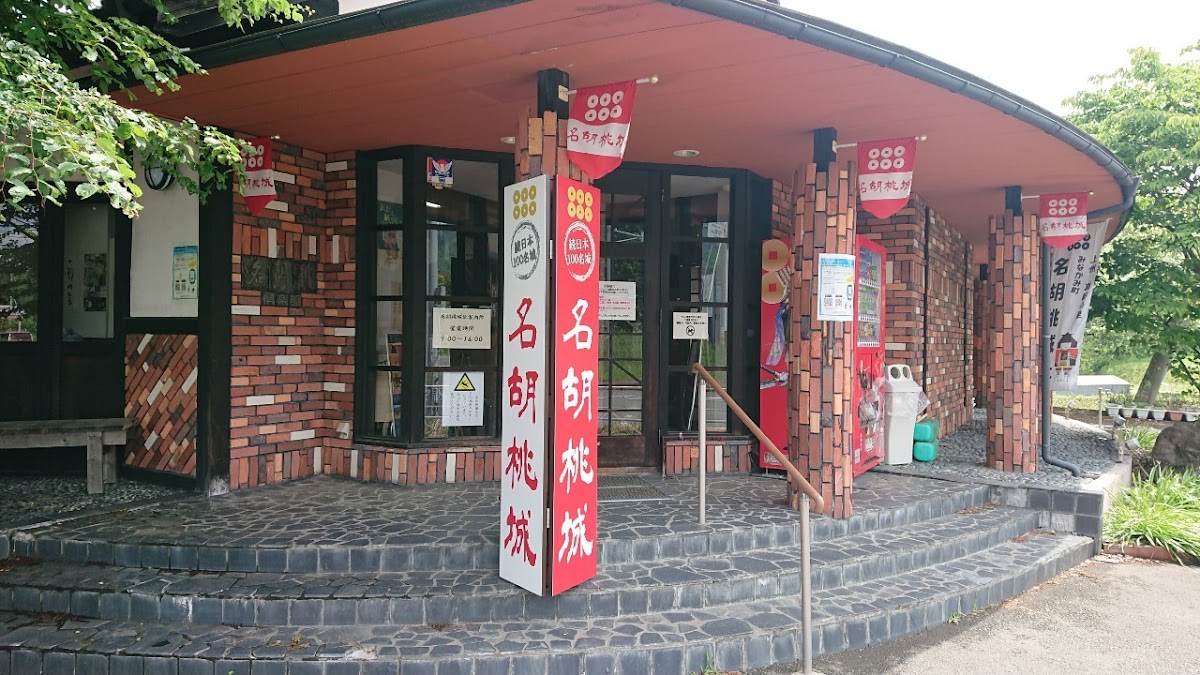
The ruins of Nakurume Castle are about to become a historical monument designated as a group of castles, and will be opened overseas. The entrance to National Route 17 is located at the “Nagurume Castle Ruins Information Center”, and visitors are welcome to learn more about the history of the fort. The information center exhibition has been completed with excavated cultural artifacts, Japanese explanation tiles, and is an ideal place for visitors to understand the background knowledge before visiting. There are walking paths within the fort, and guests can walk around the main fort and surrounding areas. Each piece has an explanation of its history and history background. The ruins are perfectly preserved, and the Hijikata process is clear and clear.
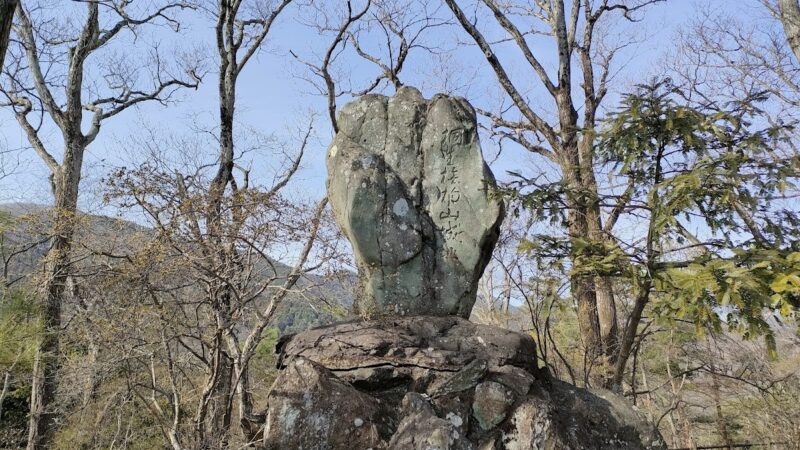
The panoramic view of the main castle is particularly magnificent, with the Tone River flowing downstream, Numata City on the shore, and Mt. Tanigawa. Among them, the importance of the war strategy of the name Kurumi Castle was felt.
In recent years, a group of local volunteers, “Minakami Town History Guide Review Association,” has been proposed to conduct further research and explore the history of Nakurumi Castle. In order to understand the history of the city’s fortifications without having to take a look at the history of the fort, the Sanada clan and the Numata area were taken from the Nakurumi Castle Incident, and the power was provided by independent review for a more serious understanding.
Transportation and travel information
Convenient transportation to Kurumi Castle ruins.
Self-driving route:
- Tsukiyono interchange road exit from Yukanetsu Expressway, approximately 6 minutes by car
- There are sufficient free parking spaces along National Highway 17.
Public transportation route:
- From the Joetsu new dry line to the Jomo Highlands station, it takes about 7 minutes.
- From the JR Joetsu Line 5 Station, it takes about 10 minutes.
Information Center for Meitabi Kaijo Castle Ruins:
- Opening time: 9:00 am – 5:00 pm (possible to adjust according to season)
- Closing day: Shuji, New Year holiday
- Gate: No fee
- Land site: 3462-2 Shimotsu, Minakami-cho, Gunma-Tone-gun
Shoes and Japanese clothing that are suitable for wearing when visiting the building. Within the castle ruins, there is a road on the road, and the ground can be wet and slippery after rain. In the summer, you can get a copy of the mosquito net, and in the winter, you can get a copy of the clothing to keep you warm.
Zhoukan Xiangguan History Museum
When I visited Nakumi Castle, I also visited and visited the history of the Sanada clan.
Numata Castle Ruins
Numata Castle is located approximately 3 km north of Kukai Castle, and is the fort of Nobuyuki Sanada (Nobuyuki). Numata Park, which is currently open, has a reserved part of the stone mound and castle river. This is a famous place to win, attracting a lot of visitors in the spring.
Iwaguchi Castle Ruins
Iwaguchi Castle is located in Azuma-cho, and the distance is approximately 30 km southwest of Nakuumi Castle, which is the base of Masayuki Sanada’s military base in Numata. On the top of the rocky mountain in the construction of the building, it is the stronghold of the first troupe.
Ueda Castle
Ueda Castle was built by Masayuki Sanada and his son Nobushige Sanada (Yukimura), and was located in Ueda City. However, the distance between the Nakumi Castle and the Sanada clan’s base was very high.
Impressions of Naguumi Castle and Japanese history
Naguumi Castle is a small mountain castle, which has been in use for more than 10 years, and has had an unbelievable impact on Japanese history. As a result, the famous Kukai castle was changed, the course of the battle of Odawara’s commander Hideyoshi was completely different, and the change was possible in Japan at the same time.
After the Battle of Odawara, the death of the Hojo clan, the entry of Tokugawa Ieyasu into the Kanto district, and the construction of the Yorohira Road by the Tokugawa shogunate. In addition to this, the actions of each daimyo in the role of the advisor and the influence of the influence were also differentiated in the forces of the central east and west of the battle.
According to the words of the Sanada clan, Nakurujo no Kanaya is one of the most important points of misunderstanding. The incident was confirmed, and the Sanada family was restrained in the Numata area, and the Sanada family remained alive during the war. Afterwards, Nobushige Sanada (Yukimura), who was honored as “Japan’s greatest samurai”, and his father Masayuki Sanada, who was in Nakuru Castle during the battle, played an active role in the battle.
Nakuru Castle’s protection and future challenge
Nakuru Castle has been designated as a historical site since the ruins of the castle, but the protection is managed as appropriate as demand progresses. In recent years, the city fortress site has been able to receive new benefits, attracting many visitors, but at the same time, people have been able to visit the castle and have a chance to experience and destroy it.
Minakami Town has been established to plan the conservation and utilization of the Nakurume Castle ruins, and to preserve the balance of the ruins and travel industry exhibition. Under the joint efforts of the local residents and volunteers, the construction of the castle fortress environment was planned.
Comprehensive futuristic challenge: further in-depth archaeological excavation, the true state of the castle fort; preservation of excavated artifacts; perfect exhibition planning; and subsequent use of numerical technology to reveal the ancient Japanese appearance of the fort. In addition, the planning and construction of other Sanada clan castle forts (Numata Castle, Iwaguchi Castle and Ueda Castle), construction, construction, and area tourist routes.
Overview: History of Japan after the Ichiza Ojo Fortress was changed
Nakurume Castle is a small-scale mountain castle during the time of the war, but it is also an important fortress, and a turning point in the history of Japan. This is the multi-castle construction station of the castle fort, Masayuki Sanada is the master of the castle fort construction techniques, its natural defense construction, and the most important work is the historical stage of the “Nakurume Castle Incident”, the historical stage of the city’s official name.
Today, when you visit the famous Kurume Castle ruins, you can still feel that it has been perfectly preserved and is a monument from the era of war. A bird’s-eye view of the Tone River from the castle’s main castle, an imagined view of Masayuki Sanada and his soldiers, and a treasured experience of the rich history of Romance.
When you arrive at Minakami-cho, you must visit Kurume Castle Ruins. How did Oyama Castle change so that you could feel your body and how the land changed and the progress of Japanese history. Nago Castle is an irreplaceable history of history, the end of the country’s era, the commander Hideyoshi, and the Sanada clan’s military talent since Japan.