History of Yamaga Castle and its history: Yamaga Castle in Hihou Province and Chikuzen Province
“Yanka Castle” is the most unique fort in Japanese history. The troupe is located in Yamagata Castle, Feihou Province, Kumamoto, Yamagata City, and the mountain town of Chikuzen Province, Ashiya Town, Fukuoka County. However, the surname and residence of the Yamaka clan are the same, but the historical background of Japan’s historical background is clearly different. Main text details: This is a comprehensive history of the production of Yamagata Castle, and its current state of construction.
Feihou Country Mountain City Overview
Geographic location and geographic expedition
Feihou country, Shanga City, and now Kumamoto’s Shanga city, Shanga hot spring district. The castle fort is a mountain castle (plain castle) built on a low dwarf mountain hill, with a strategic position of Yongyue, and a bird’s-eye view of the mountain hot spring resort area. The location of the castle fort is the location of Nyojin Seishi Seiyasu Shrine, Kosenji Temple, Kentsuji Temple, etc., and the appearance of a castle fort in the past.
It has other names, such as 汤町城, 上市城和正泷城, which is a small name that reflects the geographical location of the fort and its functional capabilities.汤町城则它它 YAMAGA HOT SPRINGS, KAMIICHI CASTLE BODY IS APPEARED, A SITE OF YAMAGA WORKS A collection of special features, and the Qingyoshi Castle is presented as 它YO Qingyō Shrine.
History of the Yamaga clan’s establishment
The Yamaga clan established the Yamaga castle in the post-Kokuni province, and it was a branch of the Kikuchi clan. The surname was Yamaga, which was adopted by the second son of Takenobu and Kikuchi Hirotaka (the founder of the Kikuchi clan) Nishinotaro Masataka. The Kikuchi clan was a samurai family in the post-Kokukuni era, and the Yamaga clan was formed after the establishment and establishment of Yamaga.
There is a clear record of the construction date of Shanlu Castle, but there is no evidence that it was built during the Northern and Southern Dynasties. According to historical records in 1351 (Shohei 6), under the command of General Kiyonari (commander of the Western Conquest), there was a feud between the Yamaga clan and the Kaneyoshi kings of Kyushu, and the Yamaga clan was in existence for a period of time, and the Northern Dynasty had ended.
Yamaga Castle during the Northern and Southern Dynasties
During the period of the Northern and Southern Dynasties, the Kikuchi clan (Southern Dynasty) and the Northern Dynasty were at the forefront of fierce exchanges. The main family of the Yokikuchi clan is not the same, the Yamaga clan supports the Northern Court, and there are constant internal disputes within the adopted family. Various political differences reveal the distinctive characteristics of the Yamaga clan, which also exhibits a high degree of regional independence.
After King Kaneyoshi, he established a position in the southern court, conquered various parts of Kyushu, and began to fight against the Yamaga clan. During the time when Yamaga Castle was in existence, it was an important point for the Northern Court.
Yamaga Castle during the war
After the advent of the War of Nations, the imperial forces of Feihou, Ali, Kikuchi, Sagara, and others all competed for power. From the Yamaga clan’s roots to the Yamaga castle, the company has its own strength. However, after the end of the 16th century, the events of the 16th century, the entry into the country, the bombing of the Hihou Rebellion, and the northward movement of the Imatsu clan continued to occur.
In 1587, after the war of Kyushu, the vassal Hideyoshi entered the kingdom. However, after the establishment of the Feihou state, Kato Kiyomasa became the owner of the northern part of the Feihou region. During this period, Yamaga Castle was built and completed, as well as the history of the residence of the Yamaga clan.
Yamaga Castle ruins
Nowadays, after the death of Fei, the ruins of Yamaga Castle were integrated into the city area, and there remains a small amount of clear ruins. In the past, the surrounding area of Kiyotoshi Shrine has been reserved for a special geographical feature, and the implication is that Yamaga Castle has the brilliance of old days, and the sights of the past have been imaginable by visitors.
Yamaga Castle Ruins Surrounding Area, Chengdu Yamaga Hot Spring Tourist Area, Wanfu Hot Spring Inn and Shop, is a hot tourist destination. The area is a historical and cultural exchange area where the area is active, where the mountain deer lanterns are held, etc.
Overview of Chikuzen Kuniyama Castle
Geographic location and strategy
Chikuzenkuni Mountain Castle is Ichiza Yamashiro, located on a mountain hill about 40 meters above sea level, Ashiya-cho, Fukuoka-gun. The entrance to the Yulong River, the strategic location, and the important waterway transportation route. The Ogawa River is an important river in the Western Sea in the Tsukumine area, and its entry point means that the control has been completed and the operation of military operations has been completed.
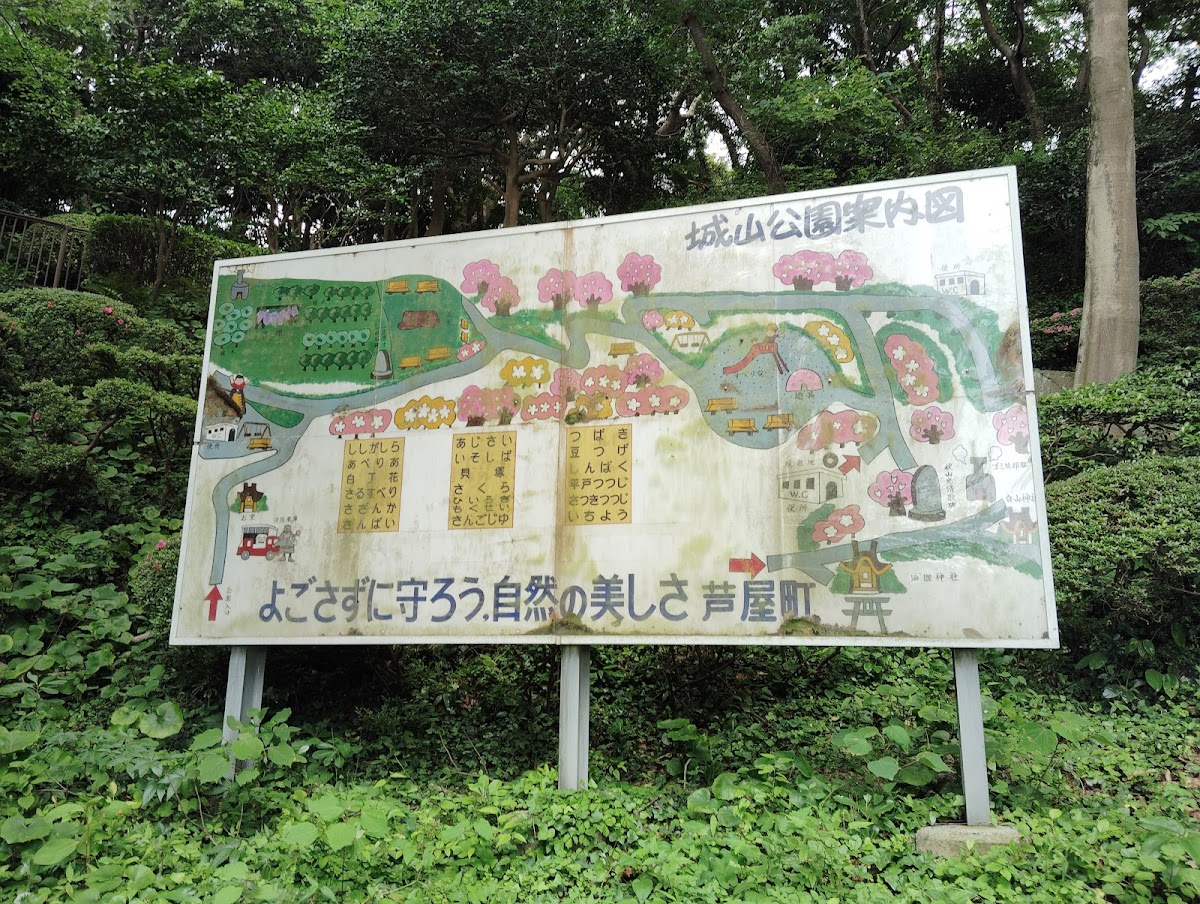
Nowadays, the site of Shange City is being rebuilt and Chengshan Park is a place for Chenghe citizens to relax and release pine trees. This is a famous victory place, and every spring season attracts many visitors.
Established by the Fujiwara Ujiyama clan
Built and installed by Fujiwara Fujitsugu, Chikuzen Kuni Yamaka Castle, and is a younger brother of Fujiwara Hideyasu. The castle fort was established during the Tenjo period (938-947), and it was moved back to the middle of the Heian period. Since Hidetoshi Fujiwara’s rebellion, the rebellion of the generals and his family has spread all over the country.
Fujiwara Fujitsugu’s surname was changed to Yamagata, and after this he changed his name to Yamagata City, where he lived in Yamagata clan, and the two generations were friends. The Konoyama clan is a non-same branch of the Yamaga clan in the Yohi province, and is therefore a descendant of the Fujiwara clan. It’s interesting, the surname is the same as everyone else’s, and it has a different origin.
Fortress structure and legacy
The main direction of mountain castles in Chikuzen Province is the northwest-to-south direction. The main castle (honmaru) is located in Usanba, has a length of approximately 60 meters, and a width of approximately 20 meters. The Second Daoyan Temple (Ninomaru) is located in the lower northwest of Yu, about 70 meters in length and 30 meters in width.
The upper part of the mountain is a flat area, the lower part of the mountain is the outer part of the mountain, and it has become a typical structure of a medieval mountain castle. This is a little bit of a defensive action, and it is an enemy’s invasion.
As soon as the envoy was present, the preservation of the castle mountain park was perfect, and the envoy was able to complete the mission at the time of the castle’s heyday. The master can take a bird’s-eye view of the river estuary and the Sea, and the city fort has the ability to control the passage of water and the sea.
From the end of the Heian period to the post-Heian period
At the end of the Heian period, during the reign of Sokuyamaka Tsunemasa Kazuhide, there was an incident related to the “Heike Monogatari” by Ryōyo Sho. During the period of the Genpei War, the samurai clans of Kyushu, the Hei clan, the Minamoto clan, and the Minamoto clan were divided into large forces. Yamakaji’s book also included a series of important scenes from the political activities in Kyushu, including the Dazaifu series.
During the long period of its introduction, the Yamaka clan worked as retainers (vassals) of the Shogunate, and the control system was established in the Okina River estuary area. Due to the effectiveness of the waterway transportation, Yamagata Castle is located in northern Kyushu and has a military base.
The reign of the Yoasu clan during the war
Battlefields of various great powers such as the beginning of the Warring States period, the Ouchi clan of Chikuzen Province, the Otomo clan, the Ryuzoji clan and the Shimazu clan. During this period, the Yamaka clan gradually declined, and finally the owner of the castle, the Asu clan, was put under control.
The Asu clan is the owner of a powerful region in Chikuzen Province, and is the owner of a controlled area. The Yamaga clan survived and flourished during the period of the war, and the Asu clan was established.
The commander of Hideyoshi’s castle in Kyushu
In 1587, Hideyoshi, the vassal of Kyushu, surrendered his command to the Shimazu clan. During this period, medieval castle fortifications were established throughout Kyushu, and Yamaga Castle in Chikuzen Province was an exception.
After the conquest of Kyushu, Hideyoshi’s policy was completed, and modern castle forts were built all over Kyushu, and medieval castle forts with small scale models were built all over Kyushu. The history of the castle fortress of Yamaga Castle was completed for about 650 years.
Yamaga Castle Ruins (Chikuzen Province)
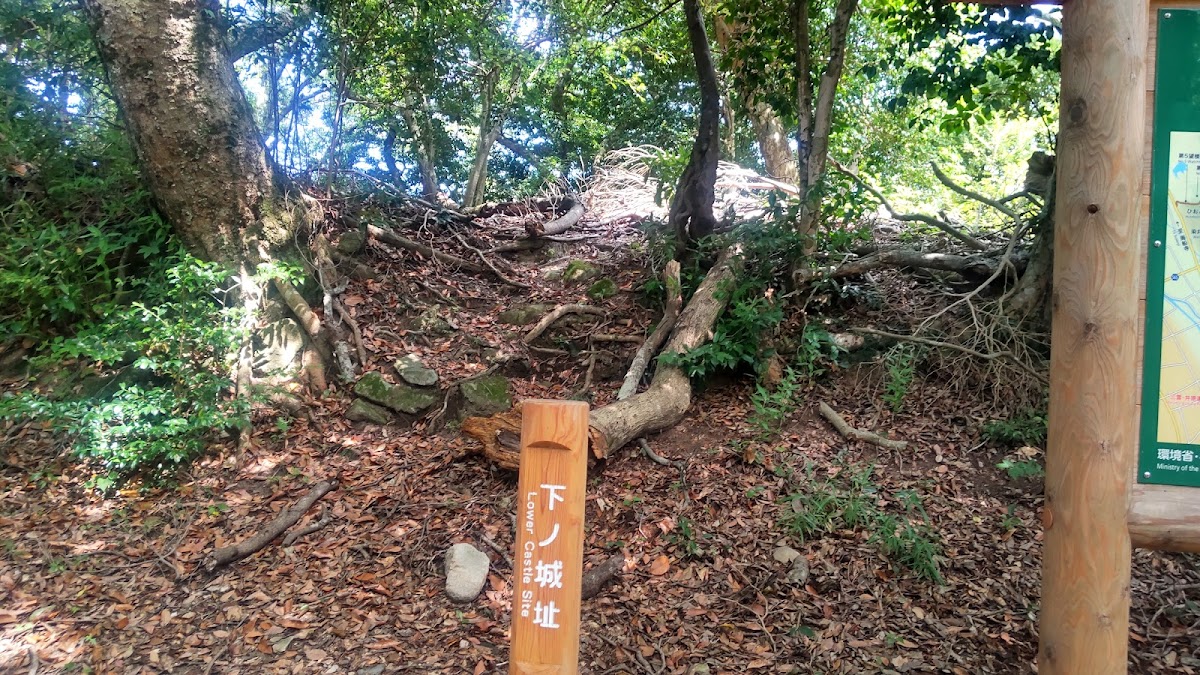
Nowadays, the site of Yamaga Castle in Chikuzen Province has been opened and Shiroyama Park is a place where the local residents of Chengdu can relax and release pine trees. There is a walking path in the park, and it is convenient for visitors to visit the main castle and the secondary castle.
This is a famous place to win, attracting many visitors in the spring. On the viewing platform, you can see the mouth of the River, the view of Ashiya city, and the panoramic view of the ocean.
Comparison of Yamagata Castle
Construction background
Built by one branch of the Kikuchi family, a samurai family in the Kyushu region, from Yamagata Castle in Hihou Province. Built by a branch of the Fujiwara clan in the East region of Chikuzen, which originated from Yamaka Castle in Chikuzen Province. The surname of Yuza Joto is “Yamaka”, but the origin is clearly different.
In this case, in medieval Japan, people often have surnames and surnames, and their families sometimes have homologous surnames.
Geographic location and function difference
The mountain town of Feihou is located in the restrained hot spring town of Wa City, and is an important transportation hub in the inner part of the country. However, the mountain castle in Chikuzen Province has changed maritime characteristics, and is an important waterway navigation center – the entrance to the Okina River.
The difference in geographical location reflects the difference in color. The mountain castle in Feihou Province is an area control base, and the mountain castle in Chikuzen Province is a monitoring base for waterway navigation and maritime traffic.
History Museum Exhibition
The castle fortress was an important influence when the Northern and Southern Dynasties entered the capital during the war, but their political status was clearly different. Yamagai Castle in Hihou Province belonged to the Northern and Southern Dynasties during the Northern and Southern Dynasties, and Sangai Castle in Chikuzen Province was abandoned during the post-Heian period, when he served as a political advisor in Kyushu for a long time.
However, in 1587, the castle fortress was the last capital to be occupied, and as a result, it was the same historical turning point: Hideyoshi conquered Kyushu.
History of Yamaga Castle and the surrounding area
History of Yamaga City, Hihou Province
Excluding Yamaga Castle, Yamaga City, and other important historical monuments. Among them, Kikuchi Castle is the most famous. Kikuchi Castle is an old mountain castle that was built at the end of the 7th century, and is one of the most famous Yamato style mountain castles built by the Yamato court in Kyushu.
Today, the Kikuchi Castle ruins are covered by the historic park, and visitors can visit the extensive construction, such as the Drum Tower and Japanese buildings. In addition, we are also a famous natural museum called `Sound Light Grass Museum'', and visitors can visit here to learn about the history of ancient Kyushu. Located in the `Chestnut Air” office, a gift point created by Yamaga Kuriko for customers to purchase, the tourist destination is a complete fusion of history and modernity.
In addition, the remains of medieval castle forts such as Kumabe Castle, Hakumura Castle, and other medieval fortifications, which have been exhibited since the Middle Ages and the early modern period, have deep historical roots.
History of Shukan District, Ashiya Town, Chikuzen Province
The Shukan area of Ashiya Town has been an important maritime transportation hub since ancient times. This area is a junction point between the Wengchuan River Waterway and the South Sea Route, and the center for the collection and distribution of commercial goods.
During the Middle Ages, the area outside the mountain castle and surrounding areas was rebuilt as a fortress such as Huaji Castle, and a defensive fort in the county. In the early modern period, part of the Fukue clan of the Kurota domain in Ashiya town, and the castle town at the mouth of the Port of Chengdu.
To this day, Ashiya Town still retains its ancient townscape, Terakowa Shrine, and its historical background.
Mountain City Research Status and Challenges
Historical locality
The historical materials of the castle in Yushan are limited, and many aspects are not clear, so it is the specific details of the fort at the time of its construction. It is a medieval local fort, a large military base, a small historical record, and a mountain castle.
The mountain fortress in the Empress of Fei Province, the Kikuchi clan’s relative historical materials and the period records of the northern and southern towns were recorded, but the concrete structure of the castle fort was confirmed by the archaeological record.
关于Chikuzen Province’s mountain castle, which is described in the Heike Tales, and the historical materials of the Waaso clan contain only a small amount of information, but many details are unclear.
Archaeological significance
If you want to go deeper into the future, it is important to know that the fort is archaeological research. Specially, as Yamaga Castle in the post-Ufei country progresses to the city of Yuyu, the opportunity to dig is limited, but some important information may be provided immediately.
Yamaga Castle and protected park in U. Chikuzen Province, where you are allowed to proceed. The structure of the fortress is understood by the research team and the promising amount of research.
Status in regional history
Yamaga Castle is known to be an important historical site where medieval samurai groups were active in their respective areas. The Kikuchi clan represented Yamaga Castle in Hihou Province, and the construction of Yamaga Castle in Chikuzen Province was an example of the Fujiwara clan’s military in Kyushu, which is of great significance during the study of military history in the area.
Promising research on the history of castle forts in the eastern part of the country and the historical understanding of medieval Kyushu samurai society and castle forts.
Going back and forth to the mountain castle
Shangai Castle Ruins
Located in Shanga City, Feihou, Kumamoto, in the Shanga Hot Springs area of the center of Shanga City, Kumamoto. After that, Sanko Hashi sitting at the JR Kumamoto station, about 1 hour car ride, and the mountain car center, and then walking for about 10 minutes, you can get there immediately.
Before leaving the car, I left the Kyushu Expressway Ueki interchange road, and the estimated demand was 20 minutes. The surrounding area has many car stops, convenient for visitors to visit, and a hot springs small town.
It was the place where Yukiyosu Shrine, Kosenji Temple, Kowa Shrine, and the shrine where the generals visited and prayed for blessings were born. However, if you look at the topography and the topography, you will be able to imagine the scenery of the fortifications and prosperity of the time.
Chikuzen Kuniyamakajo Castle Site Transportation Guide
Chikuzen Province Yamagai Castle Site (Shiroyama Park) located in Ashiya-cho, Fukuoka-gun, Ogai-gun. From JR Orio Station, it takes about 30 minutes to sit there, or from JR Ehitsu Station, it takes about 20 minutes to get there, and then you can immediately get there by car from Ashiyacho Station to Shiroyama Koen-mae Station.
By car, it takes about 20 minutes from Kitakyushu Urban Expressway to Kurosaki Interchange Road, or about 30 minutes from Kyushu Expressway to Wakamiya Interchange Road. There is a parking lot in the park.
Shiroyama Park has a well-designed walking path, convenient for visitors to visit the main castle, and a two-tiered castle. On the viewing platform, you can enjoy the scenic view of the entrance to the Yao River and the sea, and feel the true sense of the geographical location of the mountain city.
overview
The fortress of Heshan Lucheng, also known as the Fortress of Lushan, has its own unique historical characteristics and is an important historical site for the samurai society of Kyushu in the Middle Ages. Yamaga Castle in the post-Ufei Province was the seat of the Kikuchi family, and Yamaga Castle in the U.S. and Chikuzen Province was the seat of the Fujiwara clan’s samurai population.
The Fortress of Biza was preserved during the Tensho era, and is now a rare sight of local residents, as well as a rebuilt temple complex and a shrine and Japanese park. A clear and clear history is limited, but the topography and historical literature of Japanese cuisine allow me to visualize the scenery of the period of prosperity.
Information about future research on computer science and the general information on further research. Visit the historical and interesting people of China on your own visit and experience the unique art of medieval castle forts.