Yanagimoto Castle, Tenri City (Nara Prefecture) Complete Guide: A Sengoku Period Castle Site and Highlights Utilizing the Kurozuka Kofun
Located in Yanagimoto-cho, Tenri City, Nara Prefecture, Yanagimoto Castle is a Sengoku period castle site cleverly built utilizing the Kurozuka Kofun, a keyhole-shaped burial mound from the Kofun period. This site, where ancient and medieval times intersect, is an archaeologically important historical site where 33 triangular-rimmed bronze mirrors with divine beast motifs were unearthed. It also has deep connections to figures who shaped Sengoku history, such as Matsunaga Hisahide and Oda Nobunaga. This article comprehensively introduces information you should know before visiting, from the history of Yanagimoto Castle to current highlights and access methods.
History of Yanagimoto Castle: From Burial Mound to Castle
Construction by the Yanagimoto Clan and Early History
The origins of Yanagimoto Castle date back to the late Muromachi period. It is believed to have begun when the Yanagimoto clan, who were estate officials of “Yanagimoto-sho” (the estate that ruled this area), built a fort using the rear circular part of the Kurozuka Kofun. The Kurozuka Kofun is a keyhole-shaped burial mound approximately 130 meters long, constructed in the late 3rd to early 4th century. Its height and advantageous topography made it an ideal military base.
The Yanagimoto clan held considerable power as local lords in Yamato Province, but were attacked by the Toichi clan during the turmoil of the Sengoku period and eventually declined. During this period, Yamato Province was divided among various local lords such as the Tsutsui, Toichi, and Ochi clans, who engaged in fierce conflicts.
Toichi Clan Rule and the Sengoku Period
After the decline of the Yanagimoto clan, Yanagimoto Castle is believed to have come under the control of the Toichi clan. The Toichi clan was a powerful local lord in Yamato Province, rivaling the Tsutsui clan in power. During this period, Yanagimoto Castle functioned as an important military base in the eastern part of the Yamato Basin and became a stage for power struggles in the surrounding area.
It is believed that the castle underwent renovations during the Toichi clan’s rule. While utilizing the topography of the burial mound, the castle’s functions as a fortress during the Sengoku period were strengthened.
Renovations and the Fiery Period by Matsunaga Hisahide
The most important turning point in the history of Yanagimoto Castle was the full-scale castle renovation by Matsunaga Hisahide in 1575 (Tensho 3). Matsunaga Hisahide was one of the leading warlords of the Sengoku period and ruled Yamato Province, with Tamon Castle as his base.
Hisahide, while governing Yamato Province under Oda Nobunaga, considered Yanagimoto Castle a strategic stronghold and undertook large-scale renovations. It is presumed that he arranged baileys, earthworks, and moats around the rear mound of the Kurozuka burial mound, giving it the appearance of a modern castle.
During this period, Yanagimoto Castle functioned as an important branch castle of the Matsunaga clan in eastern Yamato Province, playing a role in governing the surrounding area and providing military surveillance.
Matsunaga Hisahide’s Rebellion and the Demolition of Castles
In 1577 (Tensho 5), Matsunaga Hisahide rebelled against Oda Nobunaga for the second time. Hisahide, holed up in Shigisan Castle, was besieged by the Oda army and met his end. This rebellion led to the demolition of castles under Hisahide’s control.
Yanagimoto Castle was also demolished in 1580 (Tensho 8) on the orders of Oda Nobunaga. Although the Matsunaga clan ruled for only about five years, the castle structure developed during this period is believed to represent the final form of Yanagimoto Castle.
Yanagimoto Domain and Jinya (Fortified Residence) in the Edo Period
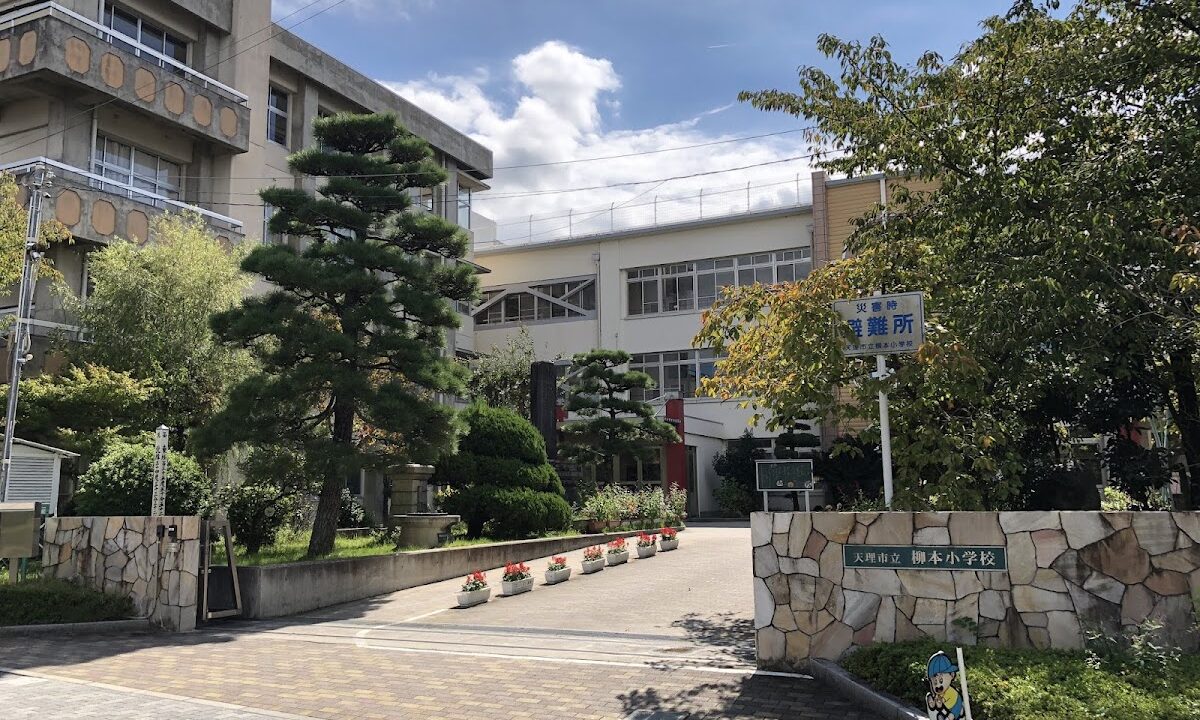
While Yanagimoto Castle, as a fortress from the Sengoku period, was demolished, the Yanagimoto Domain was established in the Yanagimoto area during the Edo period. A descendant of Oda Urakusai (Nagamasu), Oda Nobunaga’s younger brother, became the lord of the Yanagimoto Domain, and established the domain’s residence (jinya) at the site of the present-day Yanagimoto Elementary School.
Yanagimoto Domain was a small domain with a 10,000 koku (unit of rice production) yield, but it was ruled by the Oda clan throughout the Edo period, and the castle town of Yanagimoto was formed. Even today, remnants of the Edo-period town layout can be seen in Yanagimoto, giving a glimpse of its former castle town past.
Structure and Characteristics of Yanagimoto Castle
Layout Utilizing the Kurozuka Kofun (ancient burial mound)
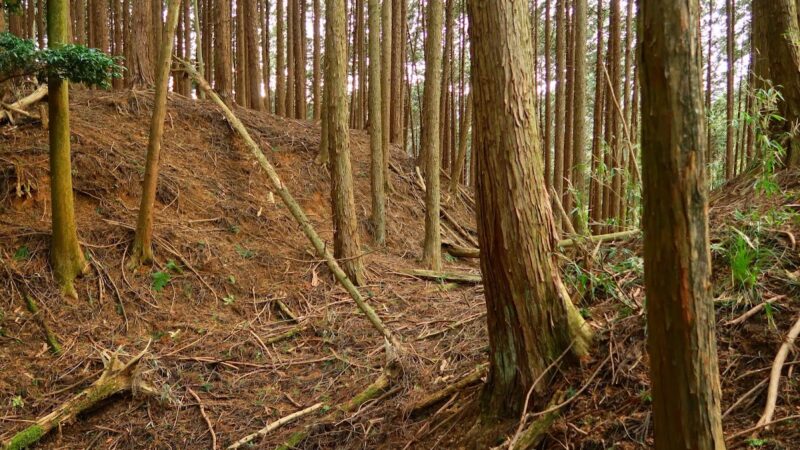
The most distinctive feature of Yanagimoto Castle is its use of the Kurozuka Kofun, a keyhole-shaped burial mound, as a castle. With a total length of approximately 130 meters and a rear circular section height of approximately 11 meters, it possessed sufficient defensive capabilities as a natural fortress.
The center of the castle is thought to be located in the rear circular section, where the main enclosure was situated. It is presumed that baileys were built in the front section and surrounding areas, and that defenses were reinforced with moats and earthworks. The possibility that the moat surrounding the burial mound was used as an outer moat has also been suggested.
Estimated Castle Facilities
Due to the lack of detailed historical records, much of the specific structure of Yanagimoto Castle relies on speculation. However, based on comparisons with castles in Yamato Province from the same period and other castles built by Matsunaga Hisahide, it is believed that the following facilities existed:
- Main Enclosure: The lord’s residence and command post located on the top of the rear mound
- Second and Third Enclosures: Defensive facilities located in and around the front section
- Earthwork: Defensive earthworks utilizing the shape of the burial mound
- Moat: An outer moat utilizing the moat surrounding the burial mound
- Gate Entrance: A defensive facility serving as an entrance to the castle
During Matsunaga Hisahide’s time, it is possible that stone walls were used and watchtowers were constructed, but no clear traces have been confirmed today.
Location and Strategic Value
Yanagimoto Castle is located in the eastern part of the Yamato Basin, along the Yamanobe Road. This location held the following strategic value:
- Transportation Hub: The intersection of the Yamanobe Road (connecting north and south) and the highway (connecting east and west)
- Excellent View: A panoramic view of the Yamato Basin, allowing for early detection of enemy movements
- Secure Water Resources: The surrounding water sources enabled a long-term siege
- Deterrent to Neighboring Forces: A monitoring base for surrounding forces such as the Tsutsui and Ochi clans
These factors explain why multiple forces, from the Yanagimoto clan to Matsunaga Hisahide, established castles in this location.
Current Yanagimoto Castle Ruins: Highlights and Remains
Development as Yanagimoto Park
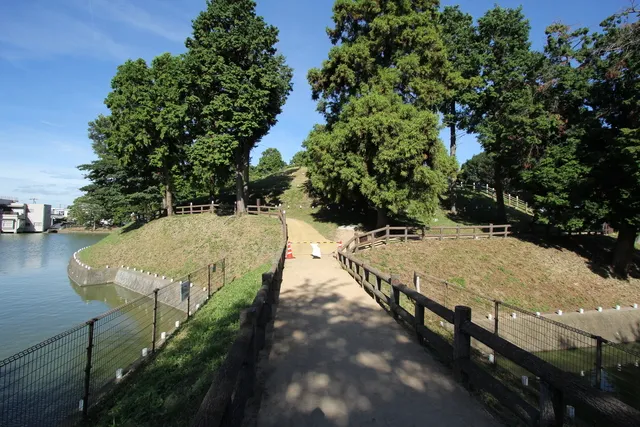
Currently, the Yanagimoto Castle ruins have been developed as “Yanagimoto Park,” serving as a place of relaxation for local residents. The park features playground equipment and rest facilities, making it a great place to visit in conjunction with a historical walk.
While there are few clear remains of the castle itself, the shape of the Kurozuka Kofun (ancient burial mound) evokes the appearance of the castle in its heyday. Climbing to the rear mound, you can overlook the Yamato Basin and experience the view that the former castle lords once saw.
Kurozuka Tumulus and Triangular-Rimmed Bronze Mirrors
When visiting the Yanagimoto Castle ruins, one cannot miss the historical value of the Kurozuka Tumulus itself, which formed the foundation of the castle. Excavations conducted in 1997 (Heisei 9) unearthed 33 triangular-rimmed bronze mirrors from the vertical stone chamber of the rear mound, causing a major shock to the archaeological world.
This is the largest number of mirrors ever unearthed from a single tumulus in Japan, and it was an important discovery related to the characteristics of the triangular-rimmed bronze mirrors, known as “Himiko’s mirrors,” and to the Yamatai Kingdom controversy. It is a rare historical site where the histories of two eras, the Kofun period and the Sengoku period, exist in a layered manner.
Tenri City Kurozuka Tumulus Exhibition Hall
Adjacent to the Yanagimoto Castle ruins is the “Tenri City Kurozuka Tumulus Exhibition Hall.” This facility offers the following exhibits:
- Replica of an excavated triangular-rimmed bronze mirror
- Full-scale reconstruction of a vertical shaft stone chamber
- Explanation of the structure and construction process of the burial mound
- Exhibit of some excavated artifacts
- Historical materials related to Yanagimoto Castle
The exhibition hall is free to visit and is a valuable facility where you can learn about the history of both the burial mound and the castle ruins. We highly recommend visiting during your trip.
Historical Sites Around the Castle Ruins
Several related historical sites are scattered around the Yanagimoto Castle ruins:
Former Yanagimoto Elementary School Site: This is the site of the Yanagimoto Domain’s administrative headquarters during the Edo period, and is currently used as an elementary school. An explanatory sign is installed near the school gate, where you can learn about the scale and layout of the domain’s residence.
Around the Yanagimoto Branch of the Tenri City Fire Department: This is the former center of the castle town, and the area retains traces of the Edo period town layout.
Emperor Sujin’s Mausoleum (Andoyama Kofun): A massive keyhole-shaped burial mound located within walking distance of the Yanagimoto Castle ruins, believed to be the tomb of Emperor Sujin, the 10th emperor of Japan.
Access and Visiting Information
Access by Train
The nearest station to the Yanagimoto Castle ruins is Yanagimoto Station on the JR Sakurai Line (Manyo Mahoroba Line).
- From Osaka: Take the JR Osaka Loop Line to JR Tennoji Station, then the JR Yamatoji Line to JR Nara Station, and transfer to the JR Sakurai Line to Yanagimoto Station (approximately 90 minutes).
- From Kyoto: Take the JR Nara Line to JR Nara Station, then transfer to the JR Sakurai Line to Yanagimoto Station (approximately 70 minutes).
- From Nara Station: Approximately 20 minutes on the JR Sakurai Line.
Yanagimoto Station is very easily accessible, just a 5-minute walk from the Yanagimoto Castle Ruins (Kurozuka Kofun). The station building is a castle-style wooden structure built in 1898, renovated in 2019, and reborn as a tourist hub with local product sales and a cafe.
Access by Car
- From Tenri IC on the Nishi-Meihan Expressway: Approximately 15 minutes
- From Tenri-Higashi IC on the Meihan National Highway: Approximately 10 minutes
The Kurozuka Kofun Exhibition Hall has a dedicated parking lot (free of charge) with space for approximately 20 cars. However, it may get crowded during peak tourist seasons and on weekends.
Visiting Hours and Fees
- Yanagimoto Castle Ruins (Yanagimoto Park): Open 24 hours, free of charge
- Tenri City Kurozuka Kofun Exhibition Hall:
- Opening Hours: 9:00 AM – 5:00 PM (Last entry at 4:30 PM)
- Closed: Mondays (or the following day if Monday is a public holiday), New Year holidays
- Admission Fee: Free
Best Season to Visit
Yanagimoto Castle Ruins can be visited year-round, but the following times are especially recommended:
- Spring (Late March – Early April): Cherry blossom season, offering beautiful scenery including the surrounding burial mounds
- Autumn (October – November): Pleasant weather, perfect for enjoying autumn foliage
- Winter (December – February): Clear air and particularly beautiful views of the Yamato Basin
Due to the intense heat of summer, early morning or evening visits are recommended.
Nearby Tourist Attractions
Yamanobe-no-michi Road
Yanagimoto Castle Ruins are located along the Yamanobe-no-michi Road, considered the oldest road in Japan. This ancient road is a popular tourist route, approximately 26 kilometers long, stretching from Nara City to Sakurai City, and dotted with ancient burial mounds, shrines, and monuments inscribed with Manyoshu poems.
The area around Yanagimoto Station is the midpoint of the Yamanobe-no-michi Road, connecting to Tenri City and Isonokami Shrine to the north, and to Omiwa Shrine in Sakurai City to the south.
Isonokami Shrine
Located approximately 3 kilometers north of Yanagimoto Castle Ruins, it is one of the oldest shrines in Japan. Revered as the tutelary shrine of the Mononobe clan, it houses valuable cultural assets, including the national treasure, the Seven-Branched Sword. Free-roaming chickens roam the grounds, creating a unique atmosphere.
Omiwa Shrine
Located approximately 4 kilometers south of Yanagimoto Castle Ruins, it is the oldest shrine in Japan, with Mount Miwa as its sacred object of worship. This temple preserves a primitive form of worship, lacking a main sanctuary and instead offering prayers for Mount Miwa from its worship hall. As the Ichinomiya (first-ranked shrine) of Yamato Province, it has long attracted many worshippers, especially during the New Year’s pilgrimage.
Chogakuji Temple
Located about a 20-minute walk from Yanagimoto Station, this ancient temple is said to have been founded by Kobo Daishi Kukai. Its main hall, a nationally important cultural property, and its beautiful garden are highlights. It is particularly popular with tourists during the autumn foliage season.
Emperor Sujin’s Mausoleum (Andoyama Kofun)
Located about a 10-minute walk from the Yanagimoto Castle ruins, this massive 242-meter-long keyhole-shaped burial mound is managed by the Imperial Household Agency as the mausoleum of the 10th Emperor Sujin. Its magnificent form, surrounded by a moat, is a sight to behold.
Tenri City
The area around JR Tenri Station, two stations north of Yanagimoto Station, is home to the headquarters facilities of the Tenrikyo religion. It boasts a unique landscape as a religious city and cultural facilities such as the Tenri University Museum of Reference (a museum exhibiting world lifestyles, cultures, and archaeological art).
Points to note and manners when visiting Yanagimoto Castle
Consideration for historical site preservation
Kurozuka Kofun is an important cultural property designated as a national historical site. Please note the following:
- Do not damage the burial mound or take any stones or soil.
- Do not enter areas other than the designated viewing paths.
- Please take all your trash with you.
- Please check whether photography is permitted inside the exhibition hall.
Consideration for Local Residents
Yanagimoto-cho is a residential area where people still live:
- Please refrain from speaking loudly or making noise in residential areas.
- Do not trespass on private property.
- Avoid parking on the street and use the designated parking area.
Clothing and Belongings
- Please wear comfortable shoes (you will be climbing up and down the burial mounds).
- In summer, please bring a hat, parasol, and drinks.
- In winter, please dress warmly.
- A camera or binoculars will allow you to enjoy the view of the Yamato Basin more.
Historical Significance and Modern Value of Yanagimoto Castle
Fusion of Burial Mounds and Castles
Yanagimoto Castle is a rare example of repurposing a legacy from the Kofun period as a castle for the Sengoku period. While several castle ruins utilizing ancient burial mounds exist throughout Japan, Yanagimoto Castle is a rare example of a castle site that combines archaeological significance with the involvement of Matsunaga Hisahide, a renowned Sengoku period warlord.
This layered history symbolizes the continuity and change in Japanese history, making it a valuable historical site where one can experience the history of the region from ancient times through the medieval and early modern periods in one place.
Important Hub for Regional History Research
Yanagimoto Castle Ruins and Kurozuka Burial Mound are important hubs for studying the history of Yamato Province. The discovery of a triangular-rimmed bronze mirror offers a new perspective on the Yamatai Kingdom debate, and in the study of Sengoku period castles, it demonstrates an example of the unique castle-building technique of utilizing burial mounds.
Further excavations and research have the potential to reveal even more historical facts.
Utilization as a Tourism Resource
Tenri City is working to promote tourism by utilizing historical heritage, including the Yanagimoto Castle Ruins. Renovations to Yanagimoto Station, improvements to the Yamanobe-no-michi trail, and the installation of various explanatory signs are underway to create an environment where visitors can comfortably stroll while learning about history.
This initiative to pass on local history to future generations and revitalize the region through tourism is attracting attention as a model case for the utilization of cultural properties in regional cities.
Summary: Experience the Charm of Yanagimoto Castle
Yanagimoto Castle in Tenri City, Nara Prefecture, is a castle site that survived the turmoil of the Sengoku period, built on the foundation of the ancient Kurozuka Kofun burial mound. Its history, beginning with the construction by the Yanagimoto clan and passed down to the Toichi clan and then to Matsunaga Hisahide, is valuable evidence of the Sengoku period history of Yamato Province.
Currently, it is maintained as a quiet park, and at the adjacent Kurozuka Kofun Exhibition Hall, you can learn about the ancient treasure, the triangular-rimmed bronze mirror with divine beast motifs. Taking advantage of its location along the Yamanobe-no-michi trail, a deeper historical experience is possible by visiting it in conjunction with the surrounding shrines, temples, and burial mounds.
With excellent access, just a 5-minute walk from JR Yanagimoto Station, it’s perfect for a casual historical stroll. The panoramic views of the Yamato Basin, the unique historical landscape where ancient burial mounds and castle ruins intersect, and the cultural heritage value preserved by the local people—all of these factors enhance the value of a visit to Yanagimoto Castle.
When sightseeing in Nara, be sure to visit the Yanagimoto Castle ruins and experience the history of this place where ancient and medieval times intersect.
Reference Information and Further Learning
For those who wish to learn more about Yanagimoto Castle, please utilize the following facilities and resources:
- Tenri City Kurozuka Tumulus Exhibition Hall: A free facility where you can learn about the history of Yanagimoto Castle and the Kurozuka Tumulus.
- Tenri City Tenri Library: Abundant resources on local history.
- Tenri University Museum: A treasure trove of archaeological materials.
- Nara Prefectural Kashihara Archaeological Institute: The central institution for research on castles in Yamato Province.
Because there are few detailed documentary records of Yanagimoto Castle, there is potential for new facts to be revealed through future research. For history enthusiasts, it is a castle site that offers the pleasure of imagining its former appearance while using your imagination.