Guide to complete construction of Yamanaka Castle: Yamashiro during the time of war, beautiful shoji-style castle river, great military battle of Hideyoshi
Is this a castle in the mountains? : Hakone Battle Fortress built by the Houjo clan
Yamanaka Castle is a mountain castle in the post-war era, located in Yamanaka Shinden, Sanshima City. Afterwards, the Hojo clan (Odawara Hojo clan) built the Juza Hakone Castle, the western defense base of Odawara Castle, the Ichiza raiding fortress, and the Shoto Kaido.
Construction of Yamanaka Castle, Hakone outer area, west side mountain spine, sea distance approximately 580 meters, east and west distance approximately 500 meters, north and south distance approximately 1000 meters. The construction of Yamanaka Castle is characterized by the extensive use of natural defense construction, which is located on the top of Mt.
In 1934, Yamanaka Castle was designated as a national historical monument, and the construction of Yamanaka Castle Site Park was opened. It is the 40th famous Japanese castle in the list of 100 famous castles in Yamanaka, a well-preserved medieval castle ruin, and an important cultural heritage.
History of Yamanaka Castle: Its construction and its decline
Construction during the Eiroku era and later the Hojo clan’s strategy
Built during the Eiroku era (approximately 1558-1570) during the Eiroku era (approximately 1558-1570). The most probable date of construction is the 1530s, which can be confirmed by an uninhabited man, but the historical records of Eiroku.
The Hojo clan was a powerful feudal lord family, based in Odawara, and the eastern region of the city was well-organized. In order to protect ourselves from the west, we have built several castles in the Hakone mountains. Among them, Yamanaka Castle is especially important, and is a key base for the East Sea Highway (one major transportation route), which is a major operational highway, and a castle without a castle (immediate defense).
The Hojo clan’s decision in 1589
In 1589, Hideyoshi, the vassal of the Hojo clan, became a descendant of the Hojo clan, and the Hojo clan’s head, the Hojo clan, was expanded to a large scale and built Yama-Nakagusuku, and in the following year, Odawara-no-hime was established. During this period, the construction process of new castles such as Osaki Shogun was rapidly progressed.
However, the construction process was not yet completely completed, and during the attack, the construction of the inner part of the castle was still incomplete. People recognize that this is a fatal weakness in the incomplete part of the battle that has been completed since then.
1590 Odawara-no-Hakuyoyama-Nakajo-no-Kai
On March 29, 1590, the vassal Hideyoshi began his attack on Odawara. His retainer Hidetsugu attacked Yamanaka Castle with a force of about 70,000 men, and the castle was completely destroyed.
There were approximately 4,000 guardians of the Hojo Army, and the castle lords, such as Yasutoshi Yumatsuda and Yasutoshi Yasumiya, were selected. However, the military forces of the men and their superiors defeated them, and they launched a ferocious attack, with no resistance from others, and the final fall of Yamanaka Castle. The number of deaths in the Hojo clan during this war was between 700 and 1,000, and there were many generals of the vassal clan, including Ichiyanagi Naosue, and there were also a number of students in the fierce battle.
The fall of Yamanaka Castle was the prelude to the battle of Odawara, and after the final invasion, the Hojo clan was overthrown, and the historical record that followed was one of the final battles during the conquest of the country.
Special points of Yamanaka Castle’s structure and distribution station
Houjo clan’s unique castle and pond construction techniques
After the construction of Yamanaka Castle, the Hojo clan followed suit in building a castle pond. The typical form of medieval castles in mountainous areas has been preserved, and the construction of rivers and rivers in the dry lands of the country is still unused.
Yamanaka Castle, main roundabout center, Yusai-Haku Castle, Hoku-Haku Castle, Nihaku-jo, Kawa-sanhaku Castle, and other major fortifications, each time the construction of the Kawa castle was protected. In the center of the Tokaido road, this is the name of the controlled road.
Shoji-bori Kawanebori: The bright spot of Yamanaka Castle
The special expedition written by Saiaki Yamanakajo is Shoji Horiwa Nebori. Since then, the Hojo clan has been exhibited in a variety of unique ways, and has been preserved in a particularly exquisite manner.
Shoji moat This is the name of the lattice of the shoji gate. Immediately, the enemy soldiers moved into the castle, Kawaya had the ability to block the ground, and others were free to move. The surrounding area of the West City Wall is a particularly perfect monument, which attracts many visitors.
Ubebori This refers to the structure of a series of vertebral earth embankments built at the bottom of the river. The surrounding area around the northern part of the country is very often seen, and the military action and construction of the capital is very difficult to stop, and the Shoji Hori is the only one who can afford it. After the completion of this unique dry castle river, it is a masterpiece of Hojo clan castle pond construction technology.
Major defense installations
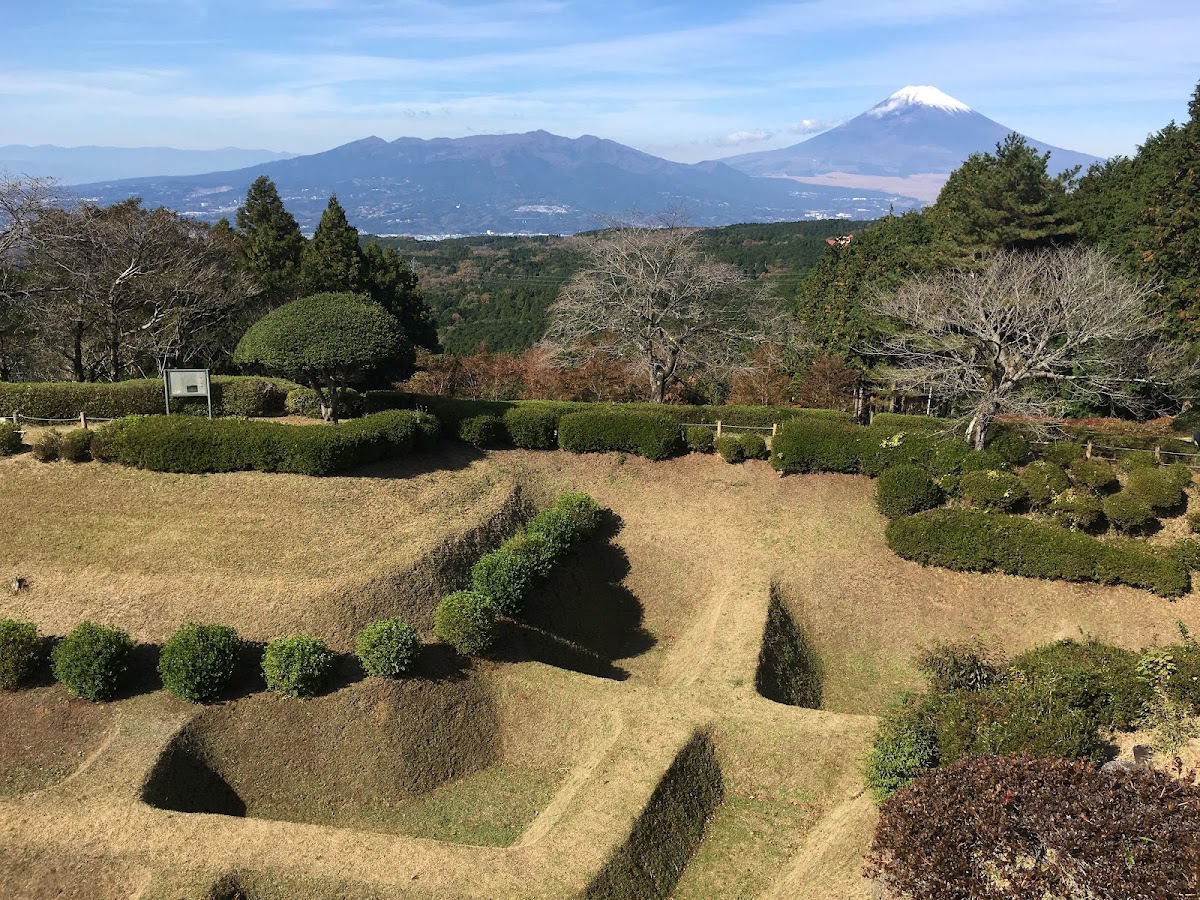
Main enclosure is the highest building in the center of Zhongcheng in Usan. Here you can see a panoramic view of Mt. Fuji and Eikawa Bay, which is the best view of Mt. Nakagusuku.
The Nishinomaru position is located on the west side of the Honmaru, with a magnificent shoji screen with a four-circle finish. The area has been completed with the largest archaeological excavation and restoration, and the mission has been completed in a rare historical site, which is currently on hold and looks like a mountain castle during the country’s era.
Osaki Demaru is a prominent part of the southwest side of Uhonjo Castle, which was built in 1589. In the same area, the shoji-hori and the net-hori proceeded with a secret defense, but when the construction was still unfinished, the partial area was attacked by the army.
The Kitanomaru is an important fort on the north side of the main castle, and is surrounded by four surrounding areas, including the main moat of the castle. This is one of the most important points in the military’s fierce battles, and many Hojo generals have passed away this past year.
History of digging and opening of Yamanaka Castle site
Showa era designated national historical sites and inspection works
Yamanaka Castle was designated as a National Historical Site in 1934. However, at that time, there were many shrubs and bamboo shoots covering the fortress, and the complete structure of the fort is unknown.
In 1973 (Showa 48), the city of Mishima was completely excavated and the site was opened and buried, giving it the appearance of a mountain castle for about 400 years. Over the course of a long period of time, the shoji-hori, Wakai-hori, etc., are unique monuments.
Heisei era development planning and park construction
Based on the results of archaeological excavation in Sanshima City, the construction of the historical park at the Zhongzhong Castle site in Sanshima City was completed. After the evacuation and destruction of the site, the workers were careful to clear the ground, remove the shrubs, plant the grass, and then directly look at the land and see the city in the form of a construction site.
In this case, you can use the shoji screen, the castle river is beautiful, the structure is clear and the view is clear, and the destination is close to the visitor. Let’s take a look at the medieval treasures of Xishan Castle, which are still in various locations throughout the country. In the ruins, each book has information about the name of the Japanese language plate, and the historical background and Japanese architecture of the building are good.
Reiwa era construction completion and current status
In April 2026 (Reiwa 8), the construction work inside the park will be completed, and the construction will be renewed and the viewing environment will be open to the public. The construction of the car park, Japanese washing room, etc., has attracted all the years of its development, making it a hot tourist attraction for castle lovers and Japanese history lovers.
Yamanaka Castle light point and sightseeing point
Beautiful views of the four seasons and Mt. Fuji scenery
Since the Yamanaka Castle Park Park is not here, its history attracts visitors, and its natural beauty is also a sight to behold. Spring flowers are in full bloom, early summer mori flowers are in full bloom, Tajiri Pond water lilies are in full bloom, autumn red spider lilies are in full bloom, and a variety of seasonal flowers are appearing.
The most impressive view of Mt.Fuji is the impressive view of Mt. Separate shoji moat view Mt.Fuji, the scenery is beautiful, people can stop looking at it, and it is also a hot scenic spot for movie lovers. Sunshine Village in the clear sky, the view of Eihe Bay, the view of where the Buddha was placed by the military commanders of the time of the war.
Hakone Kodo Ishibanji
The site of the Nakagusuku Castle in Mt. Bibin, a long 350-meter long Hakone ancient road stone slab road, is the original site. Along the way, the tamago stone road was suspended, and the appearance of the East Coast at the time of the river was taken, and all the members of Yosan and Zhongcheng took a tour.
While walking on the stone tablet road, the Buddha placed his body among the travelers during the Jiangzhou period, and felt that the mountain was built in the middle of the castle and was an important transportation hub.
Japanese Hundred Castle Seals and Commemorative Items
Ranked 40th in Japan’s list of 100 castles in Yamanaka, it is a must-visit place for those who love castle forts. The seal is located at the Usan Zhongcheng Castle Memorial Store (business hours: 10:00 am to 4:00 pm, closed for New Year’s holidays).
A book about the store’s collection, a book from the owner of the book, a commemorative item from Kojiko, and a commemorative gift for the purchaser. Information about Mt. Nakagusuku provided by Mishima City Tourist Association.
Transportation and tourism information
Public transportation
Ride on the car:
- 从 JR Mishima Station or Izu Hakone Railway Mishimatacho Station is located in the Tokai area of “Former Hakone Port.”
- Take a train to the bus station located at “Yamanaka Castle Ruins” (approx. 30 minutes ride).
- The timetable for each session is small, so this must be done beforehand.
Vote for honor:
Use the Donghai Baji exemption pass “Three Island One Day Pass (Three Islands Maru)” available in one place.
Self-driving transportation
Tokyo Expressway:
- From Numazu IC to National Highway No. 1, approximately 20 minutes.
- Exit the palace IC from National Highway 138 and National Highway 1, approximately 30 minutes.
Car stop:
We provide free parking, and the capacity is 50 standard cars. At the end of the season when traveling, the parking lot is available, and the construction is completed quickly.
Visit time and installation information
Opening time:
Yamanaka Castle Park is open for 24 hours. However, at night there is submerged lighting, and the construction is white.
Key vote:
exemption
Account viewing time:
Visit the main milestones for 1-2 hours. It took about 2-3 hours to explore the depths of the castle and build it.
Design:
- Gift shop (business hours: 10:00 am to 4:00 pm, closed for New Year holidays)
- Washing time
- Free parking
- Information tile/information tile
Note:
- The ground of the fort site is uneven, and the construction is suitable for walking.
- In the rain, the road is wet and slippery, driving cautiously.
- If you don’t enter the area outside the area, don’t enter the river.
Yamanaka Castle Tourist Scenic Spot
Mishima City Travel Scenic Spot
You can visit Mt. Zhongcheng at the same time as Sandai City. Sanshima Taisha Shrine is Izu Province’s `Ichimiya'' (first name shrine), it is also an ancient shrine, and it is deeply appreciated by history lovers. In addition, in the center of Sanshima City, there is a famous scenic spot called `Place of Life”, where underground water from Mt.
Three Islands Aerial Trail is Japan’s longest exploration bridge, and is also a hot gateway to the spectacular view of Mt. Fuji. The distance between the mountains and castles is also close.
Hakone tour
Yamanaka Castle is located at the entrance to the Hakone area, making it the ideal choice for sightseeing in Hakone. It is convenient to visit the major scenic spots in Hakone, such as the Hakone Tower, Hakone Shrine, and Lake Ashi.
After the construction of Odawara Castle, the Hojo clan took up the position, and Yoyama Nakagusuku was a rich source of history. After visiting the castle fort, General Yusuke and the castle entered deeper into the territory, the Hojo clan’s fort system was established.
Deep understanding Yamanaka Castle’s source information
Book Research Materials
Detailed information on the Zhongcheng in Yushan, reports on archaeological excavation by the Asandao City Education Committee, and materials from the Japan Castle and Pond Association. In addition to this, there is a detailed explanation of the historical records of the Hojo clan and the progress of Yamanaka Castle after the construction of the fort during the war.
Commentary on the guide
A review of the Yamanaka Castle ruins (pre-demand) provided by the late Mishima City Travel Association. Under the guidance of the current director, please feel free to explore the site and its historical background for a deeper understanding. If you use this service, contact the Sanshima City Tourist Association.
Number source information
The latest information on the archaeological excavation results of Sanshima City Official Terminal Association 发BU关Yu Shanzhongcheng ruins. Detailed information can be found at the official station of Japan’s 100 largest castle forts.
Overview: The history of Yamanaka Castle and its current meaning
Yamanaka Castle was a tragic castle fort, which lasted for a while during the end of the war period, but disappeared on stage after the war. However, over the course of 400 years, the land was replaced by a new construction, and after the development of the modern world, the fortress construction techniques of the Hojo clan and the appearance of mountain castles in other countries.
Because of its merits, the beauty of the shoji Horiwa and Kai Hori was complete, and it was also seen in other castle forts, which held an important position during the study of castle forts in the medieval period. In addition, the magnificent scenery of Mt. Fuji, the fantastic natural scenery that changes in the four seasons, and the historical surroundings are also included, making it an attractive travel destination.
From the Showa era to the Reiwa era, the constant archaeological excavation and restoration continued, and the expansion of the Yamanaka Castle Park Park made it one of the most prominent historical parks in Japan. It is free to visit, transportation is convenient, and it does not fit together with people who love history, and it also fits with families who love walking.
The story is about the exquisite beauty of the castle, Kawa, and the construction work, and the image of the country’s era, and the view of Mt. Fuji, which was in the eyes of the samurai that year. As soon as you arrive at Sandai City, you will be able to move around the city and visit the historical treasure house.