
Complete Guide to Tanaka Castle (Fujieda City, Shizuoka Prefecture) | Exploring its Circular Layout and History Associated with Tokugawa Ieyasu
Located in Fujieda City, Shizuoka Prefecture, Tanaka Castle is an extremely unique presence in the history of Japanese castles. This flatland castle, with its concentric circular layout approximately 600 meters in diameter, played a crucial role as a strategic point in Suruga Province from the Sengoku period to the Edo period. It is also known as the place where Tokugawa Ieyasu is said to have conducted his last falconry hunt and eaten tempura made with sea bream, making it a must-see historical site for history buffs.
Overview and Basic Information of Tanaka Castle
Tanaka Castle was a flatland castle located in Tanaka, Fujieda City, Shizuoka Prefecture, and served as the administrative center of the Tanaka Domain during the Edo period. Currently, it is a designated historical site of Fujieda City, and the Tanaka Castle Lower Residence site has been developed into a park.
Basic Castle Data
- Location: Tanaka, Fujieda City, Shizuoka Prefecture
- Castle Structure: Flatland Castle (Circular Outer Ring Type)
- Construction Period: Around the Oan Era (1368-1374)
- Predecessor: Tokuisshiki Castle
- Main Lords: Isshiki clan, retainers of the Takeda clan, Sakai clan, Honda clan, etc.
- Designation: Fujieda City Designated Historic Site
The most distinctive feature of Tanaka Castle is its layout, with the second, third, and fourth baileys arranged in concentric circles around the main bailey. Such circular outer ring castles are extremely rare throughout Japan and are valued as a precious historical site in the history of castle architecture.
History of Tanaka Castle | The Struggle for Control Between the Imagawa, Takeda, and Tokugawa
From Tokuisshiki Castle to Tanaka Castle | The Beginning of the Imagawa Era
The origins of Tanaka Castle are said to date back to the Muromachi period, specifically the Ōan era (1368-1374). Initially called “Tokuisshiki Castle,” it is believed to have been built by the Isshiki clan, a powerful local family, under the orders of the Imagawa clan. The Isshiki clan was a powerful local lord in western Suruga Province and played a key role in the defense of Suruga Province under the Imagawa clan.
Tokuisshiki Castle was strategically located near the border between Suruga and Tōtōmi Provinces, making it an important base for the Imagawa clan to defend against attacks from the west. The castle was originally built as a flatland castle, and it is believed that a defensive system utilizing the surrounding low-lying wetlands was constructed.
Takeda Shingen’s Targeted Stronghold in Tōtōmi Province
In January of Eiroku 13 (1570), Takeda Shingen’s forces, advancing their invasion of Suruga Province, launched an operation to capture the remaining Imagawa-controlled castles in western Suruga. At this time, Tokuisshiki Castle also became a target of the Takeda army.
Takeda Shingen highly valued the strategic importance of Tokuisshiki Castle during his conquest of Suruga Province. Even after Imagawa Ujizane fled to Kakegawa Castle, Imagawa resistance continued in western Suruga Province, and Tokuisshiki Castle was a central point of this resistance. After being attacked by the Takeda army, Tokuisshiki Castle eventually surrendered and came under Takeda control.
Takeda Shingen renamed the castle “Tanaka Castle” and carried out extensive renovations. It is said that Shingen expanded the castle’s layout and developed a unique concentric circular structure. This circular layout is believed to have been influenced by the Takeda-style castle construction techniques, and was designed as a defensive system capable of responding to attacks from all directions.
During the Takeda era, the castle was once ruled by the renowned general Yamagata Masakage, and Tanaka Castle functioned as an important base in the Takeda clan’s administration of Suruga Province.
Recapture and Control by Tokugawa Ieyasu
In 1582, when the Takeda clan fell, Suruga Province came under the control of Tokugawa Ieyasu. Tanaka Castle also became a Tokugawa castle, and Ieyasu appointed a trusted retainer as its lord.
During the Tokugawa era, Tanaka Castle was positioned as a branch castle of Sunpu Castle (Shizuoka City) and functioned as a key point in the defense of western Suruga Province. Its importance increased particularly during periods of tension with Toyotomi Hideyoshi, as a strategic base controlling the Tokaido road.
After the Battle of Sekigahara in 1600, when Tokugawa Ieyasu became the ruler of Japan, Tanaka Castle began to be governed by fudai daimyo (hereditary feudal lords). In 1607, Sakai Tadatoshi became the lord of the castle, and thereafter, Tanaka Castle continued to exist as the administrative center of the Tanaka Domain throughout the Edo period.
Tanaka Domain in the Edo Period | Successive Lords and the Development of the Castle
During the Edo period, many fudai daimyo, including the Sakai, Honda, Ota, Naito, and Toki clans, served as lords of Tanaka Castle. The Tanaka Domain’s rice yield remained around 40,000 koku, making it a relatively small domain, but its important location facing the Tokaido road meant it was highly valued by the shogunate.
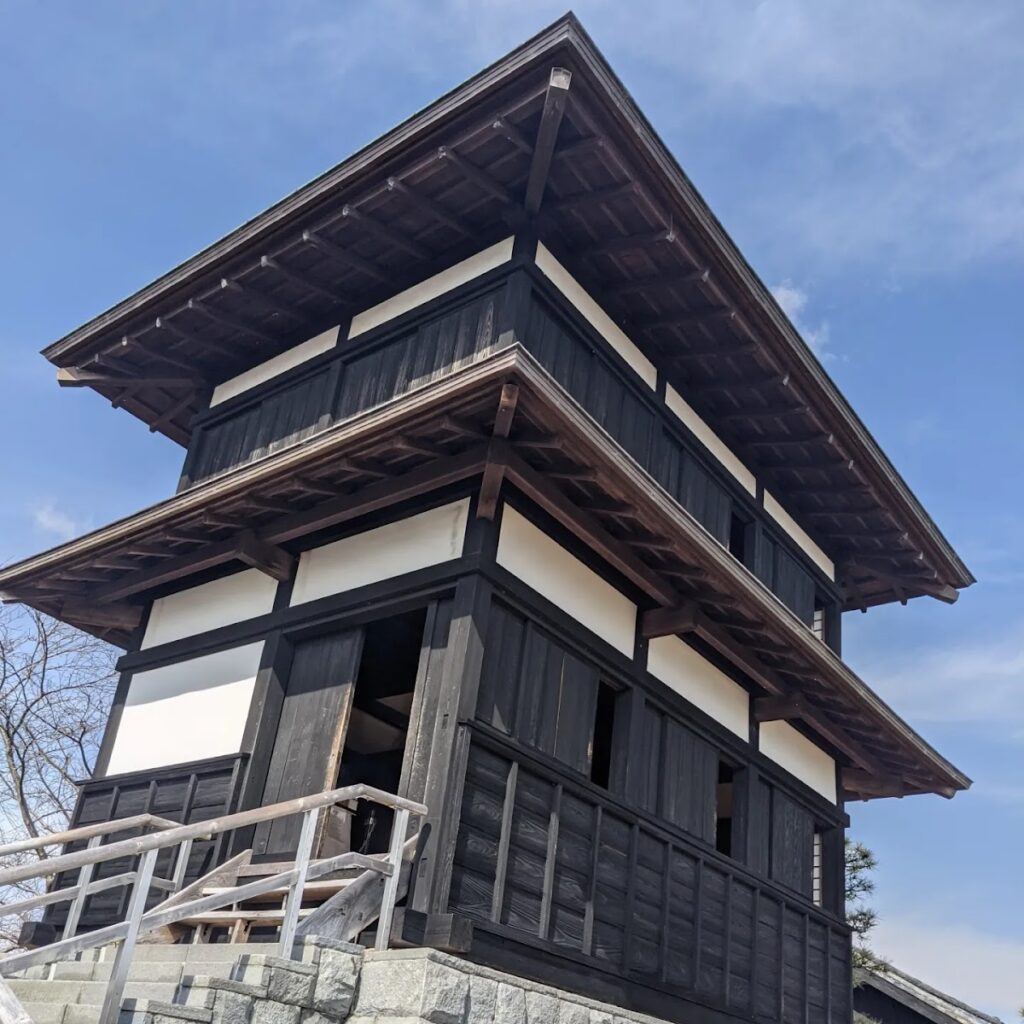
During the Edo period, a fourth moat was added, completing a perfectly circular layout with a diameter of approximately 600 meters. A two-story turret (Otei) was built in the main keep, consolidating the domain’s administrative functions. Furthermore, a secondary residence for the feudal lord was established in the southeastern corner of the castle, and a garden featuring artificial hills, a pond, and a tea room was created.
Especially during the time when the Honda clan ruled, emphasis was placed on educational policies, and cultural development was seen, including the establishment of a domain school. The Honda clan’s secondary residence was known for its seasonal flowers and as a spot for moon viewing, reflecting the refined tastes of the feudal lord.
The setting for the mystery surrounding Tokugawa Ieyasu’s death
Tanaka Castle is also known as the setting for a historical mystery surrounding the cause of Tokugawa Ieyasu’s death. In 1616, Ieyasu is said to have gone falconry at Tanaka Castle and eaten tempura made from sea bream. Legend has it that this tempura caused him to fall ill, and he died after returning to Sunpu Castle.
Ieyasu’s Last Falconry Hunt
In January of Genna 2 (1616), Ieyasu, then 75 years old, enjoyed falconry around Tanaka Castle. Falconry was a lifelong hobby for Ieyasu, and he valued it as a form of exercise for maintaining his health. However, this falconry hunt would be his last.
When Ieyasu was entertained at Tanaka Castle, the lord presented him with tempura of sea bream. At the time, tempura was becoming popular in Edo as a new cooking method, but it was a dish that used a lot of oil, which was likely a burden for an elderly person.
After eating this sea bream tempura, Ieyasu fell ill and returned to Sunpu Castle. His condition worsened, and he died on April 17th. Because of this, the legend arose that “Ieyasu died because of sea bream tempura,” and Tanaka Castle became etched in history as an important place associated with Ieyasu’s end.
Various Theories Surrounding the Cause of Death
There are various theories regarding the actual cause of Ieyasu’s death, including stomach cancer and food poisoning, and it is uncertain whether the tempura sea bream was the direct cause of death. However, it is highly probable that the events at Tanaka Castle influenced Ieyasu’s final moments, and this episode is often featured in historical novels and period dramas.
Structure and Layout Characteristics of Tanaka Castle
A Rare Circular Outline Layout Nationwide
The most distinctive feature of Tanaka Castle is its circular outline layout, with the second, third, and fourth baileys arranged concentrically around the main bailey. Such a perfectly circular castle is extremely rare throughout Japan, with almost no other examples.
The circular layout has a diameter of approximately 600 meters, and each bailey was demarcated by moats and earthen ramparts. The main bailey was located in the center, with roads radiating outwards from it, a design that allowed for defense from all directions.
Main Bailey and Major Buildings
The main bailey housed a group of buildings that served as the domain’s administrative offices. In particular, the two-story turret known as “Ochin” was built in the southeastern corner of the main enclosure and served as the residence of the feudal lord. This building was sold off after the Meiji Restoration and used as a residence, but it is now preserved at the site of the former Tanaka Castle residence.
The main enclosure also contained buildings for conducting the domain’s administrative affairs, an armory, and a rice storehouse, functioning as the central hub of the domain’s administration.
Defensive System of Moats and Earthworks
Because Tanaka Castle was a flatland castle, a defensive system of earthworks and moats was employed rather than stone walls. The moats separating each enclosure were water moats, constantly filled with water from the surrounding low-lying wetlands.
The earthworks reached a height of several meters, and it is believed that fences or walls were built on top of them. A warrior’s path was provided inside the earthworks, allowing soldiers to move quickly during defensive situations.
A Unique Urban Structure Where Castle Towns and Post Towns Blend Together
The castle town of Tanaka Castle developed outside the circular castle walls. Even more noteworthy is the fact that Fujieda-juku, a post town on the Tokaido road, was adjacent to the castle town. During the Edo period, as the Tokaido road was developed, Tanaka Castle town also flourished as a post town, creating a unique urban space where the castle town and post town were integrated.
Fujieda-juku prospered as the 22nd post town on the Tokaido, with many inns and shops lining its streets. The overlapping functions of the castle town and post town allowed Tanaka to thrive as a complex center of politics, military affairs, transportation, and commerce.
Tanaka Castle Today | Historic Sites and Highlights
Historic Site: Tanaka Castle Town Residence
Currently, the “Historic Site: Tanaka Castle Town Residence” best preserves the remains of Tanaka Castle. This site was the location of the lower residence (villa) of the Honda clan, the lords of the Tanaka Domain, during the late Edo period, and was situated in the southeastern corner of the castle.
The site of the lower residence is now a historical park, and the following are some of the points of interest:
Honmaru Turret (Patrol Tower)
A two-story turret that was located in the southeastern corner of the main keep has been relocated and restored. It is a valuable structure that conveys the architectural style of the Edo period, and visitors can tour the interior.
Tea Room and Garden
The garden, created during the time of the Honda clan, has been restored and features a man-made hill, a pond, and a tea room. Visitors can enjoy seasonal flowers and plants, and the scenery is particularly beautiful during the cherry blossom season in spring and the autumn foliage season.
Relocated Castle Buildings
In addition to the Honmaru Turret, other buildings that were once within the castle have been relocated and preserved at the lower residence site. These buildings offer insights into what Tanaka Castle was like during the Edo period.
Remains of Tanaka Castle
While the area around the main keep of Tanaka Castle is currently undergoing urbanization, traces of its circular layout remain in the town’s layout and road arrangement. From above, the concentric road arrangement can be seen, allowing one to appreciate the scale of the former castle.
Some traces of moats and earthworks also remain, allowing visitors to imagine the castle’s appearance in its heyday while strolling through the area.
Access Information
- Train: Approximately 25 minutes on foot from JR Tokaido Main Line “Fujieda Station,” or by bus.
- Bus: Take the Shizutetsu Justline from Fujieda Station and get off at “Tanaka Castle Lower Residence Entrance.”
- Car: Approximately 15 minutes from Tomei Expressway “Yaizu IC.”
- Parking: Free parking available at the Tanaka Castle Lower Residence Historic Site.
Opening Hours
- Opening Hours: 9:00 AM – 5:00 PM (Last entry 4:30 PM)
- Closed: Mondays (or the following day if Monday is a public holiday), New Year holidays
- Admission Fee: Free (Some facilities may have a fee)
Related Historic Sites and Tourist Spots Around Tanaka Castle
Kashiwaya Historical Museum
This museum is a reconstruction of Kashiwaya, a former inn in Fujieda-juku. This facility is ideal for learning about the appearance of post towns during the Edo period and understanding the relationship between Tanaka Castle town and the post town.
Fujieda City Local History Museum & Literature Museum
This museum introduces the history and culture of Fujieda City and also exhibits materials related to Tanaka Castle. Recommended for those who want to learn more about the history of the castle.
Rengeji Pond Park
A representative park of Fujieda City, where you can enjoy flowers of all seasons. A suitable spot to visit in conjunction with a stroll around Tanaka Castle.
Was Tanaka Castle a Gateway to Succession? | The Fate of Successive Castle Lords
Many daimyo who served as lords of Tanaka Castle later achieved success, leading to the saying, “Tanaka Castle was a gateway to success.”
Throughout the Edo period, many fudai daimyo were stationed at Tanaka Castle in rotation. Many of those who served as lords of Tanaka Castle were transferred to higher-ranking domains or assumed important positions in the shogunate. This is thought to be because Tanaka Castle was located at a strategic point on the Tokaido road, a place where the skills of the domain’s administrators were tested.
The shogunate appointed capable fudai daimyo (hereditary vassals) as lords of Tanaka Castle, evaluated their governing abilities, and promoted them to more important positions.
The Legacy of the Education-Focused Honda Clan
The Honda clan, who long served as lords of the Tanaka domain, are known for their strong emphasis on education. They established a domain school and created a system to educate the children of samurai in Confucianism and martial arts.
The Honda clan’s emphasis on education raised the cultural level of the domain and led to the production of outstanding talent. This tradition influenced education in Fujieda after the Meiji Restoration, and even today, Fujieda City is known as a region that prioritizes education.
The Historical Value and Future Preservation of Tanaka Castle
Tanaka Castle, with its unique circular layout, occupies an extremely important position in the history of Japanese castles. Despite being a flatland castle, it possessed a sophisticated defensive system and is a valuable historical site that demonstrates the evolution of castle construction techniques from the Sengoku period to the Edo period.
Currently, Fujieda City is focusing on the preservation and utilization of the Tanaka Castle ruins. They are developing the Tanaka Castle Lower Residence historical site and conducting surveys and protection of the remaining structures within the city. Urban development utilizing the circular town layout is also being considered, demonstrating an effort to integrate historical heritage into modern urban planning.
Summary | The Profound Depth of Japanese History as Told by Tanaka Castle
Tanaka Castle in Fujieda City, Shizuoka Prefecture, is a special place in the history of Japanese castles, as it is a flatland castle with a rare circular layout. It was the stage for fierce battles between the Imagawa, Takeda, and Tokugawa clans—representative daimyo of the Sengoku period—and is also a legendary site associated with the end of Tokugawa Ieyasu’s life.
During the Edo period, Tanaka Castle flourished as the administrative center of the Tanaka Domain and as a castle town adjacent to Fujieda-juku on the Tokaido road, playing a complex role as a center of politics, military affairs, transportation, and culture. Even today, historical remains, including the Tanaka Castle Residence, are preserved, allowing visitors to imagine what it was like in those days.
By visiting Tanaka Castle, you can experience firsthand the flow of Japanese history from the Sengoku period to the Edo period. Walking through the town’s circular layout and experiencing the buildings of yesteryear in the historical park, you can experience the rich history this area has witnessed.
