Complete Guide to Koriyama Castle: History and Highlights of Two Famous Castles in Nara and Hiroshima Prefectures
In the history of Japanese castles, the name “Koriyama Castle” refers to several castle importants. The most famous are the Koriyama Castle located in Yamato-Koriyama City, Nara Prefecture, known as the residence of Toyotomi Hidenaga, and the Koriyama Castle in Aki-Takata City, Hiroshima Prefecture, which flourished as the base of Mori Motonari. This article provides a comprehensive explanation of these two Koriyama Castles, from their historical background and architectural features to their current state.
What is Koriyama Castle?: Japanese Notation and Multiple Castles
“Koriyama Castle” is pronounced “Kōriyama-jō” in Japanese and is written as “Koriyama Castle” in kanji. While several castles share the same name throughout Japan, the two most historically significant are:
- Koriyama Castle (Yamato-Koriyama Castle) in Nara Prefecture: A flatland castle located in Yamato-Koriyama City, Nara Prefecture.
- Koriyama Castle (Aki-Koriyama Castle) in Hiroshima Prefecture: A mountain castle located in Aki-Takata City, Hiroshima Prefecture.
These castles, each with different historical contexts, builders, and roles, all functioned as important strategic points from Japan’s Sengoku period to the Edo period.
Koriyama Castle (Nara Prefecture): The residence of Toyotomi Hidenaga
Historical Background and Construction
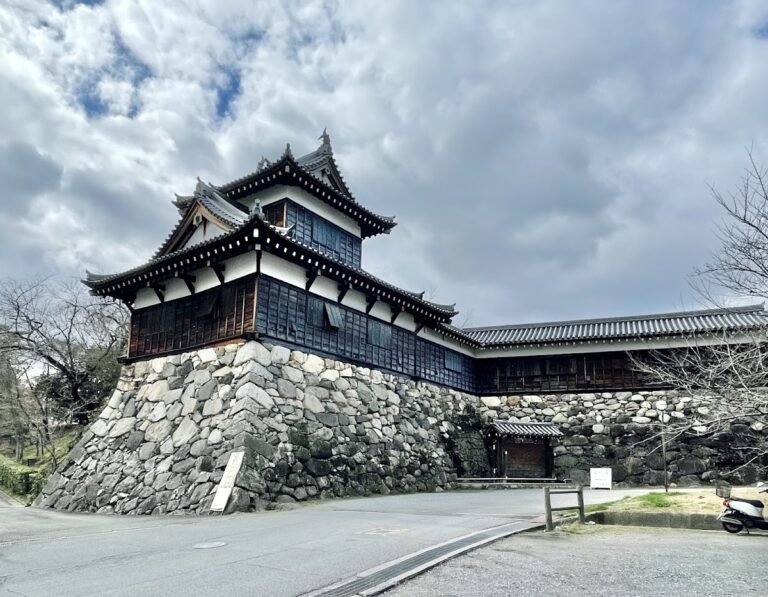
Koriyama Castle, located in Yamato-Koriyama City, Nara Prefecture, is a flatland castle that flourished as the political and military center of Yamato Province (present-day Nara Prefecture) from the Sengoku period to the Edo period.
The castle’s origins date back to the Muromachi period, but it was only after Toyotomi Hidenaga, the younger brother of Toyotomi Hideyoshi, entered the castle in 1585 (Tensho 13) as the lord of Yamato, Kii, and Izumi provinces with a domain of 1 million koku, that it was fully developed as a fortress. Hidenaga was the second most powerful figure after Hideyoshi at the time, and he built a magnificent castle befitting his position.
Features and Structure of the Castle
Koriyama Castle was designed as a ring-shaped flatland castle. A ring-shaped castle refers to a layout where the second and third baileys are arranged concentrically around the main bailey. The castle was built on a hill approximately 50 meters above sea level, occupying a strategic location overlooking the surrounding plains.
Notably, a large number of repurposed stones were used in the castle’s stone walls. This is a testament to the rapid construction and material procurement practices of the time, as the stone walls were repurposed from stone Buddha statues and five-tiered pagodas brought from nearby temples and burial mounds. Even today, inverted stone Buddha statues can be seen within the walls, adding to its historical interest.
Koriyama Domain in the Edo Period
After the death of Toyotomi Hidenaga, the castle lord changed several times, but during the Edo period, it functioned as the administrative center of the Koriyama Domain. Particularly during the time when the Yanagisawa clan ruled (from 1724 until the Meiji Restoration), the castle town was developed and flourished as a center of commerce and culture.
The Koriyama Domain was a medium-sized domain with a 150,000 koku (unit of rice production) yield, but as the only domain in Yamato Province, it wielded significant influence over the region’s politics and economy. The castle town featured a well-organized layout of samurai residences, merchant districts, and temples and shrines, and some of this town layout remains today.
Current State and Highlights
Although many of Koriyama Castle’s structures were demolished following the Meiji Restoration’s decree abolishing castles, parts of the stone walls and moats remain in good condition.
Main Highlights:
- Castle Tower Base: While the castle tower no longer exists, the castle tower base remains, offering a panoramic view of Yamato-Koriyama city.
- Main Gate Site: The site of the castle’s main gate; only the stone walls and moat remain today.
- Repurposed Stones: Repurposed stones such as Buddhist statues and gravestones found throughout the stone walls attract the attention of history enthusiasts.
- Cherry Blossom Viewing Spot: In spring, approximately 800 cherry trees bloom, and the “Castle Festival” is held.
The ruins are designated as a Nara Prefecture Historic Site, “Koriyama Castle Ruins,” and are open to the public. Nearby, there are also historical museums and samurai residences, allowing visitors to experience the atmosphere of an Edo-period castle town.
Koriyama Castle, Hiroshima Prefecture: The Base of Mori Motonari
History and the Mori Clan, a Sengoku Daimyo
Located in Yoshida-cho, Aki-Takata City, Hiroshima Prefecture, Koriyama Castle is a representative mountain castle of the Chugoku region during the Sengoku period. This castle is known as the base of Mori Motonari and his family, and played a crucial role in the Mori clan’s rise to power in the Chugoku region.
The exact construction date of the castle is unclear, but it is believed to have been developed as the Mori clan’s residence in the early 15th century. Mori Motonari was born in this castle in 1497, and by the mid-1500s, he had grown into a Sengoku daimyo who controlled the entire Chugoku region.
Structure as a Mountain Castle
Koriyama Castle is a typical mountain castle built around the summit of Mount Koriyama, approximately 390 meters above sea level. The entire mountain was fortified, with numerous baileys (kuruwa: sections within the castle grounds) arranged in a stepped pattern around the main keep.
The castle grounds were vast, not only the main citadel at the mountaintop but also residences for retainers and other officials encompassing at the foot of the mountain. Defensive features such as moats, earthworks, and stone walls were effectively strategically placed, making it an impregnable fortress for attackers.
Mori Motonari and the “Three Arrows” Teaching
Mori Motonari is considered one of the greatest strategists of the Sengoku period, demonstrating exceptional abilities in all aspects of diplomacy, strategy, and military affairs. Koriyama Castle was the center of his activities, and it was from here that his strategy for unifying the Chugoku region was formulated.
The famous “Three Arrows” teaching is known as the anecdote in which Motonari taught his three sons (Takamoto, Motoharu, and Takakage) the importance of unity. This teaching is said to have been spoken at Koriyama Castle and has become a symbol of the Mori clan’s unity and prosperity.
Relocation to Hiroshima Castle and Abandonment
Mori Terumoto, grandson of Mori Motonari, relocated his base from Koriyama Castle to Hiroshima Castle in 1591 (Tensho 19). This marked a shift to a flatland castle, more suitable for the peaceful era after Toyotomi Hideyoshi’s unification of Japan.
Although Koriyama Castle was later abandoned, its remains as a mountain castle were well-preserved and it is now designated a national historic site.
Current Koriyama Castle Ruins
The Koriyama Castle ruins in Hiroshima Prefecture are a valuable historical site that conveys the appearance of a mountain castle from the Sengoku period.
Main Highlights:
- Main Enclosure Site: Located on the mountaintop, this was the residence of Mori Motonari.
- Stone Walls: Valuable remains showcasing the stone-making techniques of the time are scattered throughout the site.
- Enclosures: The numerous enclosures spread across the entire mountain attest to the castle’s immense scale.
- Mori Motonari’s Mausoleum: Motonari’s mausoleum is located at the northwestern foot of the castle, attracting constant visits from history enthusiasts.
- Historical and Folk Museum: Located near the ruin castles, it displays materials related to the history of the Mori clan and Koriyama Castle.
Climbing to the castle requires a 30-minute hike along a mountain path, but the view from the summit is magnificent, allowing visitors to experience the atmosphere of a Sengoku period mountain castle. In recent years, digital guide maps have been developed, enabling visitors to gain a deeper understanding of the history.
Comparison of the Two Koriyama Castles
The Koriyama Castles in Nara Prefecture and Hiroshima Prefecture, while sharing the same name, differ in many respects.
Location and Castle Style
- Nara Prefecture: Hilltop Castle (on a hill approximately 50 meters above sea level)
- Hiroshima Prefecture: Mountain Castle (on a mountaintop approximately 390 meters above sea level)
Hilltop castles, being close to flat land, were well-suited as political and economic centers, while mountain castles excelled in defense and were ideal as wartime bases.
Builders and Historical Context
- Nara Prefecture: Large-scale development by Toyotomi Hidenaga (1585), a symbol of power under the Toyotomi regime
- Hiroshima Prefecture: Built by the Mori clan (early 15th century), a strategic base during the Sengoku period
Current State of Preservation
- Nara Prefecture: Stone walls and moats are well preserved, located in an urban area and developed as a tourist destination
- Hiroshima Prefecture: Mountain castle remains are preserved in almost complete form, allowing visitors to experience history in a natural environment
Visiting and Accessing Koriyama Castle
Access to Koriyama Castle in Nara Prefecture
- Train: Approximately 10 minutes on foot from Kintetsu Kashihara Line “Kintetsu Koriyama Station,” or approximately 15 minutes on foot from JR Yamatoji Line “Koriyama Station”
- Car: Approximately 10 minutes from Nishimeihan Expressway “Koriyama IC”
- Opening Hours: Always open (some facilities have time restrictions)
- Admission Fee: Free
Access to Koriyama Castle, Hiroshima Prefecture
- Train: Approximately 10 minutes by taxi or bus from Yoshidaguchi Station on the JR Geibi Line
- Car: Approximately 20 minutes from Takada Interchange on the Chugoku Expressway
- Climbing Time: The hiking trail is always open; approximately 30 minutes to the summit
- Admission Fee: Free
Value as a Historical and Cultural Resources
Both Koriyama Castles possess extremely high value as historical and cultural resources of Japan. Koriyama Castle in Nara Prefecture serves as an example of castle architecture and urban planning during the Toyotomi regime, while Koriyama Castle in Hiroshima Prefecture plays a crucial role as a historical site conveying the history of a Sengoku period mountain castle and the Mori clan.
In recent years, efforts have been made to utilize regional history for the future, including the provision of information using digital technology and the enhancement of educational programs. Visitors can not only view the ruins but also learn about the life, strategies, and culture of the time from multiple perspectives.
Summary: Experiencing Japanese Castle Culture
The two castles known as “Koriyama Castle,” though built in different eras, by different builders, and serving different roles, occupy important positions in the history of Japanese castles.
Koriyama Castle in Nara Prefecture, a flatland castle symbolizing the power and prosperity of the Toyotomi regime, possesses unique features such as repurposed stones and remains a beloved historical symbol of the region. On the other hand, Koriyama Castle in Hiroshima Prefecture, the base of Mori Motonari, one of the greatest strategists of the Sengoku period, conveys the grandeur of a mountain castle and the spirit of the Sengoku era.
Both castles are open to the public and are worth visiting not only for history enthusiasts castle but also for anyone interested in Japanese culture and architecture. Visiting the ruins will allow you to feel firsthand the profound depth of Japanese history that cannot be learned from textbooks, and the wisdom and efforts of our ancestors.
While searching for “Koriyama Castle” in Japanese will display multiple castles, each possessing its own unique story and value. If you have the opportunity, please visit both Koriyama Castles and experience Japan’s rich culture castle.